Podcast
ReGen Brands Podcast
Hosted by Regen Brands Podcast · EN
The ReGen Brands Podcast is an educational archive exploring how consumer brands, retailers, investors, and other food system leaders are advancing regenerative agriculture. Hosted by Kyle Krull and Anthony Corsaro, the podcast featured conversations with the entrepreneurs, operators, and innovators building a more regenerative food system. While the ReGen Brands organizations have wound down operations, these episodes remain available as a resource for the regenerative agriculture community.
19episodes
Episodes
Newest firstAll episodes

#108 - We Have No Idea How Regen Products Are Selling (Kyle Returns!)
Jul 18, 202500:53:11Tap to summarizeOn this episode of the ReGen Brands podcast, a voice you know and love is back. Kyle returns after his brief two-episode hiatus, but this time as the guest. We’re diving deep into a foundational issue facing regenerative CPG: we still have no unified way of tracking how regenerative products are performing at retail. From disjointed data systems and third-party paywalls to the chaos of unstandardized claims, this episode breaks down why brands, retailers, and certifiers are flying blind when it comes to understanding regen product performance.We explore how syndicated data platforms like SPINS and Nielsen work, why regenerative claims often aren’t tracked, and what that means for brand strategy, buyer decisions, and movement-wide progress. Kyle also shares why even the best sales data means nothing if you can’t translate it into value. Plus, we break down our two-pronged solution to ensure that regenerative products can be tracked just like organic, keto, or gluten-free items are today. And we detail the coordination effort it will require between certifiers, retailers, data companies, and brands. Episode Highlights: 📉 Why we don’t actually know how regen products are selling 💸 Retail sales data is paywalled, fragmented, and hard to access 🧩 Each data provider has its own rules for product attribution 🔍 No unified system exists to track regen-specific product claims 📊 Retail buyers rely on data to greenlight trends (regen’s nearly invisible) 🤝 A unified attribute across platforms could unlock new retail wins 🧪 More regen data = better decisions, faster learning, less greenwashing 🔐 Data providers are open to change, but need an ROI to justify it 🛠️ We need industry consensus on regen claim and data governance 🏆 The holy grail = data that unlocks point of sale causation Links: SPINS NielsenIQ Circana Whole Foods Market Kettle & Fire Regenerative Organic Certified (ROC™) Land to Market (EOV) Regenified A Greener World Slingshot CPG If you find this content valuable, please consider donating to support our work Follow ReGen Brands on LinkedIn Subscribe to the ReGen Brands Weekly newsletter
Transcribe →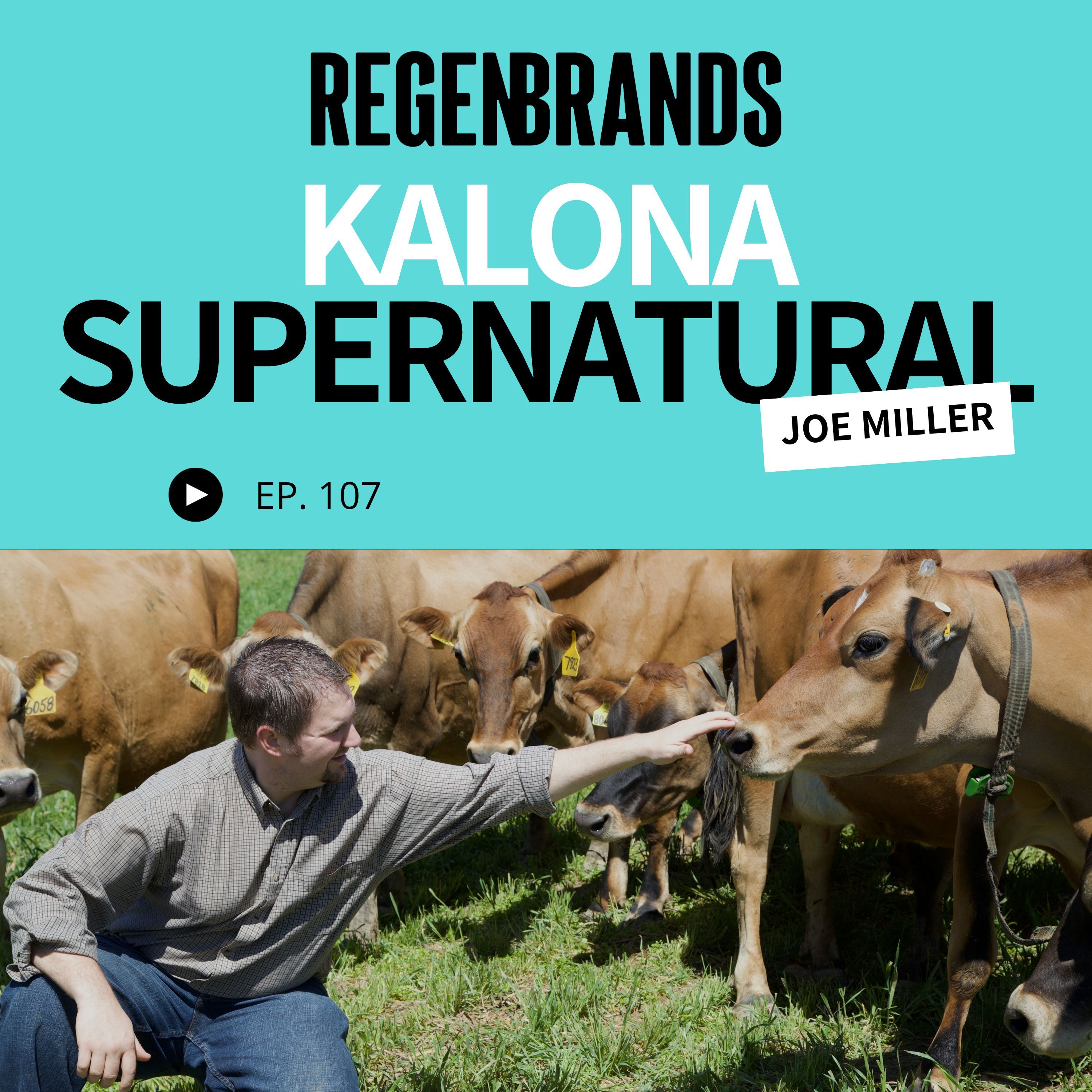
#107 - Joe Miller @ Kalona Supernatural - Regenerative, “Almost Raw” Milk From A 19-Entity Ecosystem
Jul 11, 202501:10:08Tap to summarizeOn this episode of the ReGen Brands podcast, we're joined by Joe Miller from Kalona SuperNatural — a 20-year veteran of the dairy world and a passionate advocate for organic and regenerative farming. We dig into Kalona’s unique vertically integrated ecosystem (that includes 19 different businesses!), the brand’s deep partnerships with family dairy farms, and all the ways regenerative is shaping their efforts from soil to shelf. Joe shares the story of how a group of farmers took matters into their own hands when the local co-op abandoned the organic market — and why practices like low-temp pasteurization and non-homogenization are helping differentiate their “almost raw” dairy offerings. We also discuss the challenging questions — how regenerative dairy can thrive and scale in a landscape dominated by consolidation, consumer confusion, and razor-thin margins. And Joe gives a heartfelt case for why organic and regenerative matters more than ever — to the land, to the farmer, and to the person drinking the milk. Episode Highlights: 🌱 Kalona was born to save organic dairy farms that got left behind 🚚 Their Iowa-based ecosystem includes 19 different entities 📍 Buying from small family farms, many with just 35–40 cows 🌾 Leveraging Land to Market certification for agronomic improvement 🥄 “Almost Raw” milk via low-temp pasteurization & non-homogenization 📊 How regen affects their marketing efforts in-store and post-purchase 🧠 Scaling to national distribution while maintaining local and regional impact 📈 The rise, stall, and hopeful revival of organic dairy in America 🤯 648,000 to 24,000: Why 95% of U.S. dairy farms disappeared 🥛 How regenerative agriculture can help make family dairy viable again Links: Kalona SuperNatural Open Gates Group Kalona Regenerative Network Land to Market Oasis Hummus The Tipping Point If you find this content valuable, please consider donating to support our work Follow ReGen Brands on LinkedIn Subscribe to the ReGen Brands Weekly newsletter
Transcribe →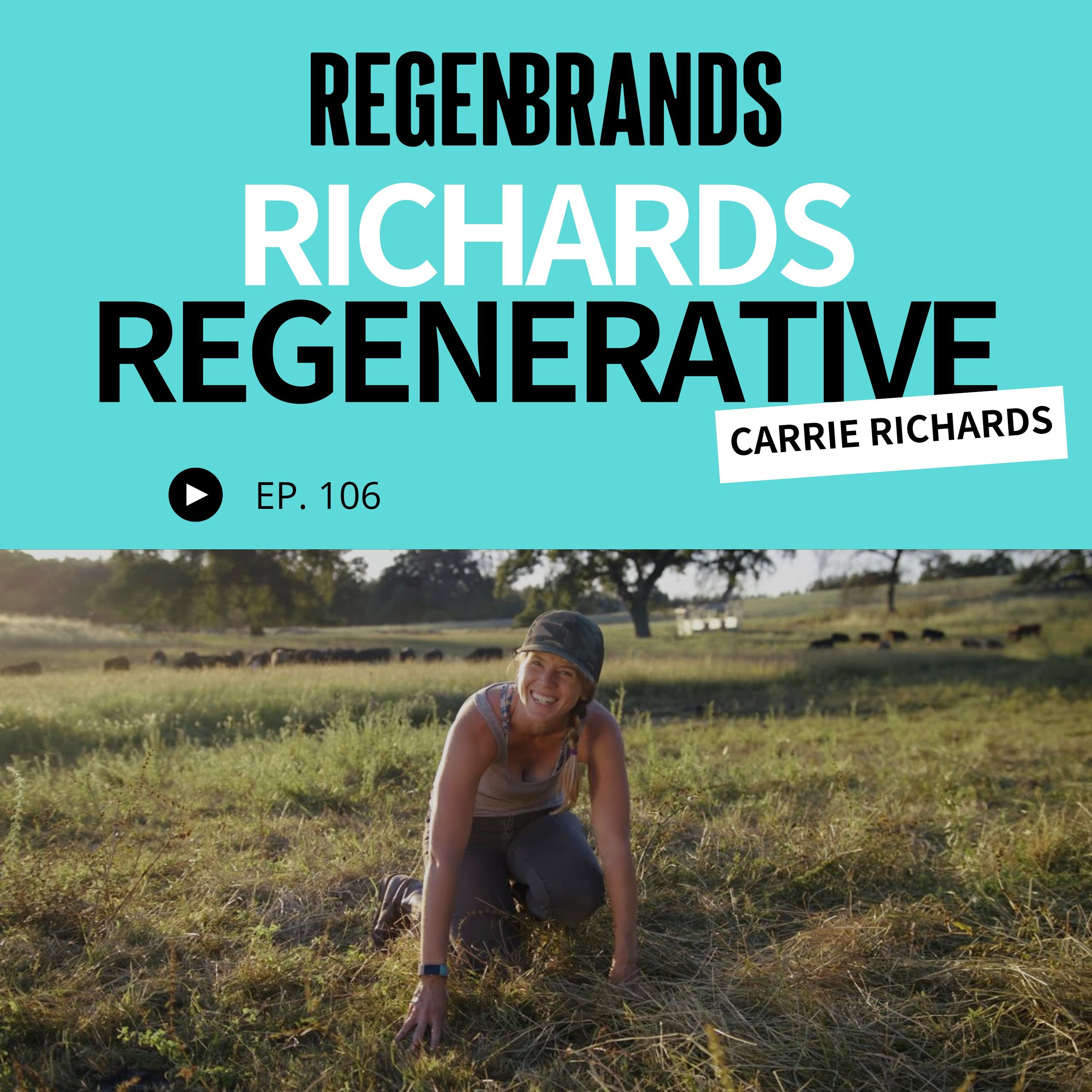
#106 - Carrie Richards @ Richards Regenerative - Wholesale Over DTC, Regenerative in Schools, and the Problem with Big Brands
Jul 3, 202501:09:31Tap to summarizeOn this episode of the ReGen Brands Podcast, we're talking with Carrie Richards – the fourth-generation rancher behind Richards Regenerative. Carrie takes us through her incredible journey from scrappy beef sales out of a friend's freezer to supplying over 40 school districts and major retailers like Sprouts. We dive deep into the challenges and contradictions of building a regenerative beef business – from dealing with misleading country-of-origin labeling and predatory brand partnerships to navigating the real math behind carcass utilization, processing costs, and wholesale margins. Carrie also shares her hopes in the future use of nutrient density data, her fears about the future of the cattle market, and the launch of Harvest Path – a software platform purpose-built to help small and mid-sized ranchers thrive. Episode Highlights: 🐄 Transitioning their family’s 6,500 acre ranch to regenerative 🛠️ “We had to build a meat company to become a finishing operation” 🌾 Rotating animals across three regions in California 🥩 Their unique model which is 90% wholesale 🏫 Serving 40+ school districts via Beef 2 Institution 👎 “The big brands use us as a marketing piece – and then disappear.” ⚙️ Harvest Path: their custom system that became a software business 📉 Concerns related to a booming cattle market and cheap imports 🔍 The hope in nutrition data and working with Edacious 💡 Musings on the state of the movement and where we’re headed Links: Richards Regenerative American Grassfed Association TomKat Ranch Savory Institute Cream Co. Meats Delivered Cold Edacious Nutrient Density Alliance UC Davis Health White Buffalo Land Trust Harvest Path CarnivoreMD (Paul Saladino) If you find this content valuable, please consider donating to support our work Follow ReGen Brands on LinkedIn Subscribe to the ReGen Brands Weekly newsletter
Transcribe →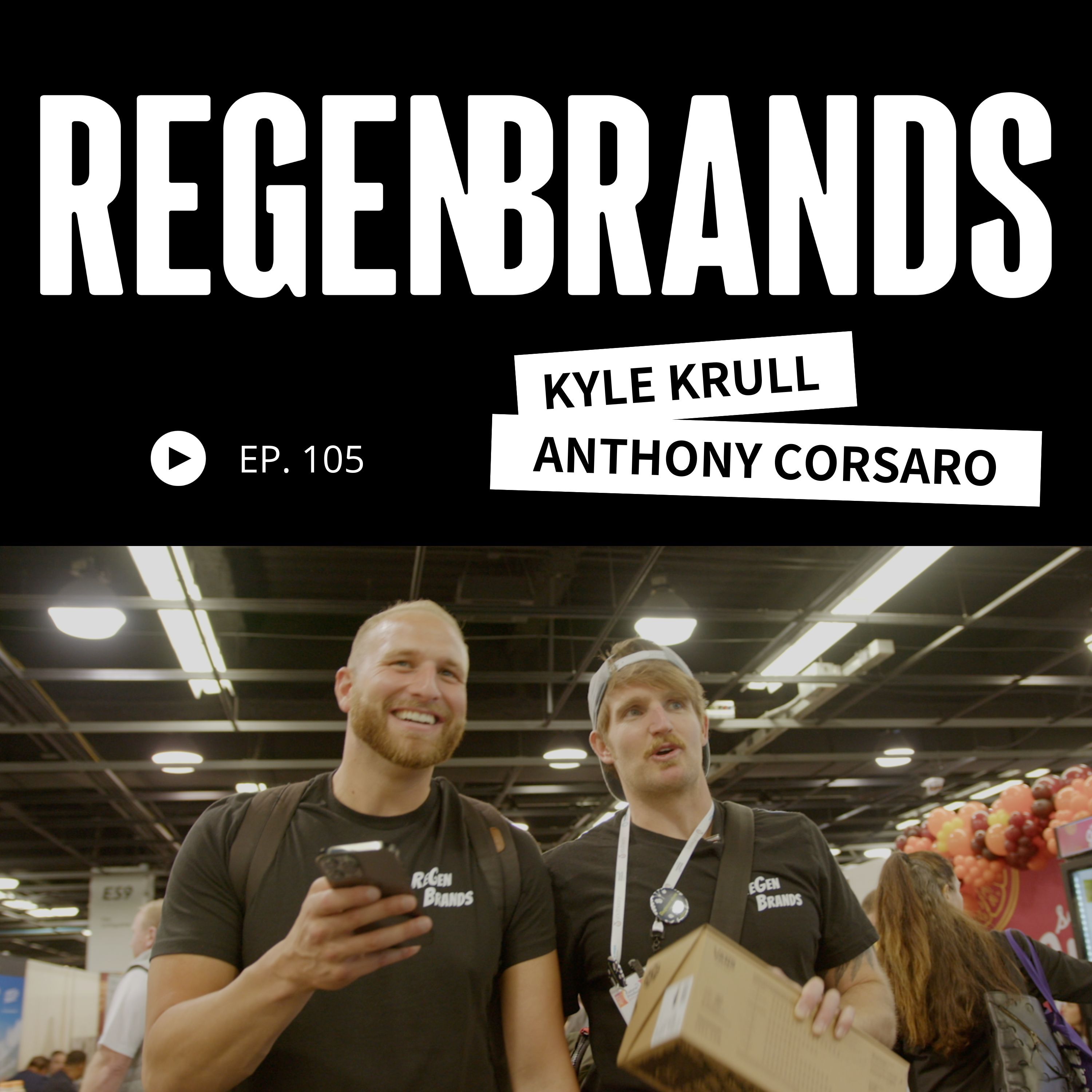
#105 - Kyle Says Goodbye, Passing The Mic But Not The Mission
Jun 17, 202500:35:27Tap to summarizeOn this episode of the ReGen Brands podcast, we’re closing a major chapter and celebrating everything that’s made it so powerful. Kyle is officially stepping away as the show’s regularly scheduled co-host. In this heartfelt conversation, Kyle shares what’s driving this decision, and we both reflect on the journey to date. You’ll hear behind-the-scenes stories, favorite moments, some laughs (of course), and a lot of love. And although I’m losing my co-host for the podcast, Kyle isn’t saying goodbye to the regenerative movement - he’s just shifting how he plans to contribute. Plus, you already know I’m recruiting him back for as many guest co-host episodes as possible, so this is definitely not the last time you’ll hear his voice on the show. Tune in as we mark this moment, say thank you, and look forward to what’s next, together. Episode Highlights: 🎤 Kyle signs off as co-host after 105 episodes 🙏 Gratitude for the Regen Brands community and listeners 🔥 The new ways Kyle plans to support regen 💼 How the pod inspired Kyle’s next moves 😂 AC already recruiting Kyle back for guest, co-host episodes Links: Kettle & Fire Maui Nui Venison If you find this content valuable, please consider donating to support our work Follow ReGen Brands on LinkedIn Subscribe to the ReGen Brands Weekly newsletter
Transcribe →
#104 - Eric Smith @ Edacious - Helping Brands Prove That Regenerative Products Are More Nutritious
May 30, 202501:31:13Tap to summarizeOn this episode, we have Eric Smith who is the Founder and CEO of Edacious. Edacious offers radically easy lab testing and intuitive nutrition software for food system professionals. They’re working on turning nutrition data into actionable insights for people and planetary health. Eric's on a mission to redefine food quality using hard data. Through his work at Edacious, he's helping brands measure, benchmark, and communicate the nutritional value of their products so consumers can truly understand what they’re eating. We explore: Why the current Nutrition Facts Panel fails us How nutrient density can drive real market demand for regen products What kinds of data regenerative brands should be gathering now And how Edacious is building a first-of-its-kind food quality benchmarking system You’ll hear Eric break down complex concepts like bioavailability and phytochemicals in clear, actionable ways – plus explain how regenerative brands can use this data to differentiate themselves in a crowded market. If we weren’t already super bullish on how nutrient density can create increased demand for regenerative products, then we definitely are now. Episode Highlights: 💪 Why Eric left climate investing to go all in on nutrition 📉 Most nutrition panels are wrong and based on outdated USDA data 🔎 Many “healthy” foods are nutrient-poor due to depleted soils and genetic dilution 🔥 The five steps every brand can and should take right now 🧾 Why regulatory risk goes away when you have third-party data 💥 Regen products often contain 10x or more of certain key vitamins 🥩 Ground-breaking insights from the recently released Beef study 👀 What brands are doing a good job marketing their nutrition data? 📊 Building the first public database of food quality benchmarks 🚀 How their Nutrition Profiling Score could change food forever Links: Edacious Grantham Foundation Bionutrient Food Association USDA FoodData Central Kettle & Fire Food Fix by Dr. Mark Hyman Stefan van Vliet (Utah State) TomKat Ranch Bruce Ames Maui Nui Venison Force of Nature Maple Hill Creamery Alexander Family Farm Wildfarmed Function Health If you find this content valuable, please consider donating to support our work Follow ReGen Brands on LinkedIn Subscribe to the ReGen Brands Weekly newsletter
Transcribe →
#103 - Mary Purdy @ Nutrient Density Alliance - Regen’s Nutrition Advantage: What We Know & Where We’re Headed
May 23, 202501:09:52Tap to summarizeOn this episode, we have Mary Purdy who is the Managing Director of the Nutrient Density Alliance. The Nutrient Density Alliance’s purpose is to ignite awareness and mobilize action around the nutritional benefits and improved food quality of soil-building regenerative agriculture to drive demand for a more sustainable food system and improve human health outcomes. You’ve heard us talk a lot about how the increased nutrient density of regenerative foods will be a powerful marketing mechanism to increase demand for regenerative products and spur more adoption of regenerative agriculture. Well, Mary and her team at the NDA are at the forefront of those efforts. In this episode, Mary shares powerful insights on the science linking healthier soil to more nutrient-dense food, the urgent need for research and clinical trials, and why dietitians, farmers, and brands must work together. We explore the regulatory landscape, the importance of using clear consumer language, and how the industry can avoid greenwashing while advancing nutrient density claims. We also tackle some big questions: Why aren’t dietitians and food service professionals being trained to understand the connection between farming practices and nutrition? What practical steps can brands take to communicate nutrient density without regulatory risk? And how can regenerative brands get healthcare influencers involved to drive demand? We’re talking phytochemicals, phytonutrients, flavonoids, and all things at the intersection of soil health, human health, and regenerative marketing. Episode Highlights: 🔬 The science backing up regen’s nutrition advantage 📝 “Healthy soil equals healthy food” is a sound bite we can all use 💡 Why brands should make “statements” and not “claims” 🤝 Partnering with dietitians to increase credibility and influence 🍅 Consumers don’t know about ‘nutrient density’ - yet 🚀 Building an undeniable case through research and case studies 👎 Why healthcare pros don’t learn about ag’s connection to nutrition 🎯 Increasing awareness while maintaining integrity 👀 What can brands do? (right now) 🏆 Why linking regen to healthcare is the holy grail Links: Nutrient Density Alliance NDA Research Repository NDA Learning Lab NDA Regen Protein Project Soil & Climate Alliance Soil & Climate Initiative Squeeze Citrus Diestel Family Ranch Edacious Western Sustainability Exchange Recipe for Health (California) 4Roots Farm (Florida) Fresh RX Oklahoma Think Regeneration Applegate Sodexo Aramark If you find this content valuable, please consider donating to support our work Follow ReGen Brands on LinkedIn Subscribe to the ReGen Brands Weekly newsletter
Transcribe →
#102 - Joseph Cassinelli @ El Nacho - Tortilla Chips Reimagined Through Lucha Libre & Regenerative Ag
May 16, 202501:07:01Tap to summarizeOn this episode, we’re joined by Joseph Cassinelli, who is the Founder and President of El Nacho. El Nacho is supporting regenerative agriculture with their line of tortilla chips made with certified regenerative corn. In this episode, Joe shares how El Nacho was born during the pandemic and how it turned him from a seasoned restaurateur to a new CPG Founder. He details the importance of their clean ingredients, ancient processing techniques, and intentional sourcing decisions to produce a bold, flavorful chip that is better for eaters, farmers, and the planet. We get a behind-the-scenes look at their brand inspiration and desire to bring storytelling and joy to the snack aisle with their bold lucha libre-inspired characters like El Nacho, Ms. Mango, and El Diablo. Joe also gives his hot takes on how we can increase consumer demand for regenerative products, and shares some top-secret information about their innovation pipeline. Grab some chips and guac and dial in on this one. Episode Highlights: 🍴 How El Nacho was born in a chef’s kitchen during COVID. 🧑🌾 Why regenerative corn offers more nutrient density — and flavor 🎨 Lucha libre branding lets El Nacho tap into nostalgia, culture, and community impact 🌱 Building supply from the ground up — including planting regen blue corn for fall 🇲🇽 Latino influence is rising, and Mexican cuisine is set to go mainstream 💬 “It takes a village” - The need for retailer, buyer, and consumer alignment on regen 🧪 Ancient wisdom meets modern flavor — the art and science of nixtamalization 🛍️ Educating buyers — most don’t have a high “Corn IQ” 💣 Why we need to see regenerative tortilla chips in 7-Eleven 👀 An exclusive sneak peek at what flavors are coming next Links: El Nacho Painted Burro Restaurant Group Expo West AGW Certified Regenerative Regenerative Organic Certified (ROC) Land to Market Regenified Siete Foods Zack’s Mighty If you find this content valuable, please consider donating to support our work Follow ReGen Brands on LinkedIn Subscribe to the ReGen Brands Weekly newsletter
Transcribe →
#89 - Trump’s 2.0, Regenified’s New Consumer Research, & Big Recent Wins For Regenerative Brands
Jan 3, 2025Tap to summarizeIn this episode, we’re bringing you into the new year with a first-of-its-kind format covering current events, new consumer research, and industry news. Kyle and I spend time talking about Trump winning the presidency and what that means for regenerative brands and the regenerative movement. How will tariffs affect cost of goods? Will mass deportations affect labor and cost of goods? Is MAHA for real and what impact will it have? Will the new administration fulfill their promises on inflation and the economy resulting in higher velocities of premium regen products and more investment into their businesses? We chat about the cultural implications from the election and how we think that will affect where regen goes over the next 4 years. How will all this anti-establishment energy affect change? What does the rejection of woke ideology mean for brands marketing the sustainability benefits of regenerative products? We cover Regenified’s recently released consumer report that highlights high interest in regenerative agriculture and growth opportunities for brands and retailers. What can we learn from the findings of this 850-person study? Regenified’s key findings highlighted rising consumer awareness and interest, the criticality of certifications, consumers prioritizing health and nutrient density, and consumer willingness to pay a premium for regenerative products. We unpack it all and share our perspectives. We share some big news from brands like Painterland Sisters, Long Table, Recoup, Little Sesame, and Diestel Family Ranch covering new products and retailer partnerships, big industry pitch slam wins, and new nutrient density analysis. Lastly, Kyle and I share some of the regenerative products we’re gifting to friends and family this holiday season. We’re pumped to bring you this new format and excited to do more episodes like it in 2025, so let us know what you think and want to hear us chat about next! Episode Highlights: 🇺🇸 What does Trump 2.0 mean for regenerative brands? ↗️ Will tariffs drive up COGS significantly? 👀 Is MAHA for real? What are we expecting? 💰 Will brand investment increase like it did in the first term? 😡 What Trump's win tells us about current consumer sentiment 💭 How anti-woke energy might affect marketing sustainability 📊 Key findings from Regenified’s new consumer research 👉 Why regenerative awareness is still so low 🚀 BIG recent wins from regenerative brands 🎁 Our regenerative gifts for the holidays Links: Food & ag organizations respond to Trump victory What a Trump Presidency Means for US Agriculture by Connie Bowen MAHA Food Fix Undaunted Courage California Food & Agriculture officials wrestle with regenerative agriculture definition Regenified's 2024 Consumer Report Recoup Takes Title as New Beverage Showdown 28 Winner Long Table wins big at SKU Fall Showcase Painterland Sisters debuts new Passion Fruit flavor Painterland Sisters is now available in all 1,300+ Publix Super Markets Little Sesame Launches First-To-Markets Kids Hummus Cups Nutritional Analysis of Diestel Regenerative Turkeys Dadascope Communications Follow ReGen Brands on LinkedIn Subscribe to the ReGen Brands Weekly newsletter
Transcribe →
#63 - Nick Wiseman @ Little Sesame - Winning At Retail With Regen Hummus
Feb 16, 2024Tap to summarizeOn this episode, we have Nick Wiseman who is a Co-Founder and the CEO of Little Sesame. Little Sesame is supporting regenerative agriculture with its lineup of organic and regeneratively farmed hummus products that includes a flavor lineup of Smooth Classic, Jammy Tomato, Caramelized Onion, Herby Jalapeño, and the newly launched Preserved Lemon. In this episode, we learn how Nick and his team pivoted Little Sesame from restaurant to retail during COVID, the “freshly-spun” difference that makes their hummus unique, and Little Sesame’s explosive growth strategy and results. We covered a ton with Nick, and this episode is super rich with insights into everything from direct-trade farm relationships, to driving product velocities at retail, to building self-manufacturing as a competitive advantage. Episode Highlights: 😍 “Freshly spun” hummus made with regen chickpeas 😯 Pivoting from restaurant to CPG during COVID 🍋 Their new lemon preserve hummus 🔥 The ROI in self-manufacturing 🤝 Partnering with their chickpea farmer, Casey Bailey 🤯 Farmer Casey’s “10-year regen experiment” and 17-crop rotation 🎯 Obsessing over velocities to drive growth 💰 Why brands need diverse capital stacks and new financial models 🥳 Using seasonal SKUs and brand collabs to grow 🚀 Planning 1,000+ demos for 2024 Links: Little Sesame The Hummus Club Timeless Seeds Inc. Athletic Brewing Article Glyphosate In Hummus (EWG) Follow Kyle and AC on LinkedIn
Transcribe →