Podcast
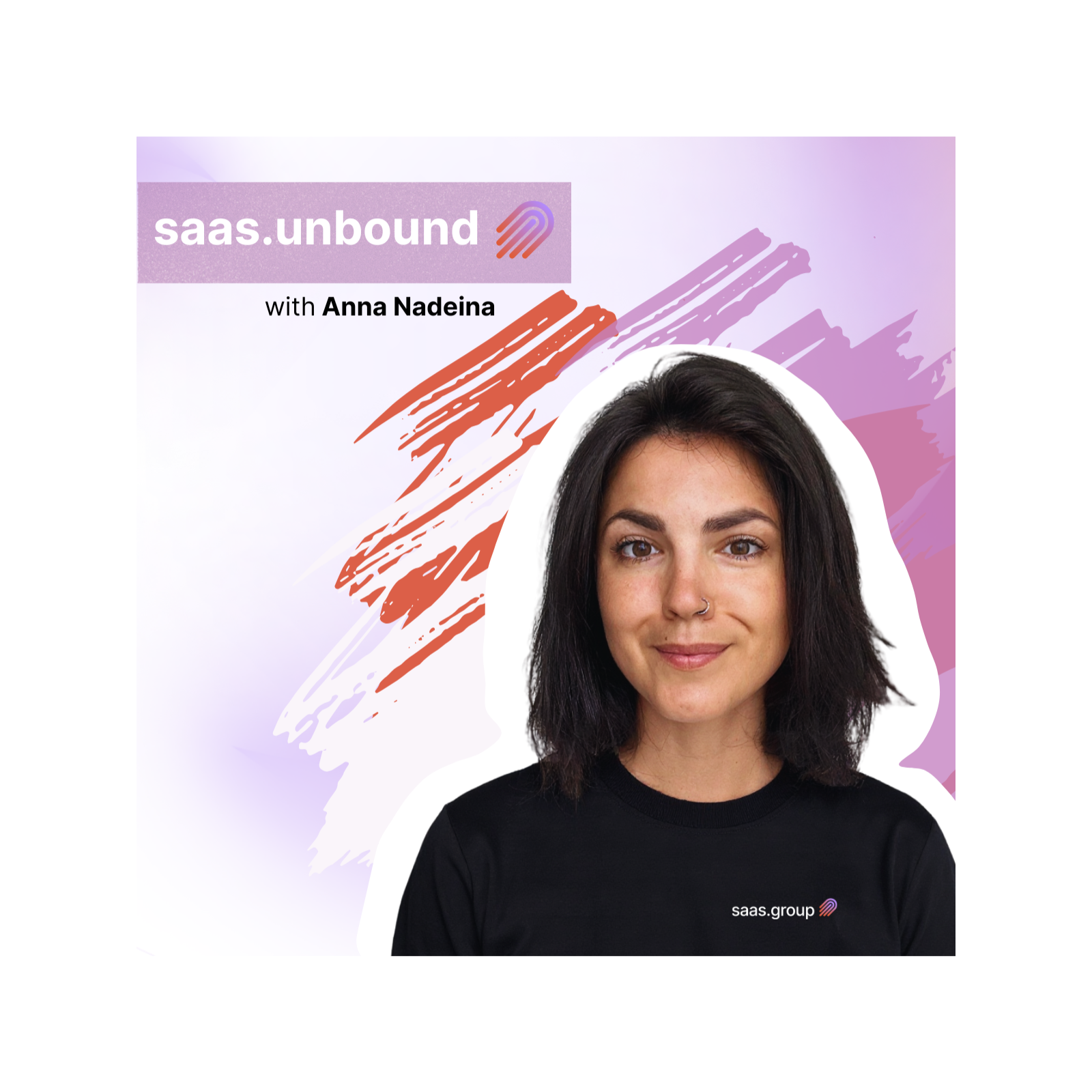
saas.unbound
Hosted by Anna Nadeina · EN
saas.unbound is a podcast where inspiring founders and experts share their stories of founding and scaling their businesses all the way to success and eternal love from their customers.
At saas.unbound we have casual chats with entrepreneurs who have already walked from 0 to 1, to 10, and sometimes to a life-changing exit.
They share their experiences, actionable insights, and mistakes to avoid.
Your host is Anna Nadeina, Head of Growth at saas.group, passionate Growth Marketer, and a big believer in sustainable growth and the power of networking.
saas.unbound is brought to you by saas.group
23episodes
Episodes
Newest firstAll episodes
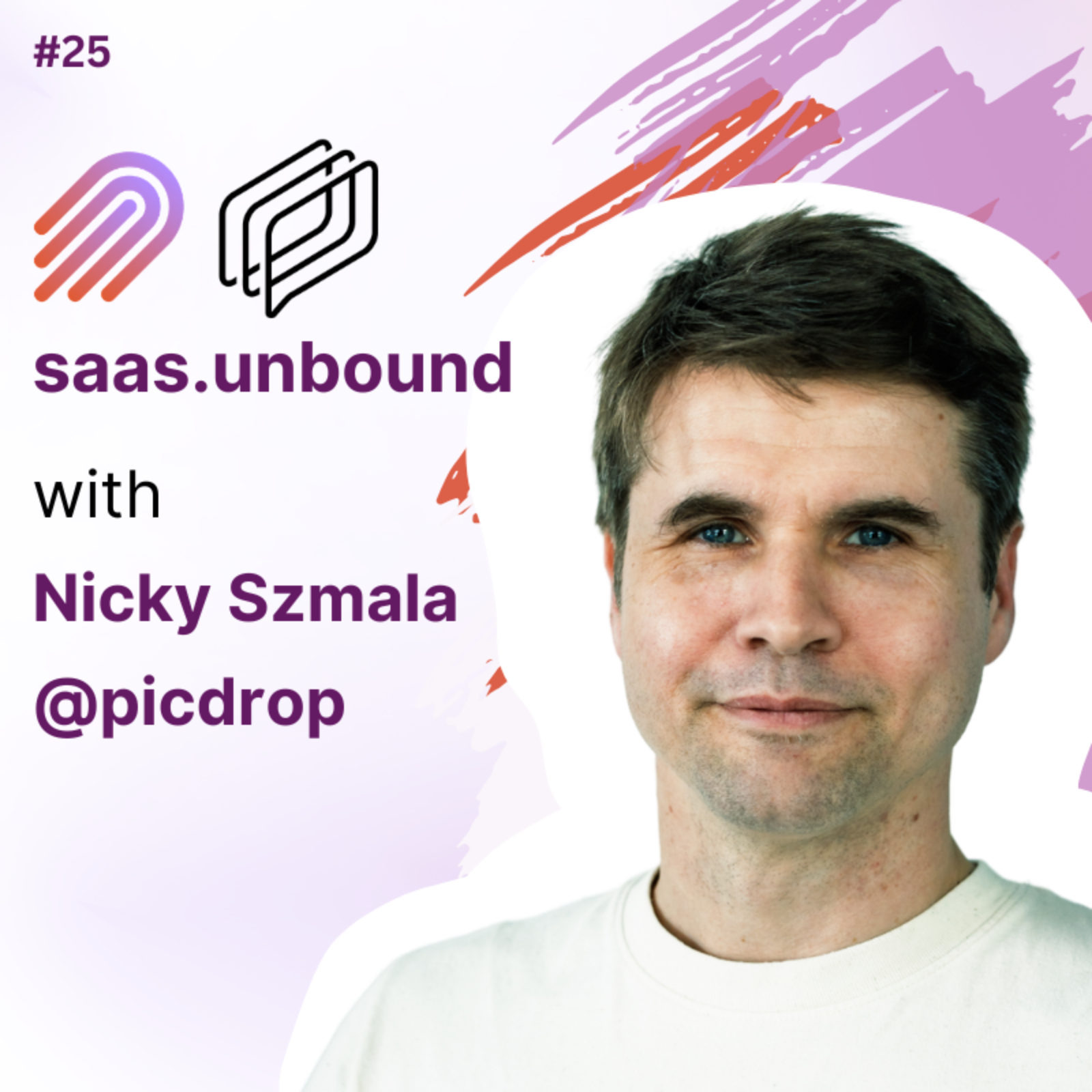
Turning users into influencers. How to run a community-based SaaS | Nicky Szmala @picdrop
1w ago00:36:43Tap to summarizeNicky Szmala joined PicDrop as CEO after the acquisition — walking into a company built by photographers, for photographers, with a growth engine already running. What he found was a community-led model that's quietly outperforming the shortcuts everyone else is chasing.In this episode:→ How picdrop finds and works with influencers who already use the product→ The two-engine growth model driving international expansion→ What it actually looks like to lead a team post-acquisition (and why openness is everything)→ Why picdrop team bets on events even though it's "100% not scalable" → Nicky's take on AI, photography rights, and community trust in a shifting landscapeThis one's for founders and operators who want real talk on brand building, community-led growth, and what life looks like inside a SaaS acquirer's portfolio.----------- Episode's Chapters -----------0:06 — Meet Nicky: From Asia to PicDrop CEO1:23 — Why Anna Was Skeptical About the Acquisition2:44 — Joining a Company Post-Acquisition: Nicky's Approach7:03 — Nicky's Background: From Berlin to 16 Years in Asia14:27 — What Is PicDrop and Who Uses It25:20 — How saas.group's Central Teams Supercharge Small Brands🎙️ Nicky Szmala - https://www.linkedin.com/in/nickyszmala/picdrop - picdrop.comSubscribe to our channel to be the first to see the interviews that we publish - https://www.youtube.com/@saas-groupStay up to date:Twitter: https://twitter.com/SaaS_groupLinkedIn: https://www.linkedin.com/company/14790796
Transcribe →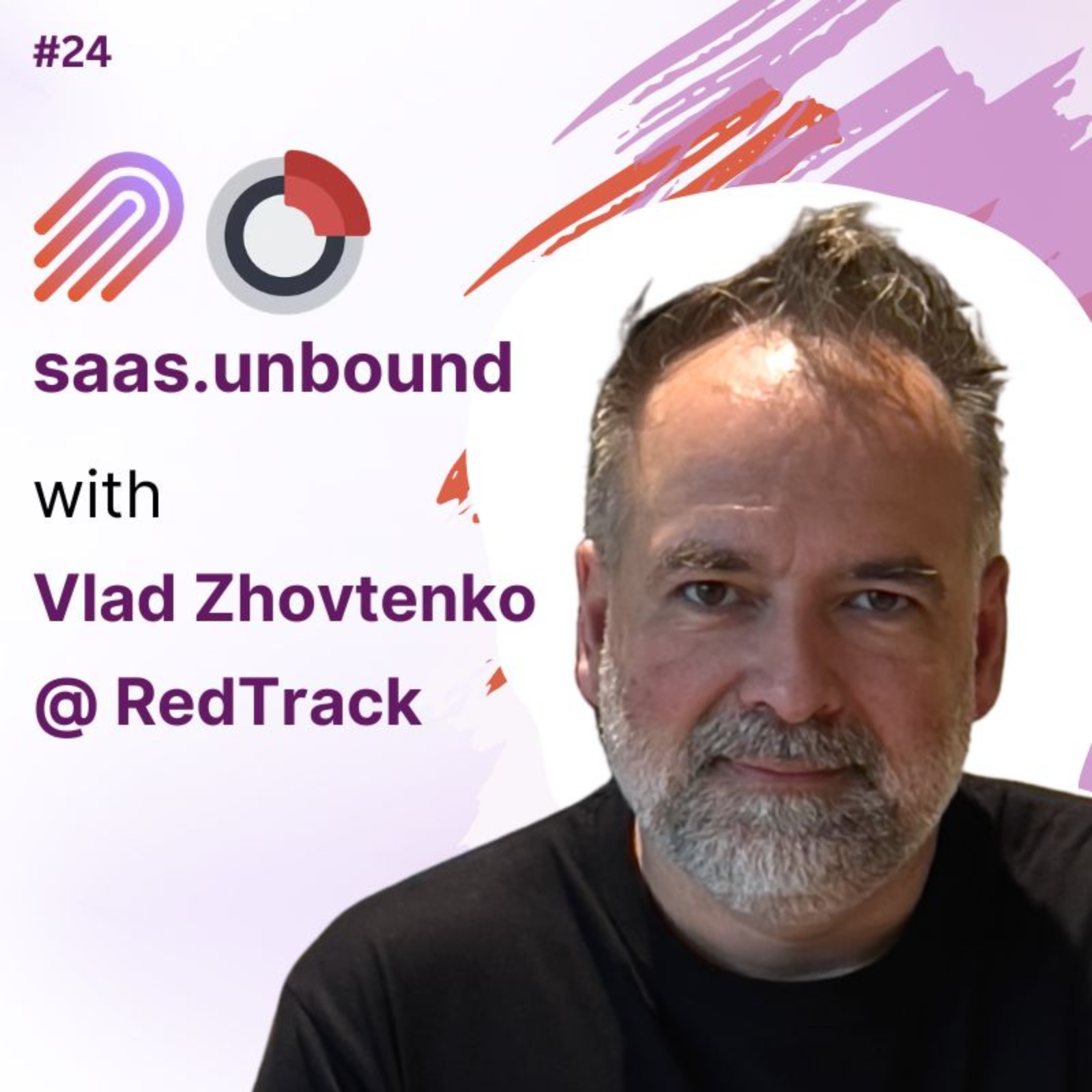
A SaaS founder's reality check vs linkedin AI hype | Vlad Zhovtenko @ RedTrack
3w ago00:35:53Tap to summarizeVlad has been online since 1997 — long enough to have seen every "this changes everything" cycle. Now, as founder of RedTrack, he's built a clear-eyed framework for what AI actually changes in SaaS, and what it doesn't.In this episode: → Why AI is the new internet — and the parts of the hype he's not buying → How iOS 14.5 quietly turned media buying from programmatic into algorithmic → The first-party data foundation every SaaS company should be building right now → What happened when RedTrack connected AI agents to three years of historical data → The four levels of AI adoption — and why most companies are stuck on level one → Why he's not raising another round, even as AI costs rise across the industryFor SaaS founders trying to separate signal from noise on AI, attribution, and the "agent manager" hype.----------- Episode's Chapters -----------0:06 — Internet Origins: How Vlad Found Digital Marketing0:49 — AI vs. the Dot-Com Era: What's Actually Different This Time3:16 — What Gen Alpha Really Thinks About AI4:39 — The Birth of RedTrack and First-Party Data7:33 — Is Attribution Still Relevant in a Cookieless World?10:01 — How AI Is About to Break (and Rebuild) Media Buying14:11 — Processing Work vs. Cognitive Work: Where AI Belongs21:25 — Building an AI-Powered Company: Champions, Workflows, and Mandates28:00 — Do You Need to Manage AI Agents? (Spoiler: No)31:41 — LinkedIn Hype vs. Reality: What's Actually Happening With AI in Business32:44 — To Raise or Not to Raise: Funding Strategy in the Age of AI🎙️ Vlad - https://www.linkedin.com/in/zhovtenko/RedTrack - https://www.redtrack.ioSubscribe to our channel to be the first to see the interviews that we publish - https://www.youtube.com/@saas-groupStay up to date:Twitter: https://twitter.com/SaaS_groupLinkedIn: https://www.linkedin.com/company/14790796
Transcribe →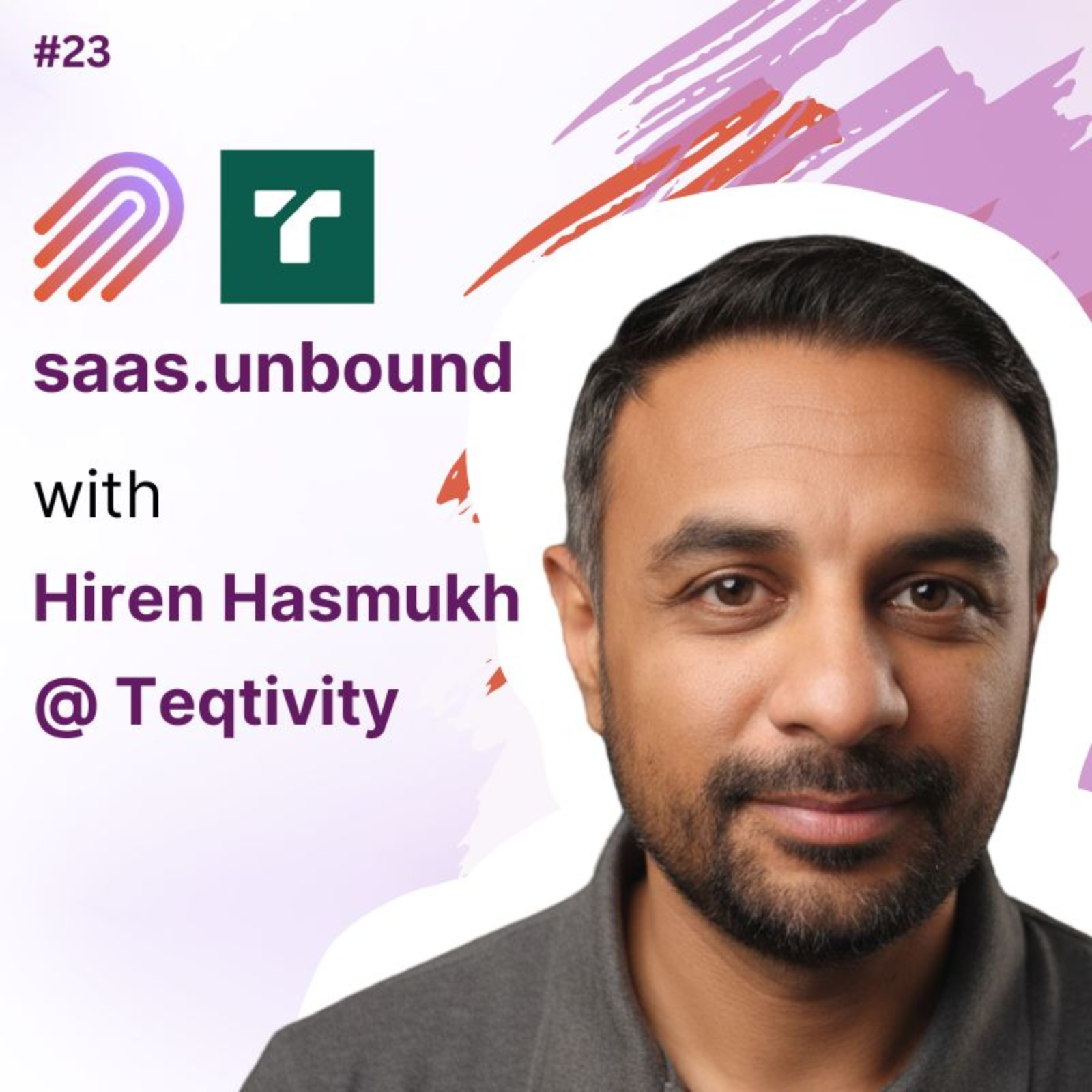
Zero outbound, 90% SEO: how to grow without a sales team | Hiren Hasmukh @Teqtivity
Jul 600:24:38Tap to summarizeHiren bootstrapped Tectivity from a smart locker idea into an IT asset management SaaS that competes with VC-funded rivals — with 25 people, zero outbound, and a customer base that refers each other across job changes.In this episode: → Why he pivoted from hardware to software, and the years he wishes he'd gotten back → How a two-week feature turnaround beats competitors who "charge for innovation" → The $900K his team saved one enterprise from a couple of reports on mobile phone usage → The security breach that hit them four years ago — and how they rebuilt trust with SOC 2 and forensics reports → Why founder-led support stops working, and when to actually step back → How 90% of growth comes from SEO and referrals — with zero cold outreachFor founders building bootstrapped B2B SaaS in crowded, well-funded categories.----------- Episode's Chapters -----------0:06 — Introduction & Hiren's Background1:10 — How the Smart Locker Idea Was Born2:05 — Pivoting from Hardware to SaaS2:29 — Why Hiren Chose to Stay Bootstrapped3:44 — Founder-Led Support on Slack: Sustainable?4:41 — Customizing the Product for Each Customer6:35 — Word of Mouth as the Primary Growth Engine9:54 — SEO vs. AI Search: What's Actually Driving Traffic14:03 — The Security Breach & Lessons Learned15:47 — Building Remote Culture with a 25-Person Team20:24 — Biggest Win, Biggest Failure & Final Hack🎙️ Hiren Hasmukh - https://www.linkedin.com/in/hiren-teq/Teqtivity - https://teqtivity.com/ Subscribe to our channel to be the first to see the interviews that we publish - https://www.youtube.com/@saas-groupStay up to date:Twitter: https://twitter.com/SaaS_groupLinkedIn: https://www.linkedin.com/company/14790796
Transcribe →
How game mechanics are changing B2B onboarding in 2026 | Karel Papik @ Product Fruits
Jun 2200:33:43Tap to summarizeKarel Papik spent 20 years making video games and then discovered that gaming principles for hooking users in the first hour are more advanced than most B2B onboarding. He brought that thinking to Product Fruits, then scrapped the entire roadmap to rebuild it around AI.We get into why his investors offered more money within 24 hours of hearing the pivot, how "forbidden mechanics" from gaming translate into SaaS adoption, why he stopped doing outbound and content entirely — and why he now tells founders to stop listening to customers about the future of their product.For SaaS founders, product managers, and operators thinking seriously about onboarding, AI adoption, and how to grow without chasing every trend.In this episode: → Why investors offered more money within 24 hours of the AI pivot → How gaming "forbidden mechanics" translate to SaaS adoption → Why they stopped doing outbound and content — and what replaced it → Personalizing onboarding at the user level, not the segment level → Why founders should stop asking customers about the future → The personal cost of critical thinking and going against consensus----------- Episode's Chapters -----------0:00 — Intro & Karel's Gaming Background1:13 — From Video Games to SaaS: How Karel Found Product Fruits3:17 — Gaming Principles That Apply to SaaS Onboarding6:59 — Why Product Fruits Went All-In on AI9:19 — AI Personalization & How Elvin Works15:07 — The "Annotation" Method: Teaching AI About Your Product20:33 — Data Privacy & Why Customer Data Stays Separate21:40 — Dealing With AI Uncertainty & Pricing Changes22:58 — Growth Strategy: PPC Over Content26:21 — Biggest Win: The Bold Bet on AI29:17 — Founder Hack: The Power of Critical Thinking🎙️ Karel Papik - linkedin.com/in/karelpapikProduct Fruits - https://productfruits.com Subscribe to our channel to be the first to see the interviews that we publish - https://www.youtube.com/@saas-groupStay up to date:Twitter: https://twitter.com/SaaS_groupLinkedIn: https://www.linkedin.com/company/14790796
Transcribe →
Why your biggest pricing mistake is copying competitors and going cheaper | Mark Walker @ Nue
Jun 800:49:10Tap to summarizeMark Walker has been a litigator, a music industry lawyer, and a repeat SaaS founder — and he's now CEO of Nue, the revenue orchestration platform quietly running the billing stack for most of the major AI companies you've heard of.We get into why customers come to you looking for reasons not to buy, how one Nue customer had $2M unbilled and didn't know it, when Stripe is genuinely enough and when it isn't, why seat-based pricing was never really right — and what Mark thinks are the only real moats left in SaaS.For SaaS founders thinking about pricing, billing complexity, or what their revenue stack should look like as they scale.In this episode: → Why customers come looking for reasons not to buy → How to find and fix revenue leakage (one customer: $2M unbilled) → When to invest in revenue infrastructure — and when Stripe is enough → Why seat-based pricing was never the right model → Lessons from selling his last company → Why distribution and data are the only real moats left----------- Episode's Chapters -----------0:24 — Introduction: Mark's Unconventional Path to SaaS1:08 — First Startup Blanketware: Ahead of Its Time3:21 — What Is Nue? Revenue Orchestration Explained4:27 — Who's Running Nue: The AI Company Client List5:44 — Pricing for the Fastest-Growing Companies in the World9:13 — When to Invest in Revenue Infrastructure16:08 — How to Price Your Product (and Stop Leaving Money on the Table)22:40 — Usage-Based Pricing: Hype or Reality?26:48 — Revenue Leakage: What It Is and Why It's Costing You Millions35:36 — Lessons from Acquisitions and Exits39:19 — Biggest Failure and Biggest Win44:08 — The Hack: Sell by Addressing What They're Afraid Of🎙️ Mark Walker - https://www.linkedin.com/in/markwalker/ Nue - nue.io Subscribe to our channel to be the first to see the interviews that we publish - https://www.youtube.com/@saas-groupStay up to date:Twitter: https://twitter.com/SaaS_groupLinkedIn: https://www.linkedin.com/company/14790796
Transcribe →
Why vibe coding is a slot machine (and what to do instead) | Eric Ries @ Lean Startup Co.
May 2500:57:53Tap to summarizeEric Ries wrote The Lean Startup and then spent a decade realizing he forgot to say "for the better." In this one he breaks down what's actually missing from the way founders build companies, and what to do about it before it's too late.We get into why it's always too early to set up governance until suddenly it's too late, the two-page legal filing most founders skip for no good reason, the study showing AI made developers 19% less productive while feeling 20% more, and what Samsung's refrigerator strategy says about cycle time.For founders, operators, and anyone building something they actually want to protect.In this episode: → Why governance is always "too early" until it's too late → The two-page filing that protects mission (and why founders skip it) → How surrogation destroys great companies — and why mission is the cure → The study: AI made developers 19% less productive (they thought they were 20% faster) → What Samsung's refrigerator strategy teaches about lean startup → Why "just give people what they want" is harder than it sounds----------- Episode's Chapters -----------0:05 — Why Lean Startup Still Matters After a Decade3:47 — What Lean Startup Left Out (and Why Eric Wrote Incorruptible)8:25 — The Danger of "Change the World" Without Saying "For the Better"14:51 — Why It's Never the Right Time to Protect Your Mission (Until It's Too Late)17:51 — The Gruff Founder Who Secretly Had a Mission All Along20:22 — The Builder's Intuition vs. Shareholder Primacy22:03 — How to Structurally Protect Your Company's Values from Day One28:26 — Surrogation: When Metrics Replace the Mission35:56 — The AI Mania: Demos Without Products and LLM Psychosis44:51 — How Leaders Actually Learn to Use AI (The Two-Week Hack)54:09 — The Real Hack: Just Give People What They Want🎙️ Eric Ries - linkedin.com/in/eries Lean Startup - theleanstartup.com Subscribe to our channel to be the first to see the interviews that we publish - https://www.youtube.com/@saas-groupStay up to date:Twitter: https://twitter.com/SaaS_groupLinkedIn: https://www.linkedin.com/company/14790796
Transcribe →
How we doubled prices twice without losing customers | J.Y. Delmotte @BuddiesHR
May 1101:00:02Tap to summarizeJ.Y. Delmotte co-founded six startups, went through YC, and is now running BuddiesHR — a suite of Slack apps doing $56K MRR. In this one he gets unusually specific about what's working, what flopped, and what could kill the business.We get into the Slack Marketplace SEO play that captured 90%+ of inbound (and why it's nearly impossible to replicate now), what happened when he doubled the price twice, the existential risk of building on Slack, and the co-founder split that got lawyers involved.For SaaS founders thinking about growth channels, pricing leverage, and building a business that can actually be sold.In this episode: → The Slack Marketplace SEO play that captured 90%+ of inbound → Why doubling the price twice barely lost any customers → The platform risk of building on Slack — and the escape plan → Why 40 founder interviews shaped the roadmap before any code → The co-founder split that got lawyers involved → Selling KarmaLinks and TalkFluence: two acquisitions, smooth handoffs----------- Episode's Chapters -----------0:05 — Introduction & Guest Background1:18 — Why J.Y Built Buddies HR2:00 — What Is Buddies HR?4:14 — Platform Risk & Slack Dependency14:18 — Growth Channels & Acquisition Strategy22:32 — Building in Public — Does It Backfire?27:42 — Revenue, Pricing & Predictability34:06 — Selling Car Links & Acquisition Lessons43:57 — Biggest Win, Biggest Failure & Lessons Learned54:31 — Founder Hack: Monthly Self-Reflection🎙️ J.Y. Delmotte - https://www.linkedin.com/in/jydelmotte 🌐 BuddiesHR - buddieshr.com Subscribe to our channel to be the first to see the interviews that we publish - https://www.youtube.com/@saas-groupStay up to date:Twitter: https://twitter.com/SaaS_groupLinkedIn: https://www.linkedin.com/company/14790796
Transcribe →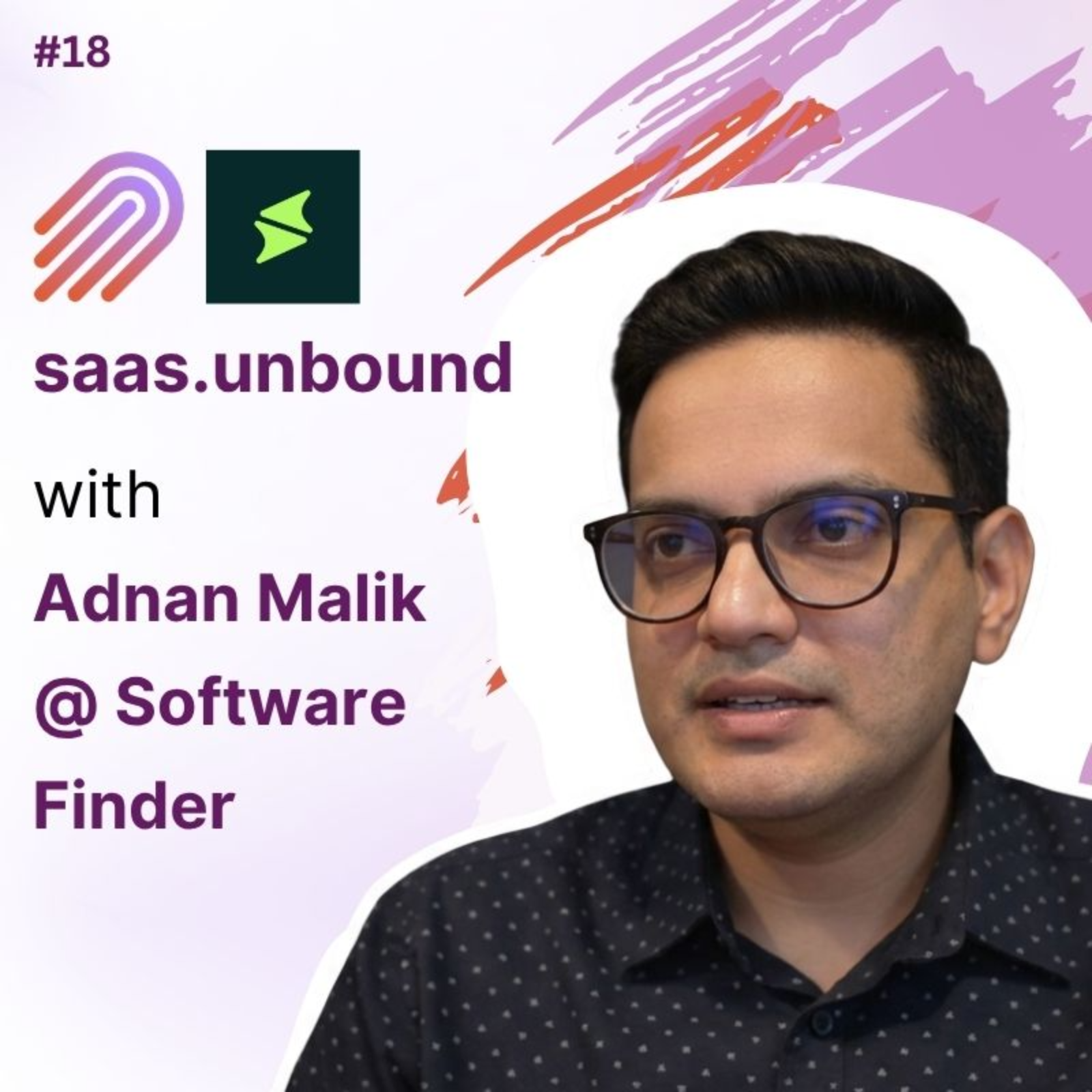
5 years of 100%+ growth with zero funding | Adnan Malik @ SoftwareFinder
May 400:39:29Tap to summarizeAdnan Malik bootstrapped Software Finder from two people in 2019 to 340 employees with 100%+ growth every year — without ever taking outside funding.The engine: a human matchmaking layer between confused software buyers and overwhelmed vendors. We get into why 70-80% of B2B software buyers end up unhappy, how a 120-person content team drove 300% organic growth while competitors collapsed, and the mid-market sales mistake costing SaaS founders their margin.For SaaS founders, operators, and marketers who want to understand how marketplaces actually scale.In this episode: → Why most B2B software buyers end up dissatisfied → The chicken-and-egg problem and the first-mover edge of starting in health IT → How content scaled to 300% organic growth while competitors dropped → Why 90% sales / 10% marketing is the costly default for mid-size SaaS → AEO in practice — and why Adnan calls it "glorified SEO" → The personal cost of scaling from 100 to 340 employees----------- Episode's Chapters -----------0:05 — Introduction & Guest Welcome0:49 — What Software Finder Does & How It Started2:01 — The Business Model: Free for Buyers, Paid by Vendors5:58 — Solving the Chicken & Egg Problem9:21 — 5 Years of 100% Growth — What's Driving It14:43 — SEO Investment & Organic Traffic Wins17:04 — AEO & How LLMs Are Changing Buyer Search20:48 — Biggest Mistakes Vendors Make with Buyers25:22 — Why Brand & Reviews Matter Before the Sale26:32 — Review Manipulation & How to Build Trust30:49 — Founder Burnout & Managing Rapid Growth33:49 — Biggest Win, Biggest Failure & Lessons Learned36:38 — Advice for Bootstrapped Founders TodayAdnan Malik - linkedin.com/in/adnanmalik1 Software Finder - https://softwarefinder.com Subscribe to our channel to be the first to see the interviews that we publish - https://www.youtube.com/@saas-groupStay up to date:Twitter: https://twitter.com/SaaS_groupLinkedIn: https://www.linkedin.com/company/14790796
Transcribe →
A serial bootstrapped SaaS founder's framework | Aaron Gibson @ Hurree
Apr 2700:44:34Tap to summarizesaas.unbound is a podcast for and about founders who are working on scaling inspiring products that people love, brought to you by https://saas.group/, a serial acquirer of B2B SaaS companies. In episode #17 of season 6, Anna Nadeina talks with Aaron Gibson has exited two companies, turned down VC funding, and built Hurree — a data analytics platform — by obsessing over one thing: showing users value before they quit.In this episode: → Why Aaron thinks moats are "a lot slimmer than they used to be" in the AI era → How anonymous pulse surveys exposed a culture problem he didn't know he had → Initiatives that changed team retention → His framework for knowing when to double down on a growth channel — and when to kill it → Why he doesn't expect his team to love their jobs, and what he expects instead → What serial founders actually build toward when they're "not building for acquisition"For bootstrapped founders, operators, and anyone building a team-first SaaS business in a crowded market.----------- Episode's Chapters -----------0:05 — Introduction & What Hurry Solves3:20 — Aaron's Background & Journey into Tech4:45 — The Origin Story of Hurry6:38 — Showing Monster Value Before Users Churn10:12 — Using AI Internally & in the Product11:55 — Measuring AI Success14:04 — AI & Hiring: Is It Changing the Team?17:20 — Building a Strong Culture as a Startup29:22 — Growth Strategy: Bootstrapped & Customer-Obsessed30:37 — Account-Based Marketing & Go-to-Market Strategy34:30 — Building for an Exit — Lessons from Two Acquisitions37:50 — Biggest Win, Biggest Failure & Founder Hacks🎙️ Aaron Gibson - https://www.linkedin.com/in/aaronhurree/ Huree - https://www.hurree.co/ Subscribe to our channel to be the first to see the interviews that we publish - https://www.youtube.com/@saas-groupStay up to date:Twitter: https://twitter.com/SaaS_groupLinkedIn: https://www.linkedin.com/company/14790796
Transcribe →
The wrong way to bring AI into your company | Leo Goldfarb @ Albato
Apr 2000:58:52Tap to summarizesaas.unbound is a podcast for and about founders who are working on scaling inspiring products that people love, brought to you by https://saas.group/, a serial acquirer of B2B SaaS companies. In episode #16 of season 6, Anna Nadeina talks with Leo Goldfarb, co-founder of Albato — a 100% bootstrapped automation and integration platform with 200,000 users and 80 people — after years at Microsoft, IBM, HP, and Booking.com. This episode gets into what it actually takes to build an AI-first product when you're competing with Zapier and nobody on your team has formal AI experience.In this episode: → Why Albato deliberately pivoted away from competing with Zapier head-on — and what they built instead → The AI copilot that kept crashing, and the API redesign they had to do before it could work → How to spot an AI skeptic on your team before they slow everything down → Why 95% of enterprise AI investments fail — and the metric mistake behind it → The case for decentralizing AI across every team, not siloing it in an innovation lab → What "pump your tires before tuning your car" means for founders bringing AI into legacy productsThis one's for founders and operators navigating the gap between AI hype and what it actually takes to ship something that works.----------- Episode's Chapters -----------0:05 — Introduction: Meet Leo from Albato1:35 — From Corporate Life to Co-Founding a Startup6:30 — What Albato Does & 7 Years Bootstrapped10:44 — The B2B Pivot: Albato Embedded18:53 — Building AI Without Dedicated AI Engineers27:38 — Mistake #1: The AI Skeptic on Your Team35:54 — How to Actually Measure AI ROI42:27 — Biggest Win & Biggest Failure at Albato49:07 — Founder Hack: Trust Your Team, Let Go54:10 — Fix Your Foundation Before Adding AILeo Goldfarb - https://www.linkedin.com/in/leo-goldfarb-7b743449/ Albato - albato.com Subscribe to our channel to be the first to see the interviews that we publish - https://www.youtube.com/@saas-groupStay up to date:Twitter: https://twitter.com/SaaS_groupLinkedIn: https://www.linkedin.com/company/14790796
Transcribe →