
Podcast
Sounds of SAND
Hosted by Science and Nonduality · EN
Sounds of SAND invites listeners into a contemplative journey through the infinite cycles of existence - from its raw beauty to its deepest mysteries, from its intricate complexity to its profound wonder. Through intimate conversations, thought-provoking interviews, poetic readings, and carefully curated music, we weave together ancient wisdom with lived experience, creating a tapestry of sound that honors the great questions of being
26episodes
Episodes
Newest firstAll episodes
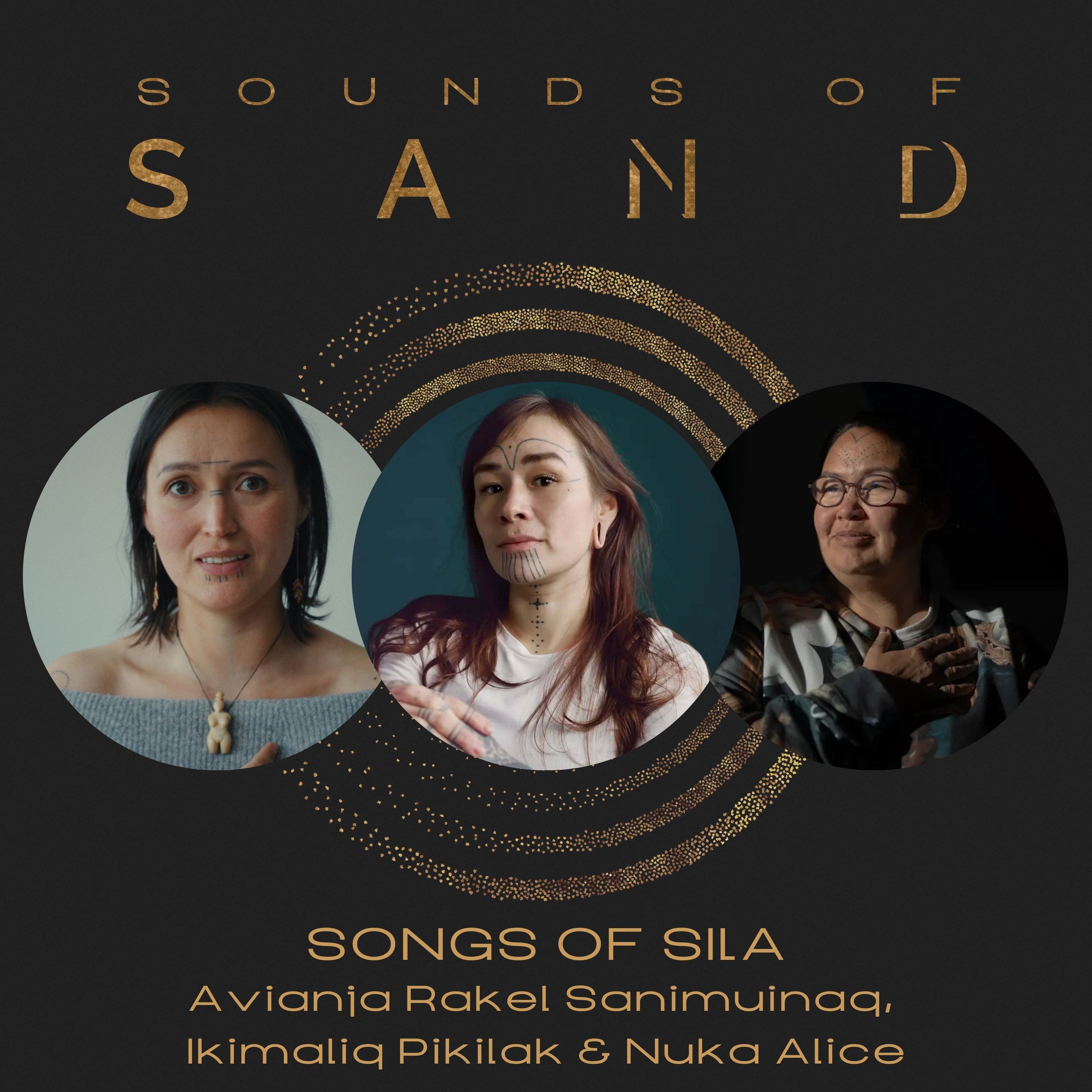
Songs of Sila: Avianja Rakel Sanimuinaq, Ikimaliq Pikilak & Nuka Alice
4w ago01:06:25Tap to summarizeThree Kalaallit Inuit women sit with Zaya and Maurizio Benazzo, who met them while filming on their traditional land in Kalaallit Nunaat (Greenland). Ikimaliq Pikilak carries the revival of Inuit tattooing, Nuka Alice carries drum dance, and Avianja Rakel Sanimuinaq carries her family's lineage of healing. Together they speak about what colonization severed, what gratitude makes survivable in the Arctic, and Sila, the word that holds weather, breath, and the consciousness connecting all living things. Recorded in June 2025 during the launch week of The Eternal Song, this conversation arrives now to celebrate Sila, the new film from Science and Nonduality featuring all three women, streaming at theeternalsong.org/sila. Guests Ikimaliq Pikilak is a Kalaallit tattoo practitioner. Trained in the Western tattoo industry in Denmark, she returned to Greenland and, through the traditionally tattooed mummies of Qilakitsoq, began an eleven-year journey of reclaiming Inuit women's markings: their meanings, their protocols, and their place in healing. Nuka Alice Lund is a drum dancer and teacher from the west coast of Kalaallit Nunaat. Taught by Paulina, who gathered songs from the elders of East Greenland, she works to normalize the use of Inuit drum dance and its songs, teaching adults and carrying the stories, intentions, and patience the practice asks for. Avianja Rakel Sanimuinaq is a healer working within her family's ancestral lineage. Her practice spans soul retrieval, putting souls to rest, and the older responsibility of rebalancing relations between people, land, and the spirit world. Of mixed Inuk and Danish parentage, she speaks in the conversation about finding her roots through her ancestors and helping others use her roots to find their own. Timestamps 00:00 — Introduction: The Eternal Song, the new film Sila, and the July 28–29 live gathering 00:05 — Ikimaliq: the mummies, the gap in memory, and the return of Inuit tattooing 00:07 — What the markings mean: confession, womanhood, gratitude, kinship 00:13 — Nuka Alice: unlearning the colonial narrative, finding the drum at 19 00:19 — Sila: weather, consciousness, the universe we have in common 00:22 — Aviaja: a family of shamans and the responsibility of the angakkoq 00:29 — Trailer: Sila, streaming now at theeternalsong.org/sila 00:31 — Soul sickness, mind sickness, and the body as self-healing land 00:42 — Drum battles: conflict resolution, truth-telling, and lifelong bonds 00:49 — "Start looking in the mirror": finding your own ancestral roots 00:55 — Eyes as pathway to the soul; growing up between Inuk and Danish worlds 01:02 — Loneliness, homesickness of the soul, and dandelion root medicine Resources & Links Watch Sila — streaming now The Eternal Song film series Sila Live Online Gathering, July 28–29, 2026: two days of conversations with guest speakers and Inuit wisdom keepers Ikimaliq Pikilak on Instagram Nuka Alice Lund at Arctic Sounds Avianja Rakel Sanimuinaq on Instagram Contact SAND podcast@scienceandnonduality.com Support the mission of SAND and the production of this podcast by becoming a SAND Member
Transcribe →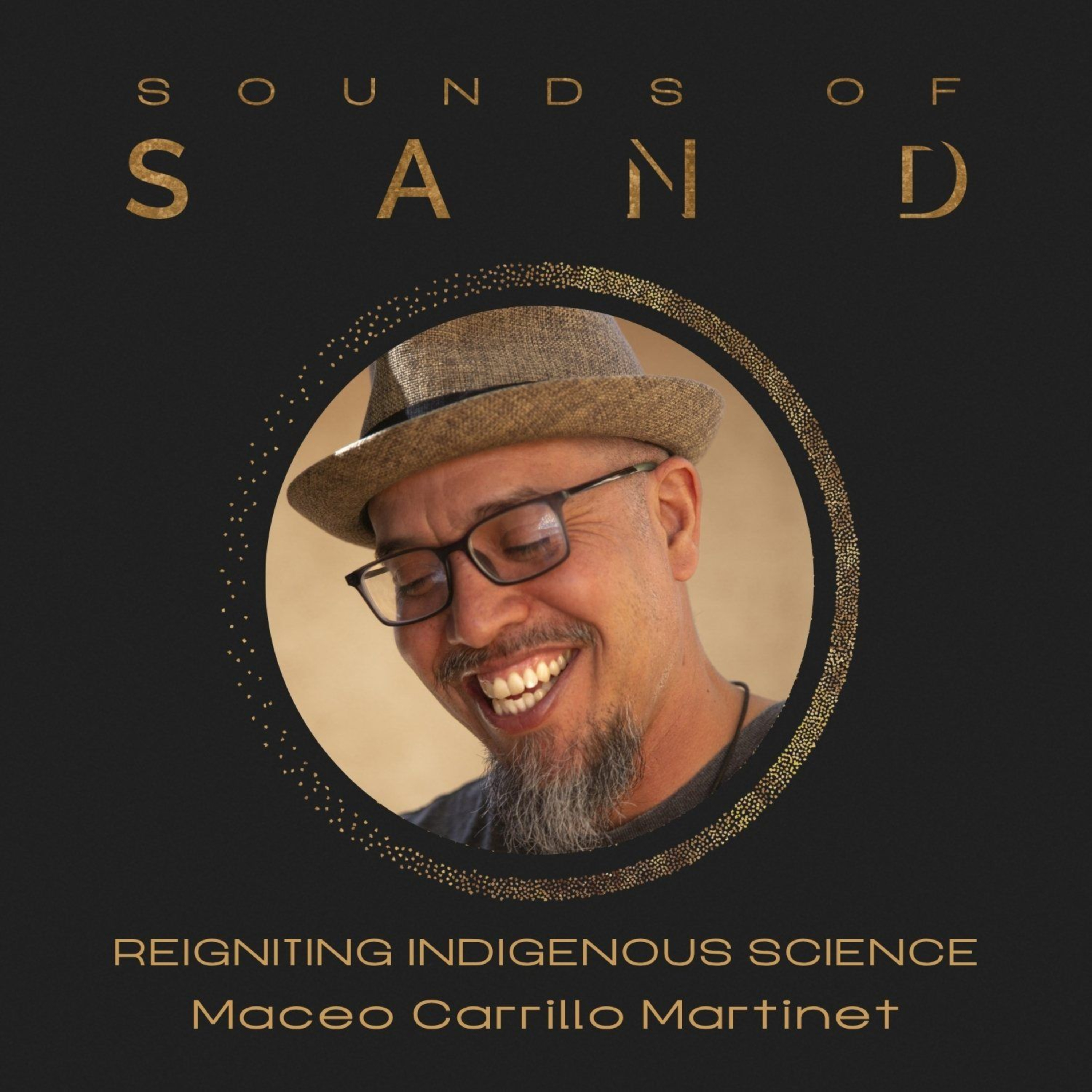
Reigniting Indigenous Science: Maceo Carrillo Martinet
Jul 900:50:10Tap to summarizeRestoration ecologist and author Dr. Maceo Carrillo Martinet joins us to talk about his new book Healing the Land Teaches Us Who We Are: How Indigenous Cultural Resistance Can Restore the Earth, Recover Community, and Create Sustainable Futures. Grounded in over two decades of community-based restoration work across New Mexico, Maceo makes the case that the climate solutions we're searching for already exist and are already being practiced by communities around the world. The book is structured around the four elements — water, earth, fire, and air — treating each not as a category but as a relative with something to say. We move through the memory of ancient Pueblo dry-land farming still visible on La Bajada Mesa, the racism embedded in the history of American fire suppression, and the idea that culture and science were never actually separate to begin with. A conversation about returning to first principles, in a time when the polycrisis makes that return feel urgent. Guest Dr. Maceo Carrillo Martinet is an award-winning restoration ecologist who has spent over 20 years co-creating community-based restoration and education projects across New Mexico and beyond. Since 2008, he has worked with the Partners for Fish and Wildlife Program, assisting private landowners, tribes, cities, and counties. He holds a PhD in biology from the University of New Mexico with a focus on ecology, freshwater sciences, and environmental education. He teaches a hands-on course at UNM on watershed and community restoration. Topics 00:00 — Introduction 00:02 — The Rio Grande community tree planting during COVID 00:06 — Wounds as portals: what the pandemic revealed 00:09 — La Bajada Mesa & ancient Pueblo dry-land farming 00:14 — Redefining Indigenous science as communal science 00:20 — The four-element framework of the book 00:23 — Elements as relatives, not categories 00:26 — Wildfires, racism & the history of fire suppression 00:33 — The Oakland Museum's "Good Fire" exhibit 00:37 — Fire as community energy, fire inside us 00:42 — The metacrisis & the land as teacher 00:47 — Closing: no silver bullets, only relationship Resources & Links Dr. Maceo Carrillo Martinet Website: maceocm.com Healing the Land Teaches Us Who We Are: How Indigenous Cultural Resistance Can Restore the Earth, Recover Community, and Create Sustainable Futures — North Atlantic Books, June 2026 Publisher page & book description at Penguin Random House Read an excerpt Referenced in the conversation Jessica Hernandez — Fresh Banana Leaves Dr. Lyla June Johnston — Architects of Abundance dissertation Stephen Pyne — fire historian, ASU Arundhati Roy — "The pandemic is a portal" Bioneers Conference Contact SAND podcast@scienceandnonduality.com Support the mission of SAND and the production of this podcast by becoming a SAND Member
Transcribe →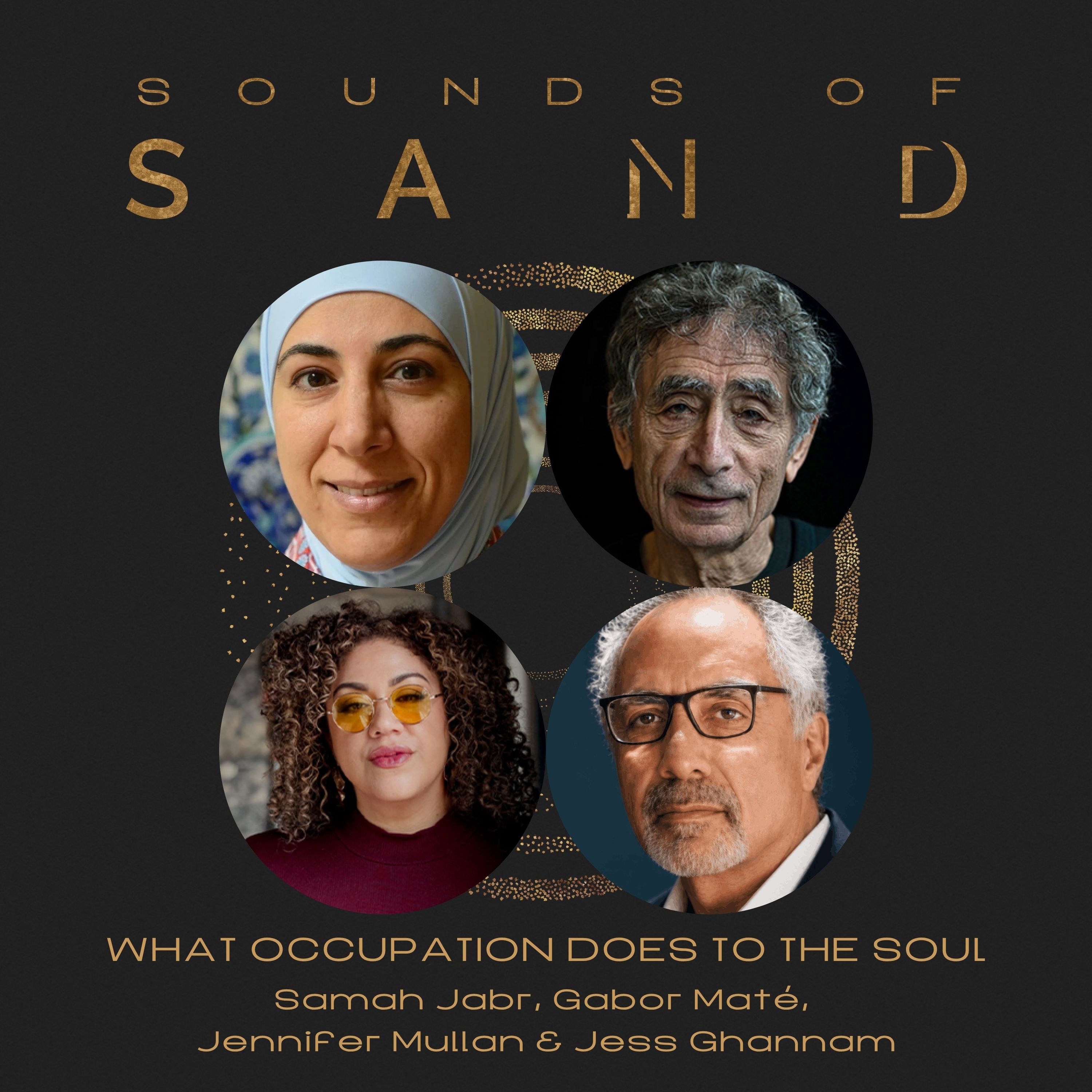
What Occupation Does to the Soul: Samah Jabr, Gabor Maté, Jennifer Mullan, Facilitated by Jess Ghannam
Jul 201:00:42Tap to summarizeGlobal Reverberations of Palestinian Historical Trauma: A SAND Community Gathering with Dr. Samah Jabr, Dr. Gabor Maté & Dr. Jennifer Mullan, facilitated by Dr. Jess Ghannam Join us for a conversation marking the book launch of Radiance and Pain in Resilience, a powerful collection of essays by Palestinian psychiatrist, psychotherapist, and internationally respected mental health advocate Dr. Samah Jabr. We are gathering in the midst of genocide. The massive, deliberate traumatization of an entire people, cheered, funded, and shielded from accountability by Western governments, is unfolding in real time. As Israel’s assault on Gaza continues to annihilate bodies, families, and entire lineages, this conversation refuses to look away. It asks what it is to tend to the psyche under conditions of systematic destruction. Drawing on decades of clinical practice, political analysis, and lived experience under occupation, Dr. Jabr examines the psychological consequences of colonization, displacement, and historical trauma on the Palestinian people. Through personal reflections, case studies, and cultural critique, she challenges dominant Western paradigms of mental health and offers a decolonial, psycho-spiritual framework rooted in dignity, collective care, resistance, and truth. Proceeds from this conversation go directly to Project Hope Palestine, supporting 500 orphaned children living at Al-Baraka orphan camp in Gaza. Guests Dr. Samah Jabr is a psychiatrist practicing in Palestine, serving communities in East Jerusalem and the West Bank. She was formerly Head of the Mental Health Unit within the Palestinian Ministry of Health and is an Associate Clinical Professor of Psychiatry and Behavioral Sciences at George Washington University. She is the author of several books including Behind the Frontlines, Sumud, Sumud in Times of Genocide, and most recently Radiance in Pain and Resilience: The Global Reverberations of Palestinian Historical Trauma. Dr. Gabor Maté is a physician, trauma expert, and bestselling author of The Myth of Normal, In the Realm of Hungry Ghosts, and When the Body Says No. Dr. Jennifer Mullan is a clinical psychologist and the author of the national bestseller Decolonizing Therapy: Oppression, Historical Trauma, and Politicizing Your Practice. She is the founder of Decolonizing Therapy®. Dr. Jess Ghannam (facilitator) is Clinical Professor of Psychiatry and Global Health Sciences at UCSF. Timestamps 00:00 — Welcome & introductions 00:04 — Dr. Jabr's path into psychiatry and writing 00:06 — Dr. Maté's journey from Zionism to Palestine solidarity 00:10 — Dr. Mullan's path & the political nature of the body 00:17 — Why PTSD doesn't capture the Palestinian experience 00:22 — The DSM, pain, and what diagnosis fails to explain 00:30 — Colonial trauma: cumulative, collective, and intentional 00:33 — Collective healing circles over individual diagnosis 00:39 — Rethinking the role of the mental health worker 00:43 — The colonial roots of Western therapy models 00:50 — Fratricide, domestic violence & the fabricated "lesser nation" 00:55 — Closing reflections: existence as resistance Resources & Links Dr. Samah Jabr Radiance in Pain and Resilience: The Global Reverberations of Palestinian Historical Trauma — Dr. Jabr's book Decolonial Mental Health Practices: Clinical and Ethical Insights From Palestine — Part 2, four-part course starting Hosted By SAND (Starting July 5, 2026) Dr. Gabor Maté The Myth of Normal: Trauma, Illness, and Healing in a Toxic Culture Dr. Jennifer Mullan Decolonizing Therapy: Oppression, Historical Trauma, and Politicizing Your Practice Center for Decolonizing Therapy® Support Project Hope Palestine — supporting 500 orphaned children at Al-Baraka orphan camp in Gaza; proceeds from this event go directly here Thinkers referenced in the conversation Frantz Fanon — referenced by Dr. Jabr in her theorization of colonial trauma Dr. Kenneth Hardy — Black psychologist referenced for the concept of the "assaulted sense of self" Dr. Na'im Akbar — author of The Psychological Chains of Slavery, referenced by Dr. Mullan Roberto and Bonnie Duran, Dr. Maria Yellow Horse Brave Heart — referenced for the concept of the "soul wound" and historical trauma Contact SAND podcast@scienceandnonduality.com Support the mission of SAND and the production of this podcast by becoming a SAND Member
Transcribe →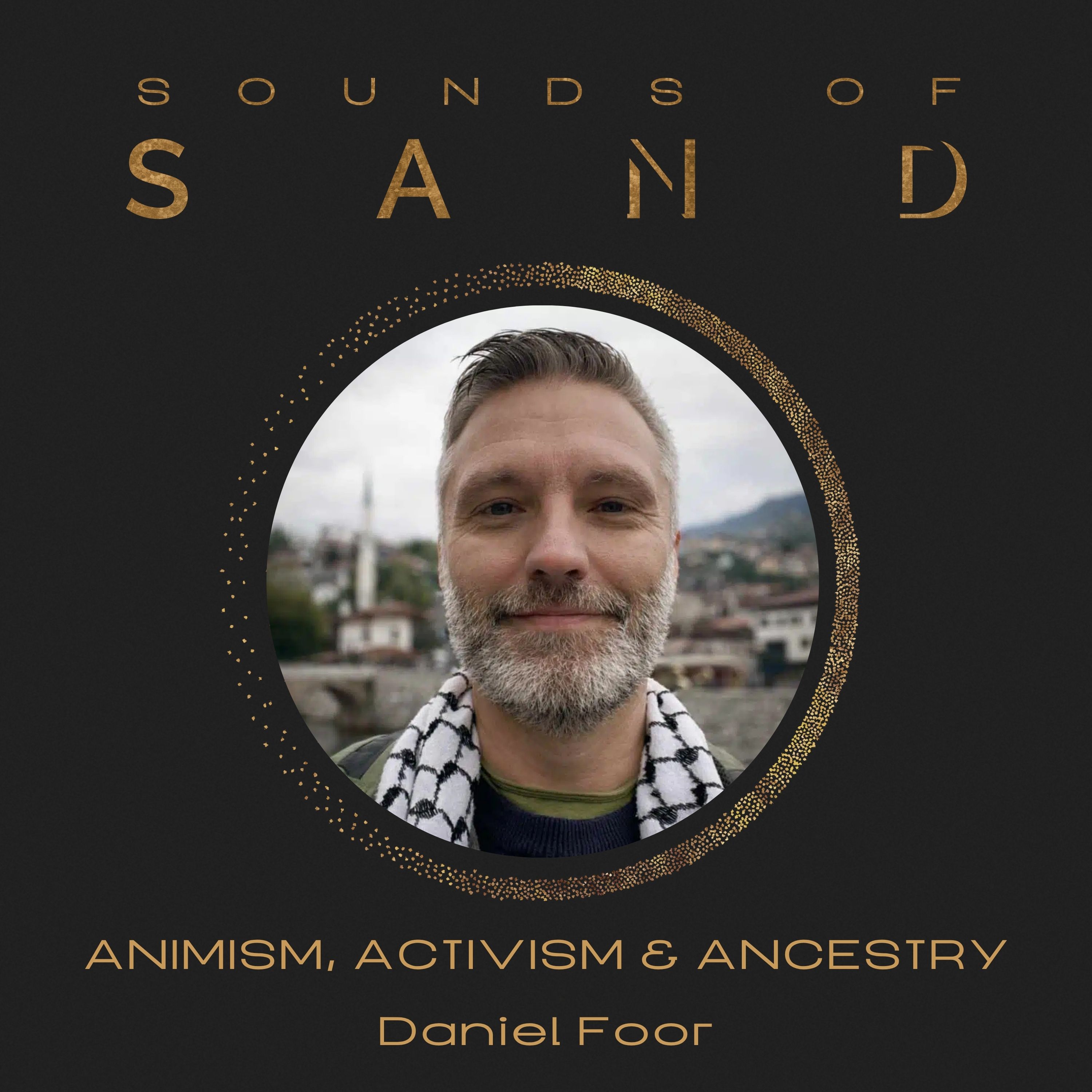
Animism, Activism & Ancestry: Daniel Foor
Jun 2500:52:46Tap to summarizeDaniel Foor returns to Sounds of SAND for a wide-ranging conversation that moves from his own winding spiritual path to the urgent question of why so many spiritual teachers stay silent in the face of injustice. A doctor of psychology, initiated priest in the Yoruba Ifá tradition, and practicing Muslim, Daniel makes the case that animism is the antidote to human supremacy, that Islam is fundamentally a relational and earth-honoring tradition, and that genuine spirituality cannot retreat from the political realities of our time. Along the way, he speaks candidly about ancestral healing, decolonization, the genocide in Gaza, and what it means to become "regular-sized" in a culture built on separation. Topics 00:00 — Welcome back & reconnecting with SAND 00:01 — Daniel's path: shamanism, psychology & many lineages 00:04 — Animism as the antidote to human supremacy 00:09 — Environmental problems are human behavior problems 00:10 — Is Islam animist? Sufism & the heart of the tradition 00:15 — Relationship is not worship: rethinking animism 00:20 — Giving the more-than-human a seat at the table 00:23 — "Blown-out" lineages & relearning relationship 00:26 — Spiritual responsibility & the silence around Gaza 00:31 — When silence becomes a moral failure 00:34 — The differential valuation of human life 00:38 — What Daniel is building: ancestral & earth ritual trainings 00:42 — Why pre-colonial ancestral connection matters 00:43 — Becoming "regular-sized": the antidote to extreme individualism 00:49 — Right relationship, humility & closing reflections Resources & Links Ancestral Medicine — Daniel Foor's website, courses, trainings & practitioner directory Ancestral & Lineage Healing Course Practitioner Directory — ancestral healing in 30+ languages, offered remotely with financial accessibility Ancestral Medicine: Rituals for Personal and Family Healing (book) SAND Films Where Olive Trees Weep The Eternal Song (series of 12 films) Referenced Graham Harvey — scholar of the "new animism," referenced in the discussion of relational worldviews Surah Al-Tin (The Fig) and the animist verses of the Quran — referenced throughout the conversation on Islam as a relational tradition Contact SAND podcast@scienceandnonduality.com Support the mission of SAND and the production of this podcast by becoming a SAND Member
Transcribe →
Tending the Whole: Nkem Ndefo & Staci K. Haines, Facilitated by Rae Abileah
Jun 1800:55:15Tap to summarizeThere is a “false wall” often placed between contemplative life and political action—a story implying that inner peace and outer justice are separate vocations. This imaginary divide exhausts us. In a world facing converging crises, how do those dedicated to healing move beyond the limits of individualized work to support systemic transformation? Join somatics experts and social change practitioners Nkem Ndefo and Staci K. Haines for a conversation introducing The Outer Work Project; an initiative dedicated to bridging trauma healing spaces with sustained social and climate justice movements. This episode explores how to move from personal healing as solely an inward practice into a rooted force for collective change. Guests Nkem Ndefo is an alchemist, disabled Black midwife, facilitator, coach, and strategist. She is the founder of Lumos Transforms and creator of The Resilience Toolkit, a model for embodied healing and liberatory change rooted in neuroscience and social justice. Her work spans the US, UK, and Palestine. Staci K. Haines has been working at the intersections of personal and social transformation for over 30 years through politicized somatics, trauma healing, embodied leadership, and transformative justice. She is the co-founder of Generative Somatics and co-leads The Outer Work Project. She is the author of The Politics of Trauma: Somatics, Healing and Social Justice. Rae Abileah (facilitator) is a social change strategist, Jewish faith leader, and member of the SAND team. Her work spans Beautiful Trouble, The Nature Conservancy Agility Lab, and ALAS, weaving cultural connection, the arts, and frontline community leadership as pathways to healing and climate justice. Timestamps 00:00 — Welcome & opening from SAND 00:03 — Rae opens: breathing, interdependence, and tending the whole amidst brokenness 00:07 — Nkem and Staci introduce themselves: lineage, the politic of suffering, and why this work 00:15 — The false wall: separating spiritual and political 00:16 — Case study: National Domestic Workers Alliance and embodied leadership 00:19 — Case study: LA County health system, anti-racism work, and the word "love" 00:25 — Burnout, overwhelm, and sustaining movement work from the inside out 00:35 — Consent, boundaries, and building a somatic culture in organizations 00:43 — Tearing down vs. building: holding contradictions without collapsing 00:48 — Visioning our yes: what a racially just feminist social democracy could feel like 00:50 — Legacy, small acts, and what we're building together 01:00 — Closing reflections: love as action and trusting our courage Resources & Links Nkem Ndefo Lumos Transforms — website The Resilience Toolkit Lumos Transforms Community (global network) Practicing Liberation — contributing author (North Atlantic Books, 2024) Staci K. Haines Website: StaciHaines.com The Politics of Trauma: Somatics, Healing and Social Justice — North Atlantic Books, 2019 Generative Somatics The Outer Work Project Strozzi Institute Rae Abileah CreateWell Beautiful Trouble ALAS — Ayudando Latinos a Soñar Organizations & concepts referenced National Domestic Workers Alliance — Staci's 7-year embodied leadership program with domestic worker organizers Ai-jen Poo — founder of NDWA — referenced throughout the NDWA story Movement Generation — Just Transitions zine — "From Banks and Tanks to Cooperation and Caring," referenced by Staci as an essential framework for a regenerative economy Terry Tempest Williams — The Glorians (audiobook) — Rae references the passage "We cannot breathe" during the opening generationFIVE — founded by Staci, committed to ending child sexual abuse within five generations using transformative justice approaches SAND Events, Courses and Films What Occupation Does to the Soul: A Global Reverberations of Palestinian Historical Trauma — June 26th, with Dr. Samah Jabr, Dr. Gabor Maté, and Dr. Jennifer Mullan Decolonial Mental Health Practices — Four-part webinar series with Dr. Samah Jabr The Eternal Song film series Contact SAND podcast@scienceandnonduality.com Support the mission of SAND and the production of this podcast by becoming a SAND Member
Transcribe →
Sacred Remembering in Times of War: Dr. Jaiya John (Mshkiki Odeh Inini, Medicine Heart Man)
Jun 1101:25:35Tap to summarizeRecorded live at a SAND Community Gathering (April 2026) Hard times are here, we hunger for voices that can see beyond the fear, beyond the noise, beyond the technologies consuming our attention. We need poets and visionaries. People who remember freedom. Dr. Jaiya John (Mshkiki Odeh Inini, Medicine Heart Man), medicine poet, freedom worker, is one of those voices. He has spent his life gathering words that heal. In this conversation, we enter the beauty, the grief, and the medicine together. We sit with the devastation tearing our world, the sorrows cracking us open, the ancestors still holding us—and the radical insistence that collective freedom is not something we chase. It is something already alive in and between us, waiting to be birthed. Dr. Jaiya John (Mshkiki Odeh Inini, Medicine Heart Man) was orphan-born on ancient Indigenous Anasazi and Pueblo lands in the high desert of New Mexico. He is an ancestral Baba, freedom worker, medicine poet, and the founder of Soul Water Rising—a global mission to eradicate oppression through re-humanization, book donations, and grants to displaced youth. He is the author of numerous books including Freedom: Medicine Words for your Brave Revolution and Fragrance After Rain, and the creator of the podcast I Will Read for You. A former professor of social psychology at Howard University, he holds a doctorate from UC Santa Cruz and has spoken to over a million people worldwide. His Indigenous soul dreams of frybread, sweetgrass, bamboo in the breeze, and turtle lakes whose poetry is peace. Watch the full video version of this conversation. Topics 00:00 Welcome and Land Acknowledgment 02:31 Guest Bio and Introduction 03:51 Opening Blessing and Heart Question 05:10 Reclaiming Anger as Medicine 08:08 Libation Prayer for the World 15:57 Anger Rage and Lifted Veils 20:19 Rethinking War and Remembering Water 25:18 Gather Your People Reading 33:04 Grief Poetry and Inner Wars 36:13 War Wants Us Small 40:30 Soul Conditions That Grow War 42:14 Oxygen of War 44:12 Harvesting Clear Vision 47:05 Ferocious Grief Revival 49:38 How Grief Behaves 51:59 Poetry Against Silence 55:08 From Muteness to Voice 58:33 Artistry as Resurrection 01:03:42 Womanhood as Creativity 01:07:23 History as Sacred Hoop 01:12:45 Composting Harm into Healing 01:16:33 Intentional Living Practice 01:19:22 All These Rivers Choose Love 01:23:01 Blessings and Farewell Dr. Jaiya John — Guest Website: jaiyajohn.com Soul Water Rising — global mission Podcast: I Will Read for You: The Voice and Writings of Jaiya John Freedom Medicine: Words for Your Brave Revolution — book Wildflowers Praying at Midnight — book We Birth Freedom at Dawn — book All These Rivers and You Chose Love — book Fragrance After Rain — book Dr. Jaiya John's YouTube channel — where his poem for the Martyred Poets of Gaza and Palestine is available Substack: jaiyajohn.substack.com Dr. Jennifer Mullan — Referenced Website: decolonizingtherapy.com — Dr. Mullan's "rage doctor" ministry and upcoming work Decolonizing Therapy: Oppression, Historical Trauma, and Politicizing Your Practice — book Therapy is Not Neutral: Dr. Jennifer Mullan & Iya Affo (SAND Podcast episode) The Gaza Monologues — Referenced The Gaza Monologues — ASHTAR Theatre — the global project of 33 young people from Gaza, which Dr. Jaiya John contributed a poem to Support ASHTAR Theatre / Gaza Monologues writers — GlobalGiving Nikki Giovanni — Referenced Nikki Giovanni — Poetry Foundation — the poet whose performance broke Dr. Jaiya John open as a young man and birthed him as a poet nikki-giovanni.com Ancestors Referenced El-Hajj Malik El-Shabazz (Malcolm X) — quoted: "Out of all our studies, history is most qualified to reward our research" Geronimo — Dr. Jaiya John's ancestral grandfather spirit, whose question "What is in your heart?" opens the gathering John Lewis — referenced for "good trouble" and getting in the way of harm Hopi Nation / Turtle Island The concept of Sipapu (the Hopi place of emergence/womb place) is discussed at length as a framework for understanding history as circular, not linear Connect with more talks and films from the SAND film Series The Eternal Song Support the mission of SAND and the production of this podcast by becoming ...
Transcribe →
Awakening in Times of Collapse: Stephan Bodian
Jun 400:40:06Tap to summarizeStephan offers webinars, retreats, videos, books, and spiritual counseling that make profound spiritual teachings and practices accessible to a global audience. He studied and practiced for many years with great masters in the nondual wisdom traditions of Zen, Dzogchen-Mahamudra, and Advaita Vedanta, and in 2001 he received Dharma transmission (authorization to teach) from Adyashanti. In this conversation, recorded to mark the release of his new book Infinite Awakening: A Guide to Nondual Wisdom and the Pathless Path (Shambhala, May 2026), Stephan and Michael explore awakening not as a destination but as an ongoing, infinite process. They move through trauma and trust, the limits of mindfulness, the role of intimate relationship as spiritual path, and how nondual realization speaks — or fails to speak — to the metacrisis we're all living through. The episode closes with a guided "rest and allow" meditation from Stephan. Topics 00:00 — Reconnecting 00:04 — Awakening as a Path 00:10 — Trauma & Trust 00:16 — IFS & Somatic Therapy 00:18 — Intimate Relationships as Spiritual Path 00:21 — Spiritual Bypassing 00:27 — The Limits of Mindfulness 00:33 — Guided Meditation: Rest and Allow by Stephan Resources & Links Stephan Bodian Website: infinite-awakening.org Infinite Awakening: A Guide to Nondual Wisdom and the Pathless Path — Shambhala/Penguin Random House, May 2026 Beyond Mindfulness — referenced in the conversation Meditation for Dummies — Stephan Bodian Psychology Today interview: "Stephan Bodian on Our Innate Drive to Awaken" Referenced teachers and books Adyashanti — website — gave Stephan Dharma transmission; wrote the foreword to Infinite Awakening Ramana Maharshi — Wikipedia — referenced in discussion of awakening ideals Nisargadatta Maharaj — Wikipedia — "I am That"; referenced in discussion of true nature Thich Nhat Hanh — "inter-being" — referenced in discussion of inseparability and nonduality Ram Dass — "go home to your parents" — referenced in discussion of relationships as spiritual mirror Andrew Holecek — I'm Mindful, Now What? (Sounds True, 2024) — referenced as a companion conversation on the limits of mindfulness Glissando of Consciousness SAND Podcast with Andrew Holecek Gabor Maté — referenced in discussion of trauma as universal human condition Psychological Modalities IFS — Internal Family Systems — referenced as a somatic approach that complements awakening EMDR — Eye Movement Desensitization and Reprocessing — referenced alongside somatic therapy SAND The Wisdom of Trauma — SAND film The Eternal Song — SAND film series SAND membership Contact SAND podcast@scienceandnonduality.com
Transcribe →
Mysticism of Sound & Music: Michael Harrison (Encore)
May 2100:59:20Tap to summarizeWe are resharing this episode in memory of Michael Harrison, who passed away on April 17, 2026. He was 67. In this episode, we discuss the life and work of musician and Sufi teacher Hazrat Inayat Khan with composer/pianist and Inayat Khan scholar Michael Harrison. Hazrat Inayat Khan ( July 1882 – 5 February 1927) was an Indian professor of musicology, singer, exponent of the saraswati vina, poet, philosopher, and pioneer of the transmission of Sufism to the West. At the urging of his students, and on the basis of his ancestral Sufi tradition and four-fold training and authorization at the hands of Sayyid Abu Hashim Madani (d. 1907) of Hyderabad, he established an order of Sufism (the Sufi Order) in London in 1914. By the time of his death in 1927, centers had been established throughout Europe and North America, and multiple volumes of his teachings had been published. Michael Harrison (October 24, 1958 - April 17, 2026) forged a new approach to composition through just intonation (the system of tuning based on pure harmonic proportions). His works blend classical music traditions of Europe and North India. He is a Guggenheim Fellowship and NYFA Artist Fellowship recipient. Michael created dedicated tuning systems for many of his works. He pioneered a structural approach to composition in which the proportions of harmonic relationships organically determine other musical elements such as pitch, duration, and dynamics. He also invented the “harmonic piano,” a grand piano that plays 24 notes per octave, documented in the Grove Dictionary of Musical Instruments. Harrison seeks expressions of universality via the physics of sound – music that brings one into a state of concentrated listening as a meditative and even mind-altering experience. At the time of his death he was working on “The Raga Cycle”, a series of albums charting the hours of the day through Hindustani raga. The first installment, Evening Light, was released in March 2026 on Cantaloupe Records. More albums in the series were recorded before he became too ill to continue. They will be released in the years ahead. Donations in his memory can be made to the Michael Harrison Foundation for Just Music at JustMusic.org. Topics 00:00 Podcast Welcome 00:22 Encore Tribute 02:28 Mysticism Book Intro 02:49 Spiritual Music Path 04:32 Conservatory And Tonality 06:37 Daily Raga Practice 12:55 Voice Breath And Wazifa 16:48 Creation As Vibration 20:14 Harmony East And West 24:07 Math Of Consonance 25:32 Temperament Versus Just 28:24 Tuning The Soul Quote 32:03 Piano Retuning Journey 35:54 432 Versus 440 39:56 Music As Universal Religion 46:02 Cage Oliveros Deep Listening 51:16 Commentary And Curriculum 53:08 Teaching Programs 55:26 Closing Thanks And Outro Links Michael Harrison — His Own Work Evening Light: Raga Cycle I — Cantaloupe Music (2026) Seven Sacred Names — Bandcamp (2021) Revelation: Music in Pure Intonation — Cantaloupe Music (2007) From Ancient Worlds — michaelharrison.com Time Loops with Maya Beiser — Cantaloupe Music (2012) Michael Harrison website Episode Music Michael Harrison — "Mureed" from Seven Sacred Names (2021, Cantaloupe Music) Michael Harrison — "Alim: Polyphonic Raga Malkauns" from Seven Sacred Names (2021, Cantaloupe Music) Michael Harrison — "Qadr: Etude in Raga Bhimpalasi" from Seven Sacred Names (2021, Cantaloupe Music) Hazrat Inayat Khan — "Purvi Khal: Kamli Wale Tope Sabkuchhvare" (2022, Primitiv) Michael Harrison – “Sami: The Acoustic Constellation” from Seven Sacred Names (2021, Cantaloupe Music) Hazrat Inayat Khan The Mysticism of Sound and Music — Goodreads Inayat Khan 1909 78rpm Recordings — YouTube Hazrat Inayat Khan — Wikipedia The Inayat Order — Pir Zia Inayat Khan Turning Toward the Heart — SAND Podcast with Pir Zia Inayat Khan Teachers & Lineage Pandit Pran Nath — Wikipedia La Monte Young — Wikipedia Terry Riley — Wikipedia Pir Vilayat Khan — Wikipedia Ustad Mashkoor Ali Khan — Wikipedia Other Composers & Artists Referenced Pauline Oliveros — Center for Deep Listening® — Michael Reiley's teacher; creator of Deep Listening practice Pauline Oliveros — paulineoliveros.us John Cage — Wikipedia — composer, Zen Buddhist, creator of <span style="font-weight: 400;"...
Transcribe →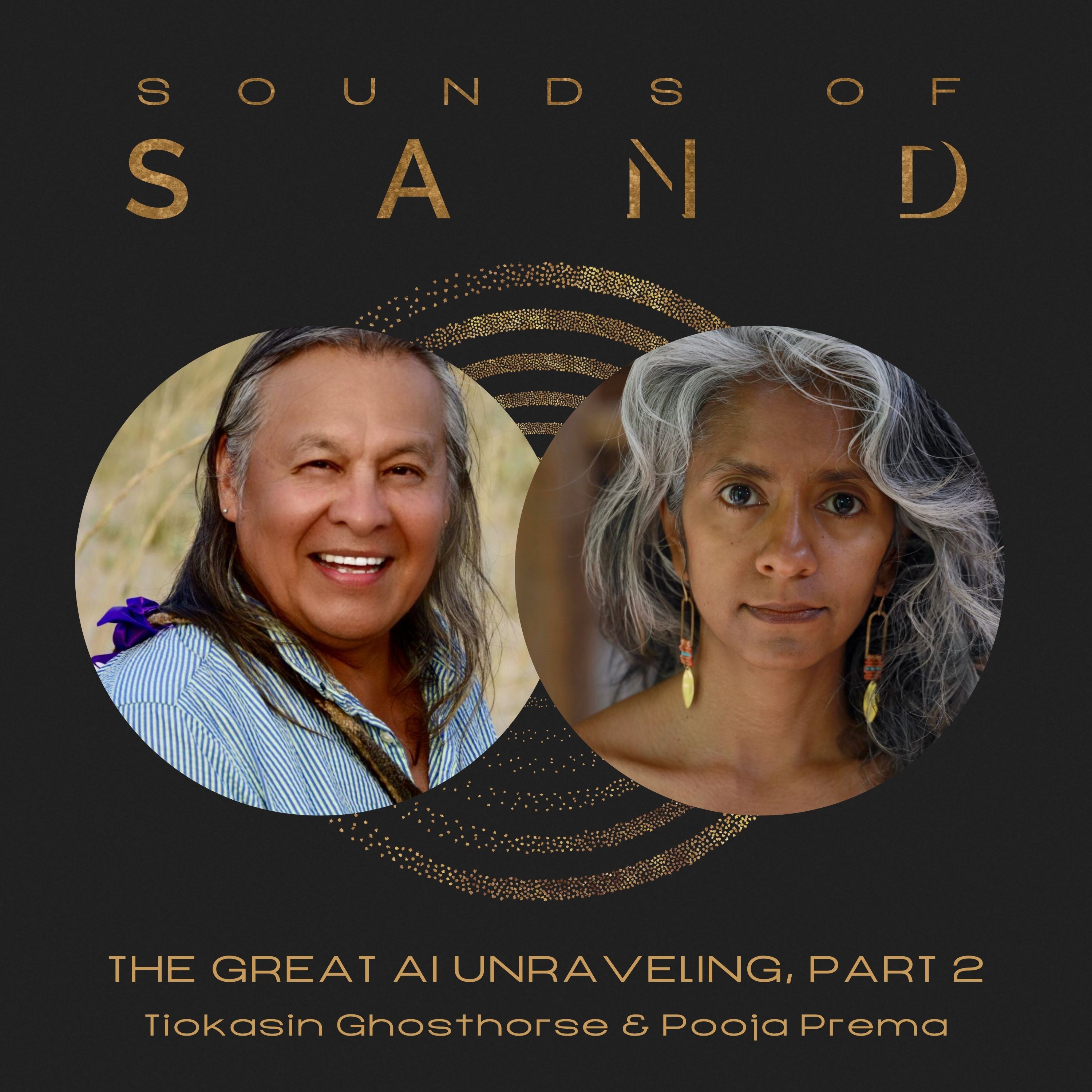
The Great AI Unraveling, Part 2: Tiokasin Ghosthorse & Pooja Prema
May 1401:23:22Tap to summarizeThis is the second gathering in SAND's ongoing series on AI and the human spirit — and it takes a deliberately different rhythm. Rather than asking "is AI safe?" or "will it take our jobs?", Tiokasin Ghosthorse and Pooja Prema invite us to slow down and ask the deeper questions: What cosmology is AI extending? What is intelligence, really? And what happens when the earth-based, organic, living intelligence of Indigenous and ancestral ways of knowing gets replaced by a synthetic one? A spacious, felt-sense conversation that asks us to remember what a living mind actually is. Timestamps 00:00 — Welcome & framing the deeper questions 00:04 — Opening body practice: tuning into felt sense before speaking 00:07 — Tiokasin: AI as the latest ship on the shore — colonization in a new form 00:17 — "There is no artificial intuition" — what technology cannot replace 00:18 — Pooja: the cosmology behind AI — colonial linearity vs. the curving motherboard of Earth 00:25 — AI as the latest savior narrative — and why that story keeps repeating 00:45 — Who owns the data? Who controls the intelligence? The politics of AI 01:05 — AI as therapist, AI replacing elders — the cost to young people and mental health 01:10 — Ghost in the Machine: how to resist empire over the long game 01:15 — Closing: "Our body is the mystic" — an invitation to make this a living inquiry Guests Tiokasin Ghosthorse is a member of the Cheyenne River Lakota Nation and lifelong Indigenous activist. He is the founder and host of First Voices Radio, which broadcast for 33 years before its final episode in July 2025. He was nominated for the Nobel Peace Prize in 2016, is a National Native American Hall of Fame nominee, and a master musician who performs worldwide. He describes himself simply as "a perfectly flawed human being." He is also featured in SAND's film The Eternal Song. Pooja Prema is a first-generation Indian American writer, multidisciplinary artist, and ritualist from Kerala, South India. Her work weaves ecofeminism, decolonial somatic practice, and animistic cosmologies. She is the founder of The Rites of Passage Project and The Ritual Theatre. Her work has been featured at the Kennedy Center, Ebony Magazine, and NPR. Resources & Links Tiokasin Ghosthorse Akantu Intelligence — website First Voices Radio — archive Featured in The Eternal Song — SAND film Pooja Prema Website: poojaprema.com The Rites of Passage Project The Ritual Theatre Instagram: @thecabinwitch Film referenced Ghost in the Machine — documentary directed by Valerie Veatch, Sundance 2026 — traces the buried history of AI and its roots in eugenics, racism, and colonial power. Featuring Tasheka Lavann on how indigenous nations are resisting data centers and how we resist empire over generations. Concepts discussed Conspecific aggression — Tiokasin's term for what happens when a species competes so aggressively over shared resources that it turns on itself Present-phobic language — technology as a tool for escaping the present into an imagined future The real motherboard — Pooja's framing of Earth and cosmos as the original curving, relational, non-linear intelligence that AI's linear grid cannot replicate SAND series context Part 1 of The Great AI Unraveling — with Tristan Harris The Eternal Song — SAND film series Contact SAND podcast@scienceandnonduality.com Support the mission of SAND and the production of this podcast by becoming a SAND Member
Transcribe →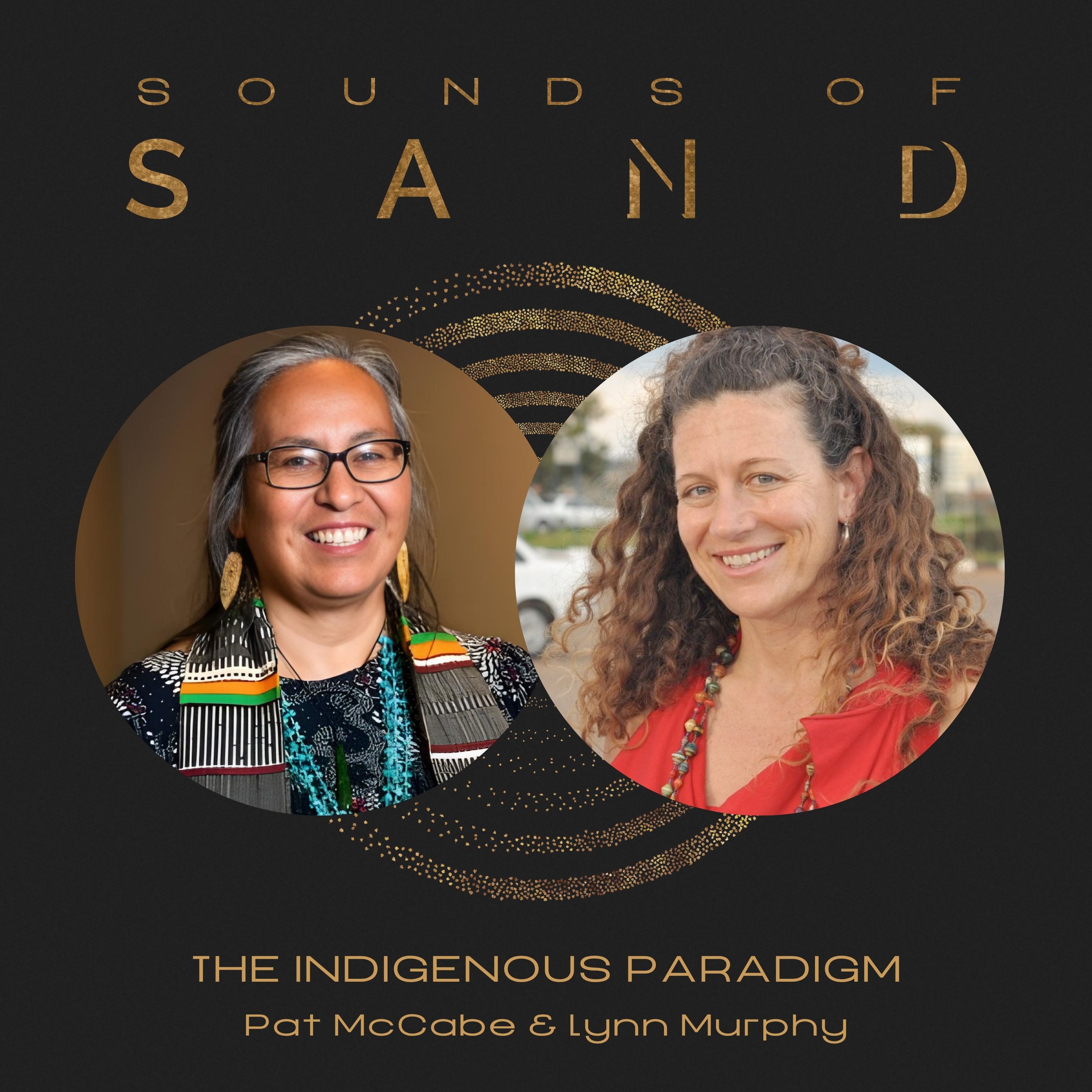
The Indigenous Paradigm: Pat McCabe & Lynn Murphy
May 701:01:47Tap to summarizeOriginally recorded at Science and Nonduality, 2021 Pat McCabe, also known as Woman Stands Shining, is a Diné elder, ceremonial prayer leader, and international speaker adopted into the Lakota spiritual way of life. In this conversation hosted by Lynn Murphy, Pat offers a profound invitation to examine the foundational assumptions of the modern world paradigm and consider what it might mean to live from a genuinely different understanding of what it is to be human. Drawing on teachings from her clan grandfather, her experience of intergenerational trauma and survival, and her deep inquiry into masculine and feminine principles, Pat maps the territory between the glittering world we are leaving and the green world we are entering. The conversation opens in ceremony and closes with a practice: a morning sunrise offering that anyone can begin today. Lynn Murphy is a strategic advisor for foundations and NGOs working in the geopolitical South. She was a senior fellow and program officer at the William and Flora Hewlett Foundation where she focused on international education and global development. She resigned as a ”conscientious objector” to neocolonial philanthropy. She holds an MA and PhD in international comparative education from Stanford University. She is also a certified Laban/Bartenieff movement analyst. This episode is released in celebration of SAND’s new film featuring Pat McCabe, Little Singer, premiering online May 26-28, 2026, as part of the Eternal Song series. Timestamps 00:00:00 — Introduction 00:01:45 — Lynn Murphy introduces Pat McCabe: Diné nation, Lakota spiritual way, Defend the Sacred alliance 00:05:00 — Pat introduces herself through her clans — clan names as places on the earth, worlds more than this one 00:07:00 — Traveling through worlds: the flood, men and women, and the movement from the glittering world to the green world 00:15:00 — The two paradigms: indigenous versus modern world — "I am a human being, relative to all my relations" 00:34:00 — Trailer for Little Singer — premiering online May 26-28, 2026 — theeternalsong.org/littlesinger 00:35:00 — Masculine and feminine principles: power over versus power with, the sacred hoop, and right relations 00:52:00 — A practice for beginning: the morning sunrise offering and the teaching on consent, sovereignty, and honorable relationship with all beings Resources and Links Pat McCabe — Woman Stands Shining Website: patmccabe.net Little Singer — Eternal Song Series Online premiere: May 26-28, 2026 Three-day event with Diné voices Mentioned in the episode Robin Wall Kimmerer — Braiding Sweetgrass (plant sovereignty, honorable harvest) Lakota spiritual traditions — Seven Generations teaching Diné (Navajo) Nation — Long Walk history, Bosque Redondo concentration camp, 1860s Residential boarding school history — US government and church collaboration Masculine and feminine principles in economics and right relations — ongoing inquiry in Pat's work Episode artwork “Woman Stands Shining” by Namita Contact SAND podcast@scienceandnonduality.com Support the mission of SAND and the production of this podcast by becoming a SAND Member
Transcribe →