
Podcast
The Autism Mom Coach
Hosted by Lisa Candera · EN
Do you sometimes feel like your life has been hijacked by Autism?
If so, this is the podcast for you. The Autism Mom Coach is a podcast for moms who feel overwhelmed, afraid, and sometimes powerless as they raise their child with Autism. Join your host, Lisa Candera, Certified Life Coach, lawyer, and (more importantly) full-time single mom to a teenage boy with Autism as she shares cognitive-based tools and trauma-informed strategies you can use to feel better now and transform your relationship with Autism and special needs parenting. The truth is, Autism is not in charge of your life, YOU are, and you have more power than you think. Visit theautismmomcoach.com for more information
25episodes
Episodes
Newest firstAll episodes
Back-to-School Series: Three Mindset Shifts to Set Yourself Up for Success This Year (Ep. 210)
1w ago00:27:19Tap to summarizeAs the new school year approaches, most autism parents focus on the tactical preparation: reviewing the IEP, adjusting sleep schedules, and buying school supplies. Those steps matter, but they are only half of what you need. In this first episode of the Back to School series, Lisa talks about the other half (preparing yourself) and the mindset that shapes how much energy you carry into every IEP meeting, every phone call from school, and every decision you make this year.In this episode, you'll learnWhy tactical preparation is only half of what you need before the school year begins, and why the mindset you bring to it matters just as much.How bracing yourself for everything that could go wrong keeps your nervous system stuck in fear and drains the energy you will need once the year is actually underway.The three mindset shifts (moving from bracing to acceptance, moving from fear to focus, and then practicing both again and again) that help you move through the school year with more resilience.
Transcribe →How to Overcome End-of-Summer Burnout for Autism Moms (Ep. 209)
2w ago00:17:51Tap to summarizeIf you are counting down the days until school starts, feeling short-tempered and exhausted, and then feeling guilty on top of it, you are experiencing end of summer burnout, and you are not alone. In this episode, Lisa Candera explains where autism mom burnout actually comes from and why the constant role of being your household's cruise director and emotional regulator drains your tank. She offers practical, low-effort ways to refill that tank and close out the summer without the pressure to make it perfect.In this episode, you'll learn:You will learn why burnout comes from the energy required to run your household nonstop, not simply from the number of things you are juggling as an autism mom.You will learn how taking space, letting other people manage their own relationships and feelings, and refusing to layer guilt on top of your rest can make that rest genuinely restorative.You will learn why dropping the pressure for the end of summer to look a certain way, and choosing simple, easy wins instead, will leave you with more energy heading into the school year.Resources mentioned:Sun, Moon, and Stars Autism Awareness Night at Quassy Amusement and Waterpark in Middlebury, Connecticut, on September 4, 2026 from 5:30 PM to 9:30 PM. This is a sensory-friendly event open to autism families, special needs families, and their allies. Registration is required through Sun, Moon, and Stars, as the event is not open to the general public.
Transcribe →Why High-Functioning Autism Is Confusing (Ep. 208)
4w ago00:18:49Tap to summarizeIf your child speaks fluently, does well in school, and can hold a conversation with any adult in the room, you have probably heard someone say, "At least he's high functioning." And you have probably also lived the part nobody else sees, the meltdown in the car, the falling apart over a small change in plans, the bedtime routine you are still walking through with a teenager. In this episode, Lisa explains why the high-functioning autism label is so confusing for parents, what is actually happening underneath it, and why the gap between what people expect from your child and what you experience at home is not a sign that you are getting it wrong.In this episode, you'll learn:Why abilities in autistic children develop unevenly, so a child can have advanced language or an above average IQ and still have very little capacity to handle a change in plans.How language, intelligence, and masking hide your child's struggles from teachers, family, and the general public, and sometimes from you as well.Why autism is never the only thing at the table, and how ADHD, anxiety, sleep, puberty, and hormones all shape what your child is able to do on any given day.
Transcribe →Autism Meltdown or Manipulation? 3 Ways to Tell the Difference (Ep 207)
Jul 900:19:18Tap to summarizeIs your autistic child having a meltdown or manipulating you to get what they want? The difference between an autism meltdown and manipulation is rarely as clear as parents are led to believe, especially when the behavior involves yelling, refusing, demanding, aggression, or a complete loss of control. In this episode, I share three ways to evaluate whether your child is melting down or manipulating you and explain why your response matters more than choosing the perfect label.In this episode, you’ll learn:What happens after your child gets the item or outcome they were demanding.How to tell whether your child is still in control of their behavior.Why the absence of a possible payoff may signal genuine distress.You may never know exactly where manipulation ends and an autistic meltdown begins. The more useful question is whether your response helps your child regain control or adds more pressure to an already difficult situation. When you manage your own reaction first, you are better able to respond with focus, consistency, and effectiveness.
Transcribe →Will My Child With Autism Outgrow Meltdowns? The Answer is in the Question
Jun 3000:15:54Tap to summarizeWhether you have a three-year-old and you're hoping to nip it in the bud or a teenager you assume should know better by now, the same question keeps surfacing: will my child outgrow meltdowns? In this episode Lisa answers it head-on by separating tantrums, which children do outgrow, from autism meltdowns, which are neurological and don't simply disappear with age.In this episode, you'll learn:Why tantrums, which are behavioral and goal-driven, are outgrown as kids mature, while meltdowns, a neurological response to overwhelm, are not.Why the expectation that a child "should" have outgrown meltdowns sets parents up to feel like failures, and how to hold acceptance and skill-building at the same time.How meltdowns evolve rather than vanish, sometimes turning inward as anxiety or withdrawal and sometimes increasing as the demands of age rise.Resources mentioned:Free Training: Reduce Meltdowns by 50% This WeekSchedule a consultation with LisaThe Autism Mom CoachRelated episodes:Autism Meltdowns: The #1 Mistake Parents Make (Ep #200)Autism Tantrums vs. Meltdowns
Transcribe →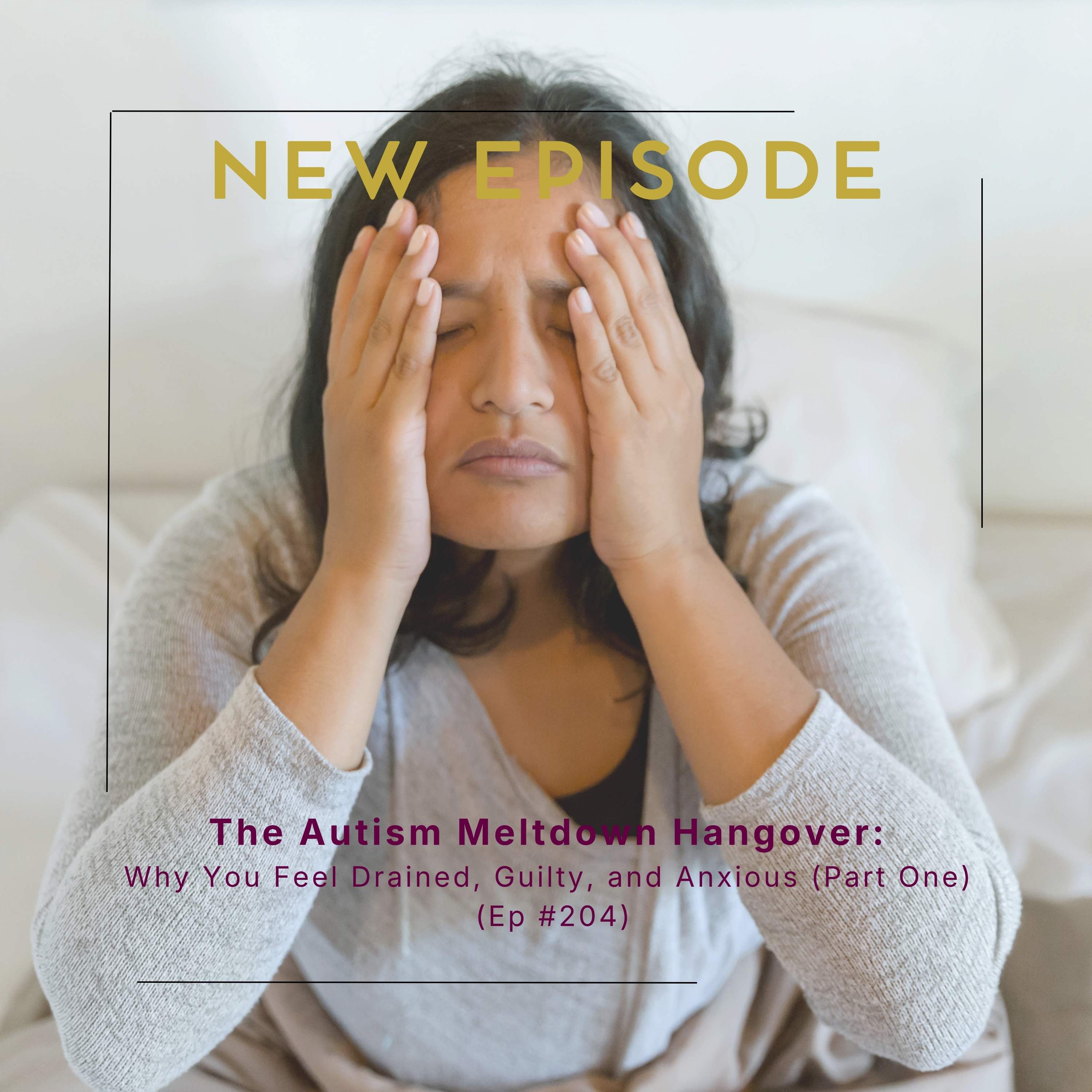
Ep. 205 Meltdown Hangover: 10 Ways to Recover After an Autism Meltdown
Jun 1800:20:59Tap to summarizeLast week Lisa named the meltdown hangover. This week she gets practical. In this episode of The Autism Mom Coach, the second of a two-part series, Lisa shares ten specific, science-backed things you can do to avoid, interrupt, or shorten the emotional and physical fallout that lingers after a meltdown. From creating space and getting outside to cold water, movement, hydration, and the way you talk to yourself, these are concrete tools to help your own nervous system reset, because staying calm as an autism mom is real work, not a personal failing.In this episode, you'll learn:Practical, body-based ways to interrupt your stress response after a meltdown, including stepping away without a dramatic exit, getting outside, cold water on your face or wrists, movement, hydration, and a protein snack.Why sensory reduction and comfort measures matter as much for you as they do for your child, since your nervous system as an autism mom is under regular strain and deserves the same care you give your kid.How thought redirection and constructive self-talk keep you from spiraling back into the stress response, including the "I'm having the thought that" technique and growing a kinder inner voice.Resources mentioned:Free Training: Reduce Meltdowns by 50% This WeekSchedule a consultation with LisaThe Autism Mom CoachDr. Kristin NeffRelated episodes:The Meltdown Hangover, Part One (Ep #204)The #1 Meltdown Mistake Autism Parents Make (And How to Stop) (Ep #200)The Autism Behavior Barometer: A Better Way to Understand Meltdowns (Ep #130)
Transcribe →Meltdown Hangovers: Why Autism Moms Feel So Burnt Out After a Meltdown (Ep. #204)
Jun 1000:11:58Tap to summarizeThe meltdown ends, but for autism moms, the aftermath lingers. In this episode of The Autism Mom Coach, the first of a two-part series, Lisa names what she calls the meltdown hangover: the emotional, mental, and physical fallout that can outlast the meltdown itself by hours, days, or even weeks. Drawing on her own experience with homework meltdowns and her son's perfectionism, she walks through the telltale signs (exhaustion, shame and guilt, rumination, anxiety, and grief) and explains why, unlike a regular hangover, this one runs on your own thoughts and can stretch on as long as you let it. The goal this week is simple awareness, the necessary first step before next week's strategies for recovery.In this episode, you'll learn:What a "meltdown hangover" is and its five common signs (exhaustion, shame and guilt, rumination, anxiety, and grief), drawn from Lisa's own life and her coaching clients.Why meltdown hangovers can last far longer than a regular hangover, since the symptoms are largely your own thoughts, and how staying stuck in them can keep you chronically depleted between meltdowns.A set of reflective questions to help you identify your personal hangover symptoms, from your energy and emotions right afterward to how kind or scolding your inner voice is.Resources mentioned:Free Training: Reduce Meltdowns by 50% This WeekSchedule a consultation with LisaThe Autism Mom Coach
Transcribe →Ep. 203: How to Handle Autism Meltdowns Like a Pro | Before, During, and After Autism Meltdown Strategy
May 2700:13:45Tap to summarizeAutism meltdowns can take over your home, your schedule, and your confidence as a parent. In this episode of The Autism Mom Coach Podcast, Lisa Candera shares the exact Before, During, and After process she developed through years of parenting her autistic son and coaching autism moms through meltdowns.Most parents get stuck in the same cycle: trying to prevent every meltdown and then scrambling to shut one down as quickly as possible once it starts. The problem is that urgency often adds fuel to the fire. In this episode, Lisa explains how preparation, a clear plan, and post-meltdown reflection can completely change the way you handle autism meltdowns.If you have ever felt exhausted, reactive, or like you are walking on eggshells waiting for the next meltdown, this episode gives you practical strategies you can use immediately.In this episode, you'll learn:✔ Why meltdown preparation starts before behaviors begin✔ How your own triggers affect your responses✔ What to do during an autism meltdown to reduce escalation✔ Why urgency and panic often make meltdowns worse✔ How to recover after a meltdown without carrying guilt for days✔ Lisa’s Before, During, and After meltdown frameworkAbout Lisa Candera:Lisa Candera is founder of The Autism Mom Coach, mother to an 18-year-old son with autism, and has coached over 100 autism moms. She teaches emotional regulation, practical meltdown support strategies, and tools that help parents stay steady during some of autism parenting’s hardest moments.
Transcribe →Ep. 202: Sneaky Ways You May Be Escalating Your Autistic Child's Meltdowns
May 2000:13:34Tap to summarizeAre you accidentally making your autistic child’s meltdowns worse without realizing it? In this episode of The Autism Mom Coach Podcast, Lisa Candera shares common parenting responses that can unintentionally escalate or prolong autism meltdowns.During meltdowns, parents often react from stress, urgency, and survival mode. Talking too much, making threats, changing tone, using sarcasm, or reacting emotionally can add more fuel to an already overwhelmed nervous system. Lisa breaks down the subtle ways parents contribute to escalation and shares practical shifts that support co-regulation and emotional steadiness.If you are parenting an autistic child and feel exhausted, reactive, or unsure during meltdowns, this episode provides actionable strategies you can start using immediately.In this episode, you'll learn: ✔ Why talking too much during a meltdown increases overwhelm ✔ How threats and consequences can intensify escalation ✔ Why your tone and nervous system matter more than your words ✔ How sarcasm and frustration affect autistic children ✔ The role of emotional reactions during meltdowns ✔ Practical ways to support regulation during autism meltdownsAbout Lisa Candera: Lisa Candera is founder of The Autism Mom Coach, mom to an 18-year-old son with autism, and has coached over 100 autism moms. She teaches emotional regulation, practical meltdown strategies, and support for moms navigating the realities of autism parenting.
Transcribe →Ep. 201: The Most Important Autism Meltdown Strategy
May 1300:11:31Tap to summarizeIn this episode, Lisa Candera breaks down the single most important skill autism moms need during meltdowns: learning how to regulate themselves first.After years of trying to prevent every autism meltdowns, Lisa shares the shift that changed everything for her parenting and coaching: moving from control and prevention to preparation and co-regulation.Lisa explains the concept of the “Solid Object,” a framework that helped her navigate severe dysregulation, aggression, and self-harm during her son’s teen years.In This Episode, You’ll LearnWhy focusing only on meltdown prevention puts unrealistic pressure on autism momsHow your nervous system impacts your child during dysregulationWhat it means to become the “Solid Object” during a meltdownWhy staying perfectly calm is not the goalHow co-regulation can reduce meltdown intensity and duration over timeWhy autism moms need support focused on themselves, not just behavior strategiesThe difference between controlling behavior and influencing behavior through grounded leadershipLisa’s TakeawayFor years, I believed the answer was finding the perfect strategy to prevent every meltdown.What actually changed my life was learning how to regulate myself while my son was dysregulated.That shift helped me stop escalating situations and start parenting from a grounded place instead of fear and urgency.Links MentionedThe Autism Mom Coach Website:https://theautismmomcoach.comSchedule a Consultation with Lisa Candera:https://talkwiththeautismmomcoach.as.me/Free Training: Reduce Autism Meltdowns By 50% This WeekGet it here:https://linktr.ee/TheAutismMomCoach
Transcribe →