Podcast
The Formula
Hosted by PILLAR Performance · EN
What separates elite performers from the rest? The Formula, by PILLAR Performance, distils the insights, science, and strategies from the top of the field - so you can apply them.
12episodes
Episodes
Newest firstAll episodes
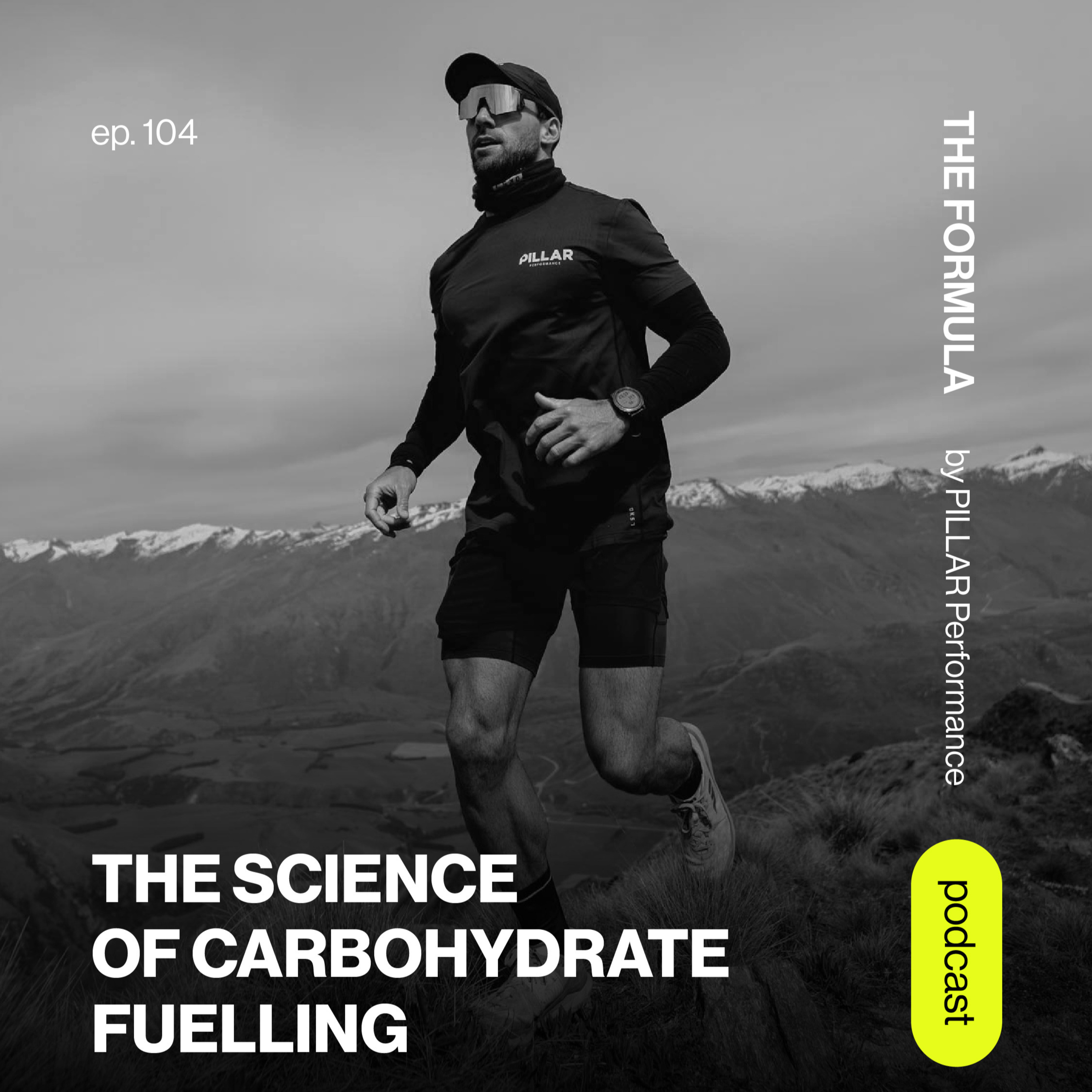
The Science of Carbohydrate Fuelling
3w ago01:24:14Tap to summarizeThe Formula by PILLAR Performance - Paul BoothPhD nutritionist Paul Booth - the coach behind both 2025 UTMB winners - sits down with Dr. Dan Plews to challenge some of the most widely accepted conventions in endurance nutrition. Why the push toward 120g of carbohydrate per hour is getting ahead of the evidence. Why your gut, not your fitness, is often the deciding factor on race day. And how elite ultra runners are actually fuelling in competition.Timestamps:00:00 - Introduction to carbohydrate fuelling debates in endurance sports00:13 - Paul's balanced approach: science-driven carbohydrate recommendations00:43 - Variability among athletes: from 70 to 110 grams per hour02:25 - Paul's background: from film industry to elite sports nutrition09:28 - Elite athletes like Tom Evans: metabolic characteristics and genetic advantages13:02 - The process of working with elite athletes: brief, data analysis, lab testing15:04 - Nutritional strategies: setting carbohydrate and fuelling goals18:56 - Cycling carbohydrate intake to match terrain and effort22:38 - Real-world studies on carbohydrate intake: from 70 to 120 grams per hour28:56 - Lab testing on Tom Evans' carbohydrate metabolism32:48 - The role of carbohydrate loading: optimal duration and timing41:28 - The aim of Paul's PhD: understanding ultra runner metabolism48:14 - The effect of carbohydrate ratios on absorption and performance52:18 - Study results: GI issues linked to higher carbohydrate doses60:47 - How dual carbohydrate strategies improve oxidation and reduce gut issues63:08 - Debunking outdated myths: the inefficacy of 2:1 carbohydrate ratios75:02 - Risks of over or under fuelling during races80:30 - Case study: an elite runner's nutritional strategy and race success83:01 - Final thoughts: science-guided, adaptable fuelling strategiesConnect:Paul Booth: instagram.com/ultra.endurance.nutritionistDr. Dan Plews: instagram.com/theplewsShop: pillarperformance.shopInstagram: instagram.com/pillarperformanceStrava: strava.com/clubs/1108245
Transcribe →
Unlocking Performance & Longevity: Insights from Ali Day and Scientific Research
May 2100:58:43Tap to summarizeDiscover the secrets behind elite endurance performance, aging muscle health, and innovative training strategies shared by renowned Surf Ironman champion Alastair Day and sports scientists. This episode explores practical tips for optimising training, nutrition, inflammation management, and longevity in sport.In this episode:Ali's transition from peak competitive Ironman racing to retirement and maintaining a healthy lifestyleKey nutritional strategies for endurance athletes, including carbohydrate loading and fuelling during multi-hour racesThe science of mitochondrial health, aging, and how consistent aerobic exercise can reverse mitochondrial declineCombining altitude and heat training for enhanced hematological benefitsManaging inflammation and injury with natural anti-inflammatory supplementsPractical advice for young athletes: small habits that lead to consistent, long-term successThe impact of mitochondrial plasticity on performance and agingInsights into how different training environments and nutrition can extend athletic longevityTimestamps: 00:00 - Introduction to Ali's illustrious career and ongoing contributions02:29 - Ali shares first impressions of retirement and current training routine04:12 - The science behind carbohydrate fueling and recent research shifts06:43 - The implications of high-carb intake for recovery versus performance08:43 - Nutrition strategies in surf Ironman racing: personal experiences and adaptations11:02 - The debate over keto versus high-carb diets for endurance athletes13:02 - How body size and session intensity influence carbohydrate needs15:07 - Typical race durations and fueling strategies in Ironman and series racing16:54 - The evolution of nutritional flexibility and race-day adaptability20:22 - The role of mitochondrial health in aging and endurance capacity22:55 - How aging affects mitochondrial efficiency and physical performance25:20 - Peak physical capacity in aging athletes and mitochondrial plasticity27:27 - The importance of early aerobic base development during puberty28:37 - The concept of mitochondrial plasticity and response to environmental stressors31:43 - Study insights on heat and altitude training benefits for endurance athletes35:27 - Practical applications: layering during altitude training and cost considerations39:19 - Inflammation management, injury prevention, and natural supplement strategies44:43 - Natural anti-inflammatory compounds: Kirkman and curcumin advances50:41 - The importance of small, controllable habits for athletic longevity55:08 - Integrating nutrition and recovery strategies for long-term health57:25 - Final thoughts on investments in athlete health and future trendsAli Day: https://www.instagram.com/alastairday/Dr Dan Plews: https://www.instagram.com/theplews/PILLAR: https://www.instagram.com/pillarperformance/Shop online: https://pillarperformance.com
Transcribe →
The Athlete's Guide to Iron: Testing, Deficiency and Performance - Rachel Arthur
Mar 501:08:00Tap to summarizeIn this episode, Rachel Arthur demystifies the complex role of iron in the body, emphasizing its importance for athletes and the general population alike. Whether you're curious about testing, supplementation, or understanding your blood markers, this conversation offers practical insights grounded in science.Key Topics Covered:The critical functions of iron in oxygen transport, energy production, and immunityWho is at risk of iron deficiency, including athletes, women, and childrenThe unique challenges in iron testing: timing, fasting, and interpreting blood markersThe nuanced roles of transferrin, transferrin saturation, and ferritin in assessing iron statusGenetic factors influencing iron absorption, such as hereditary hyperabsorptionPractical strategies for iron supplementation, including diet and supplement timingThe potential pitfalls of iron overload and the importance of personalized testingThe fascinating and somewhat mysterious process of ferritin regulation and releaseRecommendations for routine blood testing and interpreting results accuratelyTimestamps:(00:00) - Introduction to Rachel Arthur and her expertise in iron metabolism(02:11) - Why iron is a "minx among minerals" and its multifaceted roles(04:05) - Who is most at risk of iron deficiency: women, children, athletes(05:46) - Common losses of iron during exercise and sweating(07:04) - Understanding exercise-related hemolysis ("foot strike") and its impact(08:39) - Challenges of testing children for iron status and dietary strategies(11:06) - How infants historically met iron needs through breast milk and organ meats(12:38) - How to approach supplementation safely with blood testing(14:11) - The impact of exercise-induced inflammation on iron regulation(17:34) - The role of inflammation, ferritin, and the timing of blood tests(20:33) - How to interpret transferrin, saturation, and ferritin levels(22:30) - Ferritin as an inflammation marker and its complex regulation(27:00) - The detailed process of iron transport and storage in the body(33:21) - The importance of individual interpretation of iron markers(40:00) - Genetic factors influencing iron absorption ("hyperabsorber" genes)(44:48) - Why ferritin in blood may not reflect actual iron stores(50:03) - Setting blood test benchmarks and understanding normative values(53:34) - Strategies for iron supplementation in athletes: diet, timing, and doses(58:04) - The circadian rhythm of iron uptake and best practices for intake(60:30) - Summary of practical steps for blood testing and iron management(61:43) - The dangers of self-supplementation without testing(62:44) - Resources and where to find more from Rachel Arthur(63:43) - Rachel’s personal supplement routine and ongoing health practicesRachel Arthur: https://rachelarthur.com.au/Dr Dan Plews: https://www.instagram.com/theplews/PILLAR: https://www.instagram.com/pillarperformance_/ Shop online: https://pillarperformance.shop/
Transcribe →
Brad Beer - Unlocking the Secrets of Sports Injuries
Jan 1301:02:15Tap to summarizeDr. Dan Plews sits down with Brad Beer, founder of POGO Physio, to unpack the real story behind sports injuries and aging athletes. They explore the psychology of injury recovery, how hormonal changes affect tendon health, and why traditional rehab approaches are being reimagined. Brad shares practical insights on strength and conditioning, the role of collagen supplementation, and why maintaining muscle mass matters more than you think. If you're an athlete dealing with lower limb issues or simply want to stay healthy as you age, this conversation will change how you approach performance and recovery.Key Takeaways:Why understanding athlete psychology is crucial for effective treatmentThe vital role of strength and conditioning in injury preventionHow hormonal changes impact tendon health as you ageBenefits of collagen supplementation for tendon recoveryThe importance of tailored rehabilitation for optimal outcomesHow strength training improves running performanceWhy maintaining muscle mass matters for aging athletesChapters00:00:00 Introduction and Background00:03:00 Understanding Athlete Psychology00:09:00 Strength and Conditioning00:15:00 Hormonal Impact on Tendon Health00:21:00 Collagen Supplementation Benefits00:27:00 Maintaining Muscle Mass00:33:00 Evolving Sports Physio PracticesDr Dan Plews: https://www.instagram.com/theplews/PILLAR: https://www.instagram.com/pillarperformance_/ Shop online: https://pillarperformance.shop/
Transcribe →TSS ep 4: Unlocking High Performance: Short Intervals, Micronutrition, Vitamin D & Antioxidant Adaptation
Dec 300:43:56Tap to summarizeIn this episode, Dr. Dan Plews breaks down the science behind true endurance performance. We unpack the physiological demands of racing in extreme heat, how it accelerates carbohydrate use and glycogen depletion, and why athletes need smarter, more personalised fueling. Dan also dives into short-interval training—how micro intervals can replace long, low-intensity sessions and why they’re a game-changer for anyone training indoors or on limited time.We also explore the role of micronutrition in driving training adaptations, the underrated importance of vitamin D for muscle health and recovery, and how antioxidants can shape your training outcomes. If you want to understand how to fuel better, train more effectively, and support long-term performance, this episode is packed with insight.TakeawaysHeat massively increases physiological stress, accelerating carbohydrate use and dehydration.Fueling strategies must adapt in extreme conditions, often starting with higher carb intake and tapering as the race progresses.Cooling and hydration are essential to maintain performance in hot environments like Kona.Individual physiological responses to heat vary, making personalised strategies crucial.Micro/short intervals can replicate low-intensity training, making indoor training far more effective.Short on–off interval methods improve performance efficiently, especially for time-poor athletes.Micronutrition is critical for supporting training adaptations and recovery.Excess antioxidants can blunt adaptation, so they should be used strategically and cycled.Vitamin D is essential for muscle function, including repair, contraction, and mitochondrial energy production.Vitamin D dosing matters—more isn’t better, but adequate levels are vital and often overlooked in athletes.Chapters00:00 Kona Race Recap and Insights02:28 Physiological Challenges in Heat05:49 Impact of Heat on Carbohydrate Use10:47 Strategies for Endurance Athletes in Heat17:46 Micro Intervals and Low Intensity Training21:48 Short Intervals for High Performance23:12 Micronutrition and Training Adaptations30:38 The Role of Vitamin D in Muscle FunctionStudies referenced:Mougin et al., 2025 – Heat stress & dehydration on carbohydrate useGiersch et al., 2025 – Heat acclimation in males & femalesWyckelsma et al., 2025 – Antioxidants & sprint interval trainingMatomäki et al., 2024 – High-intensity microintervals vs low-intensity endurance
Transcribe →The Secrets of HYROX Training & Nutrition - James Kelly
Oct 201:01:33Tap to summarizeIn this conversation, Dr. Dan Plews and JK discuss the intricacies of elite athletic performance, focusing on JK's background in Aussie Rules Football and his transition to marathon running and HYROX competitions. They explore the importance of nutrition, training volume, and mindset in achieving peak performance. JK shares insights on his coaching evolution and the significance of being open-minded in training approaches. The discussion also touches on the future of HYROX and the competitive landscape of the sport.TakeawaysAussie rules football requires a unique combination of athleticism and endurance.Running ability is influenced more by heart and determination than physical stature.Progressive training volume is crucial for improvement in performance.Nutrition plays a vital role in maintaining weight and energy levels during training.Mindset is key; focusing on the process rather than the outcome leads to better results.There is no one-size-fits-all approach to training for HYROXBeing open-minded in training can lead to significant performance gains.The competitive landscape of HYROX is rapidly evolving with tighter race times.Effective recovery strategies, including nutrition and supplements, are essential for athletes.Training volume and energy expenditure are directly correlated with race performance.Chapters00:00 Introduction to Elite Performance and Background06:08 Aussie Rules Football and Running Journey10:16 Marathon Experiences and Training Volume15:04 Nutrition and Weight Management Strategies18:35 Training Philosophy and Coaching Evolution22:39 Mindset and Performance in High Rocks29:49 Future of HYROX and Personal GoalsDr Dan Plews: https://www.instagram.com/theplews/Shop online: https://pillarperformance.shop/ Instagram: https://www.instagram.com/pillarperformance_/
Transcribe →Dr David Lipman - Athlete Performance vs Health
Sep 500:59:49Tap to summarizeIn this episode of the Pillar Performance Podcast, Dr. Dan Plews interviews David Lipman, discussing various aspects of endurance sports, the Norwegian Method, and the balance between athlete performance and health. They explore the energy expenditure model, the concept of a performance nexus, and the importance of stress management and recovery. The conversation also delves into nutrition, emphasising the significance of protein and fibre intake, and the role of supplements like Omega-3s and magnesium. Throughout the discussion, they highlight the signs of overreaching in athletes and the importance of understanding individual responses to training and nutrition.TakeawaysThe Norwegian Method emphasises a relational coaching style.Energy expenditure models can help athletes manage their training load.Balancing health and performance is crucial for long-term success.High performance often comes at the cost of health.Stress management is key to optimising performance.Minimum effective dose concepts can simplify health and performance goals.Nutrition should prioritise protein and fibre for endurance athletes.HRV is a valuable tool for monitoring athlete readiness.Weight is an outcome of proper training and nutrition, not a goal in itself.Athletes should be aware of signs of overreaching to prevent burnout.Chapters00:00 Introduction and Background02:05 The Norwegian Method Podcast08:01 Energy Expenditure Model in Endurance Sports11:41 Performance Nexus: Balancing Health and Performance16:49 The Trade-offs in Elite Endurance Sports21:47 The Role of Stress and Recovery29:22 Minimum Effective Dose for Health and Performance37:22 Nutrition: Prioritising Protein and Fibre51:03 Signs of Overreaching in AthletesInstagram: @drdavidlipmanWebsite: https://www.drdavidjlipman.com/Newsletter: https://healthperformancenexus.substack.com/ Dr Dan Plews: https://www.instagram.com/theplews/Shop online: https://pillarperformance.shop/ Instagram: https://www.instagram.com/pillarperformance_/ STRAVA: https://www.strava.com/clubs/1108245
Transcribe →TSS EP 3: Hyrox Drama, Sub-4 Pursuit & Magnesium Myths Busted
Jul 22, 202500:40:33Tap to summarizeWelcome back to episode 3 of the Training Science Summaries (TSS), a monthly series where we break down philology research into actionable tips to improve & optimise daily performance. Topics discussed: 2:01 - 17:00 - Hyrox Chicago Discussion Dr. Dan Plews shares his recent experiences at Hyrox events.Detailed account of the challenges faced during the sled push.Discussion on the controversy around lane fairness and its impact on performance.Insights into the differences between Hyrox and other endurance events like Ironman.https://www.tiktok.com/@that.hyrox.guy/video/7516105285216390422?q=hyrox%20sled&t=175280301747617:01 - 25:00 - Sub Four Minute Mile Attempt by Faith Kipyegon Introduction to the sub four-minute mile attempt.Analysis of the physiological challenges involved.Discussion on the paper by Osborne et al. and its findings.Exploration of the differences in male and female performance metrics.25:01 - 32:00 - Relationship Between MCT Oil and EPO Introduction to the study by Kanta et al. on MCT oil's impact on EPO levels.Discussion on the potential benefits for endurance athletes.Exploration of the study's findings and dietary recommendations.32:01 - 38:00 - Topical vs. Oral Magnesium Consumption Examination of the study by Coates et al. on magnesium absorption.Comparison of topical and oral forms and their effectiveness in muscle recovery.Discussion on the practical applications for athletes and the role of consistency in supplementation.Link to studies:Osborne, R. J., et al. (2025). Seven (0.65) seconds away: The possibility and physiology of a women’s sub-4 minute mile. Journal of Applied Physiology. https://doi.org/10.1152/japplphysiol.00074.2025Induction of erythropoietin by dietary medium‑chain triacylglycerolPetersen, L., Lastname, F., Lastname, G., Lastname, H., Mayer, H., & Keller, M. (2025). Induction of erythropoietin by dietary medium‑chain triacylglycerol in humans. American Journal of Physiology – Endocrinology and Metabolism, 328(2), E210–E216. https://doi.org/10.1152/ajpendo.00415.2024Coates, A. M., Patel, D. V., Binet, E. R., & Gibala, M. J. (2025). No effect of topical application of a commercial magnesium gel on exercise recovery in active individuals. International Journal of Sport Nutrition and Exercise Metabolism. Advance online publication. https://doi.org/10.1123/ijsnem.2025-0034Dr Dan Plews: https://www.instagram.com/theplews/Shop online: https://pillarperformance.shop/ Instagram: https://www.instagram.com/pillarperformance_/STRAVA: https://www.strava.com/clubs/1108245
Transcribe →Unlocking the Power of Protein - Dr Eric Helms x Dr Dan Plews
Jun 17, 202501:17:05Tap to summarizeIn this episode of the PILLAR Performance Podcast, Dan Plews welcomes back Dr Eric Helms to discuss the critical role of protein in nutrition for athletes. Topics covered:The Importance of Protein in MealsUnderstanding Protein's Role in the BodyComplete vs. Incomplete ProteinsProtein Sources and Dietary ConsiderationsProtein Supplementation: Whey vs. IsolateThe Anabolic Window and Protein TimingBalancing Protein Intake Across MealsUnderstanding Protein Quality and SupplementationEthical Considerations in Protein SourcingNavigating Protein Intake for AthletesProtein Requirements for Different Athletic GoalsThe Role of Protein in Weight ManagementOn the PILLAR Podcast we sit down with leaders in their field of research and high performance as well as the founders and builders of the companies that exist within the high performance sporting ecosystem. At PILLAR we are on a mission to get athletes to their start line in the best condition. Enable that by developing clinical micronutrition and performance health supplements across sleep, recovery, inflammation, energy and immunity. Dr Eric Helms: https://www.instagram.com/helms3dmj/Dr Dan Plews: https://www.instagram.com/theplews/Shop online: https://pillarperformance.shop/ Instagram: https://www.instagram.com/pillarperformance_/ Tiktok: https://www.tiktok.com/@pillarperformance STRAVA: https://www.strava.com/clubs/1108245
Transcribe →Ice Baths, Thresholds & Durability - We Uncover The Science
Jun 6, 202500:31:15Tap to summarizeWelcome to episode 2 of Training Science Summaries (TSS), a monthly series where we break down research into actionable tips to boost your performance.0:00 - 8:20 Athlete Durability8:21 - 16:00 Thresholds16:01 - 31:15 Ice BathsStudies Discussed:How durable are you really?Hunter, B. et al. Durability as an Index of Endurance Exercise Performance: Methodological Considerations. Experimental Physiology, 2025. DOI: 10.1113/EP092120 https://physoc.onlinelibrary.wiley.com/doi/10.1113/EP092120How effective is the talk test? Foster, C. et al. Physiological Drift During Steady-State Exercise Based on the Incremental Talk Test. Human Movement, 2025. DOI: 10.5114/hm/199730. https://hummov.awf.wroc.pl/Physiological-drift-during-steady-state-exercise-based-on-the-incremental-talk-test,199730,0,2.htmlIce baths dampen resistance training-induced hypertrophyPiñero, A. et al. Throwing Cold Water on Muscle Growth: A Systematic Review with Meta‐Analysis of the Effects of Postexercise Cold Water Immersion on Resistance Training‐Induced Hypertrophy. European Journal of Sport Science, 2024. DOI: 10.1002/ejsc.12074. https://onlinelibrary.wiley.com/doi/full/10.1002/ejsc.12074Dr Dan Plews: https://www.instagram.com/theplews/Shop online: https://pillarperformance.shop/ Instagram: https://www.instagram.com/pillarperformance_/ Tiktok: https://www.tiktok.com/@pillarperformance STRAVA: https://www.strava.com/clubs/1108245
Transcribe →