Podcast
The Real Health Podcast
Hosted by Riordan Clinic · EN
The Real Health podcast is brought to you by Riordan Clinic. Our mission is to bring you the latest information and top experts in functional and integrative medicine to help you make informed decisions on your path to real health.
12episodes
Episodes
Newest firstAll episodes
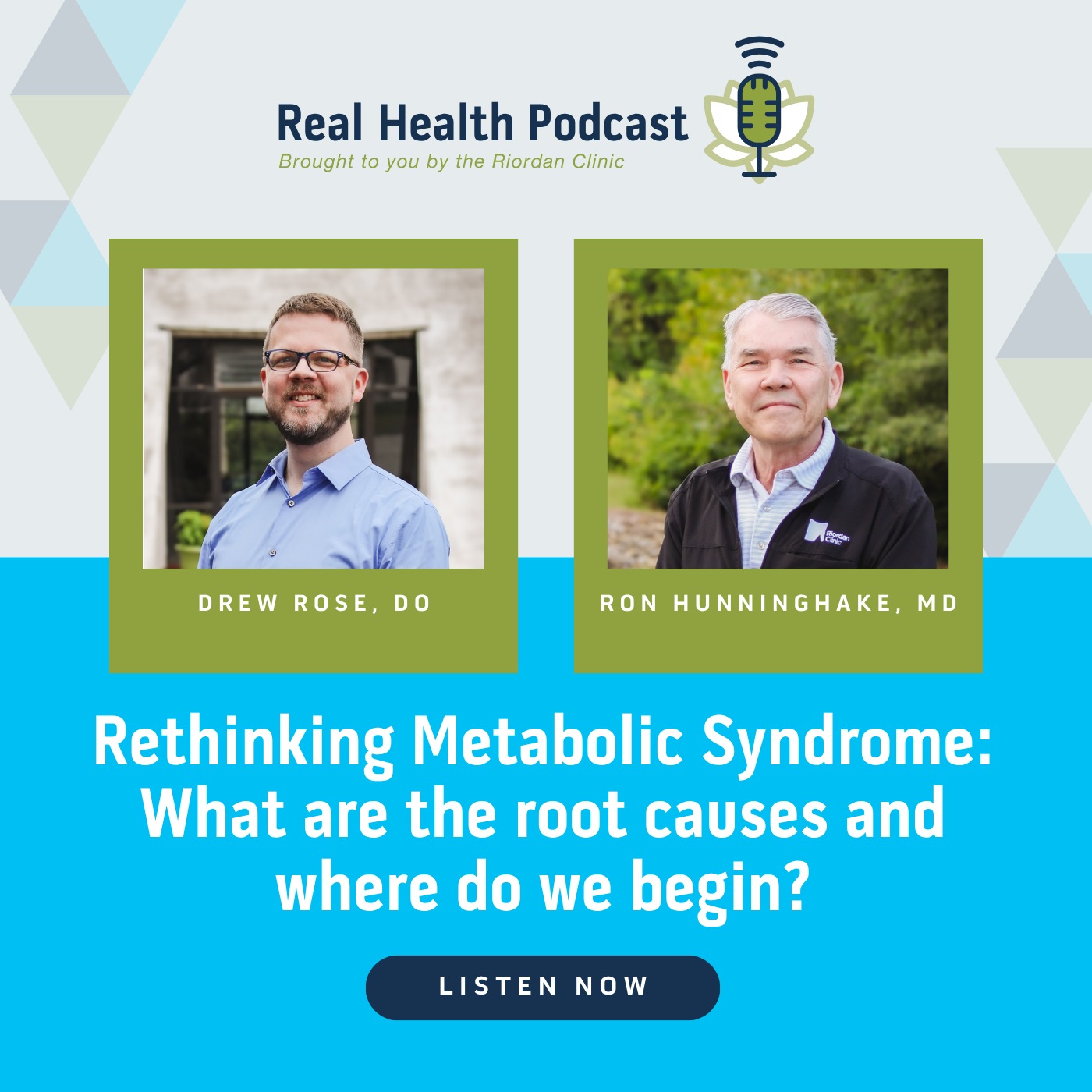
Rethinking Metabolic Syndrome: What are the root causes and where do we begin?
4w ago00:26:52Tap to summarize"The idea of metabolic scoring is to take guilt out of the picture. Because this is not anyone's fault. It's basically a cosmic shift in just our whole lifestyle here in Western civilization." — Dr. Ron HunninghakeIn this episode of the Real Health Podcast, Dr. Ron Hunninghake and Dr. Drew Rose discuss the complexities of metabolic syndrome, its prevalence in the Western world, and the lifestyle factors contributing to it. They emphasize the importance of identifying root causes and implementing personalized health strategies to combat this growing epidemic.👉 Learn more about Dr. Ron Hunninghake:https://riordanclinic.org/staff/ron-hunninghake-md/👉 Learn more about Dr. Drew Rose:https://riordanclinic.org/staff/drew-rose-do/👉 Learn more about becoming a co-learner at Riordan Clinic:https://riordanclinic.org/become-a-patient/Episode links and resources:- Learn more about Riordan Clinic: https://riordanclinic.org- Explore integrative health services: https://riordanclinic.org/services/- Listen/watch more Real Health Podcast episodes: http://podcast.riordanclinic.orgTopics we explore in this episode include:metabolic syndrome, metabolic scoring, BMI, triglycerides, HDL, LDL, body compositions, glucose monitors, whole foods, trans fat, GLP-1, food, stress, sleep, support, early detection, metabolic program, social support, individualized care, integrative medicine, real health, Riordan Clinic, Real Health Podcast
Transcribe →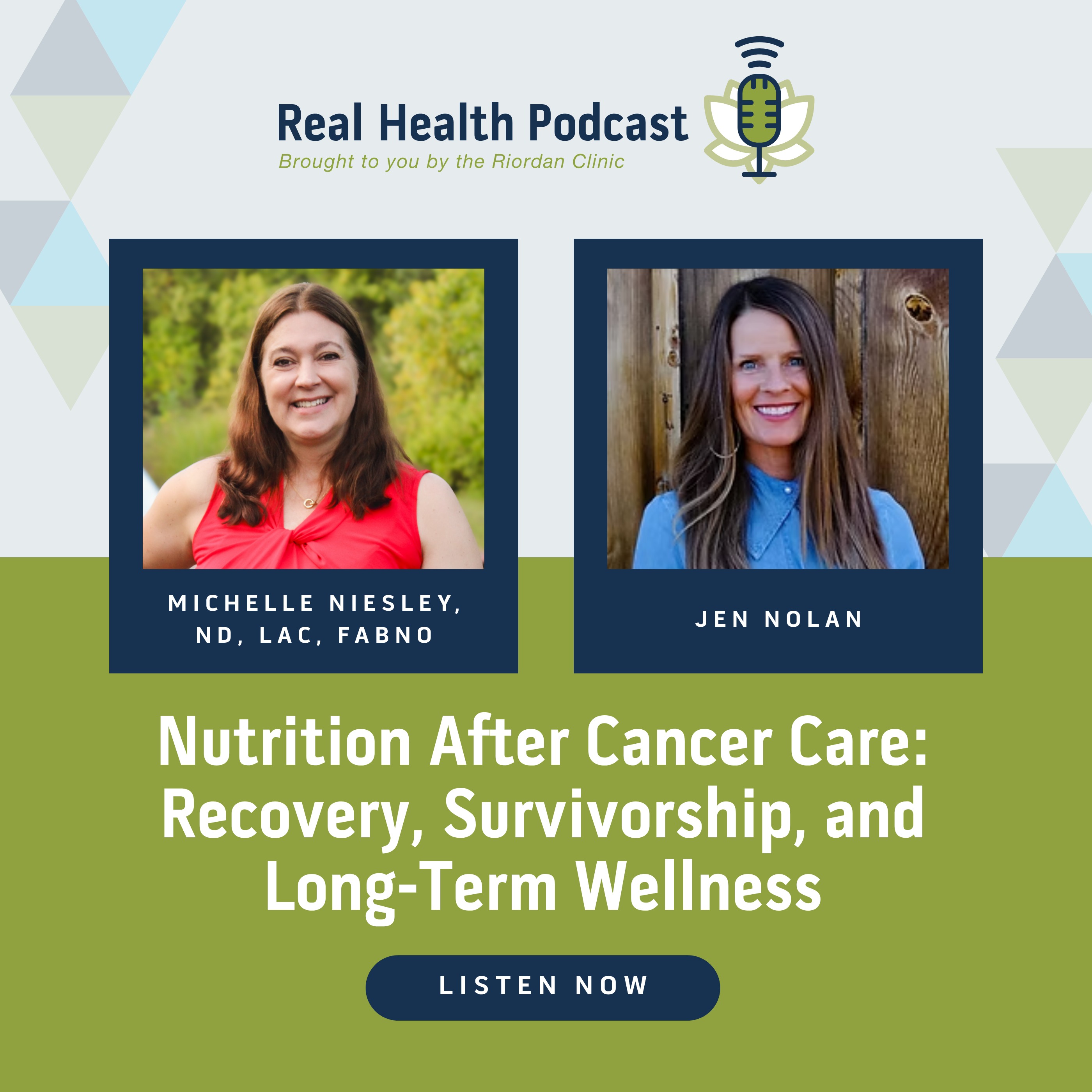
Nutrition After Cancer Care: Recovery, Survivorship, and Long-Term Wellness
Jun 200:34:45Tap to summarize“I mean, I believe so strongly that food, what we eat, matters.” —Jen NolanIn this episode of the Real Health Podcast, Dr. Michelle Niesley is joind by Jen Nolan, owner of Remission Nutrition and nutrition advisor at Riordan Clinic, to explore nutrition recomendations and the differences between what is recommended during active treatment and after treatment.👉 Learn more about Jen Nolan and Remission Nutrition👉 Learn more about Dr. Michelle Niesley👉 Learn more about becoming a co-learner at Riordan ClinicEpisode links and resourcesLearn more about Riordan ClinicExplore integrative health servicesListen/watch more Real Health Podcast episodesTopics we explore in this episode includefood as medicine, active treatment, post treatment, stress management, intermitant fasting, cancer support, survivorship, emotional resilience, integrative medicine, lifestyle medicine, healing, Riordan Clinic, Real Health Podcast
Transcribe →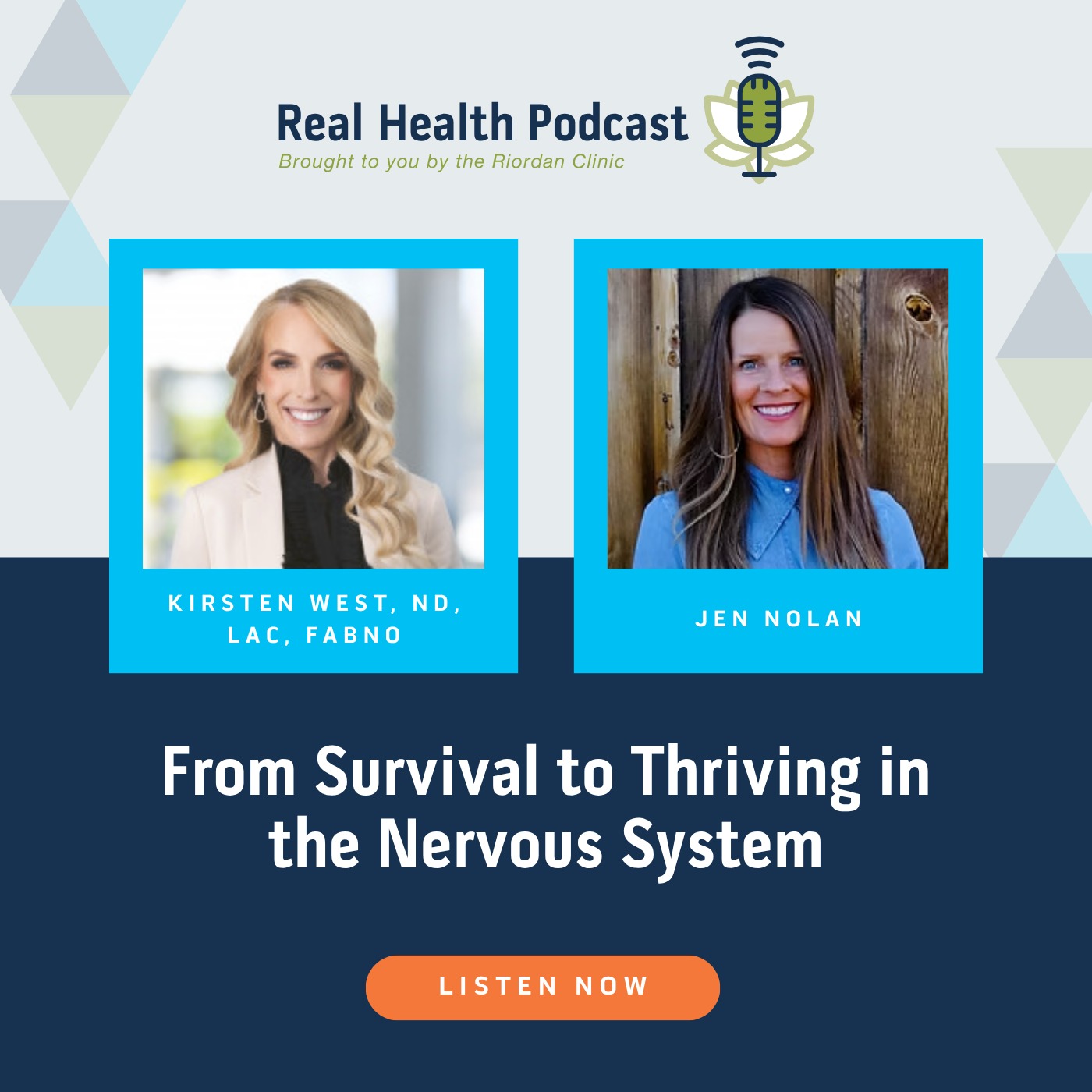
From Survival to Thriving in the Nervous System
May 2600:42:26Tap to summarize“We survive in danger, but we thrive in safety.” —Jen NolanThe nervous system shapes how the body responds to stress, healing, and everyday life, often without us realizing it.In this episode of the Real Health Podcast, Dr. Kirsten West is joined by Jen Nolan, owner of Remission Nutrition and nutrition advisor at Riordan Clinic, to explore how the nervous system influences the healing process, especially for those navigating cancer and life after treatment.Jen shares how patterns of chronic stress, fear, and “scanxiety” can keep the body in a constant state of fight or flight. Over time, this can influence inflammation, immune function, sleep, and the body’s ability to adapt.Dr. West walks through the physiology behind these responses, including the balance between the sympathetic and parasympathetic nervous systems. The conversation also introduces polyvagal theory, offering a clearer picture of how the body moves between states of stress, safety, and shutdown.You’ll hear how heart rate variability can reflect the body’s resilience and why it can be helpful to notice patterns over time. They also discuss the vagus nerve and its role in communication between the brain and body, influencing digestion, mood, and overall regulation.The episode closes with practical ways to support the nervous system in daily life. Breathwork, movement, time in nature, and connection with others can all help signal safety and support the body’s ability to regulate.Throughout the conversation, one idea keeps coming up. Healing involves more than addressing physical symptoms. It also includes creating a sense of safety within the body.👉 Learn more about Jen Nolan and Remission Nutrition👉 Learn more about Dr. Kirsten West👉 Learn more about becoming a co-learner at Riordan ClinicEpisode links and resourcesLearn more about Riordan ClinicExplore integrative health servicesListen/watch more Real Health Podcast episodesDisclaimerThe information contained on the Real Health Podcast and the resources mentioned are for educational purposes only. They are not intended as and shall not be understood or construed as medical or health advice. The information contained on this podcast is not a substitute for medical or health advice from a professional who is aware of the facts and circumstances of your individual situation. Information provided by hosts and guests on the Real Health Podcast or the use of any products or services mentioned does not create a practitioner-patient relationship between you and any persons affiliated with this podcast.Topics we explore in this episode include:nervous system health, stress response, vagus nerve, polyvagal theory, heart rate variability, cancer support, survivorship, scanxiety, emotional resilience, integrative medicine, lifestyle medicine, healing, Riordan Clinic, Real Health Podcast
Transcribe →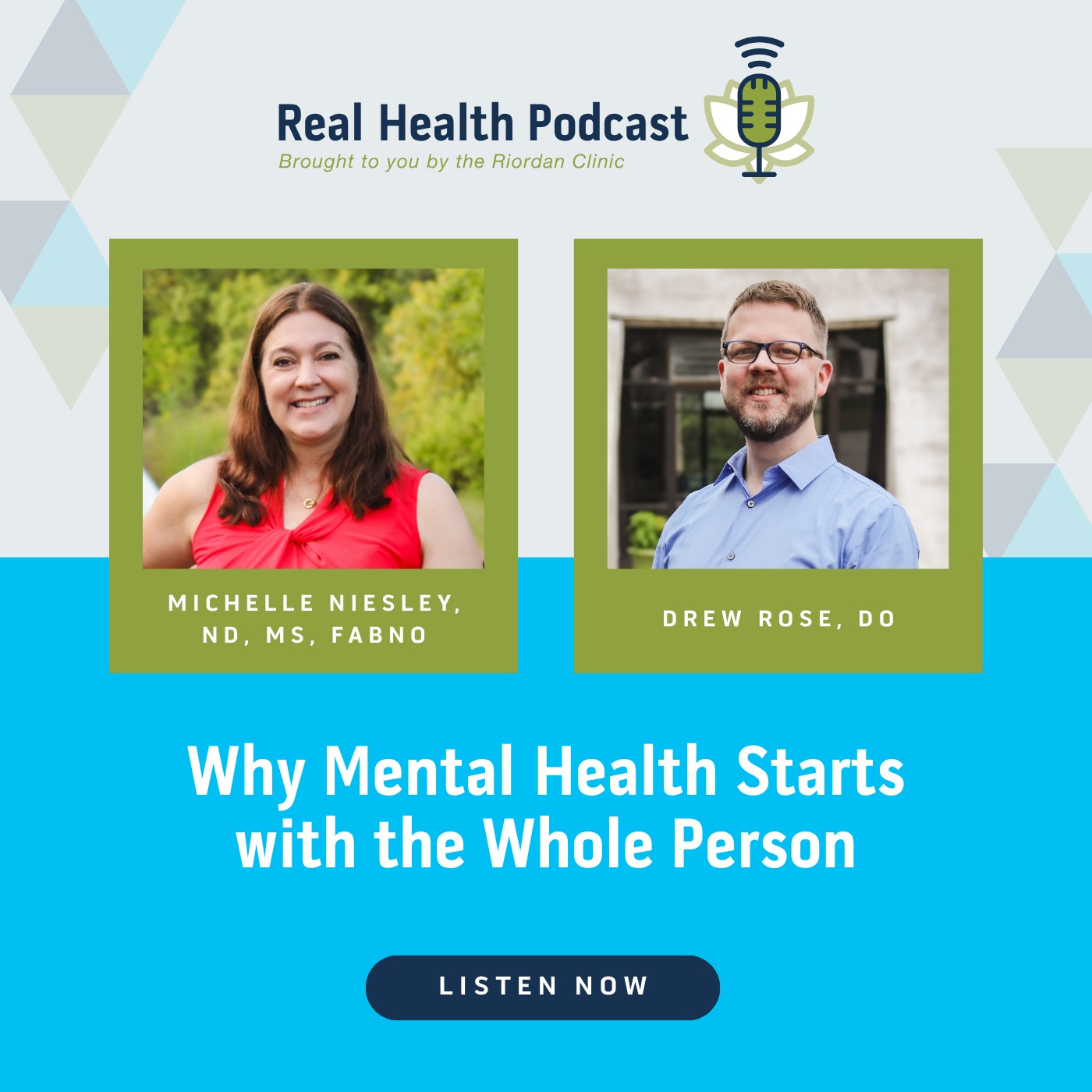
Why Mental Health Starts with the Whole Person
May 1900:29:54Tap to summarize“Words give feelings meaning.” —Dr. Drew RoseMental health is often treated as something separate from physical health, even though the two are closely connected.In this episode of the Real Health Podcast, Dr. Michelle Niesley sits down with Dr. Drew Rose to talk through how a whole-person approach can support mental and emotional well-being.Dr. Drew shares how factors like nutrient levels, inflammation, and daily habits can influence mood and mental clarity. They discuss the role of lab testing in identifying potential imbalances in vitamin D, B vitamins, magnesium, and fatty acids, and how these factors work together.Sleep is a major part of the conversation. You’ll hear why restorative sleep matters for the nervous system and how small changes in sleep habits can support better consistency over time. They also touch on circadian rhythm, light exposure, and common disruptions that affect rest.The discussion also explores the role of therapy and the importance of having the right support system in place. Mental health care often works best as a collaborative effort, where lifestyle, nutrition, and emotional support are all part of the picture.They also walk through practical ways to begin making changes, including spending time outdoors, moving, and creating space for rest. The focus stays on building a foundation that supports both mental and physical well-being.For a deeper look at this topic, Dr. Drew expands on these ideas in his article:👉 Mental Health Starts with the Whole PersonThroughout the episode, the conversation returns to a simple idea. When the body is supported, the mind often follows.👉 Learn more about Dr. Drew Rose👉 Learn more about Dr. Michelle Niesley👉 Learn more about becoming a co-learner at Riordan ClinicEpisode links and resourcesLearn more about Riordan ClinicExplore integrative health servicesListen/watch more Real Health Podcast episodesDisclaimerThe information contained on the Real Health Podcast and the resources mentioned are for educational purposes only. They are not intended as and shall not be understood or construed as medical or health advice. The information contained on this podcast is not a substitute for medical or health advice from a professional who is aware of the facts and circumstances of your individual situation. Information provided by hosts and guests on the Real Health Podcast or the use of any products or services mentioned does not create a practitioner-patient relationship between you and any persons affiliated with this podcast.Topics we explore in this episode include:mental health, sleep, circadian rhythm, stress, nervous system health, nutrient deficiencies, vitamin D, magnesium, B vitamins, integrative medicine, lifestyle medicine, therapy, wellness, functional medicine, Riordan Clinic, Real Health Podcast
Transcribe →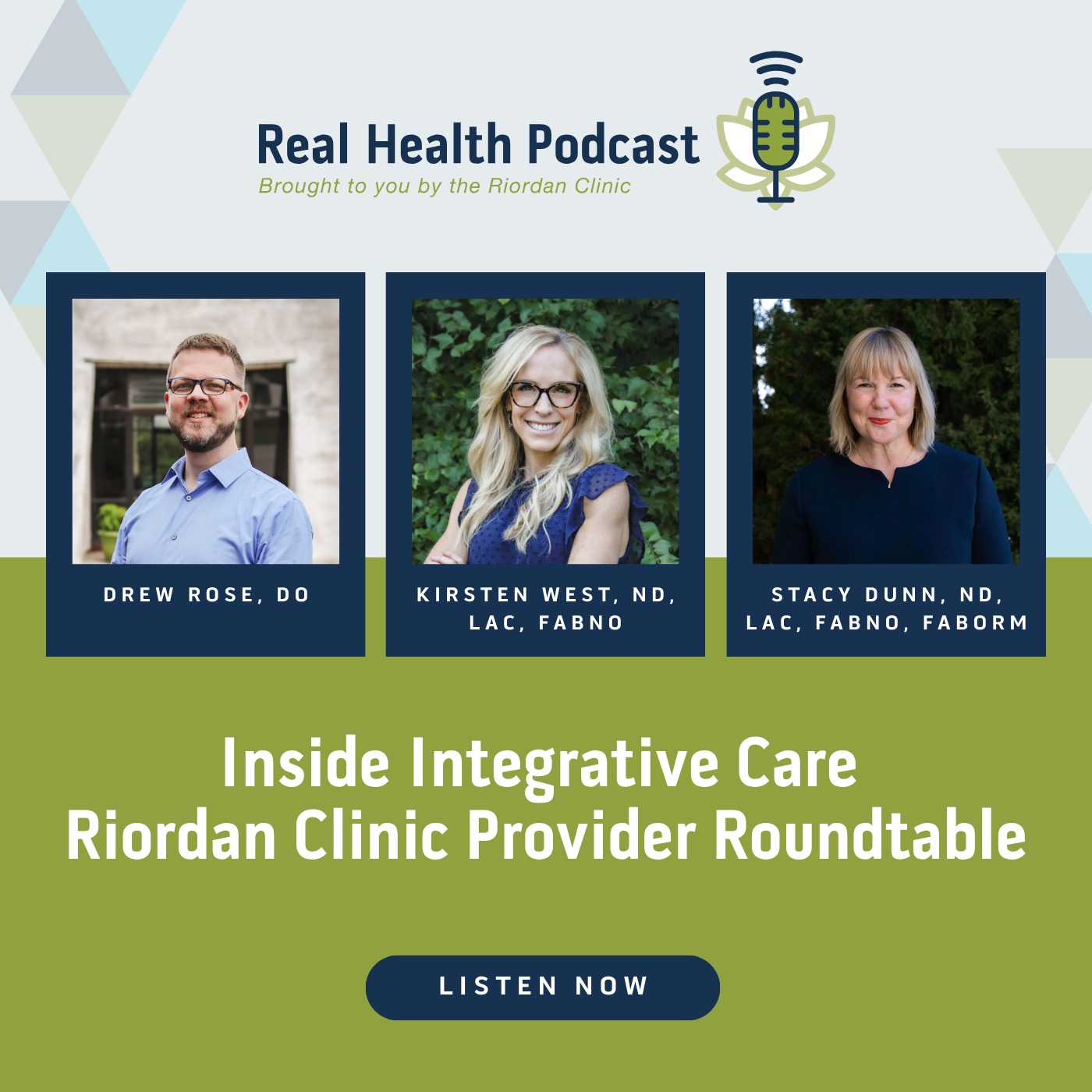
Inside Integrative Care | Riordan Clinic Provider Roundtable
May 1200:36:10Tap to summarize"The body wants to be well." —Dr. Kirsten WestEvery person’s health story looks different. Some people arrive after a diagnosis. Others come in after years of feeling dismissed, exhausted, or stuck searching for answers.In this first episode of the Riordan Clinic Provider Roundtable, Dr. Drew Rose is joined by Dr. Stacy Dunn and Dr. Kirsten West to discuss what led each of them to medicine, how they approach integrative care, and why individualized support matters.They discuss the differences between conventional and integrative medicine, including the importance of looking beyond symptoms and understanding the bigger picture of a person’s health. The conversation also touches on chronic illness, oncology support, patient advocacy, and the challenges of sorting through health information online.You’ll hear the providers share how they evaluate research, why collaboration matters in patient care, and what they hope co-learners experience when they come to Riordan Clinic.The episode also gives listeners a first look at the Riordan Clinic Provider Roundtable series, a monthly conversation bringing providers together to discuss integrative health topics, answer common questions, and share perspectives from their work with co-learners.👉 Learn more about Dr. Drew Rose👉 Learn more about Dr. Stacy Dunn👉 Learn more about Dr. Kirsten West👉 Learn more about becoming a co-learner at Riordan ClinicEpisode links and resourcesLearn more about Riordan ClinicExplore integrative oncology servicesListen/watch more Real Health Podcast episodesDisclaimerThe information contained on the Real Health Podcast and the resources mentioned are for educational purposes only. They are not intended as and shall not be understood or construed as medical or health advice. The information contained on this podcast is not a substitute for medical or health advice from a professional who is aware of the facts and circumstances of your individual situation. Information provided by hosts and guests on the Real Health Podcast or the use of any products or services mentioned does not create a practitioner-patient relationship between you and any persons affiliated with this podcast.Topics we explore in this episode include:integrative medicine, naturopathic medicine, root-cause care, functional medicine, chronic illness, integrative oncology, cancer support, patient advocacy, wellness, lifestyle medicine, provider collaboration, Riordan Clinic, Real Health Podcast
Transcribe →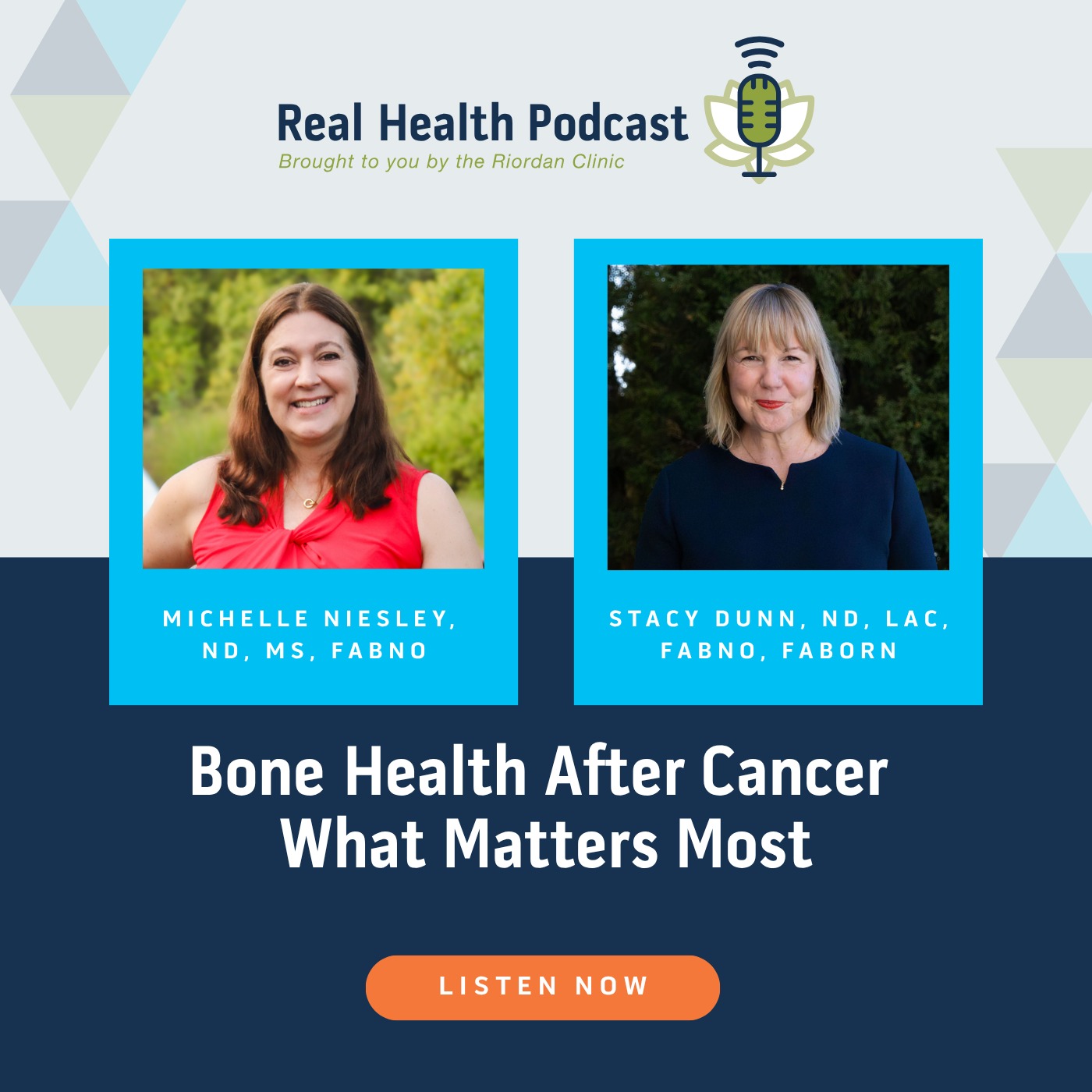
Bone Health After Cancer What Matters Most
May 500:25:24Tap to summarize“It is so important, and I think most people don’t realize that some of the cancer treatments can actually impair bone health.”—Dr. Stacy DunnBone health doesn’t always get attention until something changes. For many people, especially after cancer treatment, shifts in bone density can happen quietly over time.In this episode of the Real Health Podcast, Dr. Michelle Niesley sits down with Dr. Stacy Dunn to talk through what supports bone health during and after cancer care.Dr. Dunn shares how treatments like chemotherapy and hormone therapies can influence bone density, sometimes earlier than expected. They discuss how tools like DEXA scans are used to check bone health and why they can be helpful as part of ongoing care.The conversation also covers nutrients that play a role in bone health, including vitamin D, vitamin K2, and magnesium. Rather than focusing on one piece in isolation, they talk about how these work together and why balance matters.Movement is another part of the picture. You’ll hear why resistance training can support bone strength and how it can be worked into everyday routines without needing a full gym setup. Starting small and staying consistent can go a long way.They also walk through a few common areas of confusion, including medications, calcium intake, melatonin, and soy. The goal is to offer context so people can better understand their options and ask informed questions.Throughout the episode, the focus stays on the bigger picture. Bone health connects to nutrition, movement, sleep, and overall well-being, especially during survivorship and long-term care.👉 Learn more about Dr. Stacy Dunn👉 Learn more about Dr. Michelle Niesley👉 Learn more about becoming a co-learner at Riordan ClinicEpisode links and resourcesLearn more about Riordan ClinicExplore integrative oncology servicesListen/Watch more Real Health Podcast episodesDisclaimerThe information contained on the Real Health Podcast and the resources mentioned are for educational purposes only. They are not intended as and shall not be understood or construed as medical or health advice. The information contained on this podcast is not a substitute for medical or health advice from a professional who is aware of the facts and circumstances of your individual situation. Information provided by hosts and guests on the Real Health Podcast or the use of any products or services mentioned does not create a practitioner-patient relationship between you and any persons affiliated with this podcast.Topics we explore in this episode includebone health, osteoporosis, osteopenia, cancer survivorship, integrative oncology, vitamin D, vitamin K2, magnesium, DEXA scan, resistance training, lifestyle support, hormone therapy, melatonin, soy and health, functional medicine, integrative health, Riordan Clinic, Real Health Podcast
Transcribe →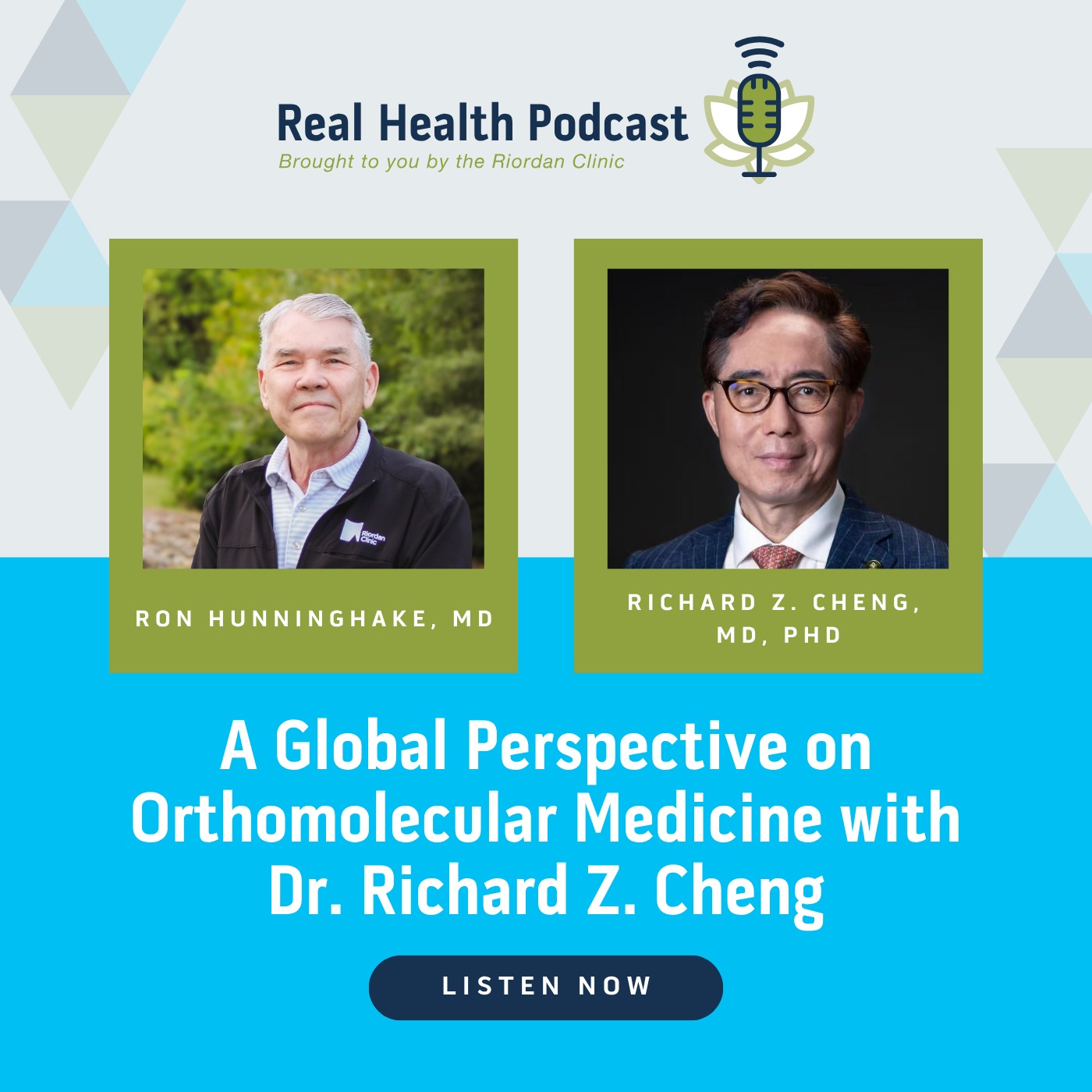
A Global Perspective on Orthomolecular Medicine with Dr. Richard Z. Cheng
Apr 2800:25:39Tap to summarize“Orthomolecular medicine is about giving the body what it needs to function at its best.” —Dr. Richard Z. ChengThere are many ways to approach health. Some focus on managing symptoms. Others take a step back and look at what the body needs to stay well in the first place.In this episode of the Real Health Podcast, Dr. Ron Hunninghake sits down with Dr. Richard Z. Cheng to discuss how orthomolecular medicine fits into the bigger picture.👉 Learn more about Dr. Richard Z. ChengDr. Cheng shares how his path began in conventional medicine and cancer research, including time at the National Cancer Institute, before expanding into nutrition, lifestyle, and orthomolecular care. With a background in molecular biology and decades of clinical experience, he brings both perspectives into the conversation.They talk through what orthomolecular medicine looks like in practice. The focus is simple, supporting the body with the nutrients it needs, in the right amounts, so it can function the way it’s designed to. It’s an approach that can be used alongside conventional care, especially in more complex or long-term situations.You’ll also hear how his work across the United States and China has shaped the way he thinks about prevention, chronic illness, and the growing interest in integrative care. More people are asking better questions about their health and looking for ways to stay ahead of it.Dr. Cheng also serves as Editor-in-Chief of the Orthomolecular Medicine News Service, where research and clinical insights are shared with a broader audience. That work continues to build awareness and provide people with access to information they might not otherwise see.The conversation also touches on the role of environment, lifestyle, and nutrient status. When those pieces are considered together, it becomes easier to understand what may be contributing to how someone feels and what steps can support them as they move forward.👉 Learn more about becoming a co-learner at Riordan Clinic.Episode links and resourcesLearn more about Dr. Richard Z. ChengExplore the Orthomolecular Medicine News ServiceLearn more about Dr. Ron HunninghakeExplore integrative services at Riordan ClinicLearn more about HOT UBI TherapyListen/Watch more Real Health Podcast episodesDisclaimerThe information contained on the Real Health Podcast and the resources mentioned are for educational purposes only. They are not intended as and shall not be understood or construed as medical or health advice. The information contained on this podcast is not a substitute for medical or health advice from a professional who is aware of the facts and circumstances of your individual situation. Information provided by hosts and guests on the Real Health Podcast or the use of any products or services mentioned does not create a practitioner-patient relationship between you and any persons affiliated with this podcast.Topics we explore in this episode include:orthomolecular medicine, integrative health, prevention and wellness, vitamin C research, nutrient therapy, chronic disease support, environmental health, immune support, lifestyle medicine, patient-centered care, Orthomolecular Medicine News Service, Dr. Richard Z. Cheng, Dr. Ron Hunninghake, Riordan Clinic, Real Health Podcast
Transcribe →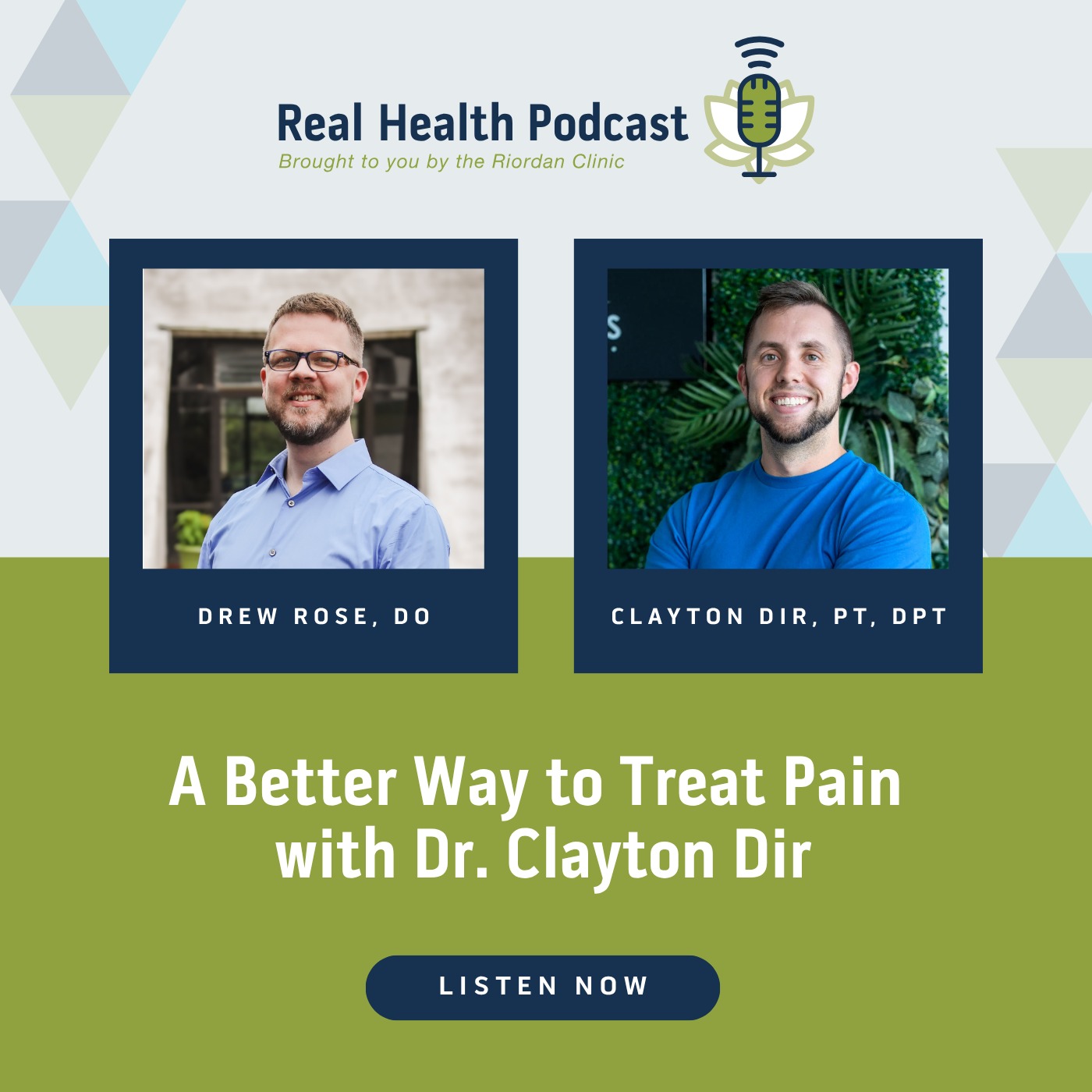
A Better Way to Treat Pain with Dr. Clayton Dir
Apr 2100:25:47Tap to summarize“We are only going to heal you as fast as your body can allow.” —Dr. Clayton DirPain doesn’t always need more appointments. Sometimes it needs a different approach.In this episode of the Real Health Podcast, Dr. Drew Rose sits down with Dr. Clayton Dir, Doctor of Physical Therapy and Clinical Director of Natural Wellness Physiotherapy, to talk about what’s missing in many recovery plans and how a more thoughtful, patient-centered approach can change outcomes.👉 Learn more about Natural Wellness Physiotherapy.Dr. Clayton shares how his path through traditional physical therapy led him to rethink the way care is delivered. After seeing patients repeat the same cycles without lasting progress, he began focusing on something simple but often overlooked—taking the time to listen and understand the full picture.The conversation walks through how his clinic approaches care differently. Longer evaluations, one-on-one attention, and a process built around reset, restore, and reload give the body time to respond and rebuild.You’ll hear how many cases that seem complicated at first come down to things that were never addressed—movement patterns, muscle imbalances, or habits that quietly hold people back from healing.They also talk through the role of daily life in recovery. Sleep, nutrition, stress, and consistency all shape how the body responds. When those pieces are supported, progress tends to follow.The episode also highlights the connection between clinics like Natural Wellness Physiotherapy and Riordan Clinic. When care is shared across providers and approached as a team effort, it creates more opportunities for people to find answers and move forward with confidence.👉 Learn more about becoming a co-learner at Riordan Clinic.✨ Riordan Clinic is celebrating 50 years of care at the upcoming Pearls & Purpose Gala. This evening brings together community, research, and the future of care. Reserve your seat!Episode links and resourcesExplore Natural Wellness PhysiotherapyFollow Dr. Clayton Dir on InstagramFollow Natural Wellness Physiotherapy on InstagramFollow Natural Wellness Physiotherapy on FacebookSubscribe to Natural Wellness Physio on YouTubeLearn more about Dr. Drew RoseExplore integrative services at Riordan ClinicLearn more about HOT UBI TherapyListen/Watch more Real Health Podcast episodesDisclaimerThe information contained on the Real Health Podcast and the resources mentioned are for educational purposes only. They are not intended as and shall not be understood or construed as medical or health advice. The information contained on this podcast is not a substitute for medical or health advice from a professional who is aware of the facts and circumstances of your individual situation. Information provided by hosts and guests on the Real Health Podcast or the use of any products or services mentioned does not create a practitioner-patient relationship between you and any persons affiliated with this podcast.Topics we explore in this episode include:physical therapy, chronic pain support, root cause approach, integrative care, functional medicine, lifestyle and recovery, sleep and healing, stress and health, dry needling, manual therapy, patient-centered care, interdisciplinary healthcare, Natural Wellness Physiotherapy, Dr. Clayton Dir, Riordan Clinic, Real Health Podcast
Transcribe →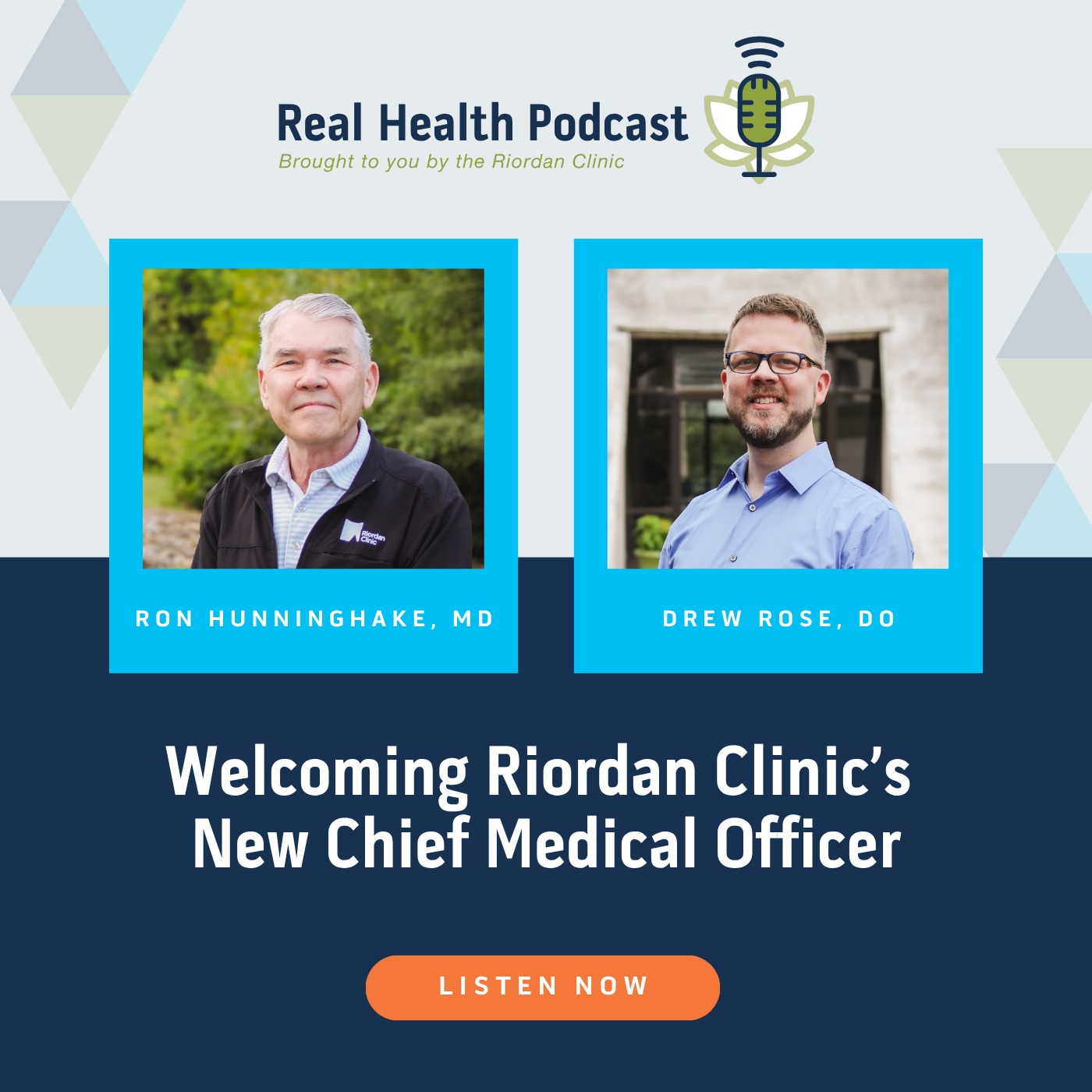
Welcoming Riordan Clinic’s New Chief Medical Officer
Apr 1400:24:24Tap to summarize"Medicine is a team sport. We’re going to figure this out together." —Dr. Drew RoseA new chapter at Riordan Clinic begins with a familiar face and a shared vision for the future.In this episode of the Real Health Podcast, Dr. Ron Hunninghake sits down with Dr. Drew Rose to talk through his journey into the role of Chief Medical Officer and what it means for the next 50 years of care at Riordan Clinic. As Dr. Drew steps into this position, Dr. Ron will continue to see co-learners while serving as President of Riordan Clinic and Chairman of the Board, maintaining his ongoing role in patient care and leadership.👉 Read the full announcement.Dr. Drew shares how his background in osteopathic medicine, conventional hospital leadership, and global medical experiences shape the way he approaches care today. From working in high-pressure hospital settings during COVID-19 to leading teams in complex environments, his path has been grounded in both clinical precision and steady leadership.The conversation explores how integrative and conventional medicine can work together in a coordinated way. You’ll hear how Riordan Clinic brings together lab testing, clinical insight, and supportive therapies to better understand what’s happening beneath the surface for each co-learner.They also discuss emerging areas of focus at the clinic, including metabolic health and its role in long-term wellness. Topics like inflammation, hormone balance, lifestyle patterns, and energy all connect back to how the body functions as a whole.You’ll also hear more about HOT UBI therapy, a form of ultraviolet blood irradiation being explored as part of the clinic’s broader approach to supporting circulation and overall function.Throughout the episode, one idea stays at the center: the co-learner model. Care at Riordan Clinic is built on partnership, where individuals are actively involved in understanding their health and making informed decisions alongside their providers.👉 Learn more about becoming a co-learner at Riordan Clinic.✨ Riordan Clinic is celebrating 50 years of care at the upcoming Pearls & Purpose Gala. This evening brings together community, research, and the future of care. 👉 Reserve your seat!Episode links and resourcesExplore integrative services at Riordan ClinicBecome a Riordan Clinic co-learnerLearn more about Dr. Drew RoseLearn more about Dr. Ron HunninghakeListen/Watch more Real Health Podcast episodesDisclaimerThe information contained on the Real Health Podcast and the resources mentioned are for educational purposes only. They are not intended as and shall not be understood or construed as medical or health advice. The information contained on this podcast is not a substitute for medical or health advice from a professional who is aware of the facts and circumstances of your individual situation. Information provided by hosts and guests on the Real Health Podcast or the use of any products or services mentioned does not create a practitioner-patient relationship between you and any persons affiliated with this podcast.Topics we explore in this episode include:chief medical officer transition, integrative medicine leadership, osteopathic medicine philosophy, co-learner model, functional medicine approach, metabolic health, chronic illness support, HOT UBI therapy, ultraviolet blood irradiation, inflammation and health, hormone balance, lifestyle and wellness, Riordan Clinic, Real Health Podcast
Transcribe →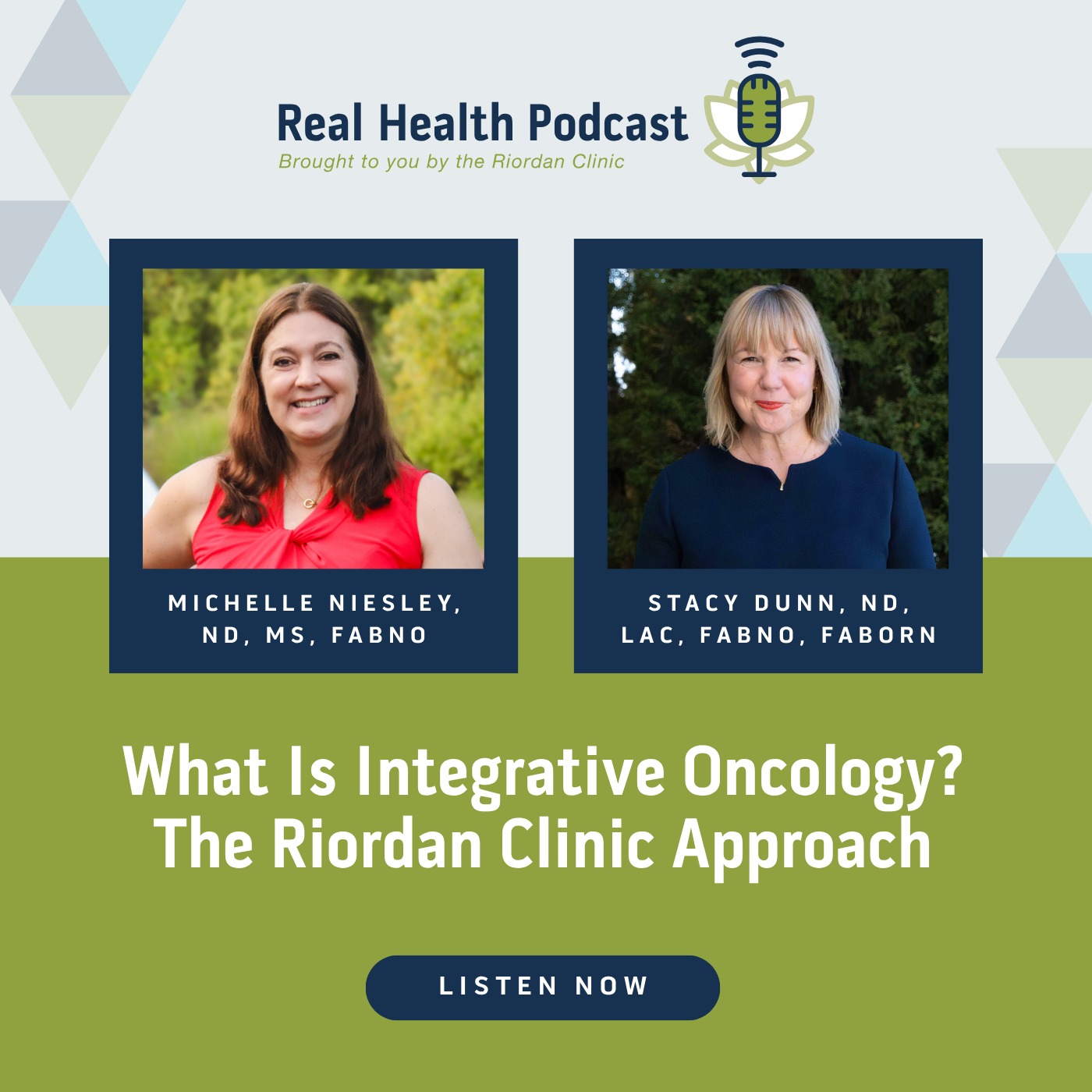
What Is Integrative Oncology? The Riordan Clinic Approach
Apr 700:33:12Tap to summarize"You can have two people with the same diagnosis and completely different plans." —Dr. Stacy DunnWorld Health Day is a reminder to step back and look at the full picture of health beyond a diagnosis.In this episode of the Real Health Podcast, Dr. Michelle Niesley sits down with Dr. Stacy Dunn to talk about integrative oncology and how it’s practiced at Riordan Clinic.If you’ve ever wondered what integrative oncology actually means, this conversation gives a clear look at how it works in a clinical setting. Integrative oncology is an approach to cancer care that works alongside conventional treatment. It uses lab testing, clinical insight, and supportive therapies to help guide care, with a focus on coordination, safety, and understanding what may be contributing to each individual case.Dr. Dunn walks through how testing is used to guide decisions. Nutrient levels, inflammation, blood sugar regulation, immune function, and toxic burden are all considered. These results help guide where to focus next. Two people with the same diagnosis may move forward with very different plans based on what their bodies are showing.They also talk about the foundation—nutrition, sleep, and stress—and how those patterns can affect how someone feels day to day.You’ll hear how therapies like intravenous vitamin C are used as part of an individualized approach, along with why supplement quality and sourcing matter. The conversation also covers common questions, including how to navigate conversations with oncologists and how to sort through different options without feeling overwhelmed.👉 Learn more about integrative oncology at Riordan Clinic✨ Riordan Clinic is also celebrating 50 years of care at the upcoming Pearls & Purpose Gala. This evening brings together community, research, and the future of care. Reserve your seat!Episode links and resourcesExplore integrative services at Riordan ClinicBecome a Riordan Clinic co-learnerLearn more about Dr. Stacy DunnLearn more about Dr. Michelle NiesleyReserve your seat at the Pearls & Purpose GalaWatch more Real Health Podcast episodesEpisode chapters00:00 Introduction + podcast disclaimer00:39 Welcome to the Real Health Podcast01:01 What is integrative oncology02:30 Why Riordan expanded into oncology care05:10 Looking beyond a diagnosis08:45 Two patients, two different approaches12:20 The role of testing and personalization16:05 Supporting the whole person during treatment20:10 Navigating conventional + integrative care together24:30 Common misconceptions about integrative oncology28:40 What patients and caregivers are really asking33:15 A more complete picture of care37:50 Final thoughts + what this means for patientsDisclaimerThe information contained on the Real Health Podcast and the resources mentioned are for educational purposes only. They are not intended as and shall not be understood or construed as medical or health advice. The information contained on this podcast is not a substitute for medical or health advice from a professional who is aware of the facts and circumstances of your individual situation. Information provided by hosts and guests on the Real Health Podcast or the use of any products or services mentioned does not create a practitioner-patient relationship between you and any persons affiliated with this podcast.Topics we explore in this episode include:integrative oncology, what is integrative oncology, integrative cancer care, individualized cancer care, functional medicine approach to cancer, intravenous vitamin C, nutrition and cancer care, inflammation and cancer, immune function, blood sugar regulation, toxic burden, Riordan Clinic, Real Health Podcast
Transcribe →