
Podcast
The Revital Health Podcast
Hosted by Revital Health Podcast · EN
Hosted by Jodi Duval, a leading naturopath and integrative medicine expert, The Revital Health Podcast explores cutting-edge strategies for health optimisation, blending modern science with ancestral wisdom.
Join Jodi and world-class experts as they break down the latest in functional medicine, biohacking, longevity, personalised nutrition, and holistic healing. Whether you’re looking to boost energy, balance hormones, improve gut health, or explore advanced therapies like red light therapy, peptides, hyperbaric oxygen, and metabolic health strategies, this podcast delivers practical insights you can apply today.
Expect deep dives, myth-busting, and actionable takeaways—all designed to help you thrive in your health journey.
21episodes
Episodes
Newest firstAll episodes
The Science, Stigma, and Seed-to-Patient Journey of Medicinal Cannabis with Matt Shales
Mar 401:01:06Tap to summarizeMedicinal cannabis is one of the fastest growing areas of modern medicine — yet it remains widely misunderstood.In this episode of The Revital Health Podcast, Jodi Duval speaks with Matt Shales, CEO and Co-Founder of MediCann Health, about the evolving medicinal cannabis industry in Australia and the science behind producing high-quality cannabis medicine.Together they explore how cultivation, genetics, extraction methods, and rigorous testing all influence the safety and effectiveness of cannabinoid therapies.The conversation moves beyond stigma and headlines to examine what truly defines a pharmaceutical-grade cannabis product and why quality control is critical for patient outcomes.They also discuss the rapid expansion of medicinal cannabis prescribing in Australia, the role of clinical research, and the future of cannabinoid medicine.In this episode we discuss:How medicinal cannabis is grown and why genetics matterThe importance of cultivation methods and environmental controlTerpenes, cannabinoids, and the “entourage effect”What defines a high-quality medicinal cannabis productThe challenges of regulation, stigma, and educationThe future of cannabis research and clinical trials in AustraliaThis episode offers a fascinating insight into how a complex plant is being transformed into a regulated therapeutic medicine.Connect with Matt ShalesWebsitewww.medicannhealth.com.auSocialsFacebook: Medicann HealthLinkedIn: Medicann HealthInstagram: @medicannhealth
Transcribe →Cycle-Smart Training: How Women Can Train With Their Hormones, Not Against Them, with Chanae Brookes
Feb 1801:01:06Tap to summarizeIn this episode of The Revital Health Podcast, Jodi Duval is joined by Chanae Brookes, for a cycle-aware conversation on female training, performance and recovery.Together they unpack what can shift across the follicular phase, ovulation and luteal phase, and how these hormonal and physiological changes may influence insulin sensitivity, inflammation, pain tolerance, perceived exertion, recovery demand and injury risk.They also explore what can happen when women overtrain, underfuel and live under chronic stress, including protective endocrine suppression patterns that may show up as cycle disruption, reduced ovulation signalling, impaired recovery, mood changes and downstream performance decline.The conversation covers practical takeaways for women who train, including cycle tracking as a readiness report, the value of biofeedback over rigid programs, and a grounded discussion about the oral contraceptive pill in sport. The episode closes with a timely discussion on creatine: potential benefits, why dosing needs to be individualised, and why lab markers and kidney function context matters when supplementation trends go mainstream.If you’re training hard and want to protect your hormones while still building performance, this episode will give you a smarter framework.Topics we coverTraining through the menstrual cycle: follicular, ovulation, lutealRecovery demand, perceived exertion and cycle-aware programmingOvulation, confidence and ligament considerationsOvertraining, under-eating and hormonal suppressionOral contraceptive pill considerations for athletesCreatine: benefits, dose context, and “test, don’t guess”Where to find ChanaeRevital Health (Global Telehealth). Chanae also offers free 10-minute discovery calls.www.revitalhealth.com.au
Transcribe →EMMETT Technique with Lindsay Hilder: The “Body Electrician” Approach to Release
Feb 500:51:59Tap to summarizeIn this episode, Jodi Duval is joined by Lindsay Hilder, body therapist with over 25 years of clinical experience and Co-Director of the EMMETT Technique International, to explore a unique, results-based approach to manual therapy used worldwide across humans and animals.The EMMETT Technique is a light-touch neuromuscular release method designed to work with the body’s own intelligence rather than force change. It is results-based rather than time-based, highly precise, and intentionally inclusive rather than exclusive, meaning it can stand alone or integrate seamlessly with other therapies.Lindsay shares the lineage of the technique from founder Ross Emmett, how EMMETT points are identified and applied, and why timing, precision, and practitioner presence matter just as much as technique.In this episode, we explore:What the EMMETT Technique is (and what it is not)Light-touch neuromuscular release and its effects on posture, pain, function and lymphaticsThe “body electrician” analogy and indirect access pointsWhy timing matters: sedating rather than irritating the nervous systemResults-based treatment versus fixed session lengthsThe 7As: attitude, atmosphere, environment and their impact on outcomesApplication across adults, babies and animalsPractitioner training pathways, including workshops, practitioner modules and professional levelsHealth autonomy and restoring agency to individuals and familiesAbout Lindsay:Lindsay Hilder brings both lineage knowledge and contemporary clinical insight to the ongoing evolution of the EMMETT Technique. Raised alongside the development of the method and now teaching internationally, her work focuses on inclusivity, integration, and practitioner-agnostic education.Learn more:Official website and practitioner directory: https://www.emmett-technique-hq.com/Instagram: https://www.instagram.com/emmetttechniqueinternational/This episode is a grounded reminder that sometimes less force, greater precision, and better listening create the most meaningful change.
Transcribe →Women’s Health, Cannabinoids and Clinical Toolkits with Shannon McKendry
Jan 700:50:34Tap to summarizeIn this episode of the Revital Health Podcast, Jodi is joined by Shannon McKendry, an Integrative Health Practitioner and educator in women’s health and medicinal cannabis.With training in functional medicine, nutrition and fitness, and extensive experience supporting clinics, prescribers and patients around Australia, Shannon brings a deeply informed, evidence-based lens to women’s wellbeing and cannabinoid medicine.Together, we explore how cannabinoids can be woven into an integrative toolkit for women, rather than positioned as a quick fix.In this episode we cover:Shannon’s personal journey from young mum and law student to autoimmune patient, and ultimately to integrative practitioner and educatorThe endocannabinoid system as a master regulator for sleep, pain, mood, inflammation and stress responsesWhy women are often more sensitive to cannabinoids, and why “low and slow” dosing is crucialClinical patterns across the lifespan:Teens and young women: anxiety, sleep, cycle symptoms and nervous-system load30s–40s: chronic stress, autoimmune conditions and invisible illnessPerimenopause and menopause: sleep dysregulation, pain, mood shifts, thermoregulation and cognitive changesEndometriosis, PCOS and gynaecological pain:Emerging research on cannabinoid creams and sublingual oilsReal-world shifts in pain, function and quality of lifeHow cannabinoids can act as a catalyst, helping women access enough nervous-system stability to actually implement foundations like nutrition, movement, light and sleepCommon concerns and misconceptions among prescribers and clinics“THC is dangerous, CBD is the only safe option”Fears around psychoactivity, driving and safetyOverwhelm with the number of products and delivery formatsThe importance of:Individualised assessment and careful titrationWorking within current Australian legal and regulatory frameworksOngoing education for clinicians, and collaboration between prescribers, integrative practitioners and referrersUsing cannabinoids not only in chronic disease, but as part of proactive health optimisation and longevity strategiesThis conversation is for you if:You are a woman navigating anxiety, pain, sleep issues or hormonal transitions and want to understand where plant-based medicines may fitYou are a practitioner or prescriber seeking a grounded, integrative view of cannabinoid medicine in women’s healthYou are a referrer wanting clearer, safer pathways for your patientsTo learn more about Shannon’s work and clinical education in this space, you can explore MediCann - https://www.medicannclinics.com.au/
Transcribe →Choosing the Witness Self: Vision, Healing and the Will to Heal with Dr Talia Steed
Dec 1700:47:52Tap to summarizeIn this episode I’m joined by Dr Talia SteedIn her new book, Choosing the Witness Self, Talia writes:In this way of being, we can make contact with pure awareness. Awareness beyond the thoughts, beyond the feelings, beyond the sensations in the body. And this is the essence of spirituality. Discovering that you are the witness to the experiences of your life. Nothing more, and nothing less.In this conversation we explore:The difference between the will to live and the will to healWhy the body is not punishing you, but illuminating what needs attentionHow chronic symptoms can reflect misalignment in work, relationships and lifestyleWhat it means to “choose the witness self” instead of being run by the ego mindHow to create space, safety and self-compassion so change feels possiblePractical entry points for people who find stillness, silence or “self-care time” confrontingThe power of self-validation and taking ownership of your own healing journeyWe also talk about our new collaboration:Choosing the Witness Self – Monthly Book Club (Perth)Dr Talia is hosting an in-person book club at Skol in Scarborough on the last Friday of each month at 1pm, starting 30 January. We’ll be moving through Choosing the Witness Self chapter by chapter, aligned with this podcast series, so you can integrate the material slowly with community support.Reserve your place here:Book Club Tickets – EventbriteConnect with Dr Talia SteedWebsite: www.drtaliasteed.comInstagram: @bodi_alchemyFacebook: Bodi AlchemyConnect with Jodi & Revital HealthClinic: Revital Health, PerthPodcast: The Revital Health Podcast
Transcribe →The Business of Better Care: Mode, GrowHouse and the Future of Healthcare in Australia
Dec 800:58:26Tap to summarizeIn this episode, Jodi sits down with Jordan from Mode Healthcare for a deep and refreshingly honest conversation about what it takes to build a new healthcare model in Australia.Together they explore:• Jordan’s personal journey into the health space and the PTSD event that reshaped his life• the early days of Mode and why “make it matter” became the foundation of their clinic design• communication, culture, and why relatability is critical for patient trust• the difficulties clinics face in Australia: regulation, TGA rules, compliance, dispensary errors, supply inconsistencies• the difference between proactive health coaching and traditional reactive medicine• the risks of recreational-style thinking around natural therapies — and why quality, dosing, safety, and continuity must stay central• the creation of Mode’s GrowHouse system: an integrated treatment, prescribing, communication, education, and logistics platform for improving outcomes at scale• yoga, breathwork, mobility, music and lifestyle as essential components of long-term wellness• the importance of matching the right doctor to the right patient — and why patients have permission to “fire” their doctor and find better fit• the future of medicine in Australia, why burnout is happening at every level, and what a more sustainable system could look likeThis episode is for anyone interested in integrative medicine, business innovation, patient safety, cannabis medicine, or the future of health care delivery in Australia.
Transcribe →Mushrooms for Brain, Immunity and Hormones: Evidence-Based Uses with Jason Leppard from Supreme Shrooms
Nov 1900:40:34Tap to summarizeIn this episode, Jodi sits down again with Jason from Supreme Shrooms to unpack the real world of medicinal mushrooms – beyond trends and social media hype.Together, they explore:Why mushrooms are not a fadAncient medicinal use of Reishi and other speciesWhy interest and the evidence base keep growingWhat actually makes mushrooms “medicinal”Beta-glucans, triterpenes, polysaccharides and terpenesWhy medicinal varieties can have up to 100× the active compounds of culinary mushroomsHow dual extraction keeps quality powders stable in hot drinksBrain health, dementia and nerve repairLion’s Mane for cognition and nerve regenerationDementia research and the power of lifestyle interventionsReal-world clinical outcomes for focus and clarityCancer, immunity and fungal mythsShiitake and turkey tail in cancer-supportive careMushrooms as immune modulators, not overstimulatorsHow they support Candida and gut terrain balanceGut health, dosing and integrationBeta-glucans as food for the microbiomeWhy consistency beats intensitySafe dosing for adults, kids, and sensitive systemsStacking and synergyCombining mushrooms with creatine, omega-3s, collagen, hemp and adaptogensCustom blends for hormone balance, menopause and brain optimisationIf you’re curious about mushrooms for brain health, immune balance, hormones or long-term prevention, this conversation is a grounded, practical deep dive.🍄 Explore Jason’s range: supremeshrooms.com.au💡 Follow Jodi: Instagram @revital_health | @jodi. duval| revitalhealth.com.au
Transcribe →Is All Mental Illness Metabolic? A Conversation with Dr Matthew Bernstein
Nov 500:42:11Tap to summarizeWhat if your depression isn’t psychological — it’s metabolic?Dr Matthew Bernstein joins Jodi Duval on The Revital Health Podcast to explore how mitochondria, nutrition, and light can reshape the brain.Together they explore:• The bi-directional link between metabolism and mental health• How ketogenic interventions are transforming outcomes in severe psychiatric illness• Why mitochondria may be psychiatry’s most important therapeutic target• Practical markers and tools: insulin, HbA1c, BHB, CGM, and lifestyle protocols• How to integrate food, light, and movement for true metabolic repairThis conversation bridges psychiatry and cellular medicine — redefining mental health from the inside out.Links: Guest: Dr Matthew Bernstein — Clinical Psychiatrist & CEO, Accord🔗 Follow: Instagram @accordmh | X @accordmetabolic | Facebook @accordmh📧 Contact: allison@themlgcollective.comHost: Jodi Duval | Revital Health | @revital_health | @jodiduval
Transcribe →Low Tox Living with Pania Edwards
Sep 1700:28:17Tap to summarizeIn this episode of The Revital Health Podcast, Jodi Duval is joined by Revital Health clinician Pania to explore the essentials of low tox living.We break down what “low tox” really means, why it matters for your health and resilience, and how to start making practical, realistic changes in your home — without stress or overwhelm.From hidden toxins in everyday products to simple swaps that lower your body’s toxic burden, this conversation is all about informed choices and balance.What you’ll learn in this episode:Why toxic load matters and how it impacts hormones, mitochondria, and long-term health.Eye-opening stats on everyday exposure — from microplastics to household chemicals.The “bucket” analogy for understanding cumulative toxic burden.Practical starting points: cookware, containers, cleaners, personal products.How to reduce stress while reducing toxins — avoiding the trap of perfectionism.Why listen:If you’ve ever wondered where to start with low tox living, or felt overwhelmed by the constant messaging about “everything being harmful,” this episode gives you a grounded, practical roadmap. Small changes really do add up to big results.Book with Pania today! www.revitalhealth.com.au
Transcribe →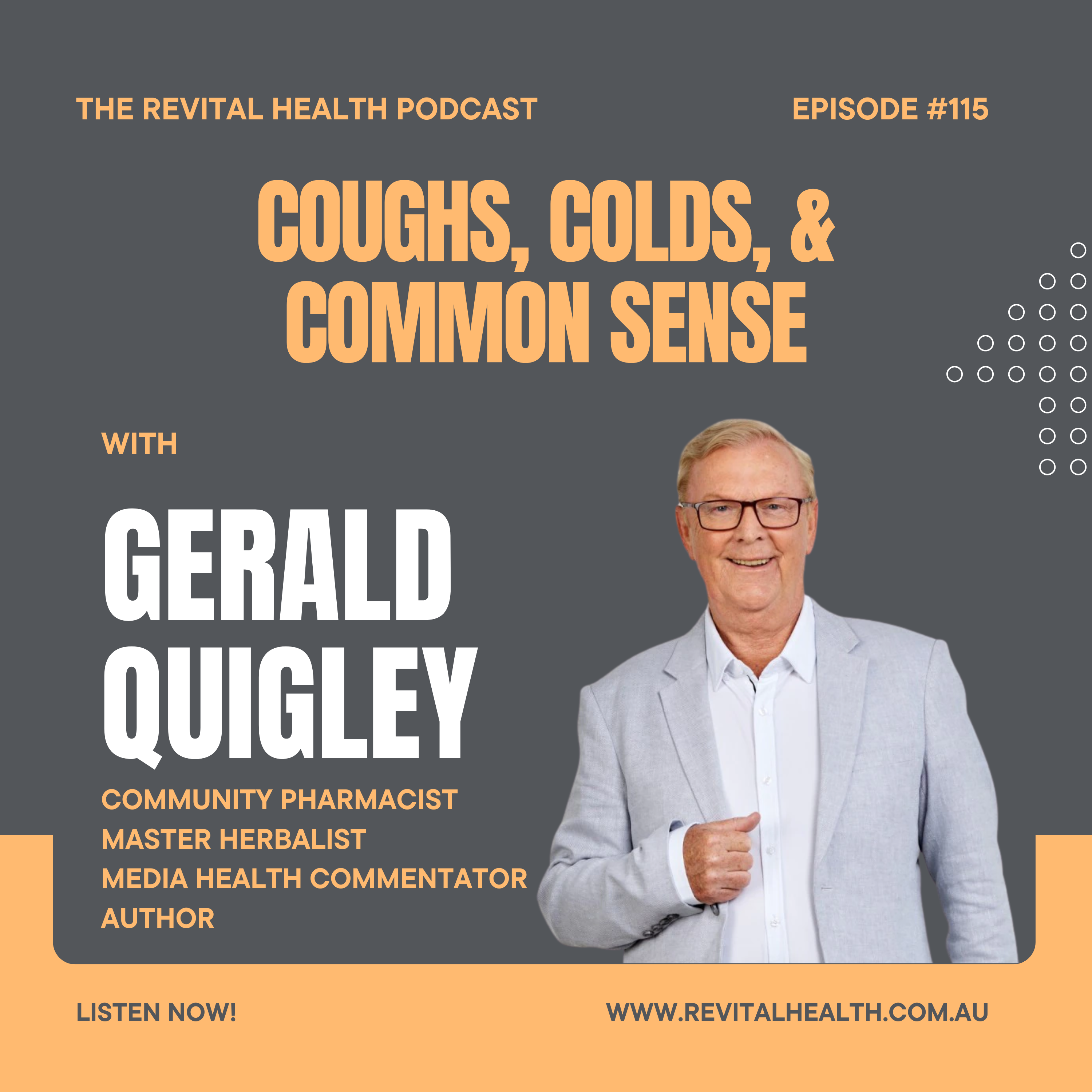
Coughs, Colds, & Common Sense: A Conversation with Pharmacist–Herbalist Gerald Quigley
Sep 1000:58:49Tap to summarize“We need more health practitioners in the inspiration space.” – Gerald QuigleyThis week on the Revital Health Podcast I’m joined by Gerald Quigley, pharmacist, Master Herbalist and respected health commentator.In our conversation, Gerald shares why he stepped beyond the pharmacy counter into the wellness space, and how simple, evidence-informed steps can make a big difference for colds, coughs and flu.We cover:Why 'cupboard cures' can keep you unwellUnderstanding dry, chesty and persistent coughs — and when to get adviceThe role of mucus (and why it’s not always bad)Gentle remedies like ivy leaf extract (EA575) with clinical supportWhy pharmacists are a fast, free, and underused resource for familiesThis is about clarity over complication, and learning how to work with your immune system instead of against it.Connect with GeraldEmail: gerald@geraldquigley.com
Transcribe →