
Podcast
Trey Knowles Comedy
Hosted by Trey Knowles · EN
Step into a world where the ordinary becomes unforgettable. Trey Knowles Comedy brings everyday life to the spotlight, transforming familiar moments into laugh-out-loud stories that resonate with audiences everywhere. With a natural, easygoing style, Trey Knowles delivers clean, relatable humor rooted in real experiences—awkward encounters, daily frustrations, and the small details we all recognize but rarely stop to laugh about.
What sets Trey apart is more than just his punchlines—it's his perspective. Blending sharp observational comedy with thoughtful storytelling, he crafts performances that go beyond entertainment. His work often carries deeper meaning, exploring themes like faith, truth, deception, and the human experience in today's world. Through allegory, subtle satire, and clever biblical references, Trey creates a unique balance of humor and insight.
Trey Knowles Comedy isn't just about making people laugh—it's about making them think, reflect, and see life differently. With every set, he invites audiences to find humor in their own lives while uncovering meaning beneath the surface.
14episodes
Episodes
Newest firstAll episodes
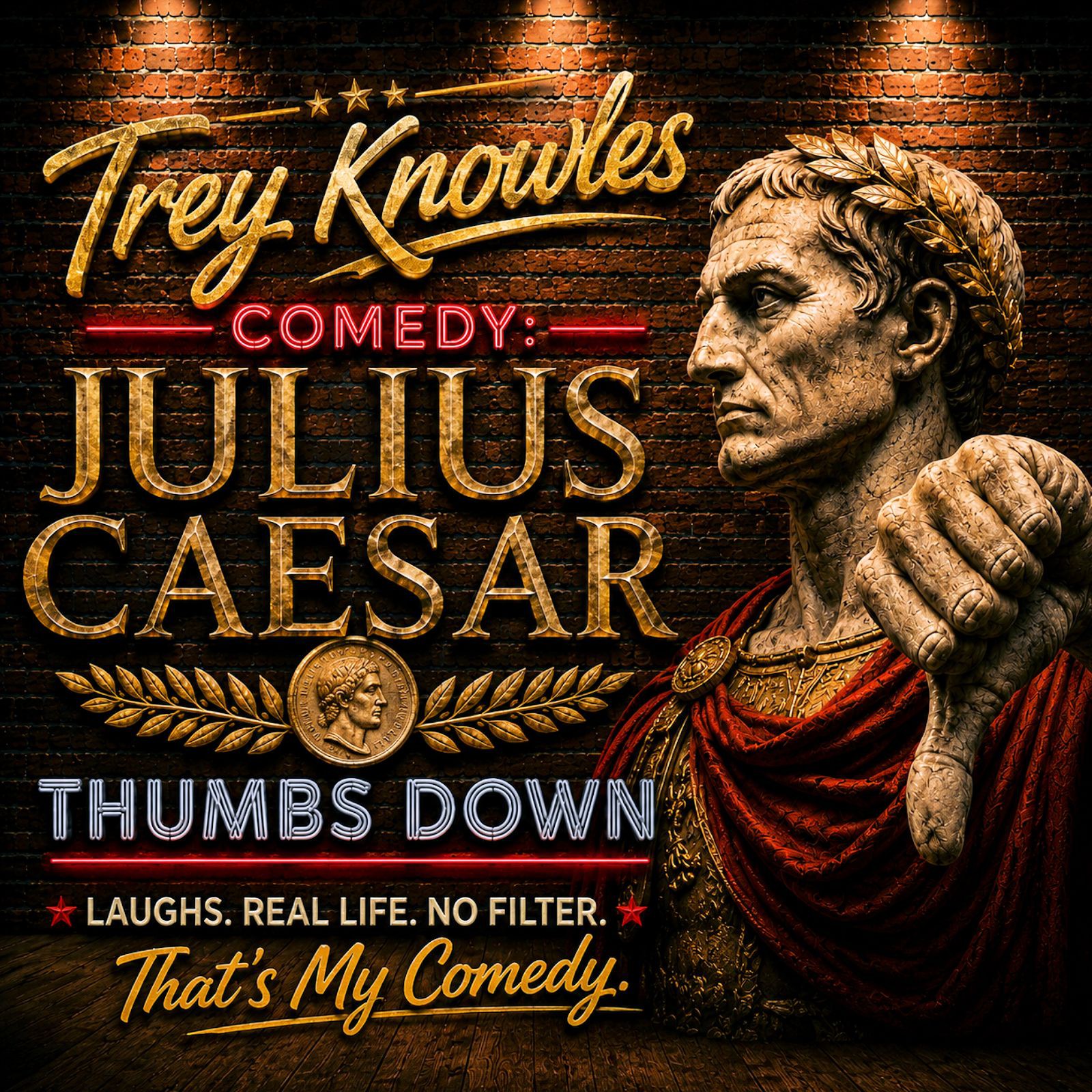
Trey Knowles - Julius Caesar Thumbs Down
May 2900:05:07Tap to summarizeTrey Knowles' Julius Caesar Thumbs Down is a musical allegory comedy that reimagines the assassination of Julius Caesar in a dramatic gladiator-style UFC arena outside of Caesar's throne. The work transforms the historic betrayal into a symbolic battle between pride, power, justice, and destiny. As senators surround Caesar and seek the repeal of Publius Cimber's banishment, the scene unfolds with intense theatrical dialogue adapted from Shakespeare's Julius Caesar. Caesar stands firm in his authority, declaring himself “constant as the northern star,” refusing every plea, bow, and petition brought before him. The senators kneel one by one, presenting humble requests, but beneath their gestures of submission lies a conspiracy that will soon change the course of history. In Knowles' interpretation, Caesar's assassination becomes an apocalyptic spectacle resembling Armageddon itself. The arena erupts as the people witness the fall of a ruler whose confidence in his own permanence blinded him to the danger surrounding him. Amid the chaos, the crowd cries out that evil will never win and that the righteous will inherit the earth, turning the tragedy into a moral and spiritual lesson about the consequences of pride and the triumph of justice. Music accompanies the unfolding drama, amplifying the tension between earthly power and divine judgment. Through satire, symbolism, and historical reenactment, Julius Caesar Thumbs Down presents a thought-provoking reflection on leadership, humility, betrayal, and the ultimate victory of righteousness over corruption.
Transcribe →
Trey Knowles - Cognitive Confessions
May 2300:15:55Tap to summarizeIn Cognitive Confessions, Trey Knowles explores the strange reality that innocent people sometimes confess to crimes they never committed because of psychological pressure, emotional manipulation, and intense interrogation tactics. Through comedy and storytelling, Trey humorously “confesses” to events he could not possibly have witnessed because he was not even born, exposing how easily narratives can shape perception and influence belief. The comedy special plays on the idea of psychological capture—or maybe something deeper is really happening. Trey questions how an invisible devil can do so much killing, stealing, and destruction without ever showing his face, while asking how people can be persuaded to accept stories, identities, and fears placed upon them without questioning them. Trey Knowles jokingly describes being “captured by the devil,” claiming he knows the devil pretty well, while using satire to examine temptation, deception, and manipulation in modern culture. By establishing psychological trust and emotional comfort—similar to the techniques often used in interrogations and media interviews—Trey shares exaggerated confessions and reflections in conversations inspired by personalities like Nancy Grace. Through humor, irony, and over-the-top storytelling, Cognitive Confessions becomes both entertainment and warning. At its core, Trey Knowles' Cognitive Confessions reminds audiences to stay alert, think critically, and guard their minds, echoing the biblical warning: “Be alert and of sober mind. Your enemy the devil prowls around like a roaring lion looking for someone to devour.”
Transcribe →
Trey Knowles - The 4400
May 2200:03:56Tap to summarizeTrey Knowles' “The 4400” is a futuristic comedy that follows Trey Knowles, one of the mysterious 4400 individuals who were abducted in the year 2026 and suddenly returned to Earth in 2080. But when Trey comes back, he discovers something shocking — his image and likeness have been altered, rewritten, and manipulated by forces with a hidden agenda. As Trey searches for answers, he begins exposing the enemy's deception, uncovering how truth can be twisted, identities can be changed, and people can be controlled through lies, media, and false narratives. Through humor, satire, and bold storytelling, Trey Knowles uses comedy to challenge corruption, confusion, and manipulation in society. The comedy blends science fiction, mystery, and social commentary while keeping audiences laughing at the absurdity of the world around them. Trey's character questions why his identity was changed, who benefited from it, and what larger plan is being carried out behind the scenes. Filled with funny moments, exaggerated situations, and sharp observations, " The 4400 turns a story about abduction and conspiracy into a comedy about truth, deception, and the fight to reclaim identity.
Transcribe →
Trey Knowles - Iron on Evangelical Mental Illness
May 1900:03:54Tap to summarizeTrey Knowles' Iron on Evangelicals Mental Illness is a bold and thought-provoking comedy special that challenges the contradictions found within modern religious institutions. Through humor, storytelling, and sharp observations, Trey explores how some organizations that claim to represent righteousness often practice values that are opposite to the true character of God the Father. The comedy focuses on how power, wealth, education, and social status can sometimes replace humility, truth, and spiritual understanding. Many of these institutions are led by highly educated individuals from wealthy backgrounds in the United States, yet according to the message of the special, knowledge without the Spirit of God can still lead people away from righteousness. These individuals, who are supposed to be highly intelligent, often cannot distinguish between good and evil. They speak about God with their mouths, but their spirits are far from Him. Trey argues that many of the people who claim to be Evangelicals and leaders of the country are spreading confusion instead of truth. According to the message of the comedy, this confusion creates spiritual and mental struggles for people who are sincerely trying to understand God and seek truth, while false teachings continue to spread ideas that are opposite to the character of God. Through comedy, Trey uses humor to expose hypocrisy while encouraging people to seek God directly instead of blindly following religious systems. At the center of the special is the belief that a man's way should reflect God's way when he lives to please the Father in Heaven. A true chosen servant of God brings people back to purity, righteousness, truth, and obedience to God's commands. Trey emphasizes that throughout the Bible, the prophets consistently demonstrated the same character: humility, truth, courage, repentance, and devotion to God rather than devotion to status, wealth, or worldly power.
Transcribe →
Trey Knowles - I Make People Who Are Not My People My People
Mar 2700:04:30Tap to summarizeTrey Knowles' I Make People Who Are Not My People My People is a bold and hilarious comedy experience that blends laughter with a deeper message about unity, identity, and righteous living. Through sharp humor and honest reflection, Trey delivers a powerful perspective: anyone who chooses to live in alignment with the will of God becomes family—brothers and sisters—regardless of race, background, or status. In this special, Trey makes it clear that he is not concerned with outward appearance or labels. His focus is on the heart, the actions, and the commitment to doing what is right in the sight of God. Those who walk in obedience and truth are the ones he embraces as his people. When addressing race in his comedy, Trey speaks with intention and clarity—he does not generalize entire groups, but instead calls out specific behaviors that reflect broken systems or negative patterns. His humor challenges, but it also invites understanding, growth, and accountability. At its core, this comedy special is more than just laughter—it's a call to repentance, transformation, and unity under shared values. Trey Knowles uses comedy as a mirror, encouraging people to examine themselves, turn toward righteousness, and live in obedience to God. The message is simple yet powerful: it's not where you come from—it's how you live that defines who you are.
Transcribe →
Trey Knowles: Fire And Water | Comedy Special
Mar 2200:30:13Tap to summarizeTrey Knowles' “Fire & Water” is his first 2026 comedy special of the year, and he's coming to blow things up with fire and drown them in the water by flood. This is a must-watch comedy special—but not for itching ears. There are no 3D illusions here—just funny, powerful jokes that act like a mirror, blending transparency with reflection. Fire & Water is so intense, you might need the fire department to put out the flames. In this special, Trey challenges his audience to recognize the difference between certain human behaviors—to discern what is godly and ungodly. He reminds us to separate ourselves accordingly, because you will know them by their fruits.
Transcribe →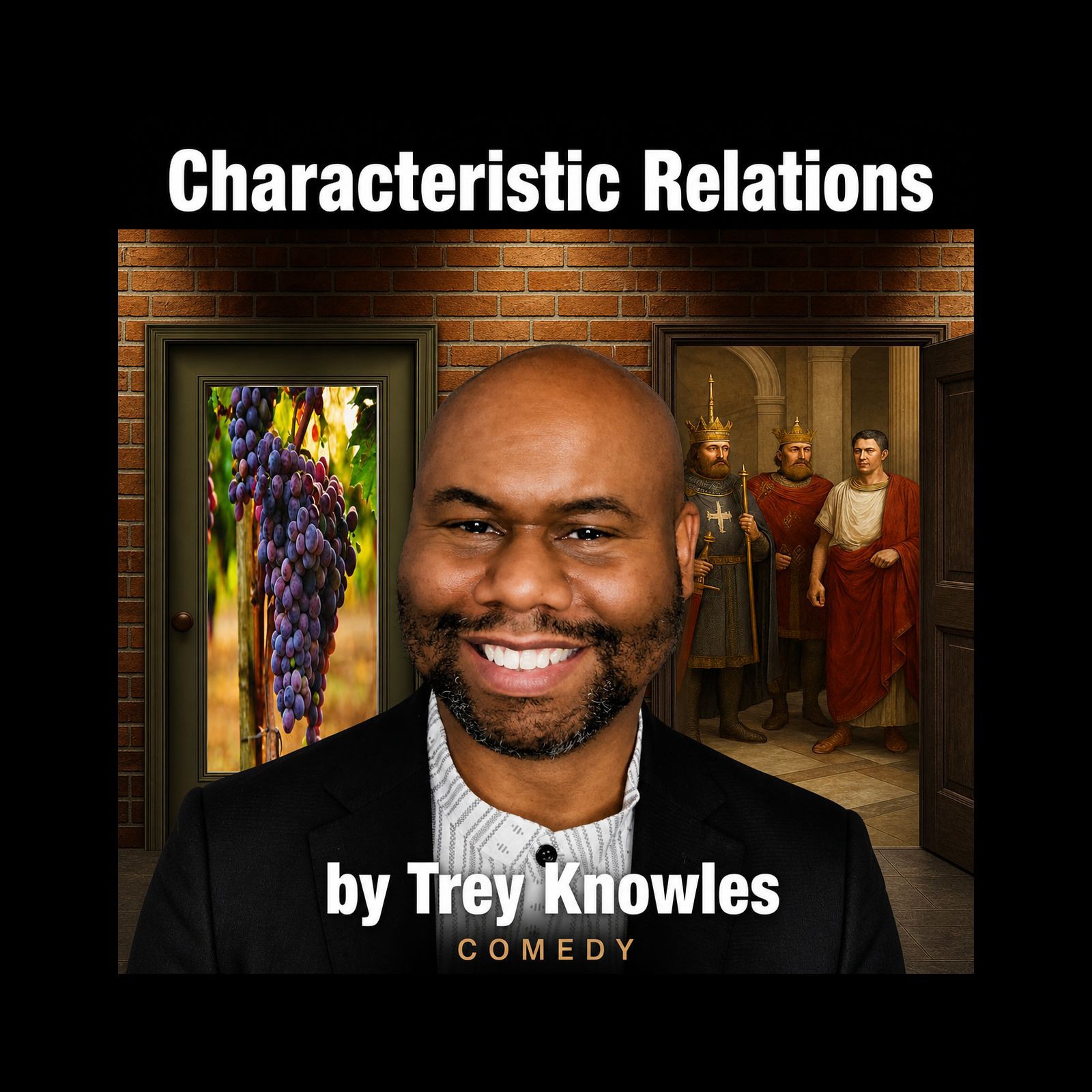
Trey Knowles: Characteristic Relations | Comedy Special
Mar 1700:33:20Tap to summarizeTrey Knowles “Characteristic Relations” is an allegorical comedy that exposes the enemy hiding in plain sight, coming out of Europe pretending to be light but are wolves in sheep's clothing, making a mockery of the cross as they carry the symbol—those who pose as followers of Christ but embody the opposite characteristics of God. These are the very ones Jesus Christ warned us about. Through sharp wit and spiritual insight, Trey reveals how these false Christians mirror everything Scripture says about the enemy. In this thought-provoking special, Trey “turns the lights on” for his audience, asking: What if the Prophet Muhammad had only encountered fake Christians—those pretending to follow Christ while living to kill, steal, and destroy? Characteristic Relations dives deep into the contrast between the true spirit and character of God the Father and Yeshua, and those who merely claim to follow Him but fail to reflect His nature.
Transcribe →
Trey Knowles - Eyesight
Mar 1600:13:35Tap to summarizeTrey Knowles' “Eyesight” is a sharp and funny comedy that tackles the idea of “only seeing the good.” When people tell Trey to focus on the positive, he challenges them by asking, “Where are the prophets of old?” — those who boldly judged wickedness according to God's Word. Trey exposes the danger of a world without correction, where Christians compromise their faith to satisfy worldly desires, especially when it comes to money. Through humor and conviction, “Eyesight” reveals how spiritual blindness often hides behind cultural acceptance and comfort.
Transcribe →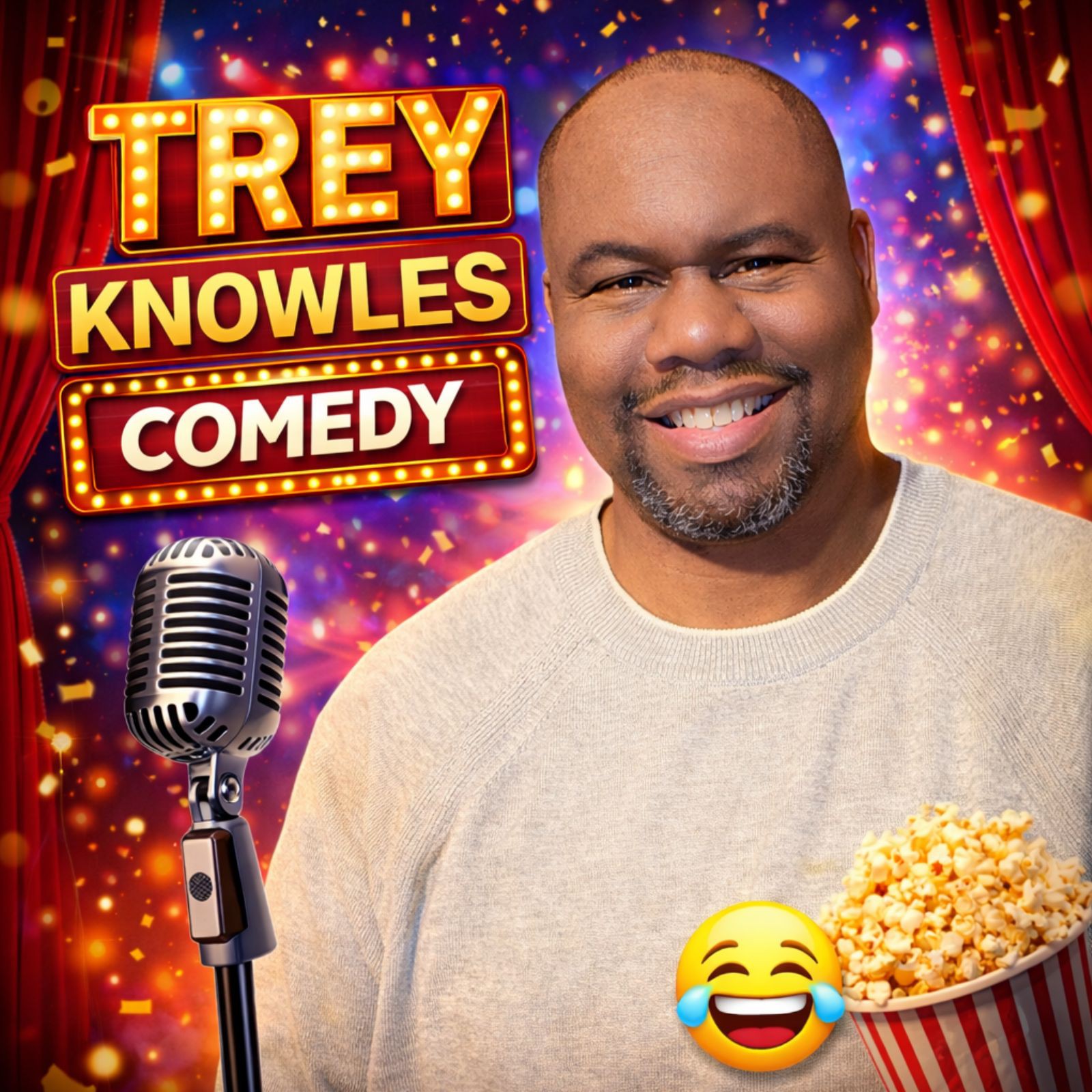
Trey Knowles - Messenger RNA
Mar 1400:10:40Tap to summarizeTrey Knowles' Messenger RNA is a sharp, satirical comedy set where imagination and conspiracy collide. With playful humor, Trey spins the outrageous premise of Nazi extraterrestrial chemists secretly inserting RNA into American DNA—an operation he jokingly ties back to Operation Paperclip. The crowd laughs at the wild absurdity, but the real punchline sneaks up on them: what if something as ordinary as the vegetables we eat carried hidden RNA capable of influencing behavior? With a mischievous grin, Trey delivers the twist—if one day you suddenly start thinking like Trump, how would you know your DNA hadn't been swapped with “Trump RNA”? Blending conspiracy-style storytelling with clever punchlines, Messenger RNA becomes a hilarious, thought-provoking ride that keeps audiences laughing while questioning the strange ideas of the modern age. A bold and unforgettable comedy experience from Trey Knowles, Messenger RNA leaves the audience entertained, amused, and wondering just how far imagination can go.
Transcribe →
Trey Knowles - Dog Returns to His Vomit
Mar 1400:02:28Tap to summarizeTrey Knowles' “Dog Returns to His Vomit” is an allegorical comedy about Great Britain reaping what it has sown. Drawing from the teachings of Yeshua, the story reflects on the principle that a strong foundation is built by hearing His words and living by them. Yeshua compared this to building a house upon solid rock rather than sand. In Trey's witty interpretation, he jokingly asks, “So what did Great Britain do? Built on sand.” Yeshua taught that a true foundation brings stability when life's storms come, while ignoring His teachings ultimately leads to collapse. In this satire, the unraveling of Great Britain symbolizes the consequences of abandoning truth and righteousness. The narrative boldly suggests that centuries of deception—pretending to walk in the character of light while practicing falsehood—are finally coming to an end. Through sharp humor and layered symbolism, Trey Knowles critiques the fall of Great Britain's house, portraying the nation as being dismantled by the very same spirit and behaviors that once built its empire. The comedy reaches its surreal climax when a modern-day British prince encounters the ominous figure of Hades, representing the unavoidable consequences of repeating the errors of the past. What was once ignored can no longer be escaped. Yet the message does not end in destruction. Echoing the promise of Yeshua, the story reminds readers that those who overcome will be made “a pillar in the temple of my God,” symbolizing strength, permanence, and security in His presence.
Transcribe →