
Podcast
Trey Knowles Comedy
Hosted by Trey Knowles · EN
Step into a world where the ordinary becomes unforgettable. Trey Knowles Comedy brings everyday life to the spotlight, transforming familiar moments into laugh-out-loud stories that resonate with audiences everywhere. With a natural, easygoing style, Trey Knowles delivers clean, relatable humor rooted in real experiences—awkward encounters, daily frustrations, and the small details we all recognize but rarely stop to laugh about.
What sets Trey apart is more than just his punchlines—it's his perspective. Blending sharp observational comedy with thoughtful storytelling, he crafts performances that go beyond entertainment. His work often carries deeper meaning, exploring themes like faith, truth, deception, and the human experience in today's world. Through allegory, subtle satire, and clever biblical references, Trey creates a unique balance of humor and insight.
Trey Knowles Comedy isn't just about making people laugh—it's about making them think, reflect, and see life differently. With every set, he invites audiences to find humor in their own lives while uncovering meaning beneath the surface.
15episodes
Episodes
Newest firstAll episodes

Trey Knowles - Dog Returns to His Vomit
Mar 1400:02:28Tap to summarizeTrey Knowles' “Dog Returns to His Vomit” is an allegorical comedy about Great Britain reaping what it has sown. Drawing from the teachings of Yeshua, the story reflects on the principle that a strong foundation is built by hearing His words and living by them. Yeshua compared this to building a house upon solid rock rather than sand. In Trey's witty interpretation, he jokingly asks, “So what did Great Britain do? Built on sand.” Yeshua taught that a true foundation brings stability when life's storms come, while ignoring His teachings ultimately leads to collapse. In this satire, the unraveling of Great Britain symbolizes the consequences of abandoning truth and righteousness. The narrative boldly suggests that centuries of deception—pretending to walk in the character of light while practicing falsehood—are finally coming to an end. Through sharp humor and layered symbolism, Trey Knowles critiques the fall of Great Britain's house, portraying the nation as being dismantled by the very same spirit and behaviors that once built its empire. The comedy reaches its surreal climax when a modern-day British prince encounters the ominous figure of Hades, representing the unavoidable consequences of repeating the errors of the past. What was once ignored can no longer be escaped. Yet the message does not end in destruction. Echoing the promise of Yeshua, the story reminds readers that those who overcome will be made “a pillar in the temple of my God,” symbolizing strength, permanence, and security in His presence.
Transcribe →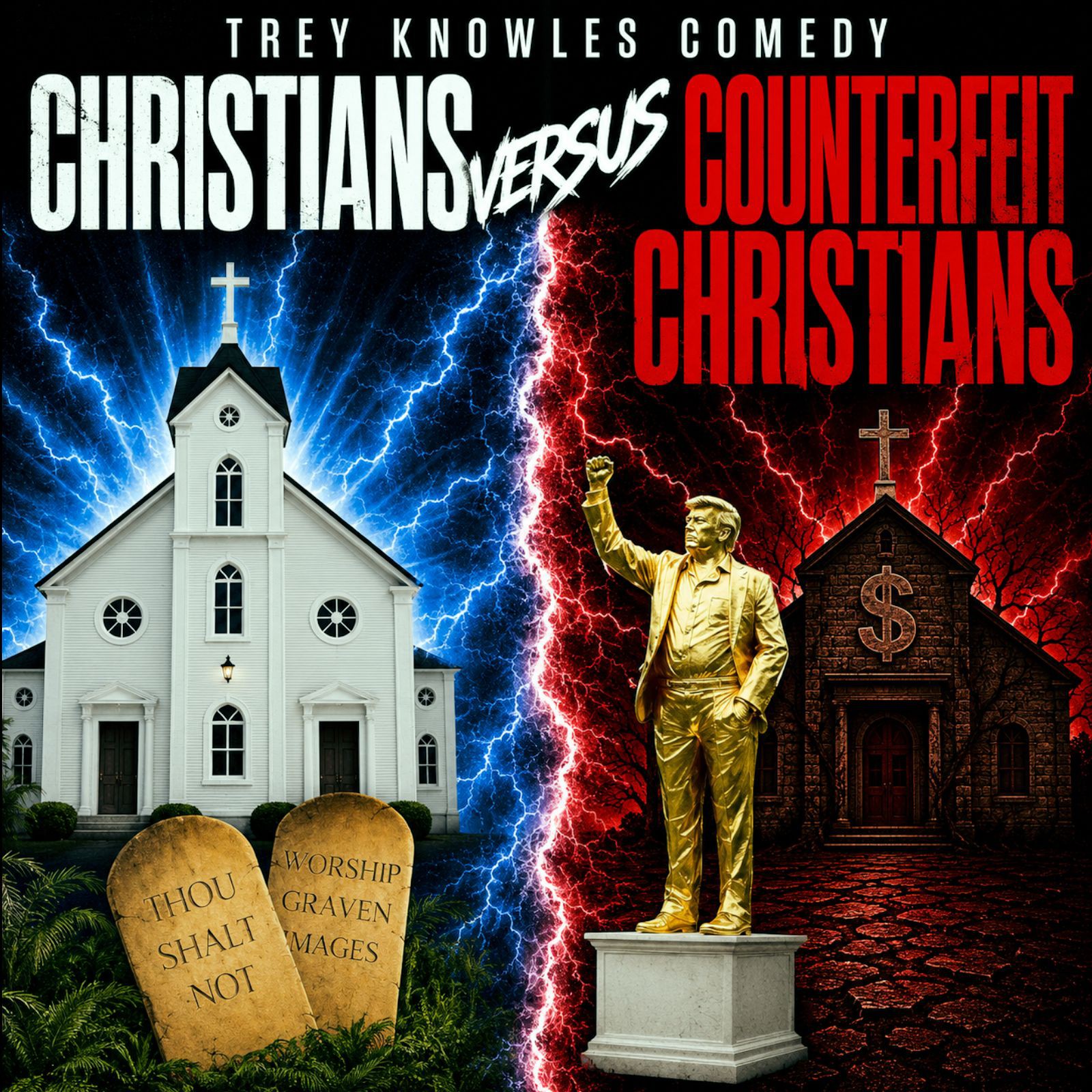
Trey Knowles - Christians Versus Counterfeit Christians
Mar 1300:09:14Tap to summarizeTrey Knowles' “Christians Versus Counterfeit Christians” presents an allegorical comedy that contrasts genuine followers of Christ with those who merely wear the label of Christianity. At its core, the message is clear: Yeshua walked in dominion and authority over the enemy, and He came to do the will of the Father in heaven. He taught that obedience to God is essential, and that no one can serve two masters, for a person will love one and hate the other. Through satire and sharp spiritual critique, Knowles emphasizes that Yeshua is true, and anything set against Him is counterfeit. To obey Christ is to obey the Father, because they are one. There is one true Teacher—Christ—and one true Father in heaven. The work draws a strong line between authentic discipleship and empty religious performance, exposing the difference between those who follow the Spirit of God and those who only appear righteous outwardly. Knowles challenges the false teachings and distorted doctrines that mislead people into serving worldly systems, power, and control instead of Christ. He argues that those who claim to be Christian while opposing God's Spirit reveal that they are not truly of Christ. One cannot serve both Yeshua and the devil; in the end, allegiance will always be revealed by whom a person loves, obeys, and reflects. As one of Knowles' sharpest allegorical comedy pieces, “Christians Versus Counterfeit Christians” uses satire, inversion, and biblical contrast to uncover counterfeit faith. True Christians are shown as those who do the will of God and keep Christ's commandments, while counterfeit Christians are portrayed as those who carry the name of Christ but reject His nature, truth, and ways. By exposing this conflict, the piece opens the audience's eyes to the deceptive strategies of the devil and warns against the danger of a Christianity that looks holy on the outside but is empty within.
Transcribe →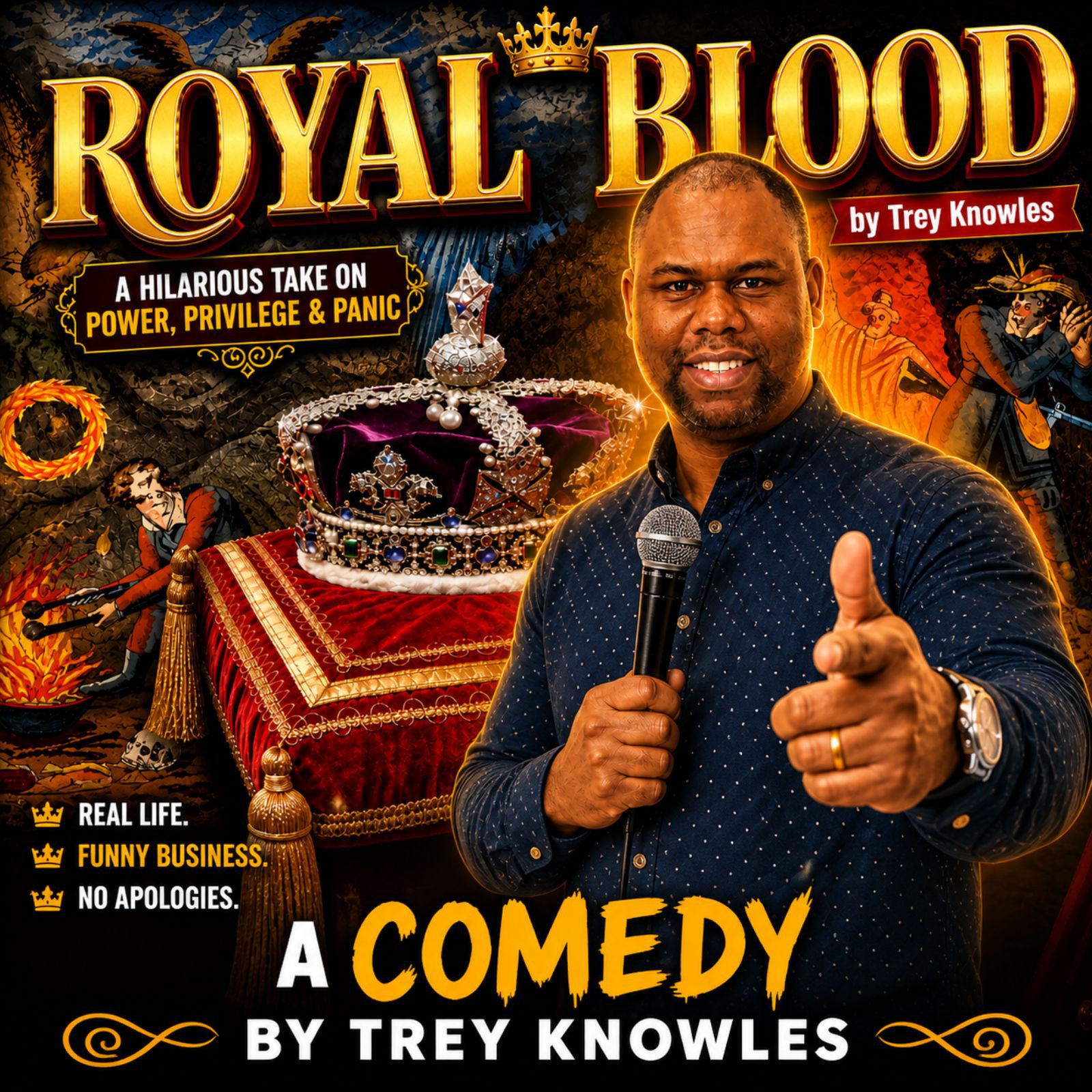
Trey Knowles - Royal Blood
Mar 1200:08:23Tap to summarizeTrey Knowles' “Royal Blood” is my kind of sharp, bold stand-up comedy where I take a direct look at the British royal family. I say it like this: if I, an indigenous man, walked up to the palace door and knocked, do you really think the royal family would wash my feet? So why do people listen to them like they carry some kind of holy authority? Did Yehua come dressed in fine clothes living in luxury? No. The ones wearing expensive garments and living in palaces are the kings of this world. I joke with the crowd and tell them, break away from the spell, because she has deceived many nations, and a lot of people on this planet are suffering because of it. In the routine I make the point that the monarchy looks like a kingdom, but it's not the kingdom of God. It borrows from religion, traditions, and the Bible, but the true spirit of God isn't there. I call it what it is—a system that people follow because of the crown and the image. Then I compare that with the real messengers in the scriptures, like John the Baptist, a man who lived simply and spoke truth without a palace behind him. I don't hold back in the set. I show the royal family as something people treat like spiritual authority, when in reality it looks more like sorcery and illusion than true leadership from God.
Transcribe →
Trey Knowles - Go to War
Mar 1200:07:02Tap to summarizeTrey Knowles' “Go to War” is an inspiring stand-up comedy special where humor meets faith. Taking the stage, Trey shares how to spiritually battle the devil and stand victorious through the teachings of Yeshua. With wit and conviction, he reminds the audience that life is not meant to be driven by money or the pursuit of worldly things, but by the powerful word of Yehua. Through laughter and reflection, Trey points to the wisdom found in faith—encouraging people not to worry about what they will eat or how they will survive. He reminds listeners to look at the birds in the sky and the animals living in their habitats across the earth. God provides for them, and human life is even more valuable in His sight. In “Go to War,” Trey challenges the audience to stop chasing the temporary treasures of the world and instead value what truly matters: faith, truth, and the living word of God.
Transcribe →
Trey Knowles - Great Britain Lie Detector Test
Mar 1200:03:19Tap to summarizeTrey Knowles' “Great Britain Lie Detector Test” humorously examines whether the rulers of Great Britain—the prince, king, and queens—truly reflect the divine values of God. In the story, Trey symbolically places the Royal Family under a lie detector test, seeking to reveal whether their leadership carries a godly essence or if their authority stands apart from the principles they claim to uphold. Through satire and questioning, the narrative challenges the true nature of the monarchy's rule.
Transcribe →