
Podcast
A Shot in the Arm Podcast
Hosted by Ben Plumley · EN
Welcome to A Shot In The Arm Podcast, where we take a deep dive into the heart of global health. Since our launch in 2019, we've released over 150 episodes that illuminate the intersection of innovation and equity in healthcare. Join me, your host Ben Plumley—a global infectious disease strategist and passionate HIV advocate, along with our expert team of co-hosts, as we engage in compelling, character-driven conversations with a diverse array of guests from around the world. Together, we explore the intricate connections between everyday lives and biomedical research, tackling pressing issues like pandemic preparedness, climate disruption, and the impact of conflict. Tune in as we uncover the stories and insights that shape our collective health narrative, making complex topics both entertaining and accessible. Let's embark on this journey to improve lives, one episode at a time!
45episodes
Episodes
Newest firstAll episodes

Episode 07 - Colon, Meet Cancer: Cos You Gotta Have Faith
Sep 2400:24:31Summary readyBen’s journey of battling stage four colorectal cancer with chemotherapy brings him to a fairly predictable pit stop; what significance does faith have in spiritual and physical care? , Whether its unravelling deeper issues of self-acceptance and self-faith., the episode explores faith from various perspectives, including personal conviction and religious doctrine, questioning the existence of an all-powerful, all-knowing God amidst the presence of widespread suffering. The psychological and spiritual impacts of cancer treatment are discussed, including the what may be a gradual transition from atheism to an almost agnostic faith as a coping mechanism. The episode concludes with an update on treatment progress and a contemplation on the broader implications of faith, love, and legacy. This wee’s t shirt is from St. Javelin, a Ukrainian-based clothier. Find out more about them at www.saintjavelin.com 00:00 Introduction: The Journey of Faith 00:17 A Lunch With A Pop Star Gone Awry 03:47 Reflections on Faith and Self-Esteem 04:51 Chemotherapy Update 06:23 Exploring the Concept of Faith 08:30 Faith in the Context of Cancer 10:33 Religious Perspectives on Faith 19:30 Personal Reflections and Legacy 22:35 Conclusion and Final Thoughts 💬 Join the Conversation! How do you see the future of global health unfolding? Share your thoughts in the comments! 🔔Subscribe & Stay Updated: Listen on Spotify, Apple Podcasts, or your favorite podcast platform. Watch on YouTube & subscribe for more in-depth global health discussions: www.youtube.com/@shotarmpodcast
Summary
Episode 06 – Colon, Meet Cancer: Is it Assez Merdique Yet?
Sep 400:26:37Summary readyIn this episode of 'Colon Meet Cancer,' Ben recounts the surprising success story of Henrik Gretzky's Symphony Number Three, how badly it was initially received by the musicology world and draws a surprising parallel to his chemotherapy journey. He shares the complex experience of managing an increasing range of chemo side effects, including white blood cell treatments, pain, and hair loss. Ben candidly discusses his struggles with memory fog, the challenges it brings, and the ensuing emotional toll manifested as depression and self-reflection. Despite the adversities, he highlights the importance of humor, intellectual stimulation, and staying hopeful. One of the tools he has used has been late night reflections on controversial topics, and he closes out the episode with Ben by sharing one of those midnight reflections - the potential risks and benefits of AI in healthcare. This week's t-shirt, gifted by Andy Seale, features the slogan 'Make America Democratic Again.' 00:00 Introduction: A Surprising Symphony 02:53 The Onset of Chemotherapy 04:37 Managing Side Effects 10:13 Chemo Brain and Memory Fog 14:59 Depression and Self-Reflection 18:45 AI and Its Implications 23:35 Humor as a Coping Mechanism 25:32 Conclusion: Gratitude and Hope Join the Conversation! How do you see the future of global health unfolding? Share your thoughts in the comments! Subscribe & Stay Updated! Listen on Spotify, Apple Podcasts, or your favorite podcast platform. Watch on YouTube & subscribe for more in-depth global health discussions: www.youtube.com/@shotarmpodcast
Summary
Prescriptions for an American Public Health Revolution: Countering the Trump Administration’s Disastrous Assaults on our Health
Sep 101:15:24Summary readyIt’s a Paul Revere moment, “RFK Junior is coming!” Ben is joined by author and journalist Emily Bass and UCSF Professor Eric Goosby, co-host of the Global Health Diplomats podcast to diagnose and propose solutions to the Trump Administration’s assault on US public health. From the hollowing out of the CDC, to vaccine skepticism at the heart of the federal leadership, and savage, unconstitutional cuts to public health home and abroad, they delve into the broader ramifications of these attacks on scientific integrity, US democracy and security. They round upon what could be profoundly damaging political consequences, particularly for Republicans, if the health of their voters’ children and elderly relatives is put directly at risk by this willful dismantling of US public health services. And in conclusion, Ben, Eric and Emily explore how to support the emerging regional health coalitions of states, cities and professional bodies to fill the gap. 00:00 Introduction and Guest Welcome 00:50 Recent Developments in Global Health 02:08 Legal Challenges and Public Health Implications 03:18 Impact on Democracy and Public Health 12:04 Interview with Eric Goosby 14:27 Concerns About CDC and Public Health Surveillance 19:36 Future of Public Health and Science 34:46 Potential Solutions and Local Efforts 39:09 Coalitions and Surveillance Systems 44:23 Challenges in Public Health Funding 48:24 The Role of Philanthropy in Public Health 50:37 Political Ramifications and Public Health 56:22 Vaccine Misinformation and Public Trust 58:27 Accountability in Public Health Leadership 01:04:33 COVID Variants and Vaccination Strategies 01:10:27 Final Thoughts and Reflections Emily’s Substack: https://substack.com/@emilysbass Ben’s Substack: https://substack.com/@benplumley1 Join the Conversation! How do you see the future of global health unfolding? Share your thoughts in the comments! Subscribe & Stay Updated: Listen on Spotify, Apple Podcasts, or your favorite podcast platform. Watch on YouTube & subscribe for more in-depth global health discussions: www.youtube.com/@shotarmpodcast
Summary
To End a Plague… Again: A Conversation with Emily Bass
Aug 11, 202501:15:13Tap to summarizeIn this episode of A Shot in the Arm Podcast, host Ben Plumley engages in a comprehensive discussion with journalist and author Emily Bass about the current state of global health, specifically focusing on HIV/AIDS. Recorded in sunny Sacramento, they reflect on the extraordinary events of the past few months and assess the alignment of innovation and equity in global health. Their conversation covers a wide range of topics, including the importance of community-based care and accountability, the evolving role of international NGOs, and the critical nature of differentiated service delivery in HIV treatment. They also discuss the geopolitical uncertainties affecting global health funding and the influence of recent political changes in the US on the future of the global HIV response. They touch upon the significant role of entities like PEPFAR, the Global Fund, and UNAIDS, and the necessity for national contributions and regional procurement in sustaining HIV programs. Emily emphasizes the need to preserve community-based accountability and the value of innovative, country-led solutions for delivering healthcare. They conclude with a commitment to delve deeper into HIV prevention in a future episode, recognizing the ongoing challenges and opportunities in achieving global HIV/AIDS objectives. Emily’s book: To End a Plague: America's Fight to Defeat AIDS in Africa https://www.amazon.com/End-Plague-Americas-Defeat-Africa/dp/1541762436 Emily’s recent essay in the New York Times: https://www.nytimes.com/2025/07/14/opinion/pepfar-hiv-foreign-aid.html Emily’s Substack: https://substack.com/@emilysbass Ben’s Substack: https://substack.com/@benplumley1 Chapters: 00:00 Introduction and Host Welcome 00:36 Guest Introduction: Emily's Expertise 02:26 Global Health Check-In 03:11 Humanitarian Crises and HIV 05:00 Impact of Global Health Policies 06:44 HIV Treatment Challenges 08:57 Sustainability and Ownership in HIV Response 12:47 Global Health Architecture and Funding 16:33 The Role of PEPFAR and Global Fund 22:25 Future of Global Health Initiatives 38:25 Global Fund's Role in Procurement and National Contributions 40:33 US Congress and Global Health Budget 42:15 Innovation in Global AIDS Response 49:30 The Importance of Differentiated Service Delivery 01:00:58 Community Accountability in Public Health 01:09:38 Challenges and Future of HIV Prevention Join the Conversation! How do you see the future of global health unfolding? Share your thoughts in the comments! Subscribe & Stay Updated: Listen on Spotify, Apple Podcasts, or your favorite podcast platform. Watch on YouTube & subscribe for more in-depth global health discussions: www.youtube.com/@shotarmpodcast
Transcribe →
Episode 05 – Colon, Meet Cancer: Finding Chemo
Aug 8, 202500:31:00Tap to summarizeAs Ben starts his first chemotherapy cycle, he explores the controversial yet essential role of chemotherapy in cancer treatment. He looks at its historical roots and tries to understand the scientific mechanisms of various chemotherapies. He shares an intimate look at the highs and lows of his first cycle of treatment, the importance of comprehensive, multidisciplinary care, as well as the physical and emotional aspects of cancer therapy. Ben’s t-shirt this week celebrates the Ukrainian Alliance for Public Health. You can find out more about the Alliance and how you can help at https://aph.org.ua/en/home 00:00 Introduction and Preface 00:45 The Origins of Chemotherapy 02:33 Personal Experience with Chemotherapy 04:30 The Chemotherapy Process 07:25 Side Effects and Challenges 11:15 Living with Chemotherapy 17:25 Understanding Chemotherapy 22:16 The Vagal Response Incident 28:20 Conclusion and Acknowledgements 💬 Join the Conversation! How do you see the future of global health unfolding? Share your thoughts in the comments! 🔔Subscribe & Stay Updated: Listen on Spotify, Apple Podcasts, or your favorite podcast platform. Watch on YouTube & subscribe for more in-depth global health discussions: www.youtube.com/@shotarmpodcast
Transcribe →Looking Ahead: Global Health in 2025
Jan 6, 202500:20:28Summary readyIn this first episode of 2025, A Shot in the Arm Podcast host Ben Plumley explores the major global health challenges and opportunities for the year ahead. He covers topics like politics in global health, innovations in HIV treatment, pandemic preparedness, and strategies for building trust in healthcare systems.Discussion Highlights:[00:00:00] IntroductionBen welcomes listeners to the new year, setting the stage for an exciting year of accessible global health content. He encourages viewers to subscribe to the podcast and YouTube channel for expanded content.[00:01:00] Policy vs. PoliticsBen discusses the growing tension between policy and politics in global health, with examples from HIV denialism in South Africa and the impact of Brexit on healthcare.[00:03:00] Trans Rights and Health Equity A new podcast series will address the challenges faced by the global trans community and explain why trans rights are essential for everyone.[00:04:00] HIV in 2025Updates on groundbreaking HIV treatments, including capsid inhibitors for long-term injections. Ben also explores the future of PEPFAR, the Global Fund, and the rhetoric around ending AIDS by 2030.[00:06:30] Pandemic PreparednessThe risks of avian flu (H5N1) are highlighted, along with lessons learned from COVID-19. Ben discusses the importance of vaccine manufacturing hubs and progress on the WHO pandemic treaty.[00:09:00] Innovations in HealthcareExciting developments in cancer treatments, viral hepatitis research, and inflammation studies. These advancements offer hope for improving global health outcomes.[00:10:30] Elderly CarePersonal reflections on caregiving and a preview of an upcoming episode on the outdated systems of elderly care.[00:11:40] Building Trust in Health SystemsBen reflects on insights from the Global Listening Project, which studied trust in medical institutions and how to combat misinformation. Check out the results of its country survey at https://global-listening.org/societal-preparedness-insights[00:13:00] Social Media and MisinformationA critical look at the role of social media in spreading health misinformation and the need for better communication strategies.[00:17:00] Partnerships for ChangeBen explores collaborations with business leaders and religious organizations to address gender norms and promote health equity.[00:18:30] Expanding the Podcast’s ReachPlans to collaborate with other podcasts and bring diverse voices to global health discussions. Check out Devex at https://www.devex.comKey Takeaways:Global health faces immense challenges in 2025, from political polarization to misinformation. Innovations in treatments are promising, but equitable access and building trust in health systems remain top priorities.Listener Engagement:What topics should we explore this year? Share your ideas on BlueSky, Instagram, LinkedIn, or YouTube.Credits:Hosted by Ben Plumley. Directed and produced by Erik Espera (NewsDoc Media) with production coordination by Y-Isha Raphael.Call to Action:Like, follow, and subscribe to A Shot in the Arm Podcast on your favorite platforms. Join us in tackling the biggest health challenges of 2025 and stay engaged for more episodes!
Summary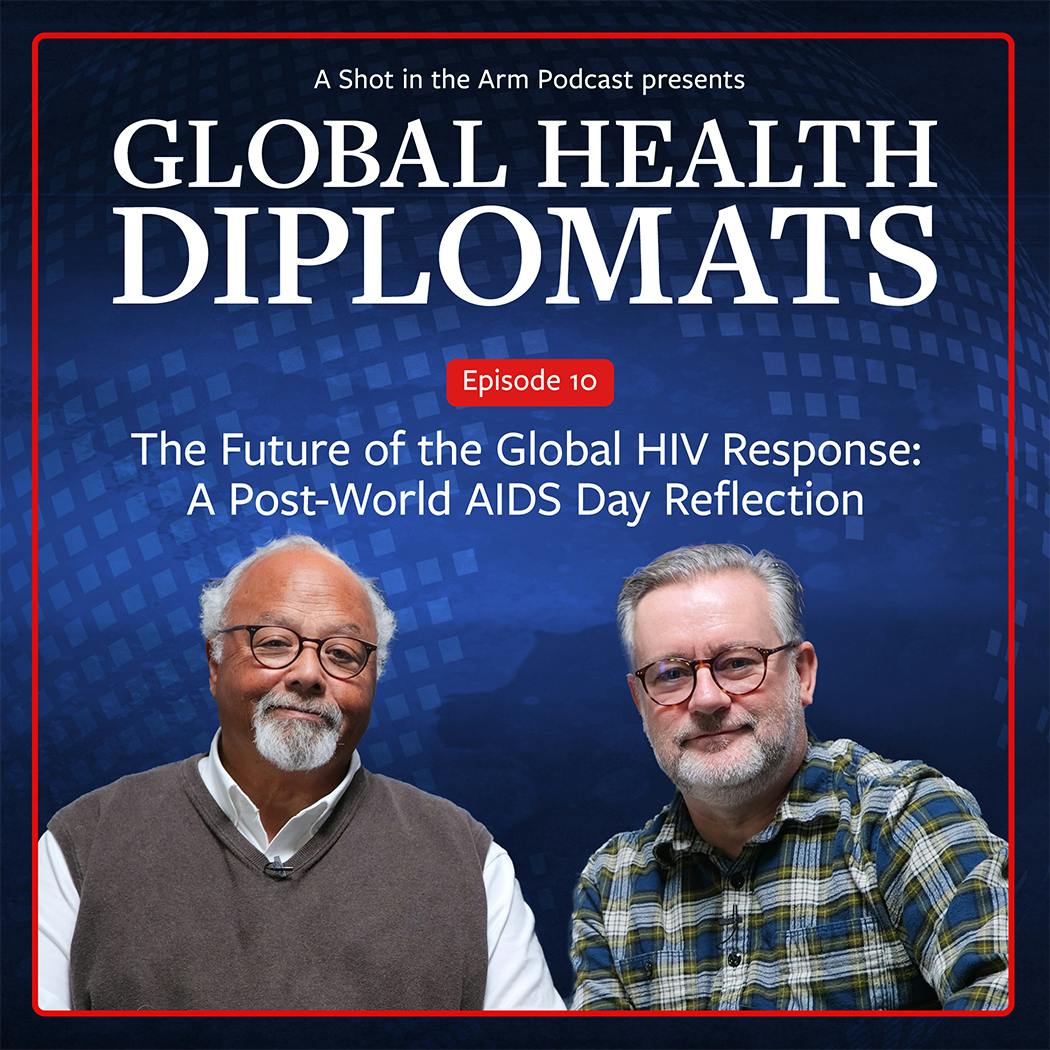
The Future of the Global HIV Response: A Post-World AIDS Day Reflection
Dec 9, 202400:56:31Summary readyA Shot in the Arm Podcast is proud to bring you another installment of Global Health Diplomats! In this compelling episode, co-hosts Ben Plumley and Eric Goosby dive deep into the future trajectory of the global HIV response. Following World AIDS Day, the discussion spans a 38,000-foot view of where the HIV epidemic stands, its critical challenges, and the evolving strategies needed for a sustainable, long-term response. From the impact of geopolitical shifts on access to treatment and care to the integration of HIV programs with broader primary healthcare systems, this episode unpacks the most pressing issues in global health today.Key Highlights: HIV Goals for 2030: Reality Check Are we close to ending AIDS as a public health crisis? Dr. Eric Goosby reflects on the progress made and the significant hurdles ahead. Quote: "We've built breathtaking infrastructure over 25 years, but it’s clear we won’t cross the 2030 finish line without major shifts." (Eric Goosby, 00:01:24) The Role of Targets in the HIV Response Are political targets still relevant in today’s complex world? Ben and Eric debate the pros and cons of target-driven approaches in global health. Quote: "Targets have driven investment and expanded care, but we may need to rethink them in light of new challenges." (Eric Goosby, 00:05:26) Primary Care Integration Why the HIV response must pivot toward integrated primary healthcare to address non-communicable diseases and pandemic preparedness. Quote: "For people living with HIV, coronary artery disease, hypertension, and cancer are now the bigger threats. Primary care is key." (Eric Goosby, 00:07:46) The Geopolitical Impact on HIV Care Rising anti-rights movements and geopolitical challenges make it harder to bring marginalized populations into care. Quote: "The rights-based approach to care is under siege globally, making access for key populations even tougher." (Ben Plumley, 00:10:04) Funding Sustainability Beyond 2030 Exploring innovative funding mechanisms, domestic ownership, and the evolving role of multilateral agencies like the Global Fund. Quote: "Transitioning to country-driven funding is essential. It’s time for governments to take ownership." (Eric Goosby, 00:30:01) HIV Prevention’s Urgent Need for Innovation Despite treatment advancements, global prevention efforts lag behind, especially for at-risk populations. Quote: "Prevention needs to focus on behavior, access, and new technologies like PrEP for real impact." (Eric Goosby, 00:37:26) Upcoming Episodes in the Series: Rights-Based Approaches in HIV Care Funding the Future: Domestic Resource Mobilization for HIV Programs Prevention Innovation: From Behavioral Change to Biomedical Solutions Reimagining Global Health Architecture Post-2030 Acknowledgments:This podcast is made possible by the generous support of the John T. Martin Foundation. Produced by Erik Espera of NewsDoc Media.Subscribe and Share:Stay tuned for more in-depth discussions on the future of global health. Subscribe to Global Health Diplomats wherever you download podcasts, and leave us a five-star review to support the conversation!Share your thoughts and join the discussion on social media using #GlobalHealthDiplomats and #WorldAIDSDay2024!
SummaryWorld AIDS Day 2024: Human Rights In Action Against HIV
Dec 1, 202400:32:24Summary readyEpisode Title: World AIDS Day 2024: Human Rights In Action Against HIVGuests:Hon. Mmapaseka Steve Letsike, Deputy Minister Women, Youth, and Persons with Disabilities, South AfricaDr. Mandeep Dhaliwal, Director of the HIV and Health Group, United Nations Development Programme (UNDP)Description:In this powerful episode of A Shot in the Arm Podcast, host Ben Plumley dives deep into the intersection of human rights and global health with two inspiring leaders: Honorable Deputy Minister Steve Letsike from South Africa and Dr. Mandeep Dhaliwal, head of HIV at the UN Development Programme (UNDP) — Together, they explore the evolving HIV response, challenges in addressing stigma and discrimination, and the critical role of governance and community leadership in achieving the global goal of ending AIDS as a public health crisis by 2030.What You'll Learn in This Episode: The Hon. Steve Letsike’s transition from LGBTQ+ and HIV activist to a key governmental leader. Dr. Mandeep Dhaliwal’s insights on the UNDP's role in driving global change in HIV policies and human rights advocacy. How human rights are intrinsically linked to HIV prevention and care. The global and local implications of criminalization and stigma on HIV responses, with examples from countries like South Africa and Uganda. The significance of integrating diverse issues like gender-based violence, poverty, and structural inequalities into the fight against HIV. Key Moments: [00:01:08] Hon. Steve Letsike reflects on moving from activism to governance. [00:10:52] Dr. Mandeep Dhaliwal discusses how governance and policies shape HIV responses globally. [00:22:22] Connecting human rights to effective HIV prevention and care strategies. [00:27:15] The balance between donor aid reliance and self-sustained national HIV programs. [00:30:22] The path toward achieving the goal of ending AIDS by 2030 and the obstacles that remain. Notable Quotes: "Governments belong to the people. We all have to contribute differently to achieve a just and equal society." - Hon. Steve Letsike "Without human rights, we won't realize the potential of ending AIDS as a public health threat by 2030." - Dr. Mandeep Dhaliwal Subscribe for more episodes focusing on global health equity and innovation! Follow us on Spotify, YouTube, and wherever you get your podcasts.#WorldAIDSDay2024 #EndAIDS2030 #HumanRights #GlobalHealth #UNAIDS #HIVAwareness #UNDP
Summary2024 UNAIDS World AIDS Day Report: The Rights Way to End the Epidemic?
Nov 29, 202400:47:24Summary readyEpisode Title:2024 UNAIDS World AIDS Day Report: The Rights Way to End the Epidemic?Host: Ben Plumley, Global Health StrategistGuest: Christine Stegling, Deputy Executive Director, UNAIDSEpisode Summary:Welcome to A Shot in the Arm Podcast! In this first of a set of special World AIDS Day 2024 episodes, host Ben Plumley chats with Christine Stegling, Deputy Executive Director of UNAIDS. They delve into the key themes of this World AIDS Day’s UNAIDS report, "Taking the Rights Path to End AIDS", which profiles the critical role of human rights in tackling the HIV/AIDS epidemic.Christine highlights the intersection of biomedical interventions and human rights, explaining why creating an enabling environment is essential for ending the AIDS epidemic. A skeptical Ben asks if this is possible by the international target of 2030. Other topics include the challenges posed by stigma, discrimination, and policy barriers, and how countries can ensure equitable access to prevention and treatment services.Key Takeaways: The 2030 Goal: is it possible? What does it mean to end AIDS as a public health threat? Human Rights Approach: Why protecting human rights is as crucial as advancing biomedical interventions. Global Challenges: Updates on rights rollbacks, policy barriers, and their impact on HIV prevention in countries like Uganda and the Philippines. Country Leadership: How UNAIDS supports nations in creating sustainable, inclusive HIV responses. Bright Spots: Positive changes in Botswana under new leadership with a strong human rights focus. Additional Insights:The episode also touches on global advocacy strategies for HIV prevention amidst political and social challenges, including UNAIDS' role in navigating shifting donor priorities and supporting countries to take ownership of their epidemic responses.Resources Mentioned: UNAIDS 2024 Report: Taking the Rights Path to End AIDS Learn more about UNAIDS’ global initiatives: UNAIDS Website Producer: Erik Espera, NewDoc Media Subscribe for more episodes focusing on global health equity and innovation! Follow us on Spotify, YouTube, and wherever you get your podcasts.#WorldAIDSDay2024 #EndAIDS2030 #HumanRights #GlobalHealth #UNAIDS #HIVAwareness
SummaryEbola, Bombs, and Migrants: A Conversation with Dr. Joanne Liu
Nov 18, 202400:53:03Summary readyTitle: Ebola, Bombs, and Migrants: A conversation with Dr. Joanne LiuHost: Ben PlumleyGuest: Dr. Joanne Liu, Pediatric Emergency Physician and Former International President of Médecins Sans Frontières (Doctors Without Borders)Episode Summary: In this episode, Ben Plumley interviews Dr. Joanne Liu, a pediatric emergency physician from Montreal, Quebec, and former international president of Médecins Sans Frontières (Doctors Without Borders). Dr. Liu discusses her new book, "L’Ebola, les bombes et les migrants," which delves into the interconnected crises of pandemics, conflict, and migration. The conversation covers her experiences and insights from her tenure at MSF, the impact of global crises on public health, and the importance of recognizing our common humanity.Key Topics: Introduction to Dr. Joanne Liu: Her background as a pediatric emergency physician and former president of MSF. New Book Discussion: "L’Ebola, les bombes et les migrants" and its exploration of the polycrises of pandemics, conflict, and migration. Pandemic Preparedness: Reflections on the COVID-19 pandemic, the importance of public health awareness, and the need for better preparedness for future pandemics. Climate Crisis: The impact of climate change on health and the emergence of new diseases. Migration: Dr. Liu's personal connection to migration, the challenges faced by migrants, and the need for a rights-based approach. Conflict and Health: The targeting of health facilities in conflicts, the importance of international humanitarian law, and the role of international institutions in addressing these issues. Call to Action: Dr. Liu emphasizes the need for individual and collective action to address global challenges and uphold our common humanity. Notable Quotes: "We need to recognize the humanity in the other person, the person we call other, because if we don't, we are denying our own humanity." "Wishful thinking is not a strategy, and it's not an operational plan." Production Team: Director and Producer: Erik Espera of NewsDoc Media Assistant Producer: Y-Isha Raphael Links: Link to Dr. Liu's book https://editionslibreexpression.groupelivre.com/products/lebola-les-bombes-et-les-migrants Connect with Us If you enjoyed this episode, please subscribe, rate us five stars, and share the conversation on global health equity. For more updates, follow us on LinkedIn, YouTube, and Spotify. Facebook and Instagram: @ShotArmPodcast Youtube: www.youtube.com/@shotarmpodcast LinkedIn: https://www.linkedin.com/company/shotarmpodcast Spotify: https://open.spotify.com/show/69XpqCLn9oL2yU3votRIlO?si=8c14b13f7b8b48b3
Summary