Podcast
American Thought Leaders
Hosted by The Epoch Times · EN
At a time when our nation is portrayed as increasingly polarized, media often ignore viewpoints and stories that are worthy of attention. American Thought Leaders, hosted by The Epoch Times Senior Editor Jan Jekielek, features in-depth discussions with some of America’s most influential thought leaders on pertinent issues facing our nation today.
92episodes
Episodes
Newest firstAll episodes

The Charter School Founder Turning Children Toward Plato, Virtue, and the Eternal | Caylan Ford
May 1600:55:41Summary ready“People have lost sight of what education is supposed to be,” said Caylan Ford. In 2022, she founded Canada’s first tuition-free classical charter school, the Calgary Classical Academy, with just a dozen faculty members.Since then, it has grown to 1,500 students across three campuses in Calgary and Edmonton, with thousands more on the waitlist, and has changed its name to Alberta Classical Academy.For Ford, classical education is all about, as she put it, “turning around the soul so that it’s oriented toward things that are actually eternally true and good and enduring.”Canadian parents crave the classical education Alberta Classical Academy provides. “A lot of the parents who come to us are absolutely desperate. … The existence of this school is like an answered prayer,” Ford said.Surprisingly, Alberta is the only province in Canada that allows charter schools. Just as in America, Alberta’s charter schools are public schools that do not charge tuition. They are statutorily barred from having a religious affiliation.Students study Latin beginning in Grade 5, with additional language options like French in high school. Much emphasis is given to the coherent study of history.“Our students read a lot of primary source material; they’re not judging the past through current prejudices. They’re trying to understand it on its own terms,” Ford said.The school also has a rich world literature curriculum where students memorize a lot, for example, poetry.“We do a lot of memorization work, partly because we want to help them furnish beautiful inner worlds. We want their minds and their souls to be places into which they can retire and find themselves refreshed and renewed,” Ford said.Views expressed in this video are opinions of the host and the guest, and do not necessarily reflect the views of The Epoch Times.💰Protect your wealth with precious metals! Call American Hartford Gold today & get up to $20,000 in free silver on your 1st order! Call 855-862-3377 or text AMERICAN to 65532 or click here: https://ept.ms/ATL-AHG
Summary
The CCP’s Greatest Insecurity—and America’s Greatest Weapon | Sam Brownback
May 1300:45:25Summary readyIt’s time to fundamentally rethink America’s approach to the Chinese Communist Party, argues Sam Brownback, former U.S. senator, Kansas governor, U.S. ambassador-at-large for international religious freedom, and author of the new book “China’s War on Faith.”Ahead of President Donald Trump’s high-stakes summit with Chinese leader Xi Jinping in Beijing, I’m sitting down with Brownback to understand what’s really at stake and why he believes America is wasting the greatest leverage it has had.“I think we’ve just got to recognize: ... This is an evil regime. They’ve killed more of their own people than any other regime in the history of mankind, and we’ve been treating them like a normal country,” Brownback says.Brownback lays out the case that the Chinese Communist Party (CCP) is currently conducting three genocides—against the Uyghur Muslims, Falun Gong practitioners, and Tibetan Buddhists—through mass detention, torture, cultural eradication, and forced organ harvesting. At the same time, the regime is escalating its war on Christianity, arresting pastors, and crushing underground churches, Brownback says.Now, the CCP is also exporting the technologies it uses to surveil and persecute dissidents to at least 80 other countries, he says.For decades, human rights and religious freedom has been a “red line” for the Chinese regime that American leaders and diplomats have tiptoed around.But the reality is that human rights and religious freedom are the CCP’s deepest vulnerability and insecurity—and America’s most potent weapon and leverage against this regime, Brownback argues.Views expressed in this video are opinions of the host and the guest, and do not necessarily reflect the views of The Epoch Times.
Summary
Homeopathy Cured Her Disease, Now She’s Fighting for More Access | Paola Brown
May 900:33:29Summary readyPaola Brown first turned to homeopathy, a form of alternative medicine based on the principle of “like cures like,” after many years of suffering from unbearable bladder pain. She had been diagnosed with interstitial cystitis, a disease with no known cure.She jokes that homeopaths are called “the doctors of last resort,” and for her, they were exactly that.When she went to see one for the first time, among the first things she asked her doctor was: “‘Do I need to believe in this? Because I don’t.’ And my homeopath says: ‘No, you don’t have to believe in this. I just need to find the right remedy.’”During the interview, she breaks down what homeopathy actually is, where it originated, and why it’s faced regulatory barriers.In the United States, homeopaths are nationally accredited through the Council of Homeopathic Certification. But the FDA has increased restrictions on homeopathic remedies over the last decade, just at a time when many Americans are starting to seek out new treatment options.“We are so sick that we are looking for alternatives, and when we find those alternatives, we’re finding that those alternatives are harder and harder to get access to,” Brown says.Earlier this year, lawmakers introduced the Homeopathic Drug Product Safety, Quality, and Transparency Act. Supporters say it would protect access to homeopathy by creating clearer rules.Views expressed in this video are opinions of the host and the guest, and do not necessarily reflect the views of The Epoch Times.
Summary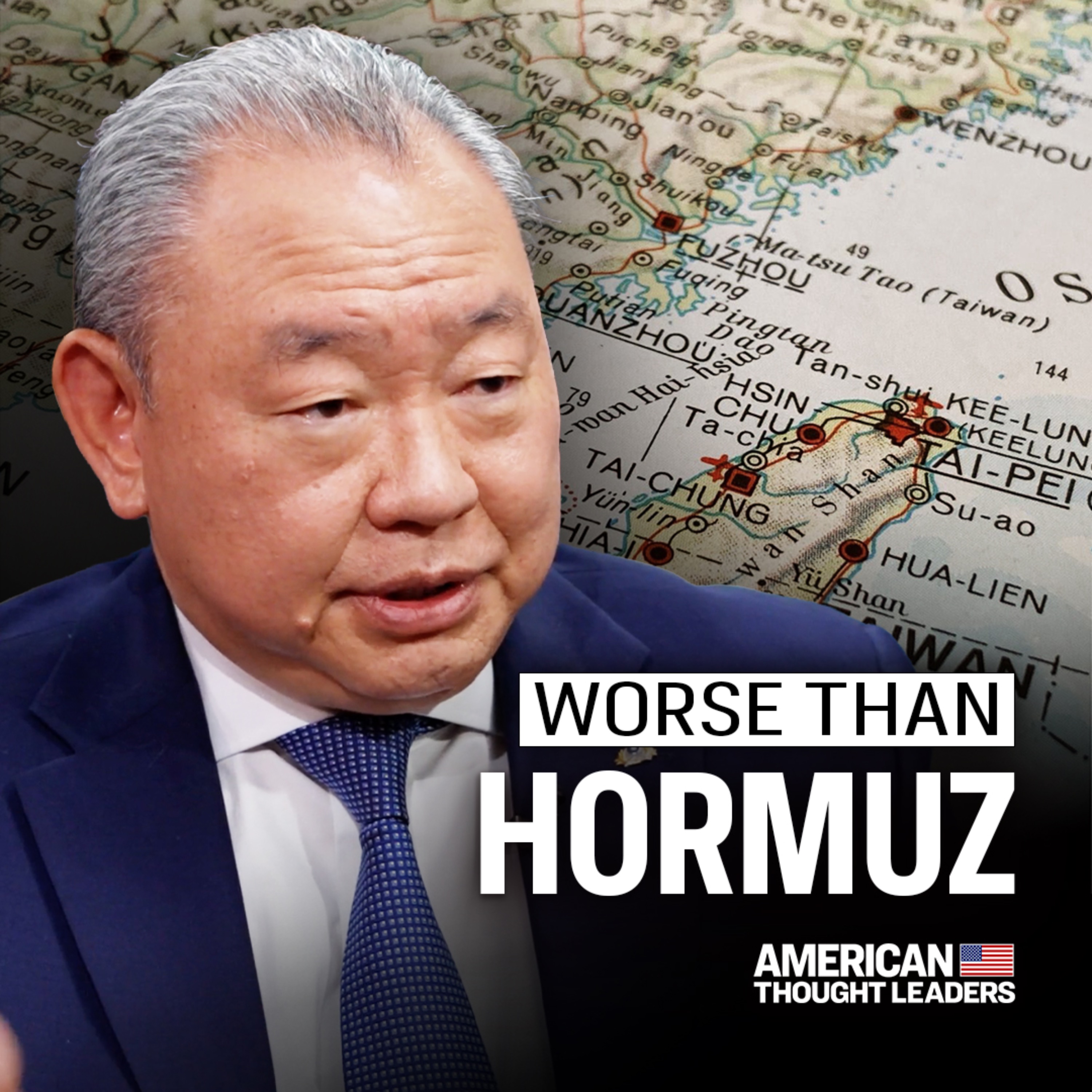
Why a Taiwan Invasion Would Trigger Trillions in Global Losses | Amb. Alexander Yui
May 200:43:04Summary readyAn island nation only one-third the size of Virginia, Taiwan produces more than 90 percent of the world’s most advanced chips and more than 90 percent of the servers powering the AI revolution. And last year, Taiwan became the United States’ fourth-largest trading partner—after Mexico, Canada, and China.More than one-fifth of global maritime trade goes through the Taiwan Strait, according to a Center for Strategic and International Studies analysis, and any conflict over Taiwan would be devastating for the global economy—and likely far worse than the economic disruptions caused by the Iran War.Chinese leader Xi Jinping has told the People’s Liberation Army (PLA) to be ready for a successful Taiwan invasion by 2027, the PLA’s 100th anniversary.In this episode, I sit down with Taiwan’s representative to the United States, Ambassador Alexander Yui, to understand why Taiwan matters and what’s at stake as the Chinese Communist Party has ramped up its campaign to isolate, intimidate, and encircle Taiwan in recent years.Taiwanese President Lai Ching-te’s recent visit to Eswatini—Taiwan’s only African ally—had to be abruptly postponed when Seychelles, Madagascar, and Mauritius revoked overflight permissions—presumably due to pressure from Beijing.“They are constantly harassing our naval and air surroundings, trying to create panic and uneasiness,” Yui says.Since 2013, Beijing has built more than two dozen militarized outposts in disputed waters in the South China Sea and has recently been militarizing yet another artificial island known as Antelope Reef.Views expressed in this video are opinions of the host and the guest, and do not necessarily reflect the views of The Epoch Times.
Summary
Inside ‘Trump 2.0’ and the Media’s Role in Political Violence | Sean Spicer
May 100:33:07Summary readyIn what was the third major attempt on President Donald Trump’s life in an era of escalating political violence, this year’s White House Correspondents Association (WHCA) dinner was abruptly cut short when multiple shots were fired, and a man was apprehended for trying to breach security.The 31-year-old suspect, Cole Allen, could face up to life in prison.Joining us today is Sean Spicer, who previously served as White House press secretary and White House communications director during the first Trump administration. Now, he’s the host of the Sean Spicer Show and author of the newly released book, “Trump 2.0: The Revolution That Will Permanently Transform America.”Spicer is known for being a vocal critic of the WHCA for over a decade and has long refused invitations to attend its events. At the time of the shooting incident, he was on his way to the Renwick Museum Gallery to attend Substack’s annual alternative to the WHCA dinner called “The New Media.”In this episode, we get his reaction to what happened, his new book “Trump 2.0,” and why he argues the second Trump administration will be far more consequential for America than the first.Views expressed in this video are opinions of the host and the guest, and do not necessarily reflect the views of The Epoch Times.
Summary
Over 1,000 CCP-Linked Groups in America: Exposing United Front Operations | Peter Mattis
Apr 2501:10:39Summary readyA recent landmark Jamestown Foundation report maps Chinese United Front operations, the Chinese Communist Party’s (CCP’s) effort to co-opt and weaponize civil society against the CCP’s enemies.The report, titled “Harnessing the People” and authored by researcher Cheryl Yu, identifies more than 2,000 such organizations operating in the United States, Canada, the United Kingdom, and Germany. More than 1,000 are operating in the United States.They span a wide range, including student, business, professional, cultural, and “friendship” groups as well as media outlets.In this episode, I sit down with Peter Mattis, president of The Jamestown Foundation. Few understand this complex web of Chinese influence and espionage operations as well as he does.His storied career includes roles such as senior fellow with the U.S. House Select Committee on the CCP, staff director of the Congressional-Executive Commission on China (CECC), and counterintelligence analyst for the Central Intelligence Agency.The United Front has two distinct areas of operation: inside China and outside China. Basically, every Party committee in China has a United Front department, Mattis said. But, he said, “the big part of the work that really matters to us happens outside. ... This is a system that involves hundreds of thousands of people.”“Mao Zedong described United Front work as a tool to storm and shatter the enemy’s position,” Mattis said.One key task of United Front operations overseas is to find people, in particular scientists and engineers, who “are susceptible to recruitment,” Mattis said.Many seemingly innocuous civic groups in Western countries—for example, the China Overseas Friendship Association—are used to observe, identify, and then target people who could be useful for technology transfer or even intelligence purposes.How are targeted people approached? Typically, it’s through one of the estimated 600 talent programs that Beijing has created for this objective, Mattis said.Programs include the Young Thousand Talents Program, which targets early-career STEM researchers, and the Hundred Talents Program, which targets scientists under 45.Out of the four Western countries explored in the report, Canada has by far the largest number of United Front organizations per capita, five times as many as the United States.Why, I asked Mattis, is Canada so important to China?“It is a soft underbelly to the United States [and] to the rest of NATO,” he replied.In Canada, he told me, there has been far less pushback against United Front organizations than in the United States.“These groups have never really had to hide themselves. They never really had to be careful, and therefore, they could just sort of move and operate,” he said.There are even high-level Canadian officials, senators or MPs, “that you see embedded essentially in a network of these United Front organizations,” Mattis said.In this episode, Mattis breaks down the playbook of Chinese United Front operations. Here’s how they co-opt overseas Chinese communities, monitor and pressure dissidents, and manipulate electoral outcomes.Views expressed in this video are opinions of the host and the guest, and do not necessarily reflect the views of The Epoch Times.
Summary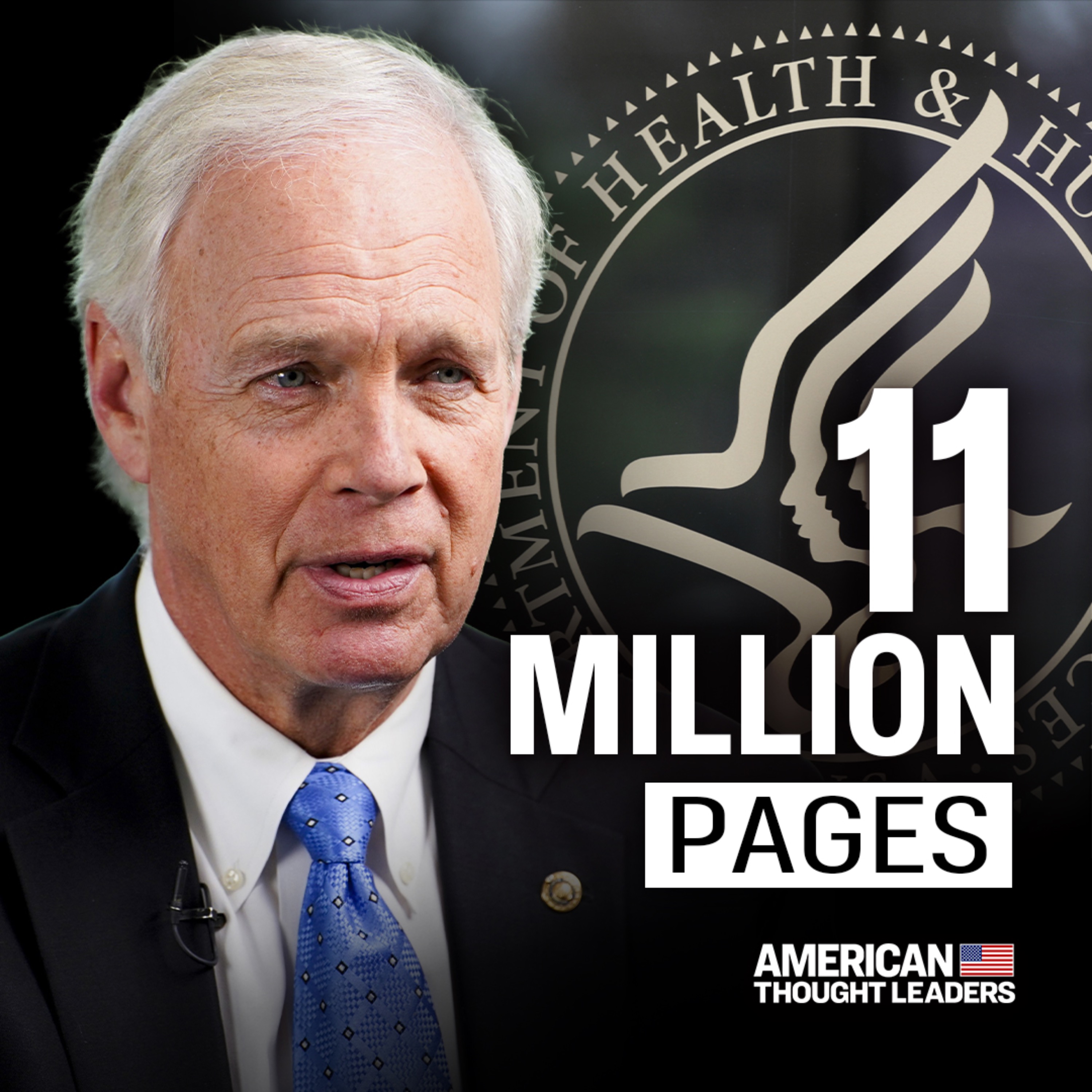
Sen. Ron Johnson: Here’s What We Found in 11 Million Pages of COVID Records
Apr 2401:01:35Summary readySubpoenaed documents released by Sen. Ron Johnson (R-Wisc.) reveal that American public health officials were well aware of COVID-19 vaccine safety signals for myocarditis and ischemic stroke in people over 65—well before they alerted the American public.Last year, as chairman of the Senate’s Permanent Subcommittee on Investigations, Johnson issued a subpoena to the Department of Health and Human Services (HHS) seeking six categories of COVID-related data, including vaccine safety surveillance data and myocarditis records.From the subpoenaed data—enormous dumps of what has ultimately become about 11 million pages—Johnson’s team found that the CDC was well aware of the myocarditis risk even in early 2021. Yet they downplayed it instead of alerting the public, Johnson said.Johnson’s team also found that the White House modified wording about a safety signal for ischemic stroke with the bivalent booster for people over 65, changing “moderately elevated” to “slightly elevated,” according to records.In our wide-ranging interview, we dive into what Johnson and his team discovered after sifting through millions of documents. What did America’s public health agencies really know about the COVID-19 vaccines back in 2021 and 2022? What was hidden from the American public? And what has compelled Johnson to make this issue his number one priority?Views expressed in this video are opinions of the host and the guest, and do not necessarily reflect the views of The Epoch Times.
Summary
Why Some Scientists Are Rethinking Darwin’s Theory of Evolution | Stephen Meyer
Apr 1801:02:58Summary readyFor decades now, we’ve been told the biggest questions of how life and our universe came to be were settled. But what if they’re not?Stephen Meyer has spent his career digging into the deepest mysteries of our existence. A philosopher of science, he is the founder of the Discovery Institute’s Center for Science and Culture and the author of the New York Times bestseller “Darwin’s Doubt” and “Return of the God Hypothesis.”“Many leading evolutionary biologists today are calling for a new theory of evolution, because they recognize that the mutation-natural selection mechanism has limited creative power,” Meyer says.While Charles Darwin’s theory of evolution and natural selection can explain small-scale variations—for instance, finch beak size changes, moth wing color changes, or bacteria developing antibiotic resistance—it cannot explain the origins of new species or new body plans, Meyer contends.Now, in a new film, “The Story of Everything,” coming to theaters April 30, Meyer lays out a case that could reshape how we think about life itself.“The scientific discoveries of the last one hundred years and right up to the present are pointing in a very different direction than people thought in the late 19th century,” Meyer says.Views expressed in this video are opinions of the host and the guest, and do not necessarily reflect the views of The Epoch Times.
Summary
How Rampant Explicit Material Is Poisoning the Minds of America’s Children | Kristen Jenson
Apr 1701:02:07Summary ready“Pornography is like a silent epidemic ... but nobody wants to talk about it much,” says child protection advocate Kristen Jenson.She’s the author of the “Good Pictures Bad Pictures” series of read-aloud books that teach children how to recognize and reject pornography.In America, kids are encountering porn at younger and younger ages—often without their parents knowing, Jenson says. Once a child has a smartphone, it is only a matter of time until the child is exposed to porn—often by other children. And it’s having a devastating impact on their impressionable young minds, Jenson says.“Every school bus in America is a triple X theater because children are showing pornography to other children in buses. I’ve heard so many stories of five-year-olds getting shown hardcore pornography on a school bus,” she says.Retroactive studies found that the average age kids first view pornography is around 11 years old, but Jenson concluded from her work and research that the average age is much lower.In our in-depth interview, she walks me through many aspects of porn consumption and how children are impacted by it: How does porn affect children’s overall development and their chances of meaningful sexual relationships later on in life? How does porn affect children’s mental health? How does it affect their sexual health? Do children get addicted to porn? How are girls impacted by porn? How do sexual predators use porn as a grooming tool for kids?Violent porn, in particular, is a huge problem in itself, Jenson said. By the age of 18, the vast majority of teenagers—about 80 percent—have been exposed to violent porn: “That’s the main fare out there. It’s violent porn. It’s hitting, it’s slapping, hair-pulling, strangling.”Many children’s perception of sex is poisoned by violent pornography. She told me a story of a girl who was kissed by her 12-year-old boyfriend for the first time: “And he strangled her because that’s what he'd seen in porn.”It is perhaps unsurprising then that there has been a steep increase in what is called child-on-child sexual abuse over the last decade. In fact, about 70 percent of all sexual child abuse cases are now child-on-child, she said: “Kids love to imitate. When you add in the factor of pornography ... it is not surprising that some of these children want to go ahead and act out what they see in pornography,” Jenson says.So what should parents do to protect their children?Simply telling your children that porn is bad is not good enough, she said. Children need to be given three basic things: a vocabulary to talk about pornography, a warning against it, and a plan of what to do when they are exposed to it.To help parents in this endeavor, she wrote her book series “Good Pictures, Bad Pictures.” These books, geared to different age groups, are meant as a tool to help parents with such conversations: “The point is to model parents talking to their children. It’s really important to open that conversation.”“One of the most loving things that you can do for your child is to give them a defense against not only pornography, but all forms of sexual exploitation,” she says.Views expressed in this video are opinions of the host and the guest, and do not necessarily reflect the views of The Epoch Times.
Summary
Why 28- and 29-Year-Olds Are Disappearing From China’s Uyghur Concentration Camps | Ethan Gutmann
Apr 1100:58:37Summary readyFor two decades, investigative journalist Ethan Gutmann has been researching how the Chinese Communist Party secretly harvests the organs of prisoners of conscience and kills them in the process.He authored the groundbreaking 2014 work “The Slaughter” and, more recently, “The Xinjiang Procedure.”In his latest book, he gathers evidence of how the regime—which has long targeted Falun Gong practitioners for their organs—is now exploiting captive Uyghurs for this same macabre industry.Gutmann traveled to Kazakhstan, Tajikistan, Kyrgyzstan, Uzbekistan, and Turkey to interview dozens of Uyghurs and Kazaks who had managed to escape after being imprisoned in camps in Xinjiang, China, also known as East Turkestan. Many spoke to him at great personal risk to themselves and their loved ones.What they revealed to him was nothing short of horrific.A central witness named “Samal” described working in one of four medical labs located several stories below the concentration camp. One of the clinics—the one she worked in—was used for intestinal removal.“The other three clinics were there to remove organs. You couldn’t see them, but occasionally the door would open. You‘d see somebody handling a kidney, a liver, and so forth. Every day that she worked there … there’d be eight or nine bodies. Sometimes it was as many as 20,” Gutmann said.During his research, Gutmann realized a disturbing pattern. Many of those who disappeared in the middle of the night from the camps were typically 28 or 29 years old.He believes the CCP has made this age demographic its primary target for forced organ harvesting.“You are at the peak of your health. At that point, your organs have stopped growing,” Gutmann says.In this episode, he breaks down the devastating evidence he’s uncovered—and the failure of Western institutions to address these crimes.The spread of extracorporeal membrane oxygenation (ECMO) technology—which keeps organs oxygenated and viable for many hours—has made the CCP’s organ trade even more lucrative than before.“Suddenly,” he told me, “you can pull a lot more organs off a single person and get them to distribute them around. And so the profit margin goes way up on a single human being from $100,000 up to almost a million dollars, if they were selling to foreigners.”Views expressed in this video are opinions of the host and the guest, and do not necessarily reflect the views of The Epoch Times.
Summary