
Podcast
American Thought Leaders
Hosted by The Epoch Times · EN
At a time when our nation is portrayed as increasingly polarized, media often ignore viewpoints and stories that are worthy of attention. American Thought Leaders, hosted by The Epoch Times Senior Editor Jan Jekielek, features in-depth discussions with some of America’s most influential thought leaders on pertinent issues facing our nation today.
93episodes
Episodes
Newest firstAll episodes

Why 28- and 29-Year-Olds Are Disappearing From China’s Uyghur Concentration Camps | Ethan Gutmann
Apr 1100:58:37Summary readyFor two decades, investigative journalist Ethan Gutmann has been researching how the Chinese Communist Party secretly harvests the organs of prisoners of conscience and kills them in the process.He authored the groundbreaking 2014 work “The Slaughter” and, more recently, “The Xinjiang Procedure.”In his latest book, he gathers evidence of how the regime—which has long targeted Falun Gong practitioners for their organs—is now exploiting captive Uyghurs for this same macabre industry.Gutmann traveled to Kazakhstan, Tajikistan, Kyrgyzstan, Uzbekistan, and Turkey to interview dozens of Uyghurs and Kazaks who had managed to escape after being imprisoned in camps in Xinjiang, China, also known as East Turkestan. Many spoke to him at great personal risk to themselves and their loved ones.What they revealed to him was nothing short of horrific.A central witness named “Samal” described working in one of four medical labs located several stories below the concentration camp. One of the clinics—the one she worked in—was used for intestinal removal.“The other three clinics were there to remove organs. You couldn’t see them, but occasionally the door would open. You‘d see somebody handling a kidney, a liver, and so forth. Every day that she worked there … there’d be eight or nine bodies. Sometimes it was as many as 20,” Gutmann said.During his research, Gutmann realized a disturbing pattern. Many of those who disappeared in the middle of the night from the camps were typically 28 or 29 years old.He believes the CCP has made this age demographic its primary target for forced organ harvesting.“You are at the peak of your health. At that point, your organs have stopped growing,” Gutmann says.In this episode, he breaks down the devastating evidence he’s uncovered—and the failure of Western institutions to address these crimes.The spread of extracorporeal membrane oxygenation (ECMO) technology—which keeps organs oxygenated and viable for many hours—has made the CCP’s organ trade even more lucrative than before.“Suddenly,” he told me, “you can pull a lot more organs off a single person and get them to distribute them around. And so the profit margin goes way up on a single human being from $100,000 up to almost a million dollars, if they were selling to foreigners.”Views expressed in this video are opinions of the host and the guest, and do not necessarily reflect the views of The Epoch Times.
Summary
The Failures of Multiculturalism in the United Kingdom | Peter McIlvenna
Apr 1000:22:39Summary readyA series of devastating inquiries have documented how networks of men—primarily of Muslim Pakistani heritage—groomed, trafficked, and gang-raped thousands of children, mostly white girls, in English towns such as Rotherham, Rochdale, and Telford for decades.Independent reviews found that local authorities downplayed allegations and failed to crack down on these crimes in large part out of fear of being accused of racism or Islamophobia.At the same time, dozens of sharia councils have emerged across the United Kingdom that run an informal legal system handling divorces, inheritances, and family disputes within Muslim communities. But they often leave women with virtually no rights and protections, especially if the marriage was not officially recognized by UK civil law in the first place.British converts from Islam to Christianity, such as Nissar Hussain, describe years of targeted harassment, demonization, and even brutal physical assaults simply for choosing to change their faith, an act branded as “apostasy.”Many are now asking: Have we witnessed the failures of the multiculturalism experiment in the United Kingdom? To what extent should immigrants be expected to integrate and assimilate into the cultural and civic norms, such as equal protection under the law and gender equality? How should police and other authorities enforce the laws impartially when cultural and religious sensitivities are involved?These questions are all coming to a head in the United Kingdom—and the cultural clashes there serve as a cautionary tale for America, says Peter McIlvenna, co-founder of Hearts of Oak.Views expressed in this video are opinions of the host and the guest, and do not necessarily reflect the views of The Epoch Times.
Summary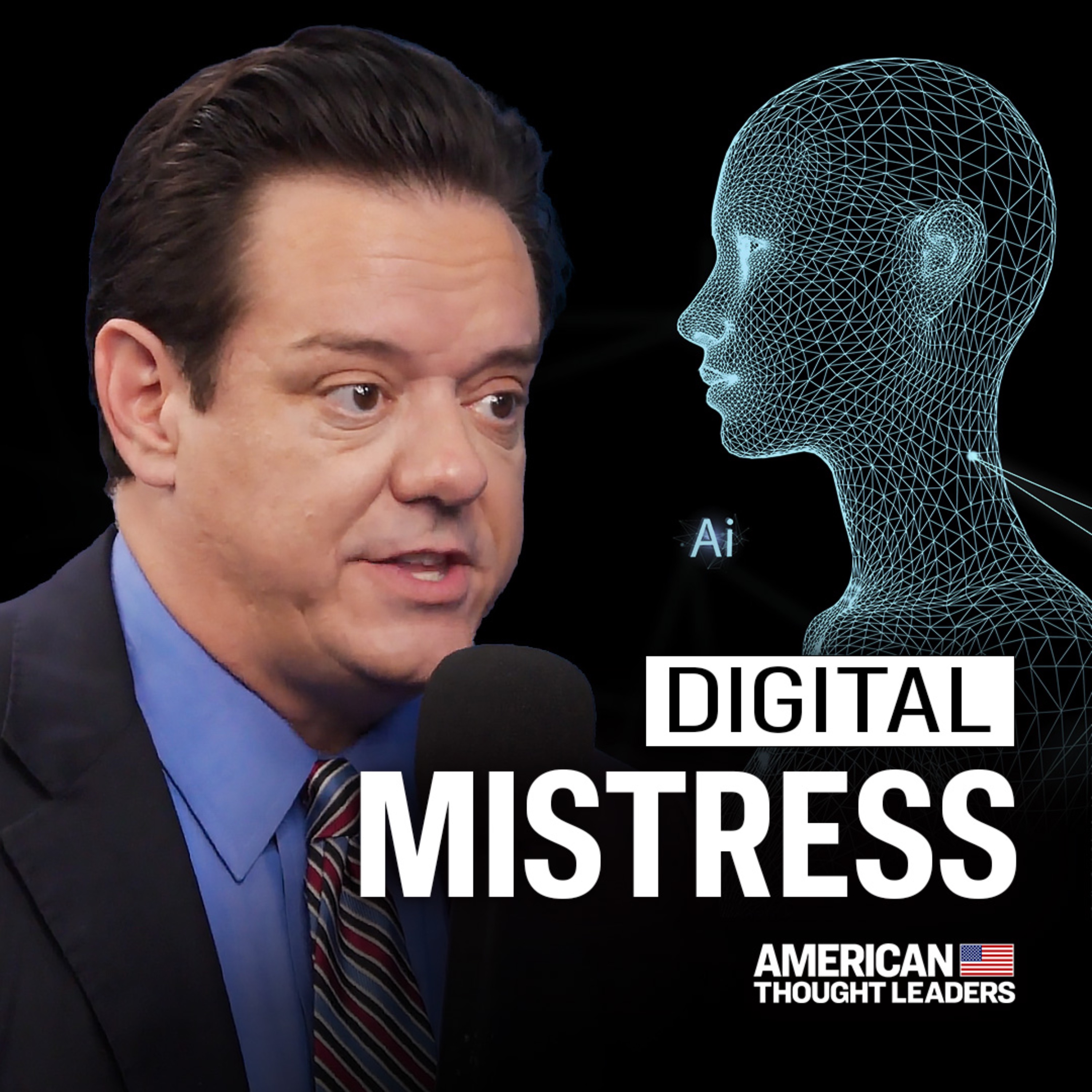
From AI Girlfriends to Brain Implants, How the AI Revolution Is Radically Reshaping Our World | Wynton Hall
Apr 400:52:09Summary readyArtificial intelligence is radically reshaping the workplace, the digital ecosystem, the way we interact with each other, and the future of crime, surveillance, and warfare.But conservatives in particular, argues Wynton Hall, risk falling dangerously behind in navigating this new world. Nobody will get to opt out of the AI revolution—whether conservatives like it or not, Hall said.Hall is the social media director at Breitbart News and author of the new New York Times bestselling book “Code Red: The Left, the Right, China, and the Race to Control AI.”He’s spent two years researching what drives America’s tech elite to build ever more powerful, faster AI systems. The questions he wanted to answer, he told me, are: “What is their ultimate goal? What is the world that they foresee their technology creating?”In our in-depth interview, we dive into the impact that this supersonic AI transformation will have on pretty much every facet of our lives: Will white-collar jobs disappear over the next few years? Will blue-collar jobs be lost to billions of robots? Will people live on Universal Basic Income? And, if so, how does that affect the structure and meaning of people’s lives?Could AI companions replace humans as friends, partners, family? How and what will children learn—or will they only learn to cheat? Will AI-powered brain implants or chips become widespread?And what are the national security implications of ever more powerful AI?“Whoever achieves superiority in AI is going to have full-spectrum battlefield dominance in things like encryption, cybersecurity, hacking of missile systems, and hacking of infrastructure,” Hall said.When it comes to the U.S.–China AI race, the problem that Americans have to figure out is “how to beat China without becoming China,” Hall said.“We do not want to emulate a techno authoritarian CCP surveillance state,” he added.Views expressed in this video are opinions of the host and the guest, and do not necessarily reflect the views of The Epoch Times.
Summary
The Missouri v. Biden Censorship Case Just Ended in a Landmark Settlement. Here’s What That Means | Mark Chenoweth
Apr 300:40:04Summary readyRecently, the New Civil Liberties Alliance (NCLA) reached a major settlement concluding the landmark Missouri v. Biden lawsuit against government-induced social media censorship.I sat down with Mark Chenoweth, president and chief legal officer of the NCLA, to discuss what this settlement actually means.The 10-year consent decree blocks the surgeon general, the Centers for Disease Control and Prevention, and the Department of Homeland Security’s Cybersecurity and Infrastructure Security Agency from pressuring social media companies to censor speech.“The federal government has now admitted that it was engaged in a very systematic operation of social media censorship,” Chenoweth says.So what does this mean exactly? What legal precedent does this set? What happens after the 10-year mark ends?And why a consent decree at all? Why was the lawsuit settled?We also discuss several other important cases that the NCLA has currently pending at the Supreme Court. One of them, Powell v. SEC, seeks to put an end to what Chenoweth calls the SEC’s “gag rule.”Views expressed in this video are opinions of the host and the guest, and do not necessarily reflect the views of The Epoch Times.
Summary
He Ran the World’s Biggest Payment Processor; Now He’s Taking on Social Security | Frank Bisignano
Mar 2800:41:45Summary readyIn this episode, I’m sitting down with Frank Bisignano, who oversees not one, but two of America’s most consequential institutions: the Social Security Administration (SSA) and the Internal Revenue Service (IRS).Before stepping into government, he built a career at the very top of finance as the youngest senior vice president in American Express history at just 25, co-COO of JPMorgan Chase, and CEO of the fintech company Fiserv.Now, he’s taking on a different kind of challenge: bringing, in his words, “accuracy” to massive federal agencies that impact every American.He’s cleaning up records—including moving records of 12.4 million people aged 120 and over into the Social Security Administration’s Death Master File—and digitizing records to streamline systems.“There wasn’t really a routine to reconcile data. ... It wasn’t that people who weren’t alive any longer were getting paid social security. It was that there was a live social security number which could be used throughout the whole system,” Bisignano said.How is he transforming these agencies? What new benefits are there in this year’s tax season?How are the newly rolled out “Trump accounts” doing? And will Social Security be able to resolve insolvency challenges in the decades ahead?Views expressed in this video are opinions of the host and the guest, and do not necessarily reflect the views of The Epoch Times.
Summary
How ‘Brain Rot’ and the Escapist Virtual World Is Harming Our Youth | Adnan Alkhalili
Mar 2700:52:26Summary readyHave Gen Z and Gen Alpha lost touch with the real world? Gen Z entrepreneur and founder of Touch Grass Together, Adnan Alkhalili, thinks so.“I grew up very natively online, scarily so ... I grew up on the Discord world. I grew up on the gaming world as well ... and even the friends I had in real life, we would end up not even spending time together. We would spend all of our time online. So they‘d be in their house, I’d be in my house,” Alkhalili says.The online world traps Gen Z into an escapist reality that their parents do not comprehend. Even good parents, he said, have no idea what their kids are doing online and to what extent they live online: “If you talk to any Gen Z and have them explain it to somebody that’s not Gen Z, the person who’s not Gen Z—maybe a later millennial and older—will actually have no idea what they’re talking about. It sounds like another language.”Gen Z and Gen Alpha, he said, spend most of their time indoors on their devices; they don’t move much. They eat addictive processed food and drink lots of addictive energy drinks to combat tiredness.“My metabolic health was destroyed,” he told me in our interview. “I felt like my life was over. ... I was so tired of life that I felt like I was in my 70s or 80s.”Now he’s helping other young people exit this lifestyle with Touch Grass Together, a health and wellness initiative focused on metabolic health and real life community experiences: “We’ve come up with a framework called the touch grass moment. And ultimately, we’re trying to recreate human ritual.”This framework, he explained, is based on four core components: light, movement, nourishment, and human connection. The goal? Getting Gen Z off their devices and out of their rooms, getting them to do things together outside such as touching grass or jumping into leaf piles and eating healthy food.But how to achieve that? In our interview, Alkhalili talks about the constructive role technology can play in helping Gen Z to escape “brain rot” online. Is there also a constructive role for AI? What about social media? And should schools forbid smartphones?Views expressed in this video are opinions of the host and the guest, and do not necessarily reflect the views of The Epoch Times.
Summary
The Many Hidden Fronts of CCP Unrestricted Warfare | Casey Fleming
Mar 2100:58:46Summary readyNational security expert T. Casey Fleming is the CEO of BlackOps Partners, a strategy and cybersecurity consulting firm that he founded in 2008. He’s also the author of the new book, “The Red Tsunami: The Silent Storm Killing Your Freedom.”“It may look like a book, but it’s a whistleblower’s exposé and survival guide. … It basically tells you what to do to protect yourself,” Fleming said.“Number one: Stop buying Chinese products and services and stop investing in companies that are investing in China,” he said.The Chinese Communist Party has been using what are known as unrestricted warfare tactics against the United States for decades, and on multiple fronts, he said. Its purpose is to weaken the enemy from within—without firing a single shot.There are dozens of tactics, including, for instance, cognitive warfare, drug warfare, and biological warfare. These manifest in the deployment of TikTok—which remains a powerful cognitive weapon in the CCP’s arsenal, Fleming argued—as well as the spread of both COVID-19 and fentanyl addiction in America.For years, Americans have largely failed to notice this pattern of unrestricted warfare and how the pieces fit together. “The mosaic effect is you see bits and pieces and you don’t connect them, and so it doesn’t really mean much to you. … When you connect the dots… it becomes the mosaic. You now see what your enemy is doing and what the end goal is, and how you need to protect yourself.”Casey said he believes this silent, unrestricted war is the final war: “The world will be won or lost within the next 10 years or less.”Views expressed in this video are opinions of the host and the guest, and do not necessarily reflect the views of The Epoch Times.
Summary
The Feminization of Society and the Stigmatization of Normalcy | J.D. Haltigan
Mar 2001:11:06Summary ready“You can’t abandon the concept of normality, or societies will just completely fall apart,” said developmental psychologist and social science scholar J.D. Haltigan.There has been a tremendous push in mental health to destigmatize mental illness, he said, and people are encouraged to regard themselves as “some sort of heroic person for having [mental] disorders.”This is true especially for mood disorders like depression and anxiety. People nowadays increasingly define themselves through mood disorders—especially women, who often are more prone than men to depression and internalization of anxiety, he said.This apparent valorization of mental illness is closely linked to a growing feminization of society, Haltigan said. Males, he told me, “tend to systemize more,” while women “tend to be more empathetic.”But in recent decades, that empathy has been weaponized, he argued: “We’ve come to basically hijack the feminine ethic of care, the feminine impulse to be empathetic.”He said this may explain why anti-ICE protests tend to skew disproportionately towards females.At the same time, he said, masculinity and the enforcement of laws and standards became demonized in society.Haltigan’s departure from the University of Toronto in 2023 coincided with his growing concerns about what he described as increasing ideological pressures in academic research and restrictions on what researchers could say about mental health and early child development.In our wide-ranging interview, we discuss these shifts in society, their impacts, and the role of social media in fueling these changes.Now, Haltigan is an honorary research fellow at the Centre for Heterodox Social Science at the University of Buckingham in the United Kingdom.Views expressed in this video are opinions of the host and the guest, and do not necessarily reflect the views of The Epoch Times.
Summary
Has Xi Jinping Unified His Own Enemies? | Robert Suettinger
Mar 1401:05:20Summary readyTo understand the significance of the sweeping military purges in China and how Beijing is reacting to America’s war with Iran, I’m sitting down with eminent China scholar Robert Suettinger, a former CIA and State Department intelligence analyst, a senior advisor at The Stimson Center, and author of “The Conscience of the Party: Hu Yaobang, China’s Communist Reformer.”“There’s no question of the fact that Xi Jinping is now less of a dominant leader than he was six or eight months ago,” Suettinger says.Earlier this year, Xi purged two top generals from the CCP’s military brass, on the heels of earlier purges last year. Now, only two of the originally seven members of the Central Military Commission remain. One of them is Xi himself; the other one, General Zhang Shengmin, is a political commander and has, like Xi, no combat experience.After the January purges, Xi issued an order to the military demanding that everyone acknowledge him as the head of the military commission. “The silence from all those military commands has been deafening and has been noticed by everybody,” Suettinger says.In the Chinese Communist Party itself, Xi is also facing trouble.The CCP is not a monolithic party, he told me, but a complex entity with many competing factions: “There’s a Shanghai group, there’s a Shandong group, there’s a Shaanxi group, and they all don’t like each other,” Suettinger says.Suettinger believes that Xi’s many purges have unified opposition against him not only in the military but also within the Communist Party. “Xi is hated by almost everybody in China,” he said.Another reason the cracks in the system, as he put it, are beginning to be more evident, is that the Chinese economy hasn’t been doing well in many years: “The Chinese people are very unhappy that their wealth opportunities are disappearing. Graduates coming out of colleges are not able to find good jobs. People who have good jobs are losing them. People who are operating in the gig economy are losing their jobs. The farmers don’t have anything to do when they go back home.”People outside of China don’t usually know how poor vast numbers of Chinese citizens still are, Suettinger told me. China’s Premier Li Keqiang himself stated in May 2020 during a press conference that 600 million people live below the poverty line and don’t even earn enough to rent a room in mid-sized Chinese cities.Where is China’s totalitarian system headed? The system, Suettinger argued, is way more fragile than it looks. “It is brittle, and when it breaks, it tends to break hard, and it tends to melt in ways that are not predictable,” he said.Notably, the CCP has not come out to meaningfully support its longtime ally, Iran. The CCP has long utilized Iran to distract America and keep its focus on the Middle East, Suettinger says, but now, to Beijing’s chagrin, America is effectively neutralizing this longtime CCP proxy.Views expressed in this video are opinions of the host and the guest, and do not necessarily reflect the views of The Epoch Times.
SummaryThe Harvard Astrophysicist Searching for Extraterrestrial Life | Avi Loeb
Mar 1301:06:37Summary readyHarvard astrophysicist Avi Loeb is not your typical astronomer. For many years, he’s been scouring the universe for the abnormal and the unknown. “Brushing anomalies under the carpet of traditional thinking,” as he puts it, is anathema for him.“One way to learn more,” he told me, “is to pay attention to the anomalies, because they may lead us to something that we’ve never thought about … Maybe they will open up our eyes to extra dimensions … or new physics.”In 2021, Loeb founded the Harvard-based Galileo Project to speed up the scientific search for evidence of extraterrestrial objects. Since then, Loeb has been supervising the construction of three state-of-the-art observatories in the United States: one in Massachusetts, one in Pennsylvania and one in Nevada. They make use of machine learning models to identify unexplained anomalies and use triangulation to infer the distance of objects from Earth.“Instead of waiting for the U.S. government to release its data, we just look up and ask, are there any objects up there that are not human-made? And of course, anything that is human-made is boring, as far as I’m concerned,” he said.Did his observatories find evidence of objects that might be extraterrestrial? Perhaps. They detected objects that, as he said, “arrive in our backyard from outside the solar system.” Such interstellar objects were purely theoretical before 2017, when the first one was discovered. Since then, two more have been found. This, he told me, is the new frontier in astronomy.But are these interstellar objects of natural origin? Many astronomers believe they are, but Loeb is not so sure. Take, for example, Oumuamua, the first recognized interstellar object ever discovered: Its core features are undisputedly abnormal. Oumuamua moved very quickly without a recognizable method of propulsion. And as it left the solar system, it accelerated to a degree that could not be explained by gravity alone.Loeb has been arguing that Oumuamua might be an artificial light sail propelled by solar radiation pressure and built by ancient civilizations that exist or existed beyond our solar system.“Most of the stars formed billions of years before the sun. The sun formed only 4.6 billion years ago … There was plenty of time for Voyager-like probes to arrive in the solar system. And so we are searching for any technological artifacts, objects very different from traditional SETI,” he said.SETI stands for “Search for Extraterrestrial Intelligence” and refers to a project dedicated to detecting advanced extraterrestrial civilizations.Here are some of the many other topics we discussed in our wide-ranging interview:-What is the origin of hypervelocity stars that race through the universe at a significant fraction of the speed of light? -Are there other dimensions beyond our own? -How would the discovery of extraterrestrial life impact religious views? -Is AI a form of alien intelligence?Views expressed in this video are opinions of the host and the guest, and do not necessarily reflect the views of The Epoch Times.
Summary