
Podcast
DTC Podcast
Hosted by DTC Newsletter and Podcast · EN
Weekly discussions between disruptive direct to consumer ecommerce brands and our amazing team about marketing, funnels, and everything scaling related. Subscribe to our newsletter for highlights and step by step tactical insights 👉🏻 📦 directtoconsumer.co
230episodes
Episodes
Newest firstAll episodes
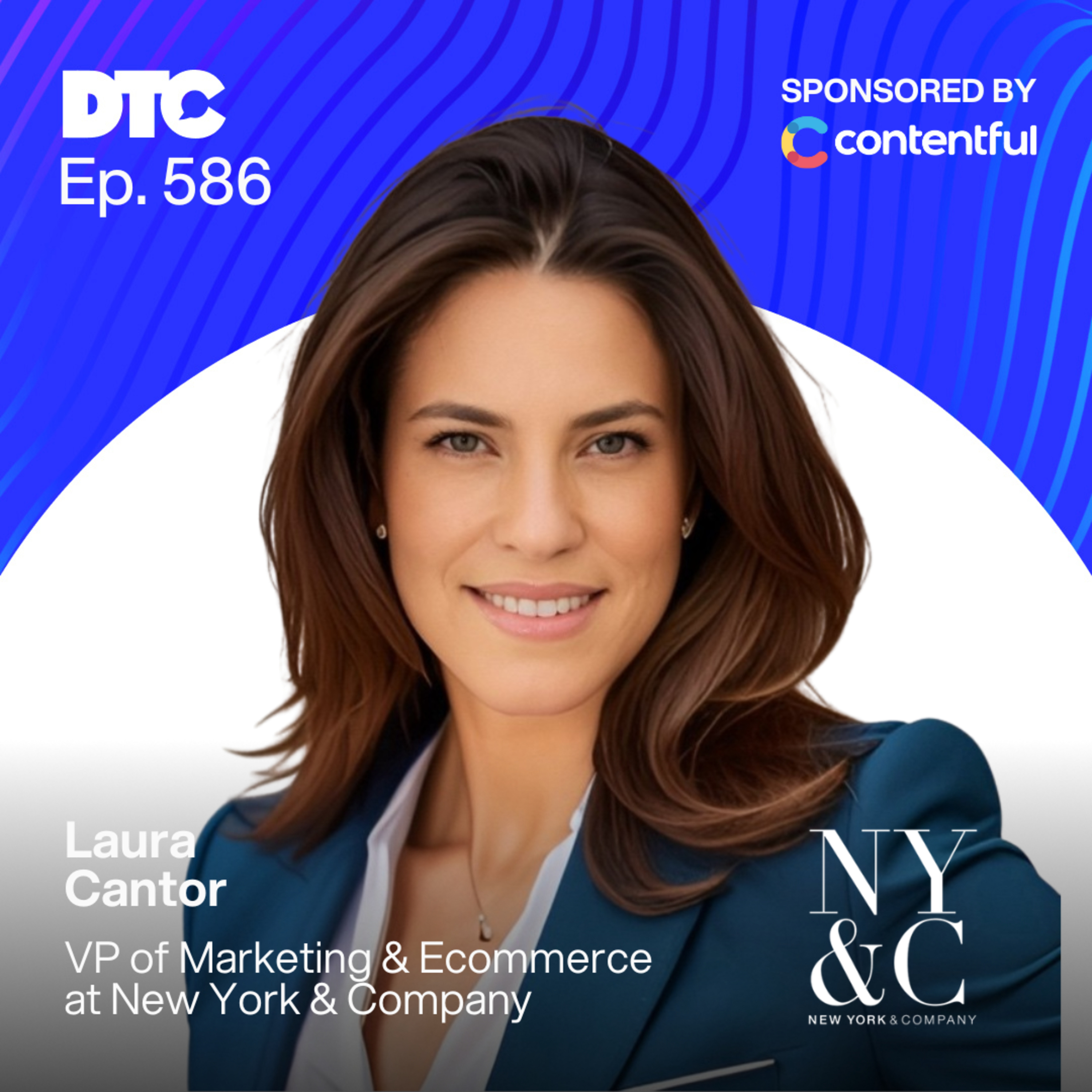
Ep 586: Laura Cantor: Digital Transformation, AI Collaboration, and Why We're All Failing Calculus Together
Feb 1600:51:36Summary readySubscribe to DTC Newsletter - https://dtcnews.link/signupLaura Cantor, VP of Marketing & E-commerce at New York & Company, shares the reality of transforming a legacy retail brand in the age of AI - and why nobody can do it alone.https://zenyt.ai/growIn this episode:🚀 Leading digital transformation at a legacy retail brand🤖 Using to find 500+ site issues (and the problems AI creates) zenyt.ai/start💻 Moving from Shopify Hydrogen to Liquid right before Black Friday🤝 Why partnerships replaced competition in retail🧠 AQ (Adaptability Quotient) - the skill that matters most📱 Building in public and learning together⚡ The reality of doing more with less in 2025🎯 Why every problem now has 10 AI solutions (and nobody knows which works)Key topics:- The shift from headless back to Liquid (and why simplicity won)- AI-powered site QA and the translation gap (zenyt.ai/start)- Why collaboration beats secrecy in the AI era- Post-COVID conference culture and community building- Adaptability and unlearning in real-time- NRF insights and retail trends for 2025- The calculus class we're all failing togetherTimestamps:0:00 - Intro1:30 - Laura's retail background (Ralph Lauren, J.Crew)2:10 - New York & Company's digital transformation journey4:40 - The biggest challenges: doing more with less8:15 - AI creates problems AND solutions (the QA challenge)15:50 - Why we moved from Hydrogen to Liquid21:10 - The post that resonated across the industry28:30 - Why partnerships matter more than competition now33:00 - How agile teams adopt AI tools36:35 - We're all failing calculus together39:00 - Adaptability Quotient (AQ) - the new essential skill44:50 - The power of clarity: translating robot to human52:30 - Why retail is fundamentally a people business55:45 - Upcoming events (eTail West, ShopTalk, Commerce Next)Subscribe to DTC Newsletter - https://dtcnews.link/signupAdvertise on DTC - https://dtcnews.link/advertiseWork with Pilothouse - https://dtcnews.link/pilothouseFollow us on Instagram & Twitter - @dtcnewsletterWatch this interview on YouTube - https://dtcnews.link/video
Summary
Ep 585: Amazon Marketing Cloud: 5 Audience Plays to Lower ACOS on Competitive Keywords
Feb 1300:17:58Summary readySubscribe to DTC Newsletter - https://dtcnews.link/signupAmazon Marketing Cloud (AMC) used to feel “enterprise-only.” Not anymore. Tyler Masur (Head of Amazon at Pilothouse) breaks down what AMC actually does, how to use the no-code templates without being a SQL wizard, and the audience overlays that make broad keywords finally make sense. Role-based hook: For Amazon operators and DTC teams spending real money on Sponsored Ads who want lower ACOS without sacrificing scale.In this episode, we get tactical on:What AMC is (and isn’t): audience building + deeper measurement layered on top of your existing console How to start with the no-code audience + analytics templates (and when AI-generated SQL helps) Why you should test AMC audiences in net-new campaigns (so you don’t accidentally choke your winners)The “broad keyword + qualified audience” play (example: bidding on “cooler” but only for outdoors browsers)Measuring DSP impact: what happens after someone sees DSP, then hits Sponsored Brands/Products Who this is for: Amazon managers, DTC founders, and growth teams trying to scale Sponsored Ads past the “set it and forget it” phase.What to steal:Build a “generic keyword” campaign, then overlay an in-market audience (nodes/categories) so you can bid higher without paying for junk clicks.Keep audience tests isolated in new campaigns; don’t jam audiences into legacy structures and hope.Run the AMC overlap reporting to spot the campaigns that actually increase conversion when paired together (then fund those).Timestamps:0:00 Amazon Marketing Cloud is now open to all sellers2:05 What AMC actually does: audiences and analytics4:10 No-code templates vs custom SQL queries (and the built-in AI helper)6:10 Audience targeting strategy to improve ACoS without over-narrowing8:55 Using prebuilt analytics to see which campaigns lift conversion together11:10 When AMC becomes worth it based on ad spend and effort required13:15 How Pilothouse uses AI day-to-day for Amazon work (including Rufus content)15:20 Measuring DSP incrementality and overlap with sponsored ads using AMC reports17:30 Platform notes: Amazon layoffs and the OpenAI + Amazon speculationSubscribe to DTC Newsletter - https://dtcnews.link/signupAdvertise on DTC - https://dtcnews.link/advertiseWork with Pilothouse - https://www.pilothouse.co/?utm_source=AKNF585Follow us on Instagram & Twitter - @dtcnewsletterWatch this interview on YouTube - https://dtcnews.link/video
Summary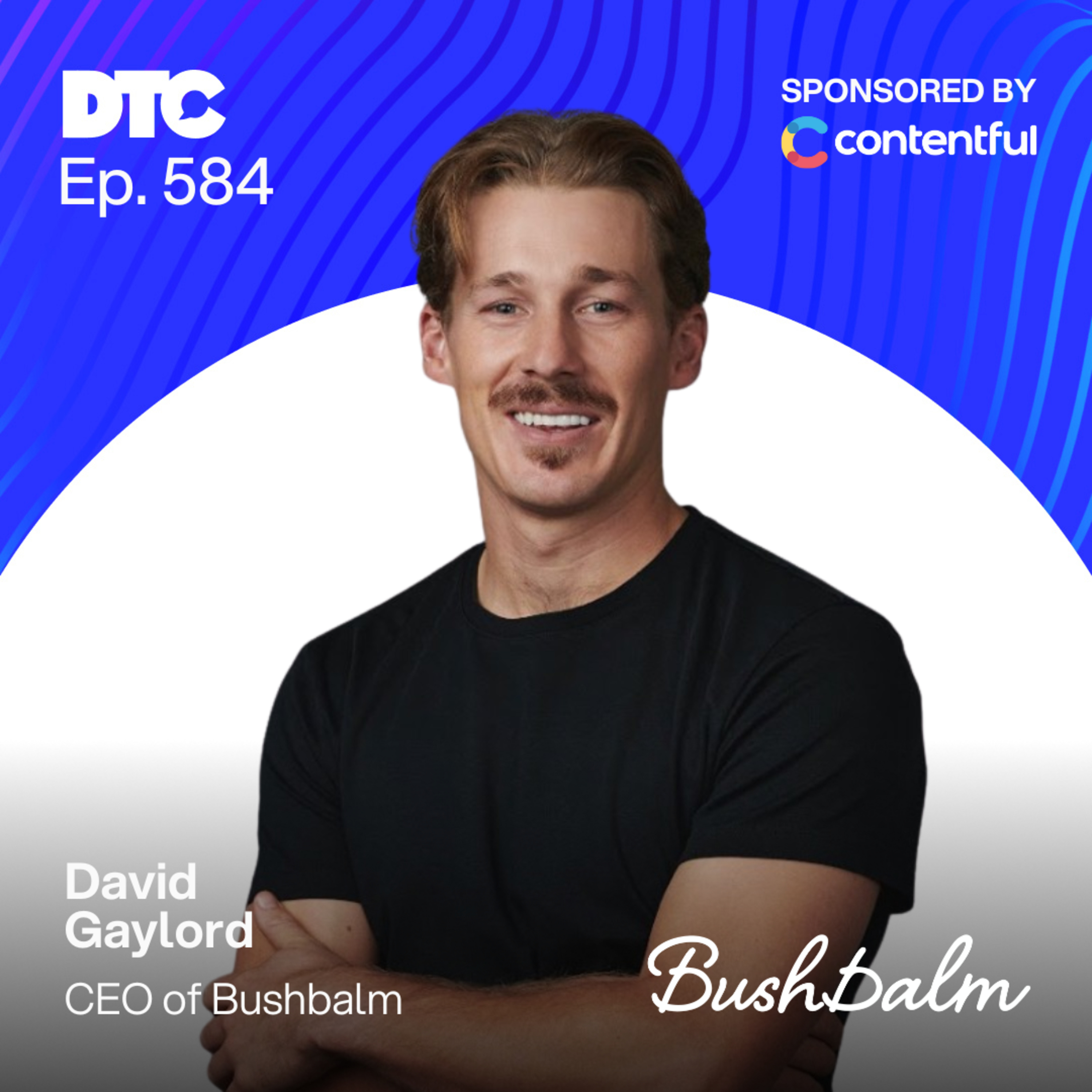
Ep 584: Building in Pubic: Inspecting Bushbalm’s 70% Growth via Retail & the Pro Channel
Feb 900:40:01Summary readySubscribe to DTC Newsletter - https://dtcnews.link/signupBushbalm co-founder David Gaylord returns for his third appearance on the pod — and he brought receipts.The brand just pulled off one of the most impressive growth runs in DTC:70% YoY revenue growth18,000+ waxing salon accounts (up from 2,000 in 2023)Expanded shelf space at Ulta BeautyFocused DTC growth (+25%) while spending less on MetaWe unpack how they’ve built a growth machine that’s lean, durable, and built on word of mouth — not channel sprawl.For DTC brands thinking bigger than Meta ads.Why their pro channel is the ultimate word-of-mouth flywheelHow they invest $200K+ into retail the right wayWhat goes into planning a product launch 2 years outWhy pulling back on Meta actually helped retentionHow exclusivity (not everywhere all at once) became their moatWho this is for: Brands navigating retail, trade marketing, or B2B scaleWhat to steal:How to anchor your retail bet on ONE whale by building deepBuild demand from the pros outwardTreat your best partners like real channels (with loyalty perks + exclusive SKUs)Timestamps00:00 Bushbalm’s 70% growth and shift to profitability02:30 Why retail and the pro channel now drive the business06:20 Going deep with one key retailer instead of many09:40 How trade marketing and in-store displays impact sales12:30 DTC growth, Meta ads, and changing channel priorities18:00 Launching exclusive products through the pro channel22:00 Simplifying DTC assortments to improve performance25:00 Category rewiring in hair removal and skincare31:40 Expanding shelf space versus adding new retailers37:00 Building a sustainable, profitable growth engineHashtags#DTCPodcast #Bushbalm #DavidGaylord #DTC #Ecommerce #RetailStrategy #BeautyBrand #FounderJourney #RetailMarketing #ProChannel #UltaBeauty #BrandGrowth #Omnichannel Subscribe to DTC Newsletter - https://dtcnews.link/signupAdvertise on DTC - https://dtcnews.link/advertiseWork with Pilothouse - https://dtcnews.link/pilothouseFollow us on Instagram & Twitter - @dtcnewsletterWatch this interview on YouTube - https://dtcnews.link/video
Summary
Ep 583: Counter Intuitive Ways to Maximize Net Present Value from Your Email List with Jordan Gordon
Feb 600:19:02Summary readySubscribe to DTC Newsletter - https://dtcnews.link/signupJordan Gordon, VP of Retention and CRO at Pilothouse returns to the pod to break down a concept every retention marketer thinks they understand but rarely applies: Net Present Value (NPV). This isn’t finance class — this is a tactical breakdown on how to treat your email list like an appreciating asset.For DTC retention leads and founders thinking beyond one-off campaigns.Why NPV thinking changes your entire email strategyHow to measure email value beyond open/click/purchaseWays to increase the long-term worth of every subscriberWhere CRO fits in to boost lifecycle valueEmail as a compounding channel: what most brands missWho this is for: Retention marketers, growth leads, lifecycle teamsWhat to steal:A framework to value your email list like a P&LHow to spot (and increase) high NPV customersWhy short-term ROI thinking stunts your retentionTimestamps00:00 Building engagement-first email habits02:10 Why email and CRO belong together at the bottom of the funnel04:05 How flat revenue businesses can increase valuation06:05 Using content emails to grow list size and engagement08:20 Pairing engagement email with high-converting site funnels10:15 Why a larger, more engaged list increases business value12:00 Finding the right engagement content for any brand14:05 Authentic vs produced content in engagement emails16:00 Email grows the audience, the website converts itHashtags#ecommerce #emailmarketing #retentionmarketing #netpresentvalue #dtc #cro #emailstrategy #customerlifetimevalue #digitalmarketing #shopify #ownedmedia #foundermarketing #growthstrategy #bottomfunnel #marketingstrategy Subscribe to DTC Newsletter - https://dtcnews.link/signupAdvertise on DTC - https://dtcnews.link/advertiseWork with Pilothouse - https://www.pilothouse.co/?utm_source=AKNF583Follow us on Instagram & Twitter - @dtcnewsletterWatch this interview on YouTube - https://dtcnews.link/video
Summary
Ep 582: How SURI Sold 5,000 Toothbrushes in a Week: DTC Growth in a Boring Category
Feb 200:33:26Summary readySubscribe to DTC Newsletter - https://dtcnews.link/signupMark Rushmore, co-founder of SURI, joins the pod to break down how they built a toothbrush brand people actually love. From selling out 5,000 units in a week to hitting 15,000+ Trustpilot reviews, SURI is proving you can create DTC magic in even the most boring category—if you take the time to get it right.For DTC founders scaling from $1M to $20M who want to increase retention and earn real customer love.Why "low expectations" created the perfect wedge for disruptionThe anti-agency approach to Meta ads that helped them scale profitablyHow they turned 15,000 reviews into a custom GPT to inform product devThe real reason they’re dominating Trustpilot (and Amazon)Their upcoming launch into 1,900+ Target storesWho this is for: Brand builders in crowded or low-interest categories, especially if you're post-product-market fit and scaling retention/subscription.What to steal:Reframe a boring utility into a desirable ritualUse Trustpilot + Slack API to keep every team member close to customer voiceDon’t overthink performance creative—fast iteration beats polished productionTimestamps00:00 Why toothbrushes are a massive but unloved category02:55 Building a better toothbrush through design and sustainability05:00 Finding product-market fit and early traction07:05 Why customers say they love this toothbrush09:40 How Suri’s ad strategy evolved over time12:00 Growth mix across ads, email, creators, and retail15:00 Competing with Oral-B and Philips on shelf18:00 Using reviews as a growth and product feedback engine20:00 Retention, subscriptions, and gifting behavior22:00 Amazon strategy and retail expansion25:00 Long-term vision for Suri and redefining successHashtags#dtcpodcast #directtoconsumer #ecommerce #dtcbrands #productmarketfit #brandbuilding #consumerproducts #subscriptionbusiness #growthmarketing #metaads #amazonfba #retentionmarketing #founderstory #startuppodcast #physicalproducts Subscribe to DTC Newsletter - https://dtcnews.link/signupAdvertise on DTC - https://dtcnews.link/advertiseWork with Pilothouse - https://dtcnews.link/pilothouseFollow us on Instagram & Twitter - @dtcnewsletterWatch this interview on YouTube - https://dtcnews.link/video
Summary
New to the DTC Podcast Network: Agency Confidential. Tom Shipley on Buying Growth: Scaling Your Agency Through Acquisitions
Jan 3100:37:43Summary readyFollow Agency Confidential on Spotify: https://open.spotify.com/show/6lbaJzKRArC51qwCX00fUp?si=QdWT3jyjTAC3cUgB--r58wFollow Agency Confidential on YouTube: https://www.youtube.com/@AgencyConfidential“Any business problem can be solved with an acquisition.”In Episode 1 of Agency Confidential, Jeff Shannon sits down with investor and operator Tom Shipley to break down how agencies actually use M&A as a growth lever—from buying businesses with limited capital to structuring deals that reduce risk.Tom shares the stories behind his first acquisitions, the criteria he uses to identify potential deals, and why he sees growing opportunity for agency acquisitions amid AI disruption and market uncertainty.If you’re an agency founder, operator, or leader thinking about growth beyond organic sales, this episode explores the mental models, deal structures, and real-world mechanics behind acquisition-led growth.What you’ll learn:Why acquisition can outperform organic growth at scaleHow to define a “buy box” for acquisition targetsWhy volume of seller conversations mattersThe real purpose of due diligenceWhat integration looks like after an acquisitionHow AI and uncertainty are influencing agency exits and dealsChapters:00:00 Any Business Problem Can Be Solved With an Acquisition 00:31 Meet Tom Shipley and His M&A Journey 01:57 Buying a Business When You’re Out of Cash 05:17 Using Acquisitions to Add Capability (Agency Examples) 08:03 Organic Growth vs Acquisition Growth (The Math) 12:18 Motivated Sellers and Creative Deal Structures 20:50 Due Diligence and Risk in Agency Acquisitions 24:33 Integration: What Actually Breaks Deals 30:11 AI, Market Uncertainty, and the Future of Agency M&ALinks & Resources:DealCon: https://dealconlive.comPilothouse: https://www.pilothouse.co/Agency (peer network): https://www.joinagency.co/?utm_source=podcastSubscribe to the DTC Newsletter: https://www.directtoconsumer.co/
Summary
Ep 581: Meta Ads Aren’t About Targeting Anymore: How $5–50M Brands Win with Intent-Based Creative
Jan 3000:29:34Summary readySubscribe to DTC Newsletter - https://dtcnews.link/signupDaniel Sendecki, VP of Brand + Performance at Pilothouse, joins us to explain why the old model of “persuasive creative” is dead—and what’s replacing it. In a post-Andromeda Meta world, the brands winning on paid social aren’t out-designing or out-targeting anyone. They’re out-resolving.Role-Based Hook:For DTC teams building creative that compounds—across Meta, search, and the full funnel.Inside the episode:Why creative isn’t about persuasion anymore—it’s about resolutionHow Pilothouse mines Google queries to map real customer frictionWhat Meta’s Andromeda update means for targeting and creative structureWhy intent clusters matter more than personasHow to build a living creative library that scalesWho this is for:DTC founders, brand leads, creative strategists, and media buyers navigating post-iOS MetaWhat to steal:Group customer questions into “psychological intent clusters”Use creative to answer, not pitchBuild ad libraries like a searchable index of problems solvedTimestamps:00:00 Creative is shifting from persuasion to resolution02:05 Why interest-based targeting no longer works04:55 Creative as answers to customer questions07:05 Meta evolving into an intent-driven platform09:15 Psychological intent clusters explained12:10 Why idea variation matters more than asset tweaks14:10 Funnel congruency in the Andromeda era17:05 Creative as an operating system, not an output19:40 Brand storytelling inside modern performance systems21:10 Recognition hooks vs interruptive hooks24:10 Blending brand and performance through intent26:15 Avoiding AI-sounding creative outputsHashtags:#DTCMarketing #CreativeStrategy #MetaAds #PerformanceCreative #BrandStrategy #MarketingPodcast #PaidSocial #CreativeTesting #Andromeda #IntentMarketing #DigitalAdvertising #EcommerceMarketing #Pilothouse Subscribe to DTC Newsletter - https://dtcnews.link/signupAdvertise on DTC - https://dtcnews.link/advertiseWork with Pilothouse - https://www.pilothouse.co/?utm_source=AKNF581Follow us on Instagram & Twitter - @dtcnewsletterWatch this interview on YouTube - https://dtcnews.link/video
Summary
Ep 580: How Fan Bi Revives DTC Brands with 30 Days of Cash Left
Jan 2600:29:04Summary readySubscribe to DTC Newsletter - https://dtcnews.link/signupFan Bi is the founder of The Hedgehog Company, where he acquires distressed DTC brands and helps get them profitable fast. He’s also the creator of In the Money, a must-follow podcast and content brand unpacking the capital side of consumer.For DTC founders navigating exits, plateaus, or profitability hell...What most founders still get wrong about valuationsHow the buyer landscape has shifted post-Unilever & WalmartSigns your bridge round is a bridge to nowhereThe trenches of sub-$20M exits, explained with examplesWhy switching costs matter more than everWho this is for: Founders, operators, and investors trying to understand today’s DTC M&A landscapeWhat to steal:20%+ post-marketing contribution as a key health metricThe 3-week test to know if your exit has tractionRealistic comps on $3M, $10M, $30M brand valuationsTimestamps00:00 Real math behind DTC exits in today’s market02:15 Why 3–5x revenue exits no longer exist05:00 The real state of DTC profitability and acquisition costs07:00 What makes a distressed DTC brand worth buying09:00 Turning around Baboon to the Moon and fixing fundamentals11:00 DTC exit trenches from $1M to $100M+ brands15:00 What kills DTC acquisition deals fastest17:00 Why bridge rounds often fail19:00 DTC vs software and AI from an investor lens22:00 Product market fit vs product channel fit24:00 Categories that still work for DTC exits26:00 What it takes to build a winning DTC brand todayHashtags#DTC #DirectToConsumer #DTCExits #Ecommerce #EcommercePodcast #StartupExits #MergersAndAcquisitions #BrandAcquisition #DTCBrands #EcommerceGrowth #FounderAdvice #ConsumerBrands #PrivateEquity #ShopifyBrands #BusinessPodcast Subscribe to DTC Newsletter - https://dtcnews.link/signupAdvertise on DTC - https://dtcnews.link/advertiseWork with Pilothouse - https://dtcnews.link/pilothouseFollow us on Instagram & Twitter - @dtcnewsletterWatch this interview on YouTube - https://dtcnews.link/video
Summary
Ep 579: How to Nail DTC Merchandising in Q1: From Scroll to Sale
Jan 2300:24:23Summary readySubscribe to DTC Newsletter - https://dtcnews.link/signupIn this episode, Pilothouse's Taylor Cain and Aves break down how to merge creative strategy with merchandising to win Q1. This is the planning season where smart brands lock in the building blocks for scalable growth—and avoid wasting paid budget.For DTC marketers planning evergreen creative and site strategy in Q1...Why Q1 is the time to de-risk creative investmentsHow to connect merch and creative across the entire funnelWhat emotional truths are, and why they drive actionHow to create merchandising that aligns with user intent (without sounding like a pitch deck)The subtle difference between price-based and identity-based offersWho this is for: Media buyers, growth leads, and brand-side marketers aiming to improve conversion and site experienceWhat to steal:The linear structure Taylor uses to build conversion flowsAves' 3-step audit for understanding persona behavior onlineWhy great PDPs start with emotion, not featuresTimestamps:00:00 Merchandising in ecommerce and cognitive competition02:45 Why shoppers visit multiple brands before buying05:10 Bringing the in-store experience into digital creative07:20 Funnel congruency and full-funnel merchandising09:40 Merchandising on social feeds beyond direct competitors12:10 Information architecture and emotional storytelling on PDPs14:05 Selling identity and ritual instead of product features18:30 How Meta optimization and Andromeda affect merchandising20:40 Practical merchandising spot checks for brandsHashtags:#ecommercemarketing #digitalmerchandising #dtcbrands #paidmedia #creativestrategy #conversionoptimization #brandstrategy #marketingfunnels #metamarketing #shopifybrands #performancecreative Subscribe to DTC Newsletter - https://dtcnews.link/signupAdvertise on DTC - https://dtcnews.link/advertiseWork with Pilothouse - https://www.pilothouse.co/?utm_source=AKNF579Follow us on Instagram & Twitter - @dtcnewsletterWatch this interview on YouTube - https://dtcnews.link/video
Summary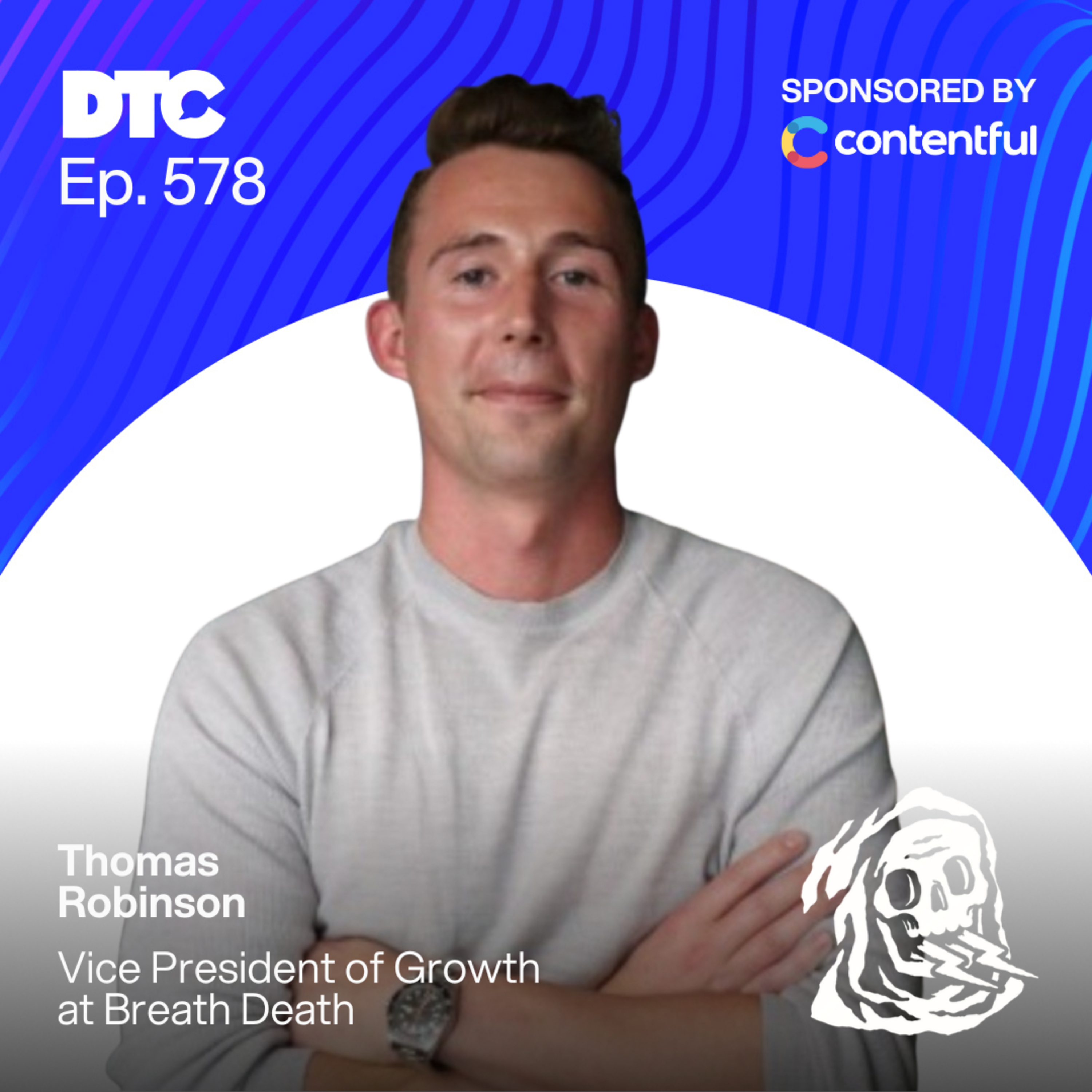
Ep 578: How Breath Death Cracked TikTok Shop: Funnels, Affiliates, and $0 Creator Content
Jan 1900:36:50Summary readySubscribe to DTC Newsletter - https://dtcnews.link/signupThomas Robinson has helped build full‑funnel growth engines for brands like Tiege Henley and now Breath Death — where he’s turning chaotic traction into scalable funnels and converting creator buzz into sustainable growth.For growth leaders scaling DTC with low‑AOV products.In this episode, Thomas breaks down:How YouTube influencer authenticity became a systematic funnel driver (not a one‑hit wonder).Why TikTok Shop is the top strategic revenue channel — and how it boosts Amazon performance.The three‑part funnel framework: Hook → Integration → CTA + cohesive landing page.Why psychographics beat demographics in creative.Omni‑channel retention: SMS, email, DM automations, WhatsApp.Who this is for: D2C marketers scaling early‑growth brands, content and performance teams, founders wrestling with low‑AOV CAC.What to steal:Turn creator moments into evergreen assets for Meta, TikTok, and YouTube.Build landing pages that mirror ad intent (don’t lose momentum).Segment email/SMS flows by customer psychographic intent.Timestamps00:00 — Turning creator buzz into scalable growth02:00 — Why Breath Death chose TikTok Shop as a core channel04:00 — Gen Z targeting, nostalgia, and early audience signals06:00 — Learning from Liquid Death’s polarizing brand strategy08:00 — Turning influencer moments into evergreen funnels10:00 — Structuring ads with hooks, integrations, and CTAs12:00 — TikTok Shop, Amazon halo effects, and channel synergy14:00 — Affiliate strategy from nano creators to macro partners16:00 — Why YouTube influencers compound better than paid ads18:00 — SEO, Reddit, and authority in AI-driven search20:00 — Scaling low-AOV products on Meta ads22:00 — Psychographics, motivations, and creative archetypes26:00 — Q4 growth, LTV focus, and retention strategy28:00 — Email, SMS, WhatsApp, and DM automation31:00 — Long-term brand storytelling vs direct response34:00 — Personalized landing pages and post-click experienceHashtags#dtcpodcast #dtcbrands #ecommercegrowth #tiktokshop #influencermarketing #creatorcommerce #brandstrategy #performanceads #youtubeinfluencers #affiliatemarketing #consumerbrands #foundermarketing #growthmarketing #directtoconsumer Subscribe to DTC Newsletter - https://dtcnews.link/signupAdvertise on DTC - https://dtcnews.link/advertiseWork with Pilothouse - https://dtcnews.link/pilothouseFollow us on Instagram & Twitter - @dtcnewsletterWatch this interview on YouTube - https://dtcnews.link/video
Summary