
Podcast
DTC Podcast
Hosted by DTC Newsletter and Podcast · EN
Weekly discussions between disruptive direct to consumer ecommerce brands and our amazing team about marketing, funnels, and everything scaling related. Subscribe to our newsletter for highlights and step by step tactical insights 👉🏻 📦 directtoconsumer.co
232episodes
Episodes
Newest firstAll episodes
Ep 579: How to Nail DTC Merchandising in Q1: From Scroll to Sale
Jan 2300:24:23Summary readySubscribe to DTC Newsletter - https://dtcnews.link/signupIn this episode, Pilothouse's Taylor Cain and Aves break down how to merge creative strategy with merchandising to win Q1. This is the planning season where smart brands lock in the building blocks for scalable growth—and avoid wasting paid budget.For DTC marketers planning evergreen creative and site strategy in Q1...Why Q1 is the time to de-risk creative investmentsHow to connect merch and creative across the entire funnelWhat emotional truths are, and why they drive actionHow to create merchandising that aligns with user intent (without sounding like a pitch deck)The subtle difference between price-based and identity-based offersWho this is for: Media buyers, growth leads, and brand-side marketers aiming to improve conversion and site experienceWhat to steal:The linear structure Taylor uses to build conversion flowsAves' 3-step audit for understanding persona behavior onlineWhy great PDPs start with emotion, not featuresTimestamps:00:00 Merchandising in ecommerce and cognitive competition02:45 Why shoppers visit multiple brands before buying05:10 Bringing the in-store experience into digital creative07:20 Funnel congruency and full-funnel merchandising09:40 Merchandising on social feeds beyond direct competitors12:10 Information architecture and emotional storytelling on PDPs14:05 Selling identity and ritual instead of product features18:30 How Meta optimization and Andromeda affect merchandising20:40 Practical merchandising spot checks for brandsHashtags:#ecommercemarketing #digitalmerchandising #dtcbrands #paidmedia #creativestrategy #conversionoptimization #brandstrategy #marketingfunnels #metamarketing #shopifybrands #performancecreative Subscribe to DTC Newsletter - https://dtcnews.link/signupAdvertise on DTC - https://dtcnews.link/advertiseWork with Pilothouse - https://www.pilothouse.co/?utm_source=AKNF579Follow us on Instagram & Twitter - @dtcnewsletterWatch this interview on YouTube - https://dtcnews.link/video
Summary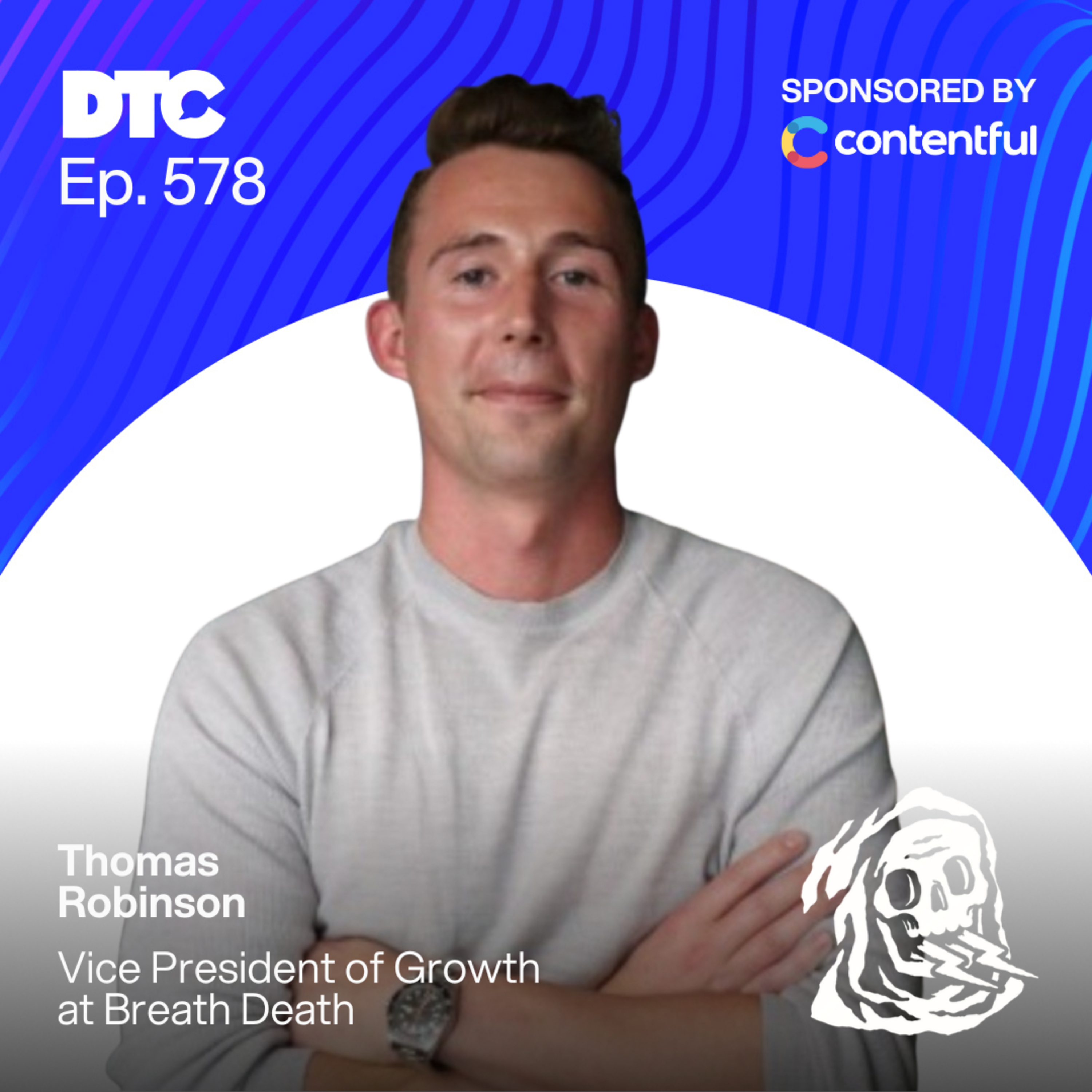
Ep 578: How Breath Death Cracked TikTok Shop: Funnels, Affiliates, and $0 Creator Content
Jan 1900:36:50Summary readySubscribe to DTC Newsletter - https://dtcnews.link/signupThomas Robinson has helped build full‑funnel growth engines for brands like Tiege Henley and now Breath Death — where he’s turning chaotic traction into scalable funnels and converting creator buzz into sustainable growth.For growth leaders scaling DTC with low‑AOV products.In this episode, Thomas breaks down:How YouTube influencer authenticity became a systematic funnel driver (not a one‑hit wonder).Why TikTok Shop is the top strategic revenue channel — and how it boosts Amazon performance.The three‑part funnel framework: Hook → Integration → CTA + cohesive landing page.Why psychographics beat demographics in creative.Omni‑channel retention: SMS, email, DM automations, WhatsApp.Who this is for: D2C marketers scaling early‑growth brands, content and performance teams, founders wrestling with low‑AOV CAC.What to steal:Turn creator moments into evergreen assets for Meta, TikTok, and YouTube.Build landing pages that mirror ad intent (don’t lose momentum).Segment email/SMS flows by customer psychographic intent.Timestamps00:00 — Turning creator buzz into scalable growth02:00 — Why Breath Death chose TikTok Shop as a core channel04:00 — Gen Z targeting, nostalgia, and early audience signals06:00 — Learning from Liquid Death’s polarizing brand strategy08:00 — Turning influencer moments into evergreen funnels10:00 — Structuring ads with hooks, integrations, and CTAs12:00 — TikTok Shop, Amazon halo effects, and channel synergy14:00 — Affiliate strategy from nano creators to macro partners16:00 — Why YouTube influencers compound better than paid ads18:00 — SEO, Reddit, and authority in AI-driven search20:00 — Scaling low-AOV products on Meta ads22:00 — Psychographics, motivations, and creative archetypes26:00 — Q4 growth, LTV focus, and retention strategy28:00 — Email, SMS, WhatsApp, and DM automation31:00 — Long-term brand storytelling vs direct response34:00 — Personalized landing pages and post-click experienceHashtags#dtcpodcast #dtcbrands #ecommercegrowth #tiktokshop #influencermarketing #creatorcommerce #brandstrategy #performanceads #youtubeinfluencers #affiliatemarketing #consumerbrands #foundermarketing #growthmarketing #directtoconsumer Subscribe to DTC Newsletter - https://dtcnews.link/signupAdvertise on DTC - https://dtcnews.link/advertiseWork with Pilothouse - https://dtcnews.link/pilothouseFollow us on Instagram & Twitter - @dtcnewsletterWatch this interview on YouTube - https://dtcnews.link/video
Summary
Ep 577: Why Content Targeting on YouTube Is Beating Cheap CPVs
Jan 1600:17:46Summary readySubscribe to DTC Newsletter - https://dtcnews.link/signupEric sits down with Dougie, Pilothouse's Google Lead, to dig into why content targeting—specifically with YouTube Select—is outperforming audience-based targeting, even at premium CPMs. If you’ve been running low-cost YouTube campaigns with underwhelming results, this is the mindset shift you need.For DTC brands tired of wasting money on passive YouTube impressions.What YouTube Select actually is (and why it matters for performance)How to think about placements vs. audiencesWhy content congruence improves funnel performanceScaling tips: what kind of brands can go big with SelectHow to build creatives that match the content being watchedWho this is for: Brands spending serious dollars on YouTube, or considering a shift from Meta to a broader channel mix.What to steal:Align creative to content before launchUse Google reps to identify top indexed channels by personaTreat YouTube Select like TV: flight-based, not daily budget-drivenTimestamps00:00 Content vs interest targeting02:01 Why content alignment converts04:02 YouTube Select explained06:02 Why low quality inventory fails08:04 How content based creative works10:03 Google and YouTube strategy shift12:02 Aligning creative to placements14:02 Meta and Google funnel synergy16:01 Scaling with YouTube SelectHashtags#YouTubeSelect #GoogleAds #ContentTargeting #MediaBuying #DigitalAdvertising #PerformanceMarketing #BrandStrategy #YouTubeAds #PaidMedia #MarketingPodcast #DTCMarketing #AdStrategy #AudienceTargeting #CreativeStrategy #Pilothouse Subscribe to DTC Newsletter - https://dtcnews.link/signupAdvertise on DTC - https://dtcnews.link/advertiseWork with Pilothouse - https://www.pilothouse.co/?utm_source=AKNF577Follow us on Instagram & Twitter - @dtcnewsletterWatch this interview on YouTube - https://dtcnews.link/video
Summary
Ep 576: How Silk & Snow Scaled to 10 Retail Stores by Focusing on Profitable CAC
Jan 1200:45:33Summary readySubscribe to DTC Newsletter - https://dtcnews.link/signupAlbert Chow built Silk & Snow in the shadow of the DTC mattress wars—but instead of racing to burn VC cash, he played the long game. Today, Silk & Snow has grown into a full home brand with 10 retail stores, a thriving Canadian customer base, and a strong U.S. expansion roadmap.For DTC founders scaling from $5M to $50M...Why they skipped the mattress arms race and leaned into vertical integrationHow bundling less (and planting trees instead) saved $1.3MWhat they learned scaling from 1 to 10 retail stores in a yearThe metrics they track now that ROAS is irrelevantWhy launching a sofa was more about customer affinity than furnitureWho this is for: Operators scaling past one SKU or one channel—and looking for a sustainable path to growth.What to steal:Bundling with purpose (optional tree planting vs. free stuff)Bottom-up brand building: low-funnel mastery firstHow to use DTC data to drive brick-and-mortar strategyTimestamps00:00 Organic growth and surviving the DTC mattress crash02:00 Entering the crowded mattress market in 201704:00 Why Silk and Snow became a full home brand06:00 Factory-first supply chain and Canadian manufacturing08:00 Launching with Kickstarter and early traction10:00 The 2019 DTC apocalypse and sustainable growth12:00 Expanding beyond mattresses into sleep accessories14:00 Functional vs aspirational buying in home goods16:00 Becoming a multi-channel retailer18:00 Using customer data to choose store locations20:00 Canada vs US growth strategy22:00 Building brand from the bottom of the funnel24:00 Replacing bundles with tree planting26:00 Performance marketing roots and early Google28:00 Shifting into awareness and brand media30:00 Why ROAS isn’t the real growth signal32:00 Retail partnerships and staying DTC34:00 Black Friday for big-ticket home products36:00 Fulfillment, returns, and sustainability38:00 Repeat customers and long-term LTV40:00 Sleep Country acquisition and retail scale42:00 Vancouver store and physical retail strategyHashtags#DTC #EcommercePodcast #SilkAndSnow #AlbertChow #DTCBrands #HomeGoods #MattressIndustry #BrandBuilding #RetailStrategy #DirectToConsumer #EcommerceGrowth #StartupPodcast #FounderStory #CanadianBrands #PerformanceMarketing #Omnichannel #RetailExpansion #DTCpodcast Subscribe to DTC Newsletter - https://dtcnews.link/signupAdvertise on DTC - https://dtcnews.link/advertiseWork with Pilothouse - https://dtcnews.link/pilothouseFollow us on Instagram & Twitter - @dtcnewsletterWatch this interview on YouTube - https://dtcnews.link/video
Summary
Ep 575: The Angle Audit: How to Break Out of the $5M “Vibes Plateau”| AKNF x Ad-Venturous
Jan 900:35:42Summary readySubscribe to DTC Newsletter - https://dtcnews.link/signup🎧 Listen now: https://www.pilothouse.co/This week on the DTC Podcast, we’re re-airing a must-listen from our sister podcast Adventurous, hosted by Avery Valerio.Avery’s diving deep into one of the most overlooked levers in DTC growth: angles — the emotional and strategic hooks that turn browsers into buyers. If you’ve been leaning on “vibes” and lifestyle content to carry your creative… this is your wake-up call.For creative strategists, performance marketers, and founders stuck at the “vibes plateau.”🧠 Tactical takeaways:Why most brands stall at $3–5M without real angle developmentHow to build angles that scale across top and bottom funnelThe difference between product features and product benefits — and why that mattersWhy “vibe-first” brands eventually need strategy to surviveHow Avery maps personas to angles using a tool she built (linked on her LinkedIn/TikTok)👀 Who this is for: Creative leads, ad buyers, or anyone building brand strategy from the ground up.💡 What to steal:The "steak vs. sizzle" framework for angle testingA mindset shift: Treat angles like campaign assets, not just captionsHow to tell when you’re out of angles — and how to fix it fastTimestamps:00:00 Intro to Ad-venturous Angles02:00 Why most DTC brands stall on vibes04:00 The need for real creative strategy06:00 What an angle really is08:00 Features vs benefits in ad angles10:00 The Got Milk example12:00 How angles create emotional connection14:00 The upside-down triangle framework16:00 Why modern angles must be agile18:00 Using research and reviews to build angles20:00 Personas and segmentation for scale22:00 The three layers of the triangle24:00 Top of funnel angle development26:00 Middle of funnel curiosity28:00 Bottom of funnel community content30:00 Why angles must work everywhere32:00 Testing and iterating angles34:00 Final takeaways on creative strategyHashtags:#DTCMarketing #AdCreative #MarketingAngles #PerformanceCreative #EcommerceMarketing #BrandStrategy #CreativeTesting #FunnelMarketing #DigitalAdvertising #ContentStrategy #Pilothouse #DTCNewsletter #AdVenturousPodcast #MarketingPodcast Subscribe to DTC Newsletter - https://dtcnews.link/signupAdvertise on DTC - https://dtcnews.link/advertiseWork with Pilothouse - https://www.pilothouse.co/?utm_source=AKNF575Follow us on Instagram & Twitter - @dtcnewsletterWatch this interview on YouTube - https://dtcnews.link/video
Summary
Ep 574: How Pretty Litter Scaled to $300M+ With Only 12 Employees
Jan 500:56:44Summary readySubscribe to DTC Newsletter - https://dtcnews.link/signupDaniel Rotman built Pretty Litter into a $300M+ revenue juggernaut by doing something most founders won’t: going all-in on an unsexy product. In this episode, he breaks down how a single innovation in kitty litter unlocked a billion-dollar outcome—with just $1M raised and a 12-person team.For DTC founders scaling from 7 to 9 figures...How to win in overlooked categories (and why sexy products attract deadly competition)Why kitty litter was the perfect subscription productThe secret to high-margin DTC logistics (and how silica unlocked DTC viability)Daniel’s media buying strategy in year 1 that drove $750K soloHow Pretty Litter used smart ops, lean hiring, and brand positioning to build a moatWho this is for: Founders, growth leads, and marketers looking to scale profitably and avoid the DTC hype trapsWhat to steal:The underdog category playbookRetention-driven brand buildingThe ops strategy behind $300M revenue and 12 employees#DTCGrowth #SubscriptionBusiness #RetentionMarketing #BootstrapStartup #EcommerceStrategy #ConsumerBrands #FoundersJourney #LeanStartup #ProductInnovation #BrandBuilding #UnsexyProducts #ScalingUp #StartupExit #PetCareIndustry #MarketingTactics00:00 – Introduction: The Power of Unsexy Products 04:41 – The Loss That Sparked Pretty Litter 16:41 – The Health Monitoring Breakthrough 20:25 – From Idea to Launch in 6 Months 23:44 – $750K Year One, Solo Founder 25:33 – Why Daniel Said No to VC 30:20 – Year-by-Year Revenue Growth to $300M+ 36:00 – How Unsexy Built a Moat and Killed the CopycatsSubscribe to DTC Newsletter - https://dtcnews.link/signupAdvertise on DTC - https://dtcnews.link/advertiseWork with Pilothouse - https://dtcnews.link/pilothouseFollow us on Instagram & Twitter - @dtcnewsletter
Summary
Ep 573: Where Should That Click Go? Landing Pages, Homepages, and PDPs (TWBERP)
Jan 200:38:19Summary readySubscribe to DTC Newsletter - https://dtcnews.link/signupMost brands obsess over ads and ignore the moment that matters most: where the click lands. In this episode, Jordan Gordon and Pilothouse strategist Taylor Cain break down how to decide whether traffic should go to your homepage, a PDP, a collection, or a dedicated landing page—plus how to diagnose when conversion rate issues aren’t about your ad at all. You’ll learn:When a landing page outperforms your homepage (and when it doesn’t)How consideration level, pricing, and message clarity determine the ideal click-through pathWhy “anchoring” and UX sequencing can dramatically change conversion ratesHow testing new PDP structures (including delaying price) can increase resultsHow to build fast, scrappy landing pages that plug cleanly into ShopifyWhat heatmaps, scroll behavior, and section-level engagement reveal about frictionWhy iteration beats theory — and how to develop a testing mindset that actually finds signal #EmailMarketing #RetentionMarketing #CRO #LandingPages #EcommerceStrategy #DTCMarketing #ShopifyBrands 00:00 — Introduction01:00 — When a Landing Page Beats Your Homepage03:00 — How Disrupted Traffic Changes Your Funnel06:00 — Rising Prices, Rising Consideration10:00 — PDP vs Landing Page: Which One Converts Better?14:00 — Why Testing Beats Theory Every Time20:00 — The Underrated Power of Email Capture on Landers29:00 — Inside a High-Performing Landing Page BuildSubscribe to DTC Newsletter - https://dtcnews.link/signupAdvertise on DTC - https://dtcnews.link/advertiseWork with Pilothouse - https://www.pilothouse.co/?utm_source=AKNF573Follow us on Instagram & Twitter - @dtcnewsletter
Summary
Bonus: How to Blend Your Omnichannel Marketing with Dean Krowitz from Blend.AI
Dec 3100:37:42Summary readySubscribe to DTC Newsletter - https://dtcnews.link/signupOn this episode of the DTC Podcast, Eric sits down with Dean Krowitz, Co-Founder of Blend‑AI, to unpack what happens when you stop managing channels in silos and start automating your entire media mix. If Meta’s efficiency is dropping and your cross-channel budget is vibes-based… this is your fix.blend-ai.comWhat You’ll Learn:Why composite funnels matter more than platform-specific attributionHow Blend automates budget shifts based on live conversion dataWhy humans shouldn’t manage five channels manually anymoreWhat most brands get wrong with creative distributionHow underused channels (like Microsoft) quietly drive resultsHow to launch campaigns in October — not November — for peak BFCM gainsSync audiences across channels to reduce over-saturationAnalyze top, middle, and bottom funnel cross-platform, not in silosIf you’re a media buyer, growth lead, or a DTC founder trying to scale performance without losing your mind, this episode is your new best friend.Hashtags:#ecommerce #dtc #mediabuying #performancemarketing #paidmedia #digitalmarketing #aimarketing #martech #adtech #marketingautomation #omnichannel #fullfunnel #growthmarketing #customeracquisition #conversionrateoptimization #cro #marketingmix #crosschannel #attribution #metaads #googleads #tiktokads #youtubeads #shopify #ecommercegrowth #d2cpodcastTimestamps:00:00 – Introduction. Why overspending on one channel kills growth04:22 – The “who, what, where” framework behind Blend’s composite funnel10:00 – How AI launches full-funnel ads across every major platform15:18 – Why Microsoft Ads is the most ignored growth channel21:40 – Why Meta’s algorithm starves most of your creative29:15 – How one brand tripled revenue with 20% less ad spendSubscribe to DTC Newsletter - https://dtcnews.link/signupAdvertise on DTC - https://dtcnews.link/advertiseWork with Pilothouse - https://dtcnews.link/pilothouseFollow us on Instagram & Twitter - @dtcnewsletter
Summary
EP 572: The $200 AOV DTC Brand Built on Pockets, Partnerships, and Purpose
Dec 2900:52:19Summary readySubscribe to DTC Newsletter - https://dtcnews.link/signupWhen Amy joined Wildfang, she was running a storefront in Portland. 10 years later, she’s the President of a vertically-integrated DTC brand pulling $200 AOVs, 25% of revenue from extended sizing, and partnerships that drive CAC down by 50%.She also made a major paid media pivot — bringing on Pilothouse to reset their entire growth engine.For DTC founders scaling from $5–50M who are thinking about verticalization, performance marketing, or brand-led growth.🔍 Inside this episode:How going vertical changed everything — from cashflow to creativeWhy extended sizing drives 25% of Wildfang’s revenue (and what it took to get there)The “90/10” Meta strategy that crushed Black Friday with PilothouseThe ROI of Debbie Harry and Taco Bell collabs (hint: it wasn’t just vibes)How to restructure ops, finance, and paid when profitability becomes the priority👀 Who this is for:Brand founders, VP Growths, operators, and marketers building modern DTC brands💥 What to steal:Pilothouse’s ad architecture playbook: reuse, reframe, retestA partnership model that blends licensing, NIL, and white-labelingHow to spot “overthink” in your performance strategy — and simplify for scaleSubscribe to DTC Newsletter - https://dtcnews.link/signupAdvertise on DTC - https://dtcnews.link/advertiseWork with Pilothouse - https://dtcnews.link/pilothouseFollow us on Instagram & Twitter - @dtcnewsletter
Summary
Ep 571: How Pilothouse Cut BFCM CPMs With Smarter Creative (2025 Recap)
Dec 2600:25:46Summary readySubscribe to DTC Newsletter - https://dtcnews.link/signupIn this BFCM 2025 breakdown, Eric chats with Pilothouse's Head of Ecom Grayson Rudzki and Lead Strategist Abby to unpack what actually worked, what flopped, and how smarter strategy beat brute-force ad spend.For DTC marketers running paid, creative, or lifecycle retentionHow Pilothouse beat Meta's creative fatigue warningsWhat "targeting with creative" really means in 2025Why retention—not acquisition—won this yearTactics for using AI without generating slopReal BFCM ads that moved the needle (with examples)Who this is for: Founders, brand-side marketers, and media buyers looking to de-risk spend and boost lifetime valueWhat to steal:The "persona-led Christmas card ad" concept that crushedHow to diversify creative for open targeting without burning outSimple Rebuy tweaks that doubled items per orderTimestamps00:00 AI reshaping BFCM strategy and creative testing02:00 Record BFCM performance numbers and key takeaways04:00 Why retention, baseline revenue, and loyalty mattered most06:00 Real examples of AI workflows that saved teams time08:00 Outdated playbooks vs the need for real strategists10:00 Meta Andromeda, creative fatigue, and targeting with creative12:00 Persona-driven creative example that drove conversions14:00 Humor, culture, and relevance in winning ad creative16:00 Diversified creative performance and lowered CPMs18:00 The new state of UGC and authenticity on Meta20:00 Post-click strategy, bundles, and conversion wins22:00 2026 resolutions: intuition, creativity, and human strategy24:00 Hero apps of the year: Rebuy, Triple Whale, and resultsHashtags#BFCM #Ecommerce #EcommerceMarketing #DTC #MetaAds #FacebookAds #PerformanceMarketing #AIinMarketing #BlackFriday #CyberMonday #MarketingStrategy #CreativeStrategy #AdBuying #TripleWhale #Rebuy Subscribe to DTC Newsletter - https://dtcnews.link/signupAdvertise on DTC - https://dtcnews.link/advertiseWork with Pilothouse - https://www.pilothouse.co/?utm_source=AKNF571Follow us on Instagram & Twitter - @dtcnewsletterWatch this interview on YouTube - https://dtcnews.link/video
Summary