Podcast
Inevitable
Hosted by an MCJ podcast · EN
Join Cody Simms each week as he engages with experts across disciplines to explore innovations driving the transition of energy and industry. Inevitable is an MCJ podcast. This show was formerly known as 'My Climate Journey.'
62episodes
Episodes
Newest firstAll episodes
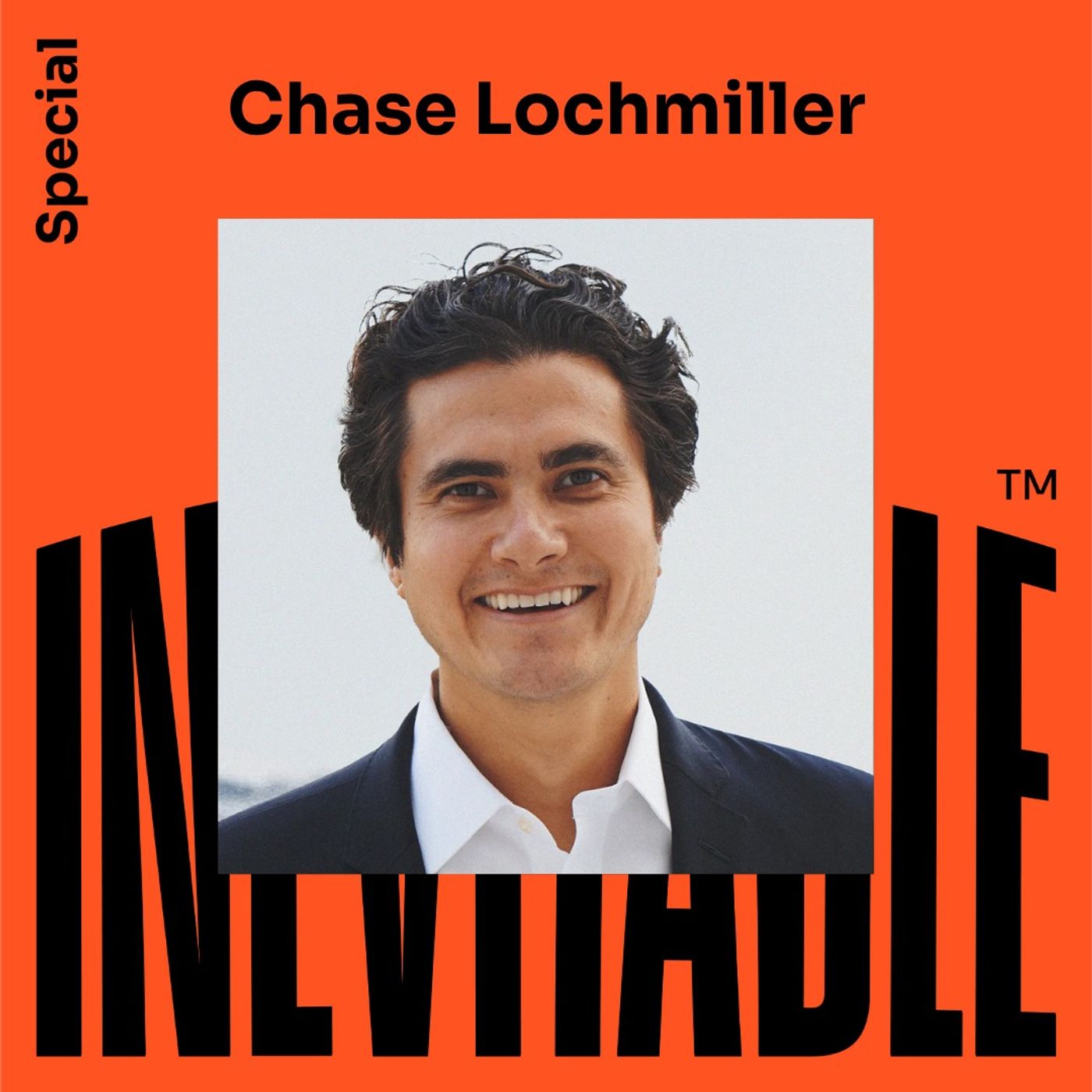
Crusoe CEO and Co-founder, Chase Lochmiller: Live Special at MCJ Summit
Oct 2900:40:04Summary readyChase Lochmiller is the CEO and co-founder of Crusoe. If you’re a regular listener, Crusoe isn’t new to the pod. This summer, Cody sat down with Chase’s Co-founder and COO, Cully Cavness, during our live event in Austin.This latest episode was recorded live at the inaugural MCJ Summit in San Francisco at the beautiful Autodesk Gallery. Cody and Chase dive into how Crusoe is building data centers at the intersection of AI and energy. Chase traces his path from MIT soccer captain and mountaineer to climate-focused entrepreneur, and how those experiences shaped Crusoe’s core values of preparation, curiosity, and speed.He shares the story behind the company’s 1.2-gigawatt Abilene, TX project, its energy-first approach to powering AI infrastructure, and his vision for an era of abundant energy and intelligence. The discussion also explores the future of AI labor, grid integration, and what digital abundance could mean for society at large.Special thanks to our MCJ Summit attendees and our kind sponsors: Autodesk Foundation, Borusan, Cedar Grove, CSC Leasing, Mitsui O.S.K. Lines, Obayashi, Palantir, and Safire Partners.Episode recorded on Oct 15, 2025 (Published on Oct 29, 2025)In this episode, we cover: [01:14] Chase’s early love of math, science, and soccer [02:42] Realizing academia moved too slow for his energy [04:32] How his entrepreneurial father shaped his path [05:05] Climbing Everest and the origins of “Think Like a Mountaineer” [09:32] Defining Crusoe as a clean AI infrastructure company [10:47] Building vertically integrated “AI factories” [16:24] Inside the 1.2 GW Abilene project for OpenAI and Oracle [20:52] Crusoe’s energy-first approach to compute build-outs [25:36] Using AI demand to accelerate next-gen energy solutions [30:24] When AI becomes a power orchestrator [33:31] Digital labor and AI’s impact on GDP and society [38:41] How Chase hopes Crusoe is remembered in 30 years Enjoyed this episode? Please leave us a review! Share feedback or suggest future topics and guests at info@mcj.vc.Connect with MCJ:Cody Simms on LinkedInVisit mcj.vcSubscribe to the MCJ Newsletter*Editing and post-production work for this episode was provided by The Podcast Consultant
Summary
AI’s Power Gap and Nuclear’s Return with The Nuclear Company
Oct 700:54:58Summary readyJuliann Edwards is Chief Development Officer at The Nuclear Company. The United States has 93 operating nuclear reactors providing about 20% of the nation’s electricity. After decades without new builds, Vogtle Units 3 and 4 in Georgia finally came online—despite cost overruns and delays that nearly derailed the project. Meanwhile, China has dozens of reactors under construction and is on pace to surpass the U.S. as the world’s nuclear leader by 2030.At the same time, an energy-demand gap—driven by AI data centers, reshoring of manufacturing, and widespread electrification—has put nuclear back in the conversation. Hyperscalers like Microsoft, Google, Amazon, and Meta are scrambling for clean, reliable baseload power.The Nuclear Company believes it can crack what’s held nuclear back in America. Rather than inventing new reactor designs, they’re using proven models like the AP1000 and targeting “the other 88%” of costs—construction, financing, and project management. Their approach is fleet-scale deployment: building multiple reactors at once to drive down costs through repetition and shared learning. They’re also partnering with Palantir to build an AI-powered operating system to orchestrate these projects.Beyond her role at The Nuclear Company, Juliann chairs U.S. Women in Nuclear. With 15 years in the industry—from steel commodities to the 2000s nuclear renaissance and the decommissioning wave—she’s seen the cycles and why today’s interest feels different.MCJ is a multiple-time investor in The Nuclear Company through our venture funds.Episode recorded on Aug 7, 2025 (Published on Oct 7, 2025)In this episode, we cover: [2:57] Juliann’s background and path to nuclear[05:30] Women in Nuclear’s mission and growth[06:38] Lessons from a six‑state nuclear bus tour[08:22] NIMBY sentiment shifting toward nuclear acceptance[10:25] U.S. build history and why it stalled[18:06] What went wrong and right at Vogtle[24:05] Nuclear reactor ~12% of cost; 88% is everything else[25:42] Workforce gaps and training pipelines[26:40] An overview of nuclear project types[32:59] Timelines: restarts soon; new builds in years[34:42] TNC’s executive makeup[37:40] The role of the Nuclear Regulatory Commission[40:35] Palantir and TNC’s newly announced partnership[48:35] Solving the nuclear waste problem[50:30] Juliann’s predictions for the future of nuclear[53:10] Hyperscalers’ evolving nuclear appetite Enjoyed this episode? Please leave us a review! Share feedback or suggest future topics and guests at info@mcj.vc.Connect with MCJ:Cody Simms on LinkedInVisit mcj.vcSubscribe to the MCJ Newsletter*Editing and post-production work for this episode was provided by The Podcast Consultant
Summary
Turning Seawater into a Carbon Removal Solution with Captura
Sep 3000:41:48Summary readySteve Oldham is CEO of Captura. Captura develops Direct Ocean Capture (DOC) technology that removes CO₂ from seawater, triggering the ocean to draw more CO₂ from the air to rebalance. With CO₂ concentrations ~150× higher in seawater than air, Captura’s closed-loop process uses electrodialysis to create acid and base on site—no added chemicals, no waste—and can run largely on off-peak renewable energy. Oldham, former CEO of Carbon Engineering, contrasts DOC with DAC, discusses MRV and crediting, deployment pathways (onshore, barges, vessels), his company’s pilot progress in Hawaii, and why pragmatic scale-up and licensing partnerships matter for gigaton carbon removal. Episode recorded on Aug 28, 2025 (Published on Sept 30, 2025)In this episode, we cover: [02:17] Steve’s path from Carbon Engineering to Captura[05:30] How Direct Ocean Capture actually works[09:10] Closed-loop design with no waste products[10:14] Using electrodialysis to split acid and base[13:12] Deployment options: onshore plants, barges, vessels[14:39] Running on off-peak and curtailed renewables[16:30] Measuring and crediting carbon drawdown[21:53] Balancing CO₂ use vs. permanent storage[25:22] Policy gaps like 45Q for ocean removal[35:15] Captura’s Kona pilot built in 70 days[37:33] First commercial project expected in Europe Enjoyed this episode? Please leave us a review! Share feedback or suggest future topics and guests at info@mcj.vc.Connect with MCJ:Cody Simms on LinkedInVisit mcj.vcSubscribe to the MCJ Newsletter*Editing and post-production work for this episode was provided by The Podcast Consultant
Summary
De-Extinction as a Platform Business with Colossal Biosciences
Sep 2300:46:05Summary readyBen Lamm is CEO and Co-founder of Colossal Biosciences, the world’s first de-extinction company. Colossal has raised more than $400 million at a valuation north of $10 billion to bring back extinct species using synthetic biology and genetic engineering. Just this year, the company unveiled the first dire wolves born in 12,000 years, created woolly mice with mammoth-like fur, and remains on track to see woolly mammoth calves by 2028.This conversation explores Colossal’s end-to-end platform approach, from ancient DNA recovery to multiplex genome editing, and why Ben sees de-extinction not just as science fiction come true but as a venture-scale business that spins out companies, partners with governments, and raises profound ethical questions. We cover polarizing public reactions, the conservation potential of rewilding keystone species, and how synthetic biology and AI are accelerating breakthroughs once thought impossible.Episode recorded on Aug 20, 2025 (Published on Sept 23, 2025)In this episode, we cover: [04:14] An overview of Colossal[05:47] The company’s dire wolf pups debut[10:51] Reasons behind de-extinction[11:49] Mammoth vs. thylacine vs. dodo challenges[18:40] How Ben co-founded a bioscience company[20:56] George Church and Colossal’s origin story[22:40] The “why” behind bringing back the mammoth[27:42] Colossal’s biodiversity credit carbon model[28:43] Trade-offs between rewilding existing species vs extinct[31:35] Colossal’s multifaceted business model[33:58] The company’s plastic-eating enzyme spinout[37:57] Colossal’s unique speed of R&D[40:38] The Colossal Foundation[42:29] Ben’s pov on our moral obligation to transparency Enjoyed this episode? Please leave us a review! Share feedback or suggest future topics and guests at info@mcj.vc.Connect with MCJ:Cody Simms on LinkedInVisit mcj.vcSubscribe to the MCJ Newsletter*Editing and post-production work for this episode was provided by The Podcast Consultant
Summary
Why Circularity Fuels Started with Diamonds to Scale Sustainable Jet Fuel
Sep 1600:53:43Summary readyDr. Stephen Beaton is Co-founder and CEO of Circularity Fuels, which develops compact reactors that turn waste carbon streams into high-value fuels and chemicals. Rather than compete with fossil fuels from the start, Stephen identified high-purity methane for lab-grown diamonds as a beachhead market—where Circularity’s product is 80–90% cheaper than incumbents while proving the core technology needed for clean liquid fuels.Stephen earned a chemistry PhD at Oxford and built deep expertise in synthetic fuels during his U.S. Air Force career, including overseeing jet fuel quality control in the Middle East and launching the Air Force’s e-fuels program. His insight: build a fuels company that doesn’t begin with fuel.Today, Circularity Fuels operates demonstration reactors in diamond facilities and is scaling toward biogas-to-SAF production using the same reactor platform. The company has raised $3M in venture funding, including from DCVC, plus $5M in grants from ARPA-E, NSF, and the California Energy Commission. MCJ is proud to be an investor.Episode recorded on Aug 12, 2025 (Published on Sept 16, 2025)In this episode, we cover: [03:09] Dr. Beaton’s background in clean fuels[07:31] His work with Air Force petroleum in the Middle East[10:12] A brief overview of hydrocarbons[13:08] ESAF as resilience for Pacific operations[16:22] What e-SAF really means and why it matters[19:24] Circularity Fuels’ origin story[21:20] The company’s three principles[23:04] High-purity methane for diamonds as a beachhead[27:46] Recycling diamond exhaust with microwave-sized reactors[30:40] Building a fuel company without fuel as the initial product[34:35] Hardware sales vs metered methane service model[39:05] Biogas-to-SAF pathway via Fischer-Tropsch[42:38] Circularity’s progress to date[44:01] Competing with fossil jet and carbon removals[48:41] How Circularity secured non-dilutive funding Enjoyed this episode? Please leave us a review! Share feedback or suggest future topics and guests at info@mcj.vc.Connect with MCJ:Cody Simms on LinkedInVisit mcj.vcSubscribe to the MCJ Newsletter*Editing and post-production work for this episode was provided by The Podcast Consultant
Summary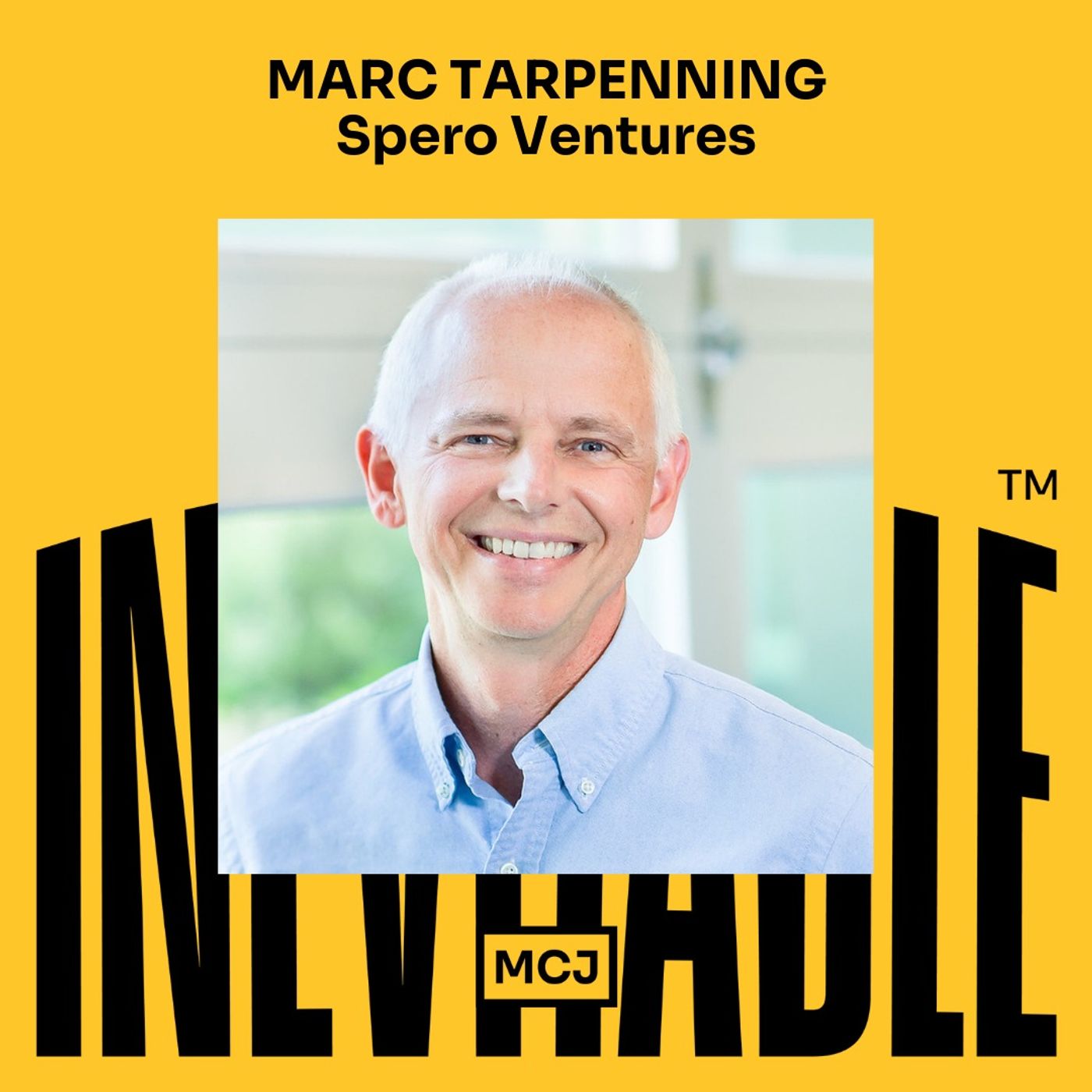
How Tesla’s Roadster Sparked the EV Revolution with Marc Tarpenning
Sep 900:56:06Summary readyMarc Tarpenning is Co-founder of Tesla and a venture partner at Spero Ventures. In 2003, Marc and Martin Eberhard saw two signals: GM killed its beloved EV1, and Californians snapped up Toyota’s Prius despite its compromises. They realized the market was ready for an electric car that was better than gas, not worse. Their breakthrough: 7,000 off-the-shelf laptop batteries powering a sports car that outran a Porsche and drove over 200 miles. The Tesla Roadster was born, before Elon Musk joined the company.Marc shares how his time in Saudi Arabia exposed him to oil dependence, how NuvoMedia taught him about the pace of battery improvement, and why a software mindset helped Tesla out-innovate incumbents. Now at Spero Ventures, Marc backs founders building solutions that are both economically compelling and environmentally vital, and explains why, to him, EVs have already won.Episode recorded on Aug 12, 2025 (Published on Sept 9, 2025)In this episode, we cover: [05:58] Marc's experience fixing software projects in Saudi Arabia[07:06] Why TELO’s compact electric pickup makes sense[09:09] Marc's Star Trek optimism versus Blade Runner dystopia[10:29] On founding NuvoMedia and the first e-book readers[17:40] Brainstorming EVs after the dot-com collapse[20:25] Prius demand proves customers value efficiency[22:18] Reducing oil dependence as national security[24:46] Roadster powered by 7,000 laptop lithium-ion cells[30:28] The Tesla launch playbook[32:14] Acceleration as the hook for high-end EV buyers[37:20] Early interactions with Elon Musk at SpaceX office[40:11] Lessons from early Roadster builds[43:36] Vertical integration only where it truly differentiates[48:15] Why EVs are inevitable[50:30] Marc's thoughts on Tesla today Enjoyed this episode? Please leave us a review! Share feedback or suggest future topics and guests at info@mcj.vc.Connect with MCJ:Cody Simms on LinkedInVisit mcj.vcSubscribe to the MCJ Newsletter*Editing and post-production work for this episode was provided by The Podcast Consultant
Summary
Inside Microsoft’s $1B Climate Fund Strategy to Hit Net Zero by 2030
May 12, 202500:40:27Summary readyBrandon Middaugh is the senior director of Microsoft’s $1 billion Climate Innovation Fund, created in 2020 to accelerate technologies that help Microsoft and the wider economy meet aggressive 2030 sustainability goals: carbon‑negative, water‑positive, zero‑waste and ecosystem‑protective. Five years in, Brandon shares how the fund’s “invest‑to‑procure” model aligns capital with Microsoft’s own demand for clean power, fuels, carbon removal, low‑carbon materials and water solutions; what’s working (a 5‑fold jump in durable CDR contracted since launch) and where supply still lags; and why scaling markets—not just piloting tech—is central to Microsoft’s moon‑shot roadmap toward net‑zero and beyond. In this episode, we cover: [01:43] Microsoft's ambitious 2030 sustainability targets[02:59] Brandon’s path toward climate finance[10:59] The fund’s “north star” [12:18] How carbon removal demand still dwarfs current supply[17:14] Airline partnerships supporting Microsoft's net-zero goals[19:46] Investment and procurement teams’ flywheel collaboration[23:22] Water-related investments and initiatives[29:36] Program mandates: innovate, accelerate, and scale[31:57] Brandon's advice on transparent engagement with Microsoft[36:43] Predicting highly distributed future energy systems[40:16] How transformation only seems inevitable in hindsightEpisode recorded on April 10, 2025 (Published on May 12, 2025) Enjoyed this episode? Please leave us a review! Share feedback or suggest future topics and guests at info@mcj.vc.Connect with MCJ:Cody Simms on LinkedInVisit mcj.vcSubscribe to the MCJ Newsletter*Editing and post-production work for this episode was provided by The Podcast Consultant
Summary
How Euclid Power Streamlines Clean Energy Development at Scale
May 5, 202500:49:55Summary readyJacob Sandry is the CEO and co-founder of Euclid Power, a platform for renewable energy project development, financing, and operations—with AI-enabled services layered on top. MCJ is proud to be an investor in Euclid, having joined the company’s seed round in mid-2022.Jacob has worked in renewable power his entire career, starting at Generate Capital right out of college, where he worked under Jigar Shah. He then spent several years on the investment team at Goldman Sachs' Renewable Power Group before having the a-ha moment that led to Euclid—and left to start it with a couple of his fellow Goldman teammates.Jacob and Cody discuss how he’s seen the renewables industry evolve over the past decade, his theory of change, the insights that led to founding Euclid, and the company’s current product and traction. We also touch on his thoughts on AI, power demand curves, and more. As we see it, Jacob is riding two massive waves with Euclid: the inexorable growth of solar and storage, and the curve-bending potential of AI and workflow automation.In this episode, we cover: [1:59] Jacob’s early career and background[3:34] Working with Jigar Shah at Generate Capital[8:26] Time on the Goldman Sachs Renewable Power team[9:24] The origin story of Euclid Power[15:23] Challenges in building renewable energy projects[19:15] From internal Goldman tools to the Euclid platform[20:29] Client spotlight: UBS[21:57] Transitioning from project development to a software company[26:07] The role of AI in Euclid’s platform[31:49] Business growth and market traction[33:35] Building Euclid as a multiplayer platform[37:10] Balancing software automation with hands-on services[40:41] Current limitations of AI and automation[42:50] Jacob’s outlook on the future of renewable energy[46:05] Powering data centers and emerging demand[47:30] Where Euclid is looking for help[48:18] The meaning behind the name “Euclid”Episode recorded on April 25, 2025 (Published on May 5, 2025) Enjoyed this episode? Please leave us a review! Share feedback or suggest future topics and guests at info@mcj.vc.Connect with MCJ:Cody Simms on LinkedInVisit mcj.vcSubscribe to the MCJ Newsletter*Editing and post-production work for this episode was provided by The Podcast Consultant
Summary
Building the Future with Patrick Maloney, CIV
May 1, 202500:43:14Summary readyPatrick Maloney is the Co-founder and CEO at CIV, and this episode was recorded in front of a live audience at the UCLA Anderson School of Management as part of LA Climate Week.Patrick's firm, CIV, is a new venture capital investment firm based in Venice, California, that backs and builds companies at the nexus of industry and technology. Patrick has had a long, successful career in clean tech. Before CIV, he founded and led Inspire, a clean energy technology company acquired by Shell in 2021. And for his work at Inspire, he was named Ernst & Young's 2018 Entrepreneur of the Year Award winner for Clean Tech and Renewables. Before Inspire, Patrick co-founded Independence Energy and was on the founding team of Energy Plus, both of which were acquired by NRG. Patrick is also co-founder of The Nuclear Company, in which we are proud investors via our venture funds at MCJ.In this episode, we cover: [1:39] How the LA wildfires shaped Patrick’s outlook[4:12] Why energy ties into philosophy, economics, and politics[7:01] Patrick’s early steps as an energy entrepreneur[10:05] The founding story behind Inspire[10:59] Lessons for CEOs and startup founders[14:59] Why Patrick sold Inspire to Shell[17:39] Entering venture capital and what came next[20:32] What CIV is and how it got started[22:30] CIV’s first fund and core motivation[27:12] How The Nuclear Company came to be[31:31] CIV’s approach to measuring impact[32:53] Patrick’s take on “climate tech” today[35:17] Navigating today’s tariff and policy shifts[36:26] What CIV looks for in investments[39:12] The future of energy and who will lead itEpisode recorded on April 8, 2025 (Published on April 24, 2025) Enjoyed this episode? Please leave us a review! Share feedback or suggest future topics and guests at info@mcj.vc.Connect with MCJ:Cody Simms on LinkedInVisit mcj.vcSubscribe to the MCJ Newsletter*Editing and post-production work for this episode was provided by The Podcast Consultant
Summary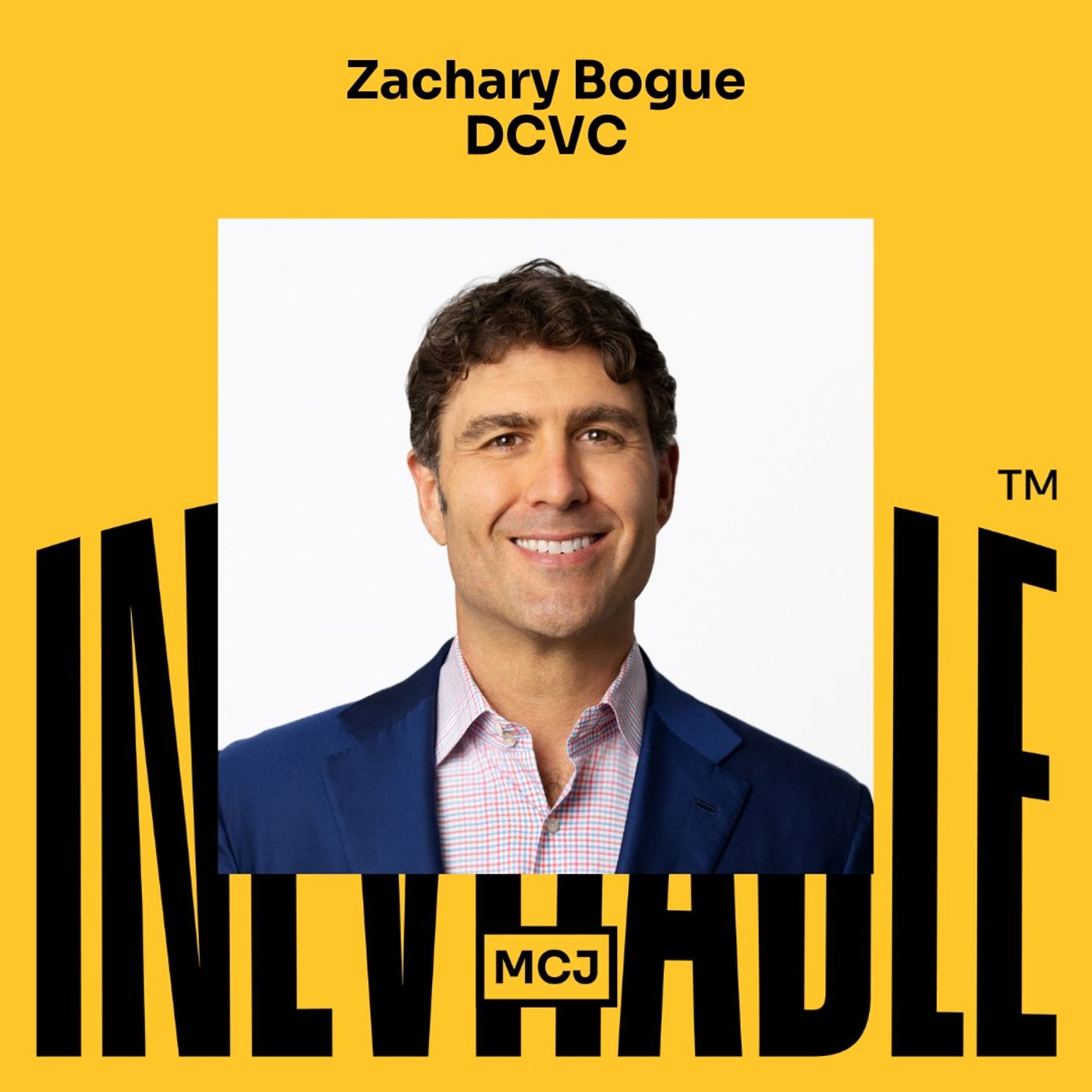
How a $4 B Deep‑Tech Fund Tackles Emissions with DCVC
Apr 17, 202500:41:20Summary readyZack Bogue is co‑founder and co‑managing partner at DCVC, a $4 billion deep‑tech venture firm spanning 13 funds. In late 2024, DCVC launched DCVC Climate, a dedicated vehicle backing technologies that slash emissions in heavy industry, hasten the energy transition, and bolster climate adaptation. In this episode, Zack unpacks how the firm’s strategy evolved, how his journey—from Colorado outdoors‑kid to Harvard environmental‑science major to Silicon Valley deal‑maker—shaped his worldview, and what it takes to build a capital‑efficient deep‑tech portfolio that moves the climate needle.In this episode, we cover: [01:53] What DCVC is and Zack’s role[02:41] Why DCVC focuses on deep tech[04:04] Zack’s path from Harvard to VC[12:34] DCVC’s playbook: applied AI, capital-light, climate-aligned[15:01] Launching a climate-only fund[20:06] Measuring impact beyond CO₂[25:55] Navigating policy shifts and returns[31:41] Bridging the Series B funding gap[32:56] Solving FOAK financing challenges[37:57] DCVC’s bets: geothermal, micro-reactors, SAF, and moreEpisode recorded on March 28, 2025 (Published on April 17, 2025) Enjoyed this episode? Please leave us a review! Share feedback or suggest future topics and guests at info@mcj.vc.Connect with MCJ:Cody Simms on LinkedInVisit mcj.vcSubscribe to the MCJ Newsletter*Editing and post-production work for this episode was provided by The Podcast Consultant
Summary