Podcast
The AIAC Podcast
Hosted by Africa Is a Country · EN
Hosted by Will Shoki, the Africa Is a Country Podcast is a weekly destination for analysis of current events, culture, and sports on the African continent and its diaspora, from the left.
45episodes
Episodes
Newest firstAll episodes
Business as Usual?
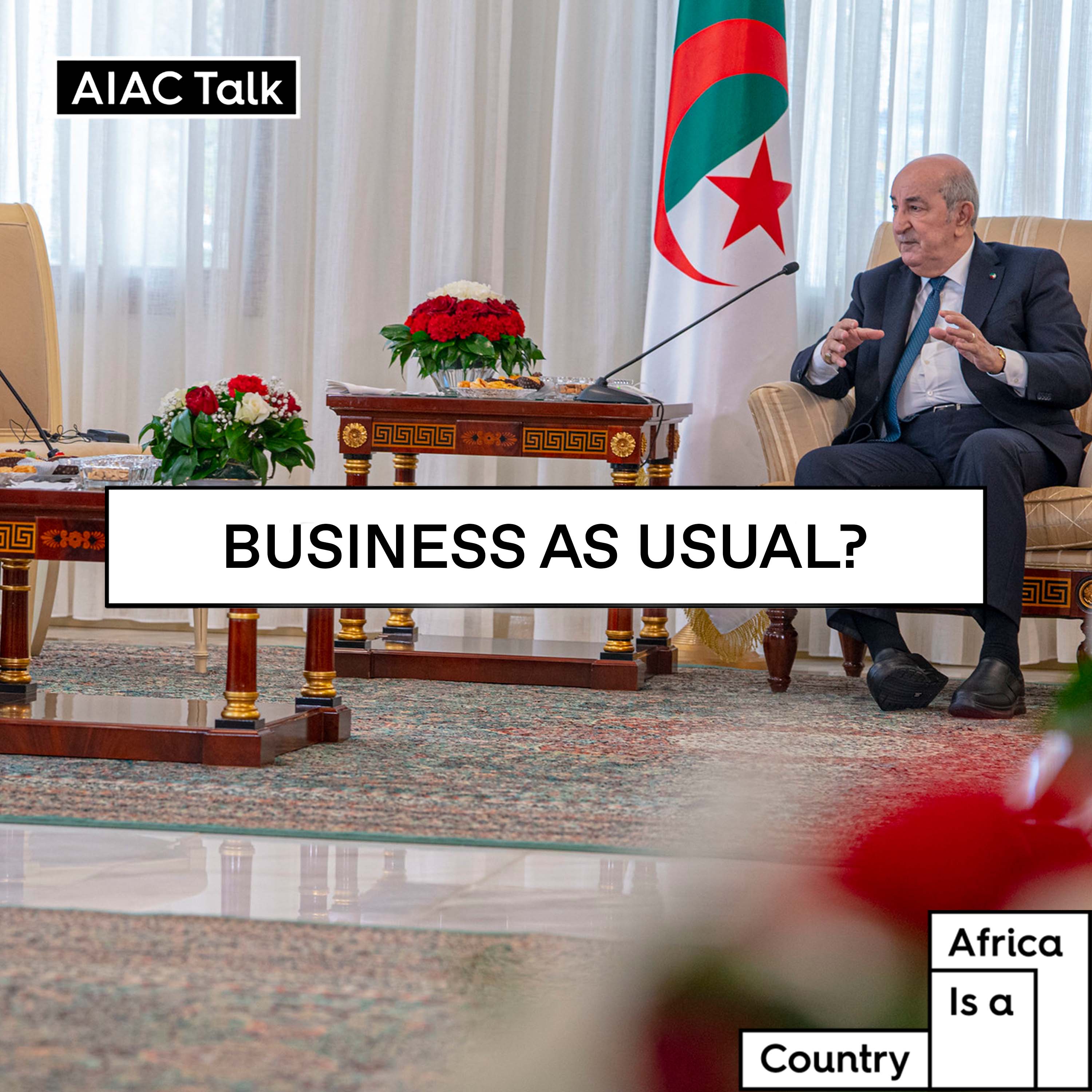
Sep 19, 202400:56:55Summary readyOn September 7, 2024, Algeria’s incumbent president, Abdelmadjid Tebboune, was re-elected for a second five-year presidential term with 94.65 percent of the vote. Tebboune came into power in 2019, replacing Abdelaziz Bouteflika, who ruled the country for 20 years and planned on running for a fifth term until widespread protests for radical change ended his rule.Data from Algeria’s National Independent Authority for Elections (ANIE) suggest that just 23 percent of the population voted for a candidate. Only three regime-approved candidates contested, with Tebboune's main challengers being conservative Abdelaali Hassani Cherif and socialist Youcef Aouchiche, who received 3 percent and 2.1 percent of the vote, respectively.The widespread disaffection reflects the legacy of 2019’s Hirak movement—whose complaint was not just against Bouteflika but the entire Algerian political system—and many activists from this generation have been forced into exile or detained while numerous associations and media outlets have shuttered. Tebboune has managed discontent through social spending to improve quality of life, while his foreign policy has focused on key geopolitical questions around Palestine, Western Sahara, the Sahel, and Libya. Algiers-based AIAC contributing editor Maher Mezahi joins the podcast to discuss what the elections mean for Algeria’s future and its role in the region.
Summary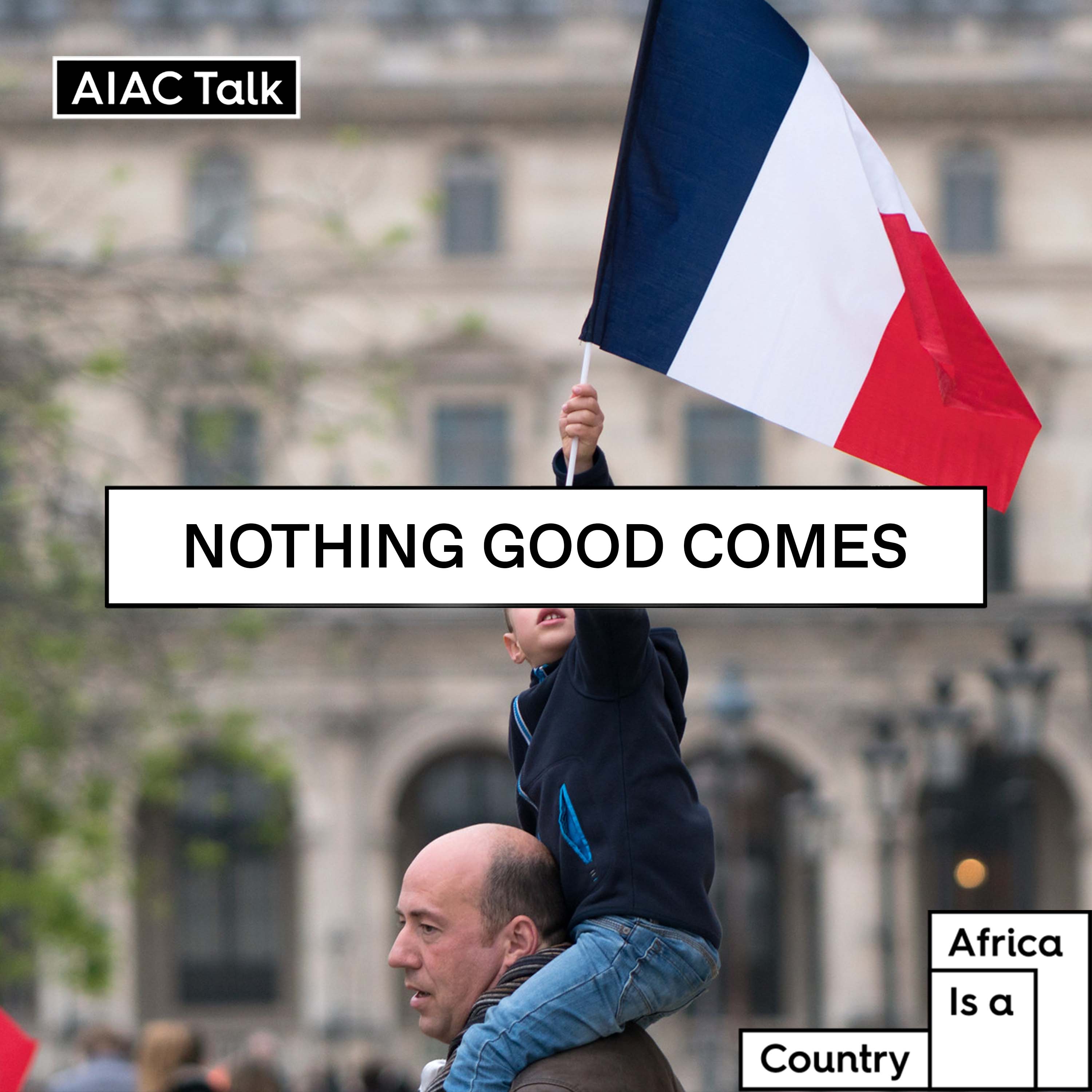
France? Nothing good comes of it
Jul 5, 202400:55:51Summary readyOn July 7, France heads to the polls in the second round of a legislative election widely viewed as a referendum on the country's future. The results of the first round boasted a strong showing for the far-right party, Rassemblement National (National Rally), which won 33% of the popular vote. The leftist alliance, Nouveau Front Populaire (New Popular Front), won 28% and President Emmanuel Macron’s centrist bloc Ensemble (Together) came third with 21%.Macron called the elections in early June after elections for the European Parliament resulted in a big swing to the right across the continent. Of the 81 seats designated for France in the 720-member body (the second-largest allocation of any member state after Germany), the National Rally won the most—30 to be exact. Faced with an uncertain parliamentary mandate, Macron seemingly called the elections to test the national mood, a gambit that many commentators say has backfired. Joining the podcast to discuss these elections, is AIAC’s Francophone regional editor, Shamira Ibrahim. Why are these elections significant? Why is Macron so popular, and how come it's the once-fringe right-wing benefitting, rather than the left? What might the normalization of anti-migrant policies mean for black and brown people in France, as well as the more than two million people who live in France’s overseas territories? In addition to being our Francophone regional editor, Shamira is a Brooklyn-based writer by way of Harlem, Canada, and the Comoros, who explores identity, cultural production, and technology.
Summary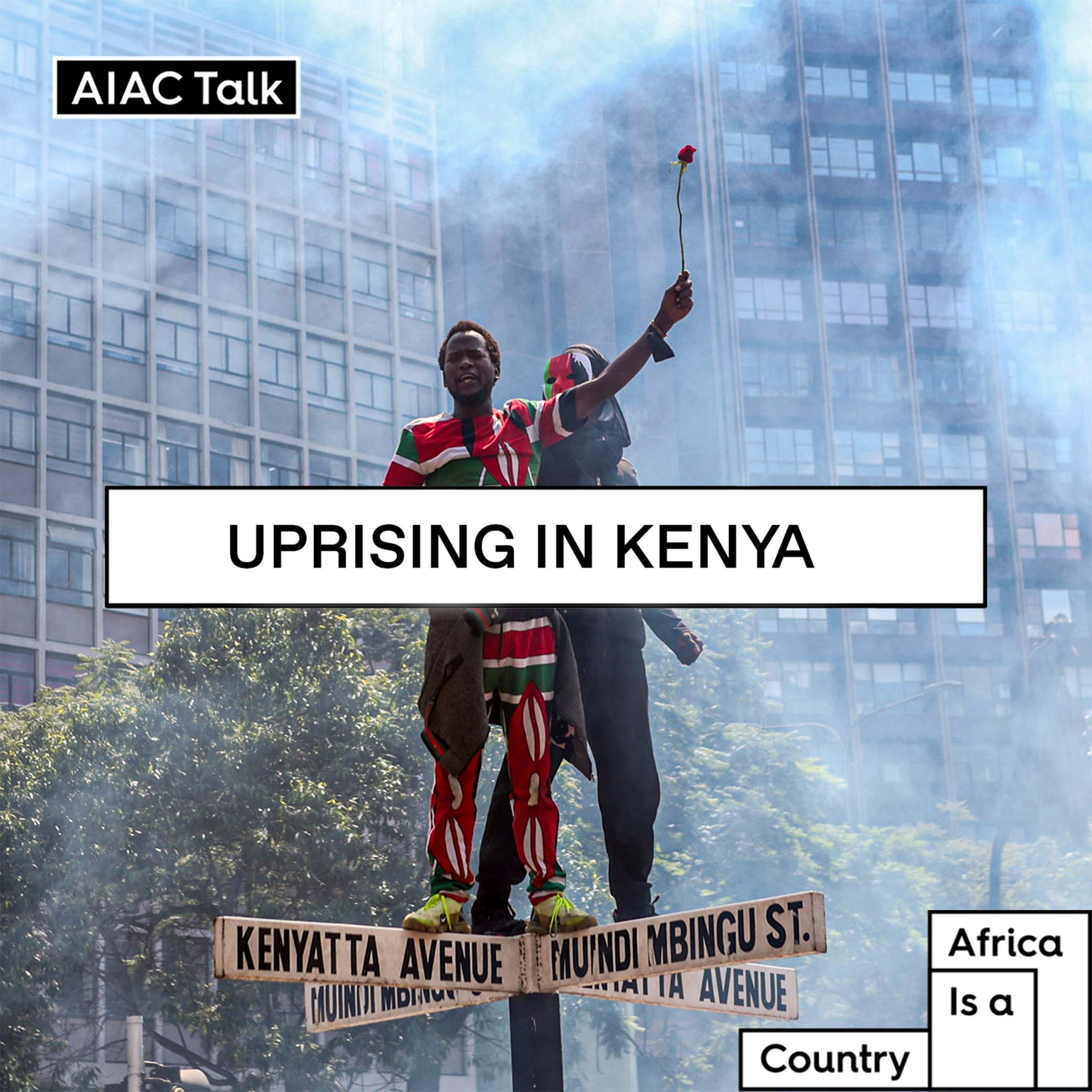
Uprising in Kenya
Jun 27, 202400:45:00Summary readyOver the last two weeks, Kenya has been rocked by widespread protests against a controversial law that aims to raise taxes. The 2024 Finance Bill sought to amass at least $2.7 billion in funds, primarily for the purpose of repaying creditors and stabilizing the country’s ballooning budget deficit, with public debt standing at 68 percent of GDP—which exceeds the 55 percent that the IMF and World Bank have recommended.Initially, the bill proposed controversial tax hikes on basic commodities such as bread and cooking oil, which were dropped on June 19 after the first wave of protests the day before. Nonetheless, Kenya’s parliament passed the bill, which still included provisions on a 16 percent tax on goods and services to be used to equip specialized hospitals with over 50 beds, which some worried would increase the cost of health care. After protests continued, President William Ruto announced on June 26 that he would not sign the bill, conceding that the “people have spoken.” The day before, however, he called some actions of protesters—particularly, the storming of parliament after police shot at demonstrators with live ammunition—an “unprecedented attack on democracy.” Meanwhile, security forces have killed at least 22 people, with witness reports suggesting that the death toll could be significantly higher.Why are these protests significant? Writing this week in Africa Is a Country, Kari Mugo observed that “this historic week marks a new era after many years of discontent and political apathy. A renewed desire for political engagement has ignited in Kenya.” The protests have wide demographic appeal but have been led primarily by Gen Z, who in Kenya is a group that largely did not participate in the 2022 general elections. And although the bill has been put on hold, protestors are still taking to the streets demanding Ruto’s outright resignation. Ruto—who came to power in a 2022 election after narrowly defeating Raila Odinga—is widely viewed as out of touch, despite styling himself as an “everyman hustler.” His time in office has been marked by deepening austerity that is worsening an escalating cost-of-living crisis. It is in this context that Ruto has regularly told Kenyans to tighten their belts. But in one of many examples of “do as I say, not as I do,” Ruto angered many when last month he chartered a private jet, instead of using the presidential carrier, to visit Joe Biden in Washington—the first visit by an African leader in sixteen years.So, to talk about these protests and what lies ahead for Kenya, I am joined by Wangui Kimari, who is our East Africa regional editor. Wangui is also an anthropologist based at the American University Nairobi Center and participatory action research coordinator for the Mathare Social Justice Centre (MSJC), a community-based organization in Nairobi, Kenya.
Summary
Corruption kills?
Jun 5, 202401:29:49Summary readyNigeria has a corruption problem—this is hardly breaking news. Less often acknowledged, however, is the fact that Nigeria has long had a vibrant and sometimes powerful anti-corruption movement. What are the origins of this movement? What has it achieved? Can it be rescued from the perennial limitations of anti-corruption (anti-)politics identified elsewhere in Africa and across the world? This episode examines these questions through the prism of the rise and fall of the politics of anti-corruption in Nigeria.Sa’eed Husaini is a research fellow at the Center for Democracy and Development in Abuja, and a regional editor for Africa Is a Country. OAG is a food security management postgraduate with a passion for revolutionary politics and discourse. He lives in Hull, UK. Emeka Ugwu is a Lagos-based book critic/co-founder of Wawa Book Review. He is also a data analyst.
Summary
Just Us Voting
May 28, 202402:02:47Summary readyOn this episode of Just Us Under A Tree, Dan Mafora, Elisha Kunene, and Tanveer Jeewa discuss the recent slew of litigation and controversial matters relating to South Africa’s 2024 elections. In particular, they unpack the latest Constitutional Court judgment that disqualified former President Jacob Zuma from contesting the elections with the M.K party (uMkhonto weSizwe, named after the A.N.C.’s former military wing).They also touch on the recent ruling of the International Court of Justice on South Africa’s request for amending the provisional orders against Israel under the Genocide Convention. Tanveer is a constitutional law and property law lecturer, Dan is a lawyer in Cape Town and the author of Capture in the Court (Tafelberg, 2023), and Elisha teaches law and politics in Cape Town.
Summary
Origins of the scam
Feb 21, 202401:20:27Tap to summarizeAfrica is a Country is happy to announce our new collaboration with The Nigerian Scam podcast, which focuses on examining how episodic iterations of audacious fraud in Nigerian history and contemporary politics intertwine with the ongoing struggle for African independence in the intricate web of global capitalism.In the first syndicated episode, Sa’eed Husaini, OAG, and Emeka Ugwu consider the uses and abuses of centering “the scam” as a tool for understanding the failures of independence and the emergence of capitalism in Nigeria. Why did Nigeria come to be associated with the classic internet scam, a.k.a. “yahoo-yahoo” (among other fraudulent activities)? To what extent can the phenomenon of fraud in Nigeria be neatly separated from “legitimate” forms of capital accumulation, such as in the oil sector, the music industry, or Nollywood? Is Nigeria’s case really unique, or is it a slight variation of the failures of petty bourgeois-led independence movements in Africa? Sa’eed is a research fellow at the Center for Democracy and Development in Abuja, and a regional editor for Africa Is a Country. OAG is a food security management postgraduate with a passion for revolutionary politics and discourse who lives in Hull, UK, and Emeka is a Lagos-based book critic/co-founder of Wawa Book Review. He is also a data analyst.
Transcribe →
Just Us for Palestine
Feb 6, 202401:11:33Tap to summarizeAfrica Is a Country is proud to present a new collaboration with the South African podcast Just Us Under a Tree. Once a month we will host an episode of the podcast, which is (mostly) about the Constitutional Court of South Africa. Returning from a long hiatus, its goal is to make it easier to talk about the law and read the news.On this episode, Tanveer Jeewa, Dan Mafora, Johan Lorenzen, and Elisha Kunene host International Human Rights Law and Children’s Rights expert, Bryony Fox, to unpack the recent ruling of the International Court of Justice on South Africa’s request for provisional orders against Israel under the Genocide Convention. Tanveer is a constitutional law and property law lecturer, Dan is a lawyer in Cape Town and the author of Capture in the Court (Tafelberg, 2023), Johan works for Richard Spoor suing companies who injure indigenous communities, workers, and consumers, and Elisha teaches law and politics in Cape Town.
Transcribe →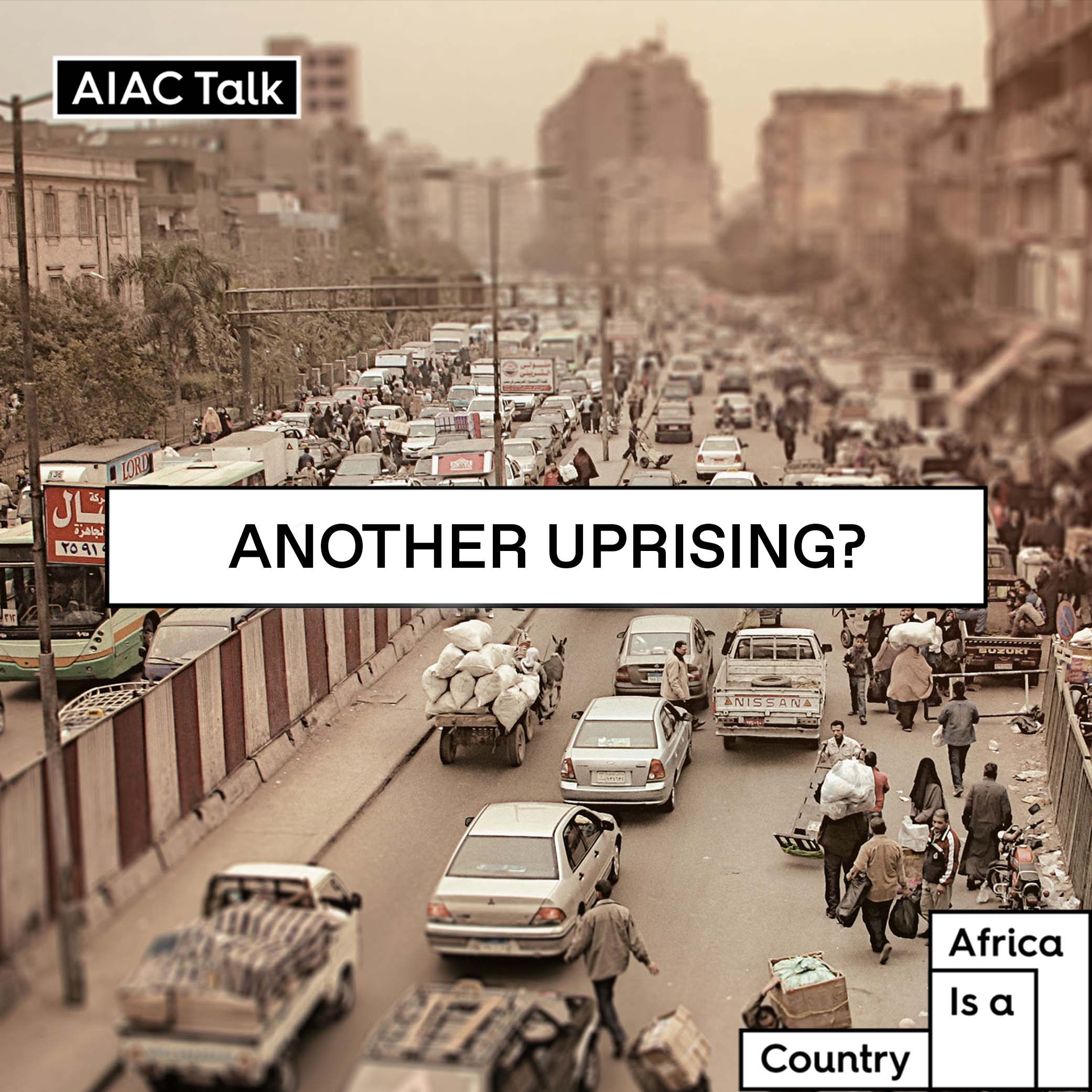
Will there be another uprising in Egypt?
Oct 10, 202301:09:13Tap to summarizeIn late September, Egypt’s Electoral Commission announced that the country will hold presidential elections in mid-December of this year. On Monday, October 3, incumbent President Abdel Fattah el-Sisi announced that he would run for a third term. A constitutional referendum in 2019 changed presidential term lengths from four years to six years, and handed Sisi a clean slate, permitting him to run for two additional terms under the new arrangement. Sisi could be in power until 2034.Sisi took power in 2013 through a popular military takeover that deposed Egypt’s first democratically elected president, Mohammed Morsi. Since then, his regime has cracked down on dissent, with tens of thousands of his political opponents (like Alaa Abd el-Fattah) jailed. Economically, Sisi handed the levers of the economy to his comrades in the junta, ballooning the country’s public debt by building scores of grandiose, white elephant projects. For ordinary people, the price of basic commodities has soared as economic restructuring by the IMF looms.The election in December is expected to be a foregone conclusion in favor of Sisi. In early October when he announced his candidacy, Sisi addressed the dire economic situation by exclaiming, “By God almighty, if the price of the nation’s progressing and prospering is that it doesn’t eat and drink as others do, then we won’t eat and drink.” This angered Egyptians and in some parts of the country (like Marsa Matrouh), spontaneous protests broke out. Is Egypt on the verge of another uprising? What space is there for dissidents, both on the street and on the ballot box? Do Sisi’s challengers—like Ahmed Tantawi—have any chance of rallying opposition against him? Joining us on the podcast to discuss all this is Hossam el-Hamalawy, an Egyptian journalist and scholar-activist, currently based in Germany. Hossam has written for various outlets, including the Guardian, New York Times, Jacobin, Middle East Eye, New Arab, Al-Jazeer, and others. He also maintains a regular newsletter on Egyptian politics on Substack.Image credit Simon Matzinger CC BY 2.0 Deed.
Transcribe →The People's Cup
Oct 3, 202300:50:23Tap to summarizeLast week, the Confederation of African Football (CAF) announced the hosts for the 2025 and 2027 African Cup of Nations. Morocco won the right to host the 2025 tournament, while the triumvirate of Tanzania, Kenya, and Uganda will host the 2027 edition. Meanwhile, the 2023 edition of the biennial competition, was originally meant to happen in June/July of this year in Côte d'Ivoire but was postponed to January 2024 to avoid adverse weather conditions brought on by the host nation’s rainy season.This was an unpopular decision in some quarters, especially in Europe’s Top Five leagues which have long complained about key African players being unavailable at a pivotal stage of the football season. Last week, the footballing world was left puzzled when Italian club Napoli uploaded videos to TikTok mocking their star Nigerian striker, Victor Osimhen. Speculation ran wild, and tellingly, one popular explanation was that Napoli's president Aurelio De Laurentiis was trying to force Osimhen out of the club, due to his expected absence given AFCON duty (Osimhen missed out on the 2021 tournament, and the Super Eagles are strong favorites for next year’s contest). In 2022, De Laurentiis controversially said Napoli wouldn’t sign African players unless they backed out of AFCON.Joining us on the podcast to discuss the politics and spectacle of AFCON, is football journalist Maher Mezehi. What can we expect from the tournament in 2024? And what political motives are behind the successful 2025 and 2027 bids, especially with Morocco outbidding Algeria, with both countries resorting to sports diplomacy in their geopolitical rivalry? Notwithstanding the constant consternation from Europe, why is AFCON a tournament that African players treasure above all? Maher Mezahi is an independent football journalist based in Algiers. He covers North African football extensively, and his work has been published in the international media including the BBC, The Guardian, The Telegraph, ESPN FC, and Al Jazeera English.
Transcribe →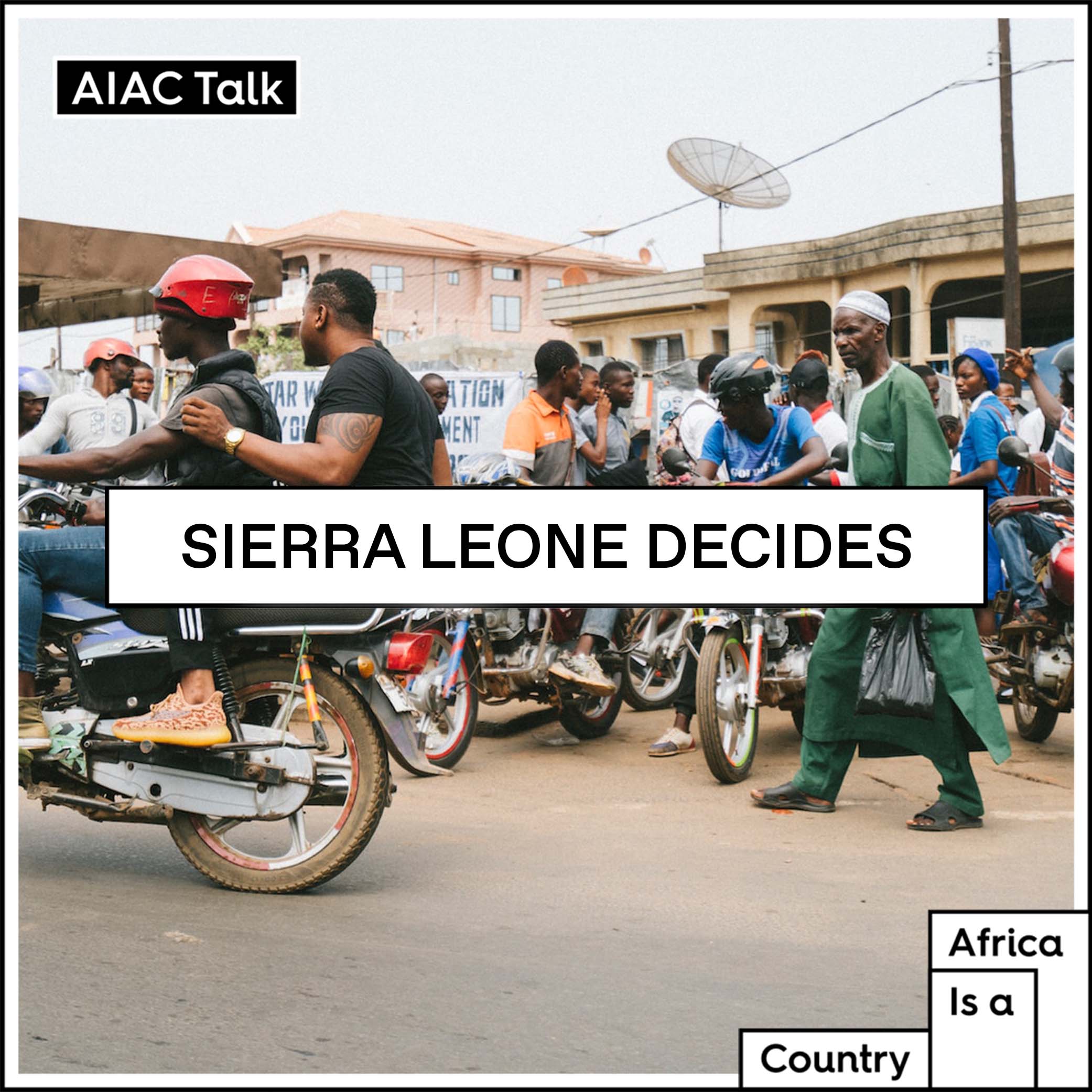
Sierra Leone decides
Jun 22, 202301:04:28Tap to summarizeSierra Leone will elect a president and parliament on June 24, its fifth election since a devastating 10-year civil war ended in 2002. Incumbent Julius Maada Bio of the Sierra Leone People’s Party (SLPP) is seeking re-election in a two-horse race against Samura Kamara of the All People’s Congress (APC). The contest is a re-match of the 2018 vote, when Bio won 51.81% of the vote to Kamara’s 48.19%.Like the rest of the continent, the country is facing a cost-of-living crisis exacerbated by global economic shocks. In August 2022, protests in this regard in Freetown, Makeni, and Kamakwie triggered a crackdown from the state, and 20 people were killed. When Bio came to power in 2018, having succeeded APC president Ernest Koroma, he promised to undo the legacy of heavy-handedness and intolerance to criticism that Koroma’s presidency became associated with. Now, many Sierra Leoneans are seeing more of the same.Ahead of the elections, restrictions on gatherings have been enforced, as well as a change to the voting system which is causing confusion. Kamara is also facing corruption charges originating from his time as foreign minister under Koroma, and the glacial pace that the case is moving through the courts has resulted in suspicions that Bio is weaponizing the state apparatus to frustrate Kamara’s candidacy.This week on the podcast, we are joined from Freetown by Sierra Leonean and American author Ishmael Beah to discuss the elections. Does Kamara represent much of a difference to Bio? How strong are Sierra Leone’s ethnic divisions, which inform most voting preferences? And, what of the youth who led the country’s cost-of-living protests? Ishmael, is the New York Times bestselling author of A Long Way Gone, Memoirs of a Boy Soldier, Radiance of Tomorrow, A Novel, and Little Family released in 2020. AIAC director of operations, Boima Tucker, also joins as a special guest.
Transcribe →