Podcast
unSILOed with Greg LaBlanc
Hosted by Greg La Blanc · EN
unSILOed is a series of interdisciplinary conversations that inspire new ways of thinking about our world. Our goal is to build a community of lifelong learners addicted to curiosity and the pursuit of insight about themselves and the world around them.*unSILOed Podcast is produced by University FM.*
64episodes
Episodes
Newest firstAll episodes
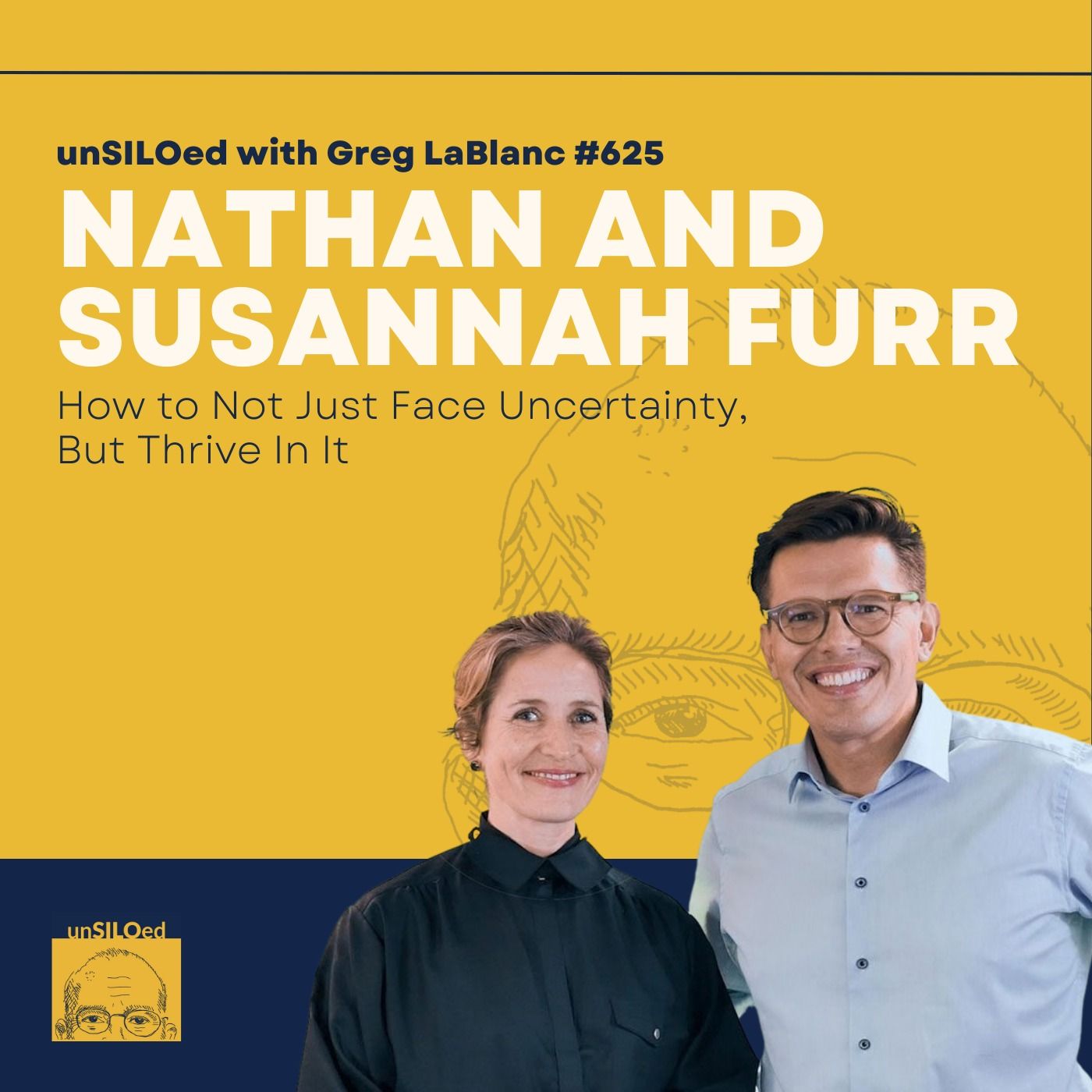
625. How to Not Just Face Uncertainty, But Thrive In It feat. Nathan and Susannah Furr
Mar 200:55:20Tap to summarizeWe live in an age where uncertainty lurks around every corner, but what if uncertainty didn’t have to be an anxiety-inducing, uncomfortable part of life? The Upside of Uncertainty: A Guide to Finding Possibility in the Unknown, by INSEAD professor Nathan Furr and entrepreneur Susannah Harmon Furr, presents strategies and tools to embrace uncertainty and turn it into opportunity. Nathan, Susannah, and Greg discuss why humans are naturally wired to avoid the unknown, and how our capacity to face it can be strengthened through learnable tools. The conversation covers some of the strategies described in the book like creating “islands of certainty” through rituals and support systems, maintaining a portfolio of personal options instead of going all-in too early, and focusing on what’s within one’s control while pursuing other meaningful goals, internally. *unSILOed Podcast is produced by University FM.* Episode Quotes: The golden space of uncertainty 26:59: [Nathan Furr] The American can-do attitude is it was this kind of illusion that we control the world. And most people who have been through something hard recognize it is not totally in our control. We sure we influence it, we nudge it, but a lot of things are outside our control. And so the people who are able to approach uncertainty with greater calm also kind of said, you know, what is in my control? I will focus on that, and what is outside of my control, or partially outside of my control, I am not going to obsess about that. And so there is this kind of golden space where you are focused on what are my internal goals, being the best, doing my best, making a contribution in the world. And I recognize that, there is some element of, in this complex, ambiguous world that I do not control, and so I am just going to focus on the things I can control and let the other pieces go. That leads to a much calmer view of the world. The video and audio are not synched On being comfortable with uncertainty 11:42: [Susannah Furr]: All of us could have cooler and more brilliant lives if we just tried a little bit more, if we got a little bit more comfortable with uncertainty. It is good to know, like, Ooh, I do not like risks. And we have a tool for that. Like, know what risks you have affinities and aversions for, but definitely do not just decide, Nope, I do not do uncertainty, because you are, you are missing out. The real danger isn’t risk 18:29: [Nathan Furr] The real danger is not that you are going to go all in on the uncertain thing, it is that you are probably going all in on the certain thing, and you are not bringing that thing you care about, that thing you dream about, into the portfolio of options in your life. Show Links: Recommended Resources: Ben Feringa World Uncertainty Index Sam Yagan Martin Seligman Kathleen M. Eisenhardt Ayana Elizabeth Johnson Guest Profile: Nathan Furr Faculty Profile at INSEAD Nathan Furr on LinkedIn Susannah Harmon Furr Profile at INSEAD Susannah Harmon Furr on LinkedIn The Uncertainty Possibility School Guests’ Work: The Upside of Uncertainty: A Guide to Finding Possibility in the Unknown The Innovator's Method: Bringing the Lean Start-up into Your Organization Leading Transformation: How to Take Charge of Your Company's Future Innovation Capital: How to Compete--and Win--Like the World’s Most Innovative Leaders Hosted by Simplecast, an AdsWizz company. See pcm.adswizz.com for information about our collection and use of personal data for advertising.
Transcribe →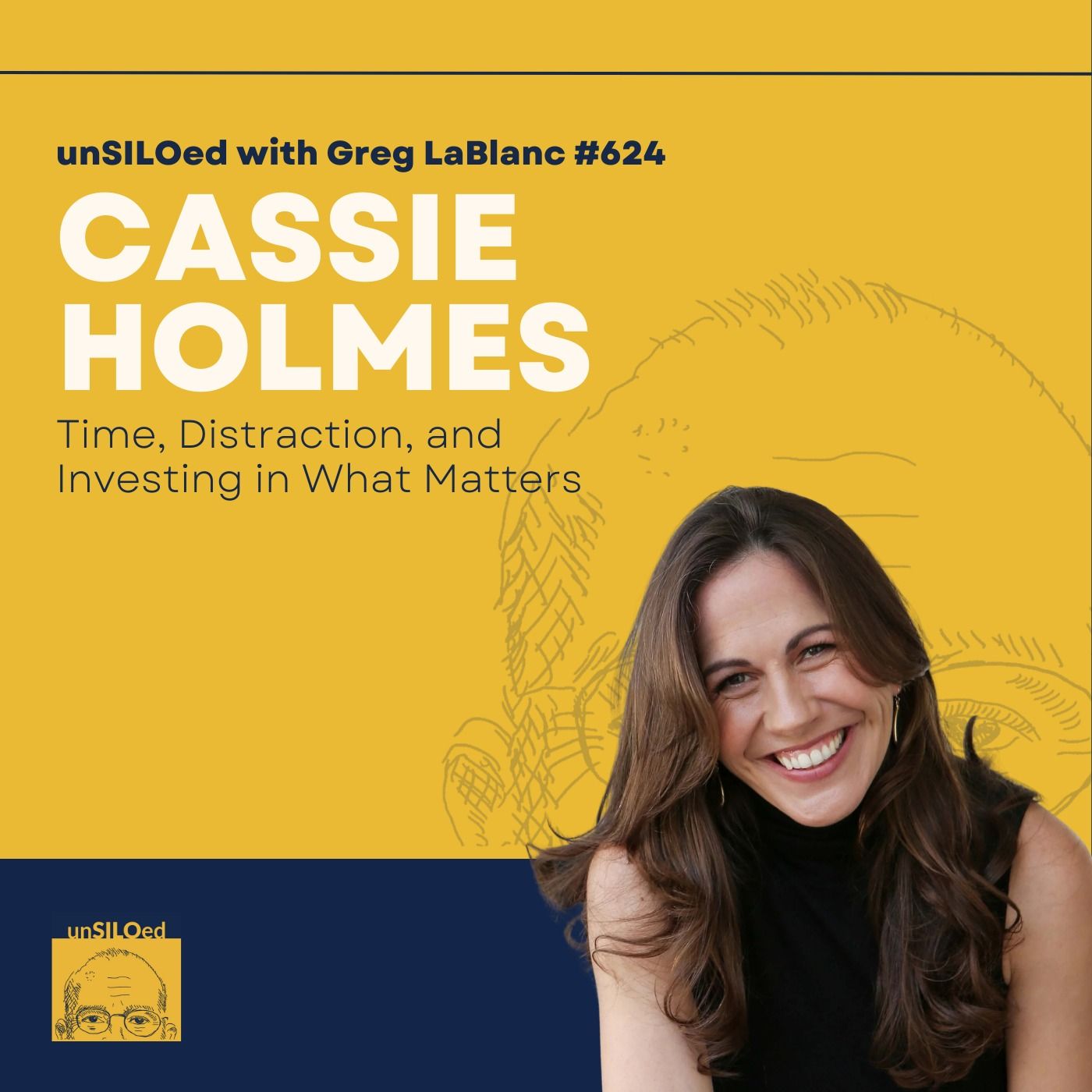
624. Time, Distraction, and Investing in What Matters with Cassie Holmes
Feb 2700:52:02Tap to summarizeWhat happens when you start thinking of time as a scarce resource? What practical strategies can you use to protect it from being passively spent or hijacked so that you can spend the time you have in more fulfilling and meaningful ways? Cassie Holmes is a professor at UCLA’s Anderson School of Management, and also the author of the book Happier Hour: How to Beat Distraction, Expand Your Time, and Focus on What Matters Most. Greg and Cassie discuss how to use time more intentionally to increase both day-to-day joy and overall life satisfaction. Cassie explains how even though these happiness questions are timeless, they have become newly urgent due to modern distractions, cell phones, productivity culture, and the pandemic’s effects on time perception, anxiety, burnout, and workplace engagement. Cassie describes exercises such as tracking one’s time and rating activities to identify what is personally most joyful and meaningful, noting common low-happiness activities (commuting, work, housework) and how individuals can find variation within them. Cassie opens the window on some of the examples of this within her own life through her regular coffee dates with her daughter and a prearranged commitment device that allows her to count on date nights with her husband. They also cover bundling chores with enjoyable activities, selectively outsourcing tasks, and the tradeoffs of pricing time in money, emphasizing that better time management enables more meaningful and satisfying life activities, not simply doing less. *unSILOed Podcast is produced by University FM.* Episode Quotes: Why being busy doesn't make you fulfilled 08:46: The unhappiness comes from when you have been busy and have spent your time and are looking back on it, feeling unfulfilled, like it got spent without you having invested in anything that ultimately matters to you. Whether it is things that give you that like true sense of joy and enjoyment, oftentimes through our interpersonal relationships, but also even that sense of satisfaction when you are making actual progress on whatever your project is, whatever that endeavor that you are sort of working towards is in line with your purpose, whether it is your personal purpose, which is really what my focus on is in the book, is the individual, and then ideally it is aligned. Your personal purpose is aligned with the sort of purpose of the work that you are doing. What is time poverty? 40:31: What time poverty is, it is this feeling of having too much to do and not enough time to do it. It is a feeling of being limited by the resources, in this case, time that you have available to achieve what you set out to do. Why isn't more enough, when it comes to happiness? 20:22: Not recognizing the role of hedonic adaptation is sure that first half hour, like, yes, that is the delight, right? You have your glass of wine, and you finally can kick back. But once you press, next episode, and you are three hours into your watching TV that night, you see on the happiness ratings that it, your enjoyment goes down over time. So that is also really helpful information, right? Because if we are trying to optimize using your optimization, sort of discipline and thinking, then we will, well, actually, we should spread out those positives, like my TV watching. This is also where intentionality comes into play. Like instead of zoning out for like many hours every night, just watch that first half hour. Show Links: Recommended Resources: Happiness Hedonic Treadmill Intentionality Marie Kondo George Shultz Time Poverty Katy Milkman Guest Profile: CassieHolmes.com Faculty Profile at UCLA Anderson School of Management LinkedIn Profile Guest Work: Happier Hour: How to Beat Distraction, Expand Your Time, and Focus on What Matters Most TEDx Talk | Finding Happiness in Ordinary Moments Hosted by Simplecast, an AdsWizz company. See pcm.adswizz.com for information about our collection and use of personal data for advertising.
Transcribe →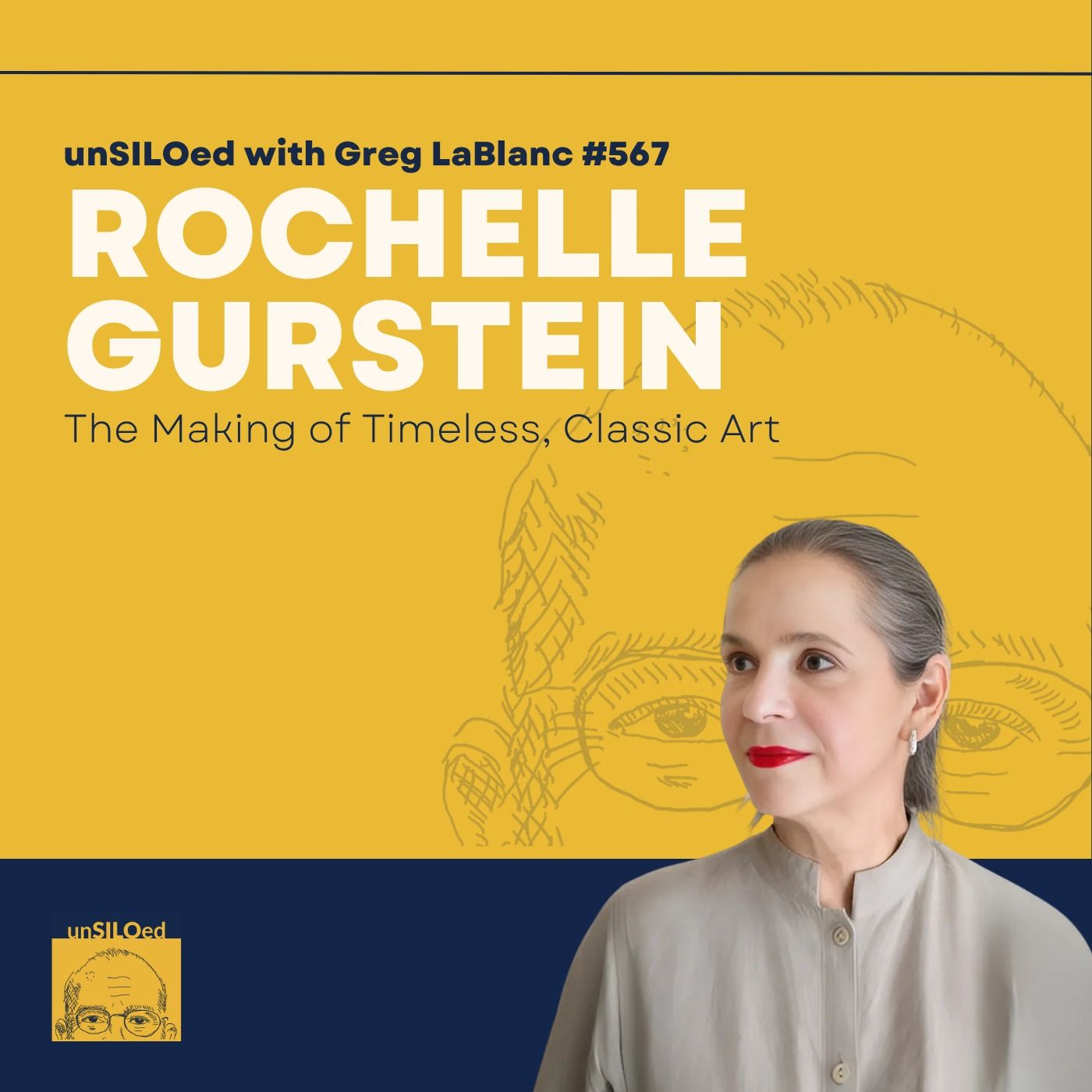
567. The Making of Timeless, Classic Art feat. Rochelle Gurstein
Jul 16, 2025Tap to summarizeBefore the Mona Lisa became one of the most famous and beloved paintings in the world, it sat in obscurity for hundreds of years away from the public eye. During that time, no one would have considered it the timeless, classic masterpiece that it is today. How did that change? Who decides what is worthy of the title “classic” and is it possible to have classics in our modern age? Rochelle Gurstein is an intellectual historian, critic, and fellow at the New York Institute for the Humanities. Her latest book, Written in Water: The Ephemeral Life of the Classic in Art explores what it means for something to be labeled “classic” and how the notion of the classics has evolved over centuries. Rochelle and Greg discuss the historical fluidity of aestheticism and taste, the shifting perception of iconic artworks, and unearth the forgotten contributions of critics and artists who shaped our understanding of what it means for art to transcend time. *unSILOed Podcast is produced by University FM.*Episode Quotes:Is the world being threatened by new art?42:07: One of the things that I try to trace in the book is this idea that one's world is being threatened by new art, and the sense that it's not the importance—by the 19th century and the 20th century—of what is at stake. It's not just that there is another work of art in the world, or a style that has entered the world. Instead, it is that a whole sensibility, taste, worldview is under attack.What is the strongest foundation for a classic?52:39: The strongest foundation for a classic is when artists keep a work alive in their own practice. So that, as long as people could still see the Venus de’ Medici in the works of all the artists who took it as the exemplar, they would continue to love it because they were all part of a continuum—an aesthetic continuum, a moral continuum—that, in the 20th century and 21st century, became harder and harder to maintain, because contemporary art shifted so dramatically every 10, 20 years—every other year these days. The way that we could keep art alive from the past is: the more we know about what other people have said about it—the people who have loved it, or the people who have not loved it.What really keeps art alive57:00: The practice of art itself—what artists are doing, not what collectors or museums and all the rest are doing, which is, of course, important. But I do not think that that is the most important thing. I think the artist’s practice and what they are keeping alive. And then knowing enough, caring enough about the art of the past, to try to understand what their aims were, and knowing it changed over time, and that these works were loved or not loved at different moments of time—and why?Show Links:Recommended Resources:RaphaelVenus de' MediciJoshua ReynoldsWilliam HazlittJohn RuskinStudies in the History of the Renaissance by Walter PaterGiovanni MorelliRoger FryGuest Profile:Fellow Profile at New York Institute for the Humanities Professional WebsiteGuest Work:Written in Water: The Ephemeral Life of the Classic in ArtThe Repeal of Reticence: America's Cultural and Legal Struggles over Free Speech, Obscenity, Sexual Liberation, and Modern Art Hosted by Simplecast, an AdsWizz company. See pcm.adswizz.com for information about our collection and use of personal data for advertising.
Transcribe →
526. Beyond Problem Solving: Philosophy and the Quest for Understanding feat. Agnes Callard
Apr 11, 202501:12:13Tap to summarizeWhat are ‘untimely questions’ and why do they become common blind spots in philosophy? Why is philosophy a team sport?? How does Moore’s paradox highlight the differences between truth and belief?Agnes Callard is a professor of philosophy at the University of Chicago and the author of the books Open Socrates: The Case for a Philosophical Life, Aspiration: The Agency of Becoming, The Case Against Travel, and On Anger.Greg and Agnes discuss the essence of living a philosophical life through the Socratic method. Agnes emphasizes inquiry, human interaction, and rigorous thinking as processes that require effort and dialogue. Their discussion touches on the distinctions between problem-solving and questioning, the complexities of human preferences, and the societal tendency to convert deep philosophical questions into more manageable problems. Callard also reflects on philosophical engagement within various contexts, including education, relationships, and ethical frameworks. The episode highlights the value of philosophical inquiry not just as an academic pursuit but as a fundamental part of living a meaningful life.*unSILOed Podcast is produced by University FM.*Episode Quotes:Philosophy concerns itself with problems not questions05:41: I think philosophy concerns itself not with problems, but with questions. Where the thing that you actually want is the answer to the question, and you're not trying to answer the question so that you can get on with something else that you were doing anyway. That's what you were doing—you were on a quest. And both problem-solving and question-answering are, kinesis, in Aristotle’s sense? They're emotions; they're processes. So they're similar in that way, but t hey're different in that, with a question, there's a sense in which the process leads to a sort of self-culmination, where the answer to the question kind of is the culmination of the process of questioning. And it's—we can almost say—you really fully understand the question when you have the answer, so that there's a kind of internal relationship between the question and the answer. Whereas, with problem-solving, anything that gets the problem out of the way is fine. You don't need a deep understanding of the problem. Like, if you were trying to move the boulder and someone else is like, "Look, you could just go around it," then that'll be fine.Philosophical training means simulating an opponent29:27: What philosophical training is, is training in simulating an interlocutor who objects to you—right? That's what you do in philosophy.What gets you to the top won’t always keep you there33:38: I think answering requires less training than asking; it requires less kind of experience in philosophical activity. And so Socrates had to relegate himself to the Socrates role because he was dealing with a bunch of people who didn't know how to do philosophy yet.Why the Socratic approach matters in philosophy39:54: Your philosophical, ethical system is going to constrain how you live your life. That's kind of the whole point of an ethical system. But I do think that the Socratic approach is one that can be inflected as a way of doing—a lot of what you were doing in your life. The Socratic approach says, do all that same stuff inquisitively. Now, there may be some things you can't do inquisitively—don't do those things. Or it may be that there are some things that you can't do inquisitively, but you simply have to do them to survive or something—like, as long as they're not unjust, that's fine. But the thought is like, well, let's take romance or something. Let's take politics. Let's take death, right? So those are the three areas I talk about. Can you be a philosopher and be doing those things? And Socrates, I think, goes out of his way to try to say, yes, that is, it's not just that those things can be done philosophically, but they're done best philosophically.Show Links:Recommended Resources:SocratesSocratic MethodAristotleTuring TestLarge Language ModelMoore's ParadoxParmenidesUtilitarianismKantianismJohn Stuart MillJeremy BenthamGuest Profile:Faculty Profile at The University of ChicagoProfile on WikipediaSocial Profile on XHer Work:Amazon Author PageOpen Socrates: The Case for a Philosophical LifeAspiration: The Agency of BecomingThe Case Against TravelOn Anger
Transcribe →
525. ‘Design Thinking’ As The Ultimate Integrator with Barry Katz
Apr 9, 202500:56:29Tap to summarizeBehind every great invention is an engineer who figured out how to make it work. But how do you take an extremely technical, cutting-edge innovation and make it easy to understand and use for the public? That’s where designers come in.Barry Katz is a professor emeritus of industrial design at California College of the Arts and a consulting professor at Stanford University. He is the author of the book, Make It New: A History of Silicon Valley Design, co-author of Change by Design: How Design Thinking Transforms Organizations and Inspires Innovation, and has spent decades studying the history of design thinking and its purpose at organizations. Barry and Greg discuss the historical trajectory of design in tech, how engineers and designers began collaborating in the 1980s, and the role of design in transforming technologies into user-friendly products. The conversation also covers the interdisciplinary nature of design, the impact of design thinking on various industries, and Barry’s latest book detailing the application of design principles in healthcare. *unSILOed Podcast is produced by University FM.*Episode Quotes:You don't have to be a designer to think like one31:47: You don't have to be a designer to think like one. And in fact, you probably don't want to become a designer. But over the course of this rather remarkable few decades, designers have learned a lot of tricks, and they're basically tricks. And many of those tricks can be learned by entrepreneurs, lawyers, physicians, which is what we dealt with in our most recent book. And it's not turning them into designers; it's giving them tools to solve their problems in medicine, law, engineering, or wherever, in something like the way that designers solve their problems.Why design thrives like an ecosystem19:17: So what is the connector between the internal combustion engine and the car, between the printed circuit board and the lamp? It's design. So, in the course of that, designers have had to learn a whole lot of new skills, new tricks. That’s where design thinking has played, I think, an important role, which may be drawing to a close. They’ve learned to integrate the behavioral sciences. They’ve learned how to talk to technical people. There's no doubt that it is an ongoing challenge.Designers shape experiences, not just products25:40: We don't want products to fail people. Now, a refrigerator is one thing, but then, when you are starting not just to approach a large appliance in your kitchen but to put it in your pocket, your kid's backpack, or a contact lens—which is to deliver insulin to a diabetic, which Google X is working on—then your tolerance for a bad experience vanishes. And it is a bit of a hackneyed thing to say, but the role of designers has been to create an experience.Design isn’t about knowing everything, it’s about knowing who to ask27:15: What happens when you have an exposure to the way anthropologists approach a problem, or economists, or linguists, or whoever it might be, is not that you become one or you acquire that level of professionalism, but you know who to ask. And you've heard an entirely new inventory of questions that may not have occurred to you in the past but are now on your agenda. And you either acquire a sufficient level of professional skill to answer those questions, or you now know who to ask. Show Links:Recommended Resources:Moore’s Law The Microma Silicon Valley (TV series) Alphonse Chapanis Larry Page Franz von HolzhausenDeepSeekNatasha Jen: Design Thinking is Bullsh*tGuest Profile:Faculty Profile at California College of the ArtsFaculty Profile at Stanford UniversityProfessional Profile on LinkedInHis Work:Make It New: A History of Silicon Valley DesignChange by Design, Revised and Updated: How Design Thinking Transforms Organizations and Inspires Innovation
Transcribe →
524. Business Strategy: Beyond the Numbers feat. Freek Vermeulen
Apr 7, 202500:57:50Tap to summarizeWhat can shake organizations out of the cycle of doing things the way they have always been done because that’s the way they have always been done? Will a shift within an organization be more likely to stick with a top-down approach or a bottom-up approach? How can organizations allow freedom for their employees, but still be in control of the direction of that freedom?Freek Vermeulen is a professor of strategy and entrepreneurship at London Business School and the author of Business Exposed: The Naked Truth about What Really Goes on in the World of Business and Breaking Bad Habits: Why Best Practices Are Killing Your Business.Greg and Freek discuss the essence of strategy in organizations, highlighting the complexities and dysfunctions within organizations, the evolutionary parallels in human behavior and cultural practices, and the critical importance of understanding organizational strategy at all levels. Freek emphasizes the necessity of both top-down strategic direction and bottom-up innovation, the pitfalls of over-reliance on visible metrics, and the value of periodic organizational changes. *unSILOed Podcast is produced by University FM.*Episode Quotes:A strategy no one follows is no strategy at all40:14: Strategy can not only be top-down, it has also to be bottom-up, that people display initiative themselves in line with strategy. And this is how it relates to it being a collective cognitive construct, and people knowing about the firm's strategy. A strategy is only a strategy if people do something different as a result of it in their daily job. If the C-suite changes the strategy, but everybody in the cubicles keeps doing the same thing, I'm sorry, you don't have a strategy. Now you have a McKinsey PowerPoint deck, but you don't have a strategy. It's only a strategy if people do something different as a result of it. And one aspect of this is that can only happen if they know about it and if they understand it. And that places a big onus on how you communicate it, how you put that in people's minds or so. Strategy is collective cognitive construct39:26: Strategy is in the mind, and it is a mindset and understanding of what we're trying to work towards and trying to do as an organization. And it's collective because it has to be shared. It’s a tool to cooperate, that we have a joint understanding of what we're actually trying to do and what we're not trying to do.What gets you to the top won’t always keep you there14:50: What we certainly know, and also that's what we see in research in cultural anthropology, by the way, as well, where there is research on what sort of individuals are most likely to become the head of a tribe, where we observe highly similar things, is to say your chances of making it to the next level, what sort of variables determine your probability of making it to the next level, and hence eventually reaching the top, are not necessarily the same traits that make you a good CEO and a good steward in the long term for an organization. There can be mismatches between these things. In a tribe, for instance, if you are a very combative individual and prone to a good fight or something like that, that may make you more likely to go through the tournament and become the head of a tribe. But it may also make you more likely to take your tribe on the warpath, which may not be so good for survival. So the same characteristics that make people more likely to become CEO are not necessarily the same characteristics that make them better as CEOs for organizations.Are business schools equipping mba students with the right tools for leadership success?53:23: This understanding about how behavioral mechanisms, including norms and so on, work is something that we need to do better in business schools. The experiment... is indeed to see if people who have more managerial experience and more economics training get it more wrong because we have some other studies that suggest that understanding more about financial incentives and economic rational behavior makes you less aware of these other aspects of human behavior, which of course exist in organizations and in reality.Show Links:Recommended Resources:Kuru (disease)Creutzfeldt–Jakob diseaseFrans van HoutenLeo TolstoyChange for Change’s Sake | HBRSEI Investments CompanyWilliam H. StarbuckConstantinos C. MarkidesAsch Conformity ExperimentsGuest Profile:LinkedIn ProfileFaculty Profile at London Business SchoolSocial Profile on XHis Work:Amazon Author PageBusiness Exposed: The Naked Truth about What Really Goes on in the World of BusinessBreaking Bad Habits: Why Best Practices Are Killing Your BusinessGoogle Scholar Page
Transcribe →
523. AI as a Colleague, Not a Replacement with Ethan Mollick
Apr 3, 202500:39:41Tap to summarizeIt’s official: AI has arrived and, from here on out, will be a part of our world. So how do we begin to learn how to coexist with our new artificial coworkers? Ethan Mollick is an associate professor at University of Pennsylvania’s Wharton School and the author of Co-Intelligence: Living and Working with AI. The book acts as a guide to readers navigating the new world of AI and explores how we might work alongside AI. He and Greg discuss the benefits of anthropomorphizing AI, the real impact the technology could have on employment, and how we can learn to co-work and co-learn with AI. *unSILOed Podcast is produced by University FM.*Episode Quotes:The result of an experiment identifying the impact of GEN AI07:35 We went to the Boston Consulting Group, one of the elite consulting companies, and we gave them 18 realistic business tasks we created with them and these were judged to be very realistic. They were used to do actual evaluations of people in interviews and so on. And we got about 8 percent of the global workforce of BCG, which is a significant investment. And we had them do these tasks first on their own without AI, and then we had them do a second set of tasks either with or without AI. So, random selection to those two. The people who got access to AI, and by the way, this is just plain vanilla GPT-4 as of last April. No special fine-tuning, no extra details, no special interface, no RAG, nothing else. And they had a 40 percent improvement in the quality of their outputs on every measure that we had. We got work done about 25 percent faster, about 12.5 percent more work done in the same time period. Pretty big results in a pretty small period of time. Is AI taking over our jobs?20:30 The ultimate question is: How good does AI get, and how long does it take to get that good? And I think if we knew the answer to that question, which we don't, that would teach us a lot about what jobs to think about and worry about.Will there be a new data war where different LLM and Gen AI providers chase proprietary data?11:17 I don't know whether this becomes like a data fight in that way because the open internet has tons of data on it, and people don't seem to be paying for permission to train on those. I think we'll see more specialized training data potentially in the future, but things like conversations, YouTube videos, podcasts are also useful data sources. So the whole idea of LLMs is that they use unsupervised learning. You throw all this data at them; they figure out the patterns.Could public data be polluted by junk and bad actors?16:39 Data quality is obviously going to be an issue for these systems. There are lots of ways of deceiving them, of hacking them, of working like a bad actor. I don't necessarily think it's going to be by poisoning the datasets themselves because the datasets are the Internet, Project Gutenberg, and Wikipedia. They're pretty resistant to that kind of mass poisoning, but I think data quality is an issue we should be concerned about.Show Links:Recommended Resources:“Navigating the Jagged Technological Frontier: Field Experimental Evidence of the Effects of AI on Knowledge Worker Productivity and Quality” | Harvard Business SchoolGeoffrey HintonProject GutenbergGemini AI“Google’s Gemini Controversy Explained: AI Model Criticized By Musk And Others Over Alleged Bias” | ForbesDevin AI Karim LakhaniGuest Profile:Faculty Profile at University of PennsylvaniaHis Work:Co-Intelligence: Living and Working with AI
Transcribe →
522. How The Invention of Choice Unlocked Freedom with Sophia Rosenfeld
Mar 31, 202500:49:33Tap to summarizeHow much has our understanding of choice evolved throughout history? And what has that invention meant to how we experience and acknowledge freedom? Sophia Rosenfeld is a professor of history at the University of Pennsylvania and an expert on the history of things taken for granted. Her books, Common Sense: A Political History, Democracy and Truth: A Short History, and most recently The Age of Choice: A History of Freedom in Modern Life, examine the origins of ideas that have become so commonplace in our modern world, they can often go overlooked. Sophia and Greg discuss the historical role of choice in consumerism, politics, and personal relationships, how choice initially got a reputation for being a feminine phenomenon, what choice has meant for concepts like freedom, and the political evolution of common sense in today’s world. *unSILOed Podcast is produced by University FM.*Episode Quotes:Has choice become the ultimate measure of freedom?47:24: Choice once had this kind of very moral apparatus around it. And, as I mentioned, over time, choice became more, I would call, value-neutral. It meant pick what you like. I don't have to like your choices; it's just what you prefer. But the strange third twist in this story is that just having the choices itself started to become a moral good. Just saying choice itself was the good, and I think that's not always right because there are certainly moments in which choice is freeing, but there are also choices that are not freeing—there are choices that are contrary to our well-being, there are places where choice is not a benefit. This choice of any weapon to buy, for instance, is a different kind of decision than saying choice in profession. Your choice in profession has little bearing on me. Your choice in weapon might have a large bearing on me or the other guy down the street. So I do question the assumption that more choice, more opportunities, more options is always preferable.How choice became the definition of freedom37:22: In the face of the threat of communism on the one hand and the threat of fascism on the other, one thing that starts to emerge most strongly in the U.S., but also in other parts of the sort of allied world, is a convergence around political choice and commercial choice, saying that what freedom is, is having choice in these two different domains. And from that point forward, I think you might say that democracy and capitalism get wedded together around the notion that choice is freedom.Is having more choices always a good thing?42:42: We've now seen policies emerge on the right and on the left framed around choice. School choice is usually more appealing on the right, reproductive choice more appealing on the left. So, I would have said that choice is one of those things that we are so used to that it's a kind of unquestioned value across the political spectrum. We might fight about what should be and by whom, but we don't fight about the value of choice itself. And to this day, things are marketed all the time around choice. You look at billboards or look at advertising anywhere you are, and you'll see choice is still a really common term—whether it's banking, house cleaning, or anything else. That may be ending in some spheres on the right.Show Links:Recommended Resources:Thomas PaineAlexis de TocquevilleThe Man Who Understood Democracy: The Life of Alexis de Tocqueville by Olivier ZunzJane AustenHannah Arendt Guest Profile:Faculty Profile at University of PennsylvaniaProfessional WebsiteHer Work:The Age of Choice: A History of Freedom in Modern LifeCommon Sense: A Political HistoryDemocracy and Truth: A Short History
Transcribe →
521. The Vital Role of Talent Development in Business with Bill Conaty
Mar 27, 202501:01:33Tap to summarizeHow important is it for business leaders to not only identify talent within their organization, but to take meaningful action to actually develop that talent? On the flip side, how handicapping can it be for an organization to keep employees who are holding the company back from success? Bill Conaty is a top former HR executive at GE and co-author of The Talent Masters: Why Smart Leaders Put People Before Numbers. His 40 years at GE and his time as an advisory partner for Clayton, Dubilier & Rice has made him an expert in identifying and developing raw talent at an organization. Bill joins Greg to share insights from his time at GE, emphasizing the necessity of integrating HR with other business functions and the importance of having a seat at the table. They also discuss GE's unique HR practices, such as talent development programs, the role of corporate audit staff, and the evolution of HR through different business eras, including the impact of COVID-19 and the DEI movement.*unSILOed Podcast is produced by University FM.*Episode Quotes:Candor comes first trust comes later41:55: Candor comes first; trust comes later. In other words, we always—through our leadership development in session C, we had to say, "We always had the list of development need, one or two." And it wasn't that I needed to go to the next course at Crotonville or that I'm too tough on myself. It had to do with legitimate development needs, and you had to be able to trust the company before you could cite, you know, "I don't have great listening skills," or—and you had to feel like, "Whatever you stipulate, we're going to work with you on that." And we said: a development need is not a fatal flaw. A development need is only a development need as long as you address it. If you don't, it can become a fatal flaw.HR Success Starts with the CEO05:41: No matter how good of an HR leader you are, if the CEO doesn't have high expectations for what he wants out of that function, you're in for a long day.What do we look for in leaders?34:50: What do we look for in leaders? We started out with three E's—energy, energize, and edge—and so that's a green light, red light, yellow light. We'd go out to all the businesses, and we came away from one, and the leader had dynamite energy, could energize others, more than enough edge, and his numbers sucked. So, I said to Jack, "We assume this, but we need a fourth E, and that's called execution." Do you need a different kind of talent master to evaluate the talent versus the values?53:26: I think the values piece is—I think it's fairly easy to identify, but it's fairly easy to identify. If you have a real intimacy in the organization. If you don't, if you're just standing off in the distance and applauding the numbers that are coming in, you can have a real kick-ass leader that people really don't enjoy working for and probably won't work for that long.Show Links:Recommended Resources:Clayton, Dubilier & RiceJack Welch Jeff Immelt CrotonvilleOmar IshrakDave Ulrich Steve Kerr (bschool professor not coach)Guest Profile:Author bioExpert Profile at Strayer UniversityHis Work:The Talent Masters: Why Smart Leaders Put People Before Numbers
Transcribe →
520. Debunking The Biggest Migration Myths with Hein de Haas
Mar 24, 202500:59:03Tap to summarizeContrary to popular belief, global migration levels have remained relatively stable. So why has it become such a hot button issue on the political world stage? Hein de Haas is a professor of sociology at the University of Amsterdam and an expert in migration. His book, How Migration Really Works: The Facts About the Most Divisive Issue in Politics delves into migration as a historical and ongoing phenomenon, comparing past and present migration patterns.Hein and Greg discuss common misconceptions about migration, why people migrate in the first place, and what the actual impact of migration is on the economy, culture, and climate. *unSILOed Podcast is produced by University FM.*Episode Quotes:Political showmanship won’t solve migration26:24: There are no easy solutions for complex migration problems. So that migration can cause problems in places where migrants concentrate, and not everybody is happy about it, particularly because employers reap the biggest benefits of their cheap labor—I can fully understand that. But the kind of solutions that politicians sell to us have more to do with bold acts of political showmanship than any really serious effort to control and manage migration.Migration is part of development15:07: We need a new paradigm, a new theory on migration—that migration is part of development. This is not about liking migration or not or denying that migration can also lead to tensions and problems. But if you deny that fundamental reality, you also see it in middle-income countries, where many governments have tried to stop or curb rural-to-urban migration. It has all failed.Are politicians in denial about the realities of migration?02:53: Both in the U.S., but also across the Atlantic in Europe, politicians have been basically in denial for over the last four to five decades about the realities of migration. That's the reason why these policies always fail. It’s a lack of fundamental understanding of migration as a social and economic process that needs to be the foundation of any policy. The migration issue has been completely hijacked by politicians, with pro- and anti-migration debates that don't really engage with the realities of migration. That huge gap is really the problem.Show Links:Recommended Resources:Economist Michael Piore books Guest Profile:Faculty Profile at University of AmsterdamProfessional WebsiteHis Work:How Migration Really Works: The Facts About the Most Divisive Issue in Politics
Transcribe →