Podcast
Next Comes What
Hosted by Andrea Pitzer · EN
Author Andrea Pitzer reveals what we can learn from the rise of strongmen around the world to thwart Trump and his allies.
87episodes
Episodes
Newest firstAll episodes

How to Get ICE Out of Your Town
Aug 6, 202500:26:37Summary readyA step-by-step list for assessing your community's relationship with ICE and learning how to end it. Read the post that inspired this episode: https://degenerateart.beehiiv.com/p/de-iceing-your-town Subscribe to Andrea Pitzer’s Degenerate Art newsletter to support Next Comes What and get Andrea's posts first: https://degenerateart.beehiiv.com/subscribe Watch this episode: https://www.youtube.com/watch?v=QzYHpKiiv5I&feature=youtu.be This week, Andrea Pitzer answers a request she's been getting from many readers and listeners lately: figuring out ICE's involvement in a given community and what to do about it. To get some expert advice, she talked to Oliver Merino of the Immigrant Legal Resource Center. Oliver is from Alexandria, Virginia and has been involved in addressing mistreatment and abuse of immigrants for more than a decade. In this episode, they discuss concrete ways to find out what level of cooperation ICE currently receives from your local law enforcement. Oliver lays out specific actions everyday people can take to reduce both official and unofficial partnerships. He also covers a number of other ways anyone can help their neighbors who have already been targeted by the government. The situation on expanded ICE funding on the federal level is grim, but there's still a lot that most of us can do to change policy and reduce harm at the local level.
Summary
Don't Wait
Jul 31, 202500:25:49Summary readyWhat if we already have what we need to do what has to be done? An unlikely story of magic and surprises, with receipts. Read the post that inspired this episode: https://degenerateart.beehiiv.com/p/pity-the-person-who-needs-something-from-me Subscribe to Andrea Pitzer’s Degenerate Art newsletter to support Next Comes What and get Andrea's posts first: https://degenerateart.beehiiv.com/subscribe Watch this episode: https://www.youtube.com/watch?v=Rh4yh7-efyc This episode of "Next Comes What" is a strange and magical story about coincidence and connection. Andrea Pitzer steps away from the current crises in the US to talk about needs and expectations that we have about one another and the tendency to want to believe someone somewhere else has more answers and will be more ready to lead, or at least more ready to act. Andrea recalls a passing exchange on Twitter from more than a decade ago that's become meaningful to her, and discusses it with her husband, who suggests she write about it. Meanwhile, she goes off to a cabin in the woods for a week for a solo writing intensive to work on a book, and tries to put off the many requests people make on her time, so she can focus on her work-in-progress. She somehow ends up interrupted anyway, and the connections between the tweet from twelve years ago and someone entirely different who is interrupting her at the cabin form a startling closed loop—and a good reminder that we're bound together in ways we barely notice. All this winds up being a map for finding a way to invent the world we hope to live in.
Summary
The Lost and The Returned
Jul 24, 202500:22:06Summary readyListening to the voices of the disappeared who have come back is a first step toward changing what's happening all around us. Read the post that inspired this episode: https://degenerateart.beehiiv.com/p/the-voices-of-the-returned Subscribe to Andrea Pitzer’s Degenerate Art newsletter to support Next Comes What and get Andrea's posts first: https://degenerateart.beehiiv.com/subscribe Watch this episode: https://youtu.be/DfFEA-3d8GU Apple Podcasts: https://podcasts.apple.com/us/podcast/next-comes-what/id1779885475 Spotify: https://open.spotify.com/show/7lUaIWeKl0oET2DJVTWhy4 This episode of "Next Comes What" looks at the recent departure from El Salvador of hundreds of men President Trump deported last spring to the CECOT camp there. Andrea Pitzer remembers seeing a Peter Greenaway production in the 1990s that used an actual historical ledger of the dead bodies pulled out of the Seine in Paris two centuries ago, and thinking about accountability to history. Underlining the importance of preserving events, she talks about a Paris protest in 1961 when the historical record was deliberately muddied, and the French government tried to censor and cover up a massacre. More than a hundred Algerians were killed while protesting peacefully against a curfew targeted directly at them. Many bodies fell into the river; others were thrown in to drown. Unlike the corpses in the 19th-century ledger from the Peter Greenaway film, these bodies and the lives they represented were erased for decades by the authorities. Andrea then looks at the reappearance in recent days of the men the US government tried to disappear into a black hold of detention in El Salvador. Addressing the importance of logging the vanished and the dead and listening to the voices of those who return, she begins to address how we might interrupt the cycle.
Summary
The Same Damn Thing But Worse
Jul 17, 202500:24:07Summary readyConcentration camps perpetuate themselves, but the fight against them shapes the future, too. Read the post that inspired this episode: https://degenerateart.beehiiv.com/p/choking-on-the-cruelty Subscribe to Andrea Pitzer’s Degenerate Art newsletter to support Next Comes What: https://degenerateart.beehiiv.com/subscribe This episode of "Next Comes What" looks at how concentration camp systems grow, how the existing institutions choke on them for at least a while, and what that means in terms of trying to stop those who want to expand our concentration camp society. Andrea Pitzer explores how some camp systems have been influenced by those created in foreign countries, while others rely more strongly on a country's own preexisting internal history. Sometimes immigration, as with Nazis to South America in the wake of World War II, shifts the political or detention environment. In each case, there are usually both foreign and domestic influences. Andrea looks at how everything from camps for Japanese Americans during World War II and immigrant detention at Guantanamo in the 1990s shaped the Everglades concentration camp and the constellation of similar camps the Trump administration is working to create now. Listing ways to block and undo this drive toward detention, Andrea includes networks of demonstrations and training opportunities that can connect listeners to concrete ways to help.
Summary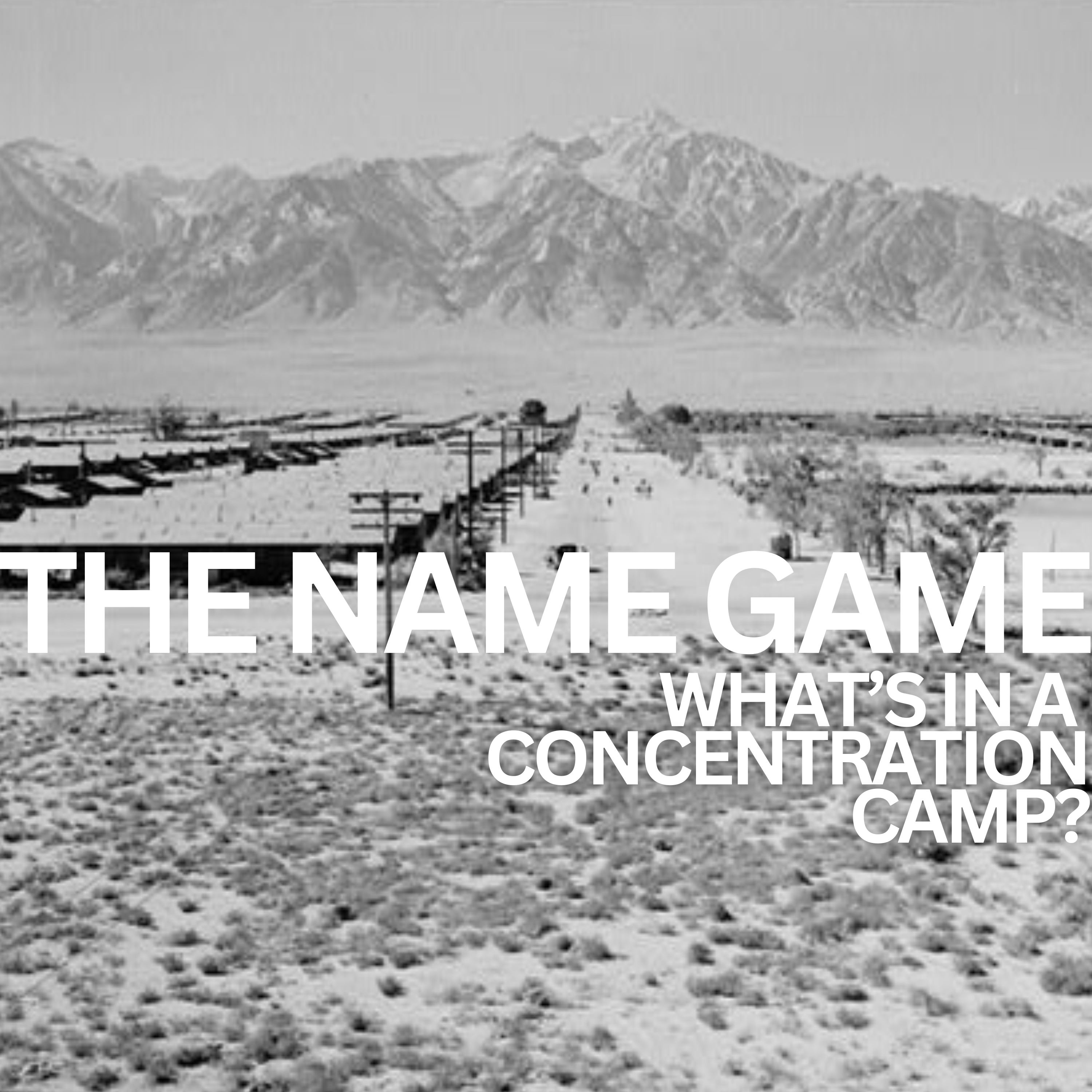
What's in a Concentration Camp?
Jul 10, 202500:32:21Summary readyA guide to understanding our new concentration-camp era and how to fight it. Read the post that inspired this episode: https://degenerateart.beehiiv.com/p/what-s-in-a-name Subscribe to Andrea Pitzer’s Degenerate Art newsletter to support Next Comes What: https://degenerateart.beehiiv.com/subscribe Watch this episode: https://www.youtube.com/watch?v=xhvb9PfUw2U In this episode, Andrea Pitzer lays out the definition of a concentration camp and breaks down each part of it. She looks at international trends in concentration camps across the last century and the specific U.S. history that has made the country vulnerable to propaganda demonizing immigrants and others. Addressing the advantages and disadvantages of comparing modern detention facilities to concentration camps and even Auschwitz, Andrea explores why what we choose to call these places matters. Coming to the conclusion that the new camp in the Everglades is a concentration camp and signals a massive expansion of extrajudicial detention that threatens all Americans, Andrea offers listeners a big-picture plan for how to strategically insert themselves into efforts to combat the concentration camp trend, from local projects to national movements.
Summary
How to Prevent a Full-Blown Dictatorship
Jul 3, 202500:24:06Summary readyThe budget bill unleashes a detention system that threatens every American, but we can still act. Read the post that inspired this episode: https://degenerateart.beehiiv.com/p/america-s-not-so-secret-police Subscribe to Andrea Pitzer’s Degenerate Art newsletter to support Next Comes What: https://degenerateart.beehiiv.com/subscribe Police-State Blues This week, Andrea looks at how police-state tactics are increasing across the country, not least with the debut of a new concentration camp in the Everglades. She draws parallels between the US and Nazi Germany (this is what people are always asking about) and shows how, in fact, our tilt toward authoritarianism now has many more echoes from that era than existed in the U.S. during Trump's first administration. The episode also considers the effects of the budget bill and how such massive funding for ICE detention and related projects could lead to repetition of another part of history in a different country: 2016 Russia, where the creation of an army-size National Guard under Putin's control marked the point where internal dissent and any significant opposition to his rule became almost impossible. Andrea suggests that we may be rapidly approaching a similar lockdown, but we aren't there yet. She lists a dozen things you can do to stop the ICE power grab.
Summary
Against a Rogue Court
Jun 26, 202500:27:45Summary readyThe Supreme Court uses the shadow docket to stick a knife into due process. But every toehold matters when you're taking back the country. Read the post that inspired this episode: https://degenerateart.beehiiv.com/p/rogue-scotus-on-the-loose Subscribe to Andrea Pitzer’s Degenerate Art newsletter to get all the posts first and to support Next Comes What: https://degenerateart.beehiiv.com/subscribe In this week's episode, Andrea Pitzer looks at Monday's Supreme Court ruling, which permits the government to send immigrants from U.S. soil to countries they did not come from and to which they have no connection, places where they might be tortured or trafficked. The decision, on the shadow docket, included a dissent but no explanation of the majority's rationale. Andrea considers what this means in terms of rights for immigrants and everyone else, and how—barring future decisions limiting it, clarifying it, or reversing it—this decision is likely to lead to violence, abuse, and concentration camp patterns of detention for those we deport abroad. She also explores how the time required to negotiate agreements with countries the US will need to bully or bribe into taking detainees will lead to even worse overcrowding in existing US detention facilities. With news of plans for a new Florida detention center nicknamed "Alligator Alcatraz", officials are emphasizing the role of pythons and other reptiles to keep prisoners on site. The episode finishes with some examples of local communities fighting detention facilities and ideas for what you can do to take action yourself.
Summary
A Movement That Can Stop Trump
Jun 19, 202500:25:14Summary readyMillions hit the streets last weekend to secure democracy and change America. Read the post that inspired this episode: https://degenerateart.beehiiv.com/p/there-is-no-final-boss Subscribe to Andrea Pitzer’s Degenerate Art newsletter to support Next Comes What: https://degenerateart.beehiiv.com/subscribe This week "Next Comes What" focuses on the five million (or so) Americans who turned up in cities and towns across the country last Saturday for No King's Day. Andrea Pitzer looks at the arc of nationwide protests from 2017 and 2020 and connects 2025 to them as a way to think about what's unfolding: a mass movement capable of rejecting Trumpism and transforming the country. Framing the fight for democracy as an ongoing effort rather than any "one and done" phenomenon, she stresses the importance of continuing to show up between the big events. Andrea recounts her reporting from two Saturday demonstrations in Falls Church, Virginia, where she lives, and considers what happened in the rest of the country. Often hopeful, yet touched by tragedy, June 14 was a wake-up call made and answered by America itself.
SummaryHow We Dissent — Lessons from LA & DC
Jun 12, 202500:27:44Summary readyPeople in the streets of LA and staff at NIH show all Americans how to stand up to power. Read the post that inspired this episode: https://degenerateart.beehiiv.com/p/standing-up-to-power Subscribe to Andrea Pitzer’s Degenerate Art newsletter to support Next Comes What: https://degenerateart.beehiiv.com/subscribe In this week's episode, Andrea Pitzer looks at actions in Los Angeles and at NIH from recent days as models for how we might each be able to shore up democracy in our own communities. She runs through a timeline of how ICE arrests in California drew residents to protest, which was met with violence by law enforcement. After the Trump administration triggered then escalated the crisis, the president took the likewise unnecessary steps of deploying the California National Guard and U.S. Marines. Andrea considers the destructive nature of these actions and the threat to democracy that they represent, as well as highlighting a few ways that Californians found to resist this overreach. The second half of the episode focuses on an interview with Rui Carlos Sá, a program director at NIH, whom Andrea first met at a "No Kings" demonstration in February. As one of the signers of Monday's Bethesda Declaration calling out the damage the new administration is inflicting on the National Institutes of Health, Sá talks about the importance of NIH and how he made the decision to stand up publicly. Andrea closes with a look at things we can do to follow in the footsteps of people speaking out in DC and LA, with an emphasis on the upcoming "No Kings" demonstrations across the US on Saturday, June 14.
SummaryThe Concentration Camp Tendency Goes Global
Jun 5, 202500:21:39Summary readyThe Trump administration is accelerating the concentration camp tendency worldwide, worsening conditions people are held in around the globe. Read the post that inspired this episode: https://degenerateart.beehiiv.com/p/the-concentration-camp-tendency-part-2 Subscribe to Andrea Pitzer’s Degenerate Art newsletter to support Next Comes What: https://degenerateart.beehiiv.com/subscribe This week, Andrea Pitzer looks at overseas expansion of the concentration camp tendency that sits at the heart of federal policy right now. This exclusion of whole groups from society is something the US is actively promoting overseas. By making plans to or actually sending people to Libya, South Sudan, El Salvador, and Panama, the current administration is creating an overseas network of concentration camps. As the US leads the way, problematic detention is being tipped over into more dangerous territory. Meanwhile, massive cuts to US aid globally are staggering international efforts to deal with political and economic crises abroad, including reducing rations in refugee camps in several countries. Andrea considers what everyday Americans can do at home and abroad, offering the example of Camden, Delaware, where community outcry ended a collaboration agreement between local police and ICE. Stick around for the details of a June 11 event at noon ET hosted by Harvard that you can sign up to attend virtually, where Andrea will be joined by former Kamala Harris policy advisor Ami Fields-Meyer and resistance-movement researcher Erica Chenoweth in conversation about ways irregular detention is expanding and how we can strengthen democracy. (Register here: https://ash.harvard.edu/events/concentration-camps-and-the-machinery-of-repression-lessons-for-saving-democracy/.)
Summary