Podcast
Radiolab
Hosted by WNYC Studios · EN
Radiolab is on a curiosity bender. We ask deep questions and use investigative journalism to get the answers. A given episode might whirl you through science, legal history, and into the home of someone halfway across the world. The show is known for innovative sound design, smashing information into music. It is hosted by Lulu Miller and Latif Nasser.
373episodes
Episodes
Newest firstAll episodes

The Punchline
Jan 1600:50:33Summary readyThis episode, first aired in 2019, brings you the story of John Scott, the professional hockey player that every fan loved to hate. A tough guy. A brawler. A goon. But when an impish pundit named Puck Daddy called on fans to vote for Scott to play alongside the world’s greatest players in the NHL All-Star Game, Scott found himself facing off against fans, commentators, and the powers that be. Was this the realization of Scott’s childhood dreams? Or a nightmarish prank gone too far? Today on Radiolab, a goof on a goon turns into a parable of the agony and the ecstasy of the internet, and democracy in the age of Boaty McBoatface.Special thanks to Larry Lynch and Morgan Springer. Check out John Scott's "Dropping the Gloves" podcast (https://www.droppingthegloves.com/) and his book (https://www.simonandschuster.com/books/A-Guy-Like-Me/John-Scott/9781501159657) "A Guy Like Me". EPISODE CREDITS: Reported by - Latif NasserProduced by - Matt KieltyOriginal music and sound design contributed by -John Dryden, Thee Oh Sees, Weedeater and Bongzilla.Sign up for our newsletter!! It includes short essays, recommendations, and details about other ways to interact with the show. Signup (https://radiolab.org/newsletter)!Radiolab is supported by listeners like you. Support Radiolab by becoming a member of The Lab (https://members.radiolab.org/) today.Follow our show on Instagram, Twitter and Facebook @radiolab, and share your thoughts with us by emailing radiolab@wnyc.org.Leadership support for Radiolab’s science programming is provided by the Simons Foundation and the John Templeton Foundation. Foundational support for Radiolab was provided by the Alfred P. Sloan Foundation.
Summary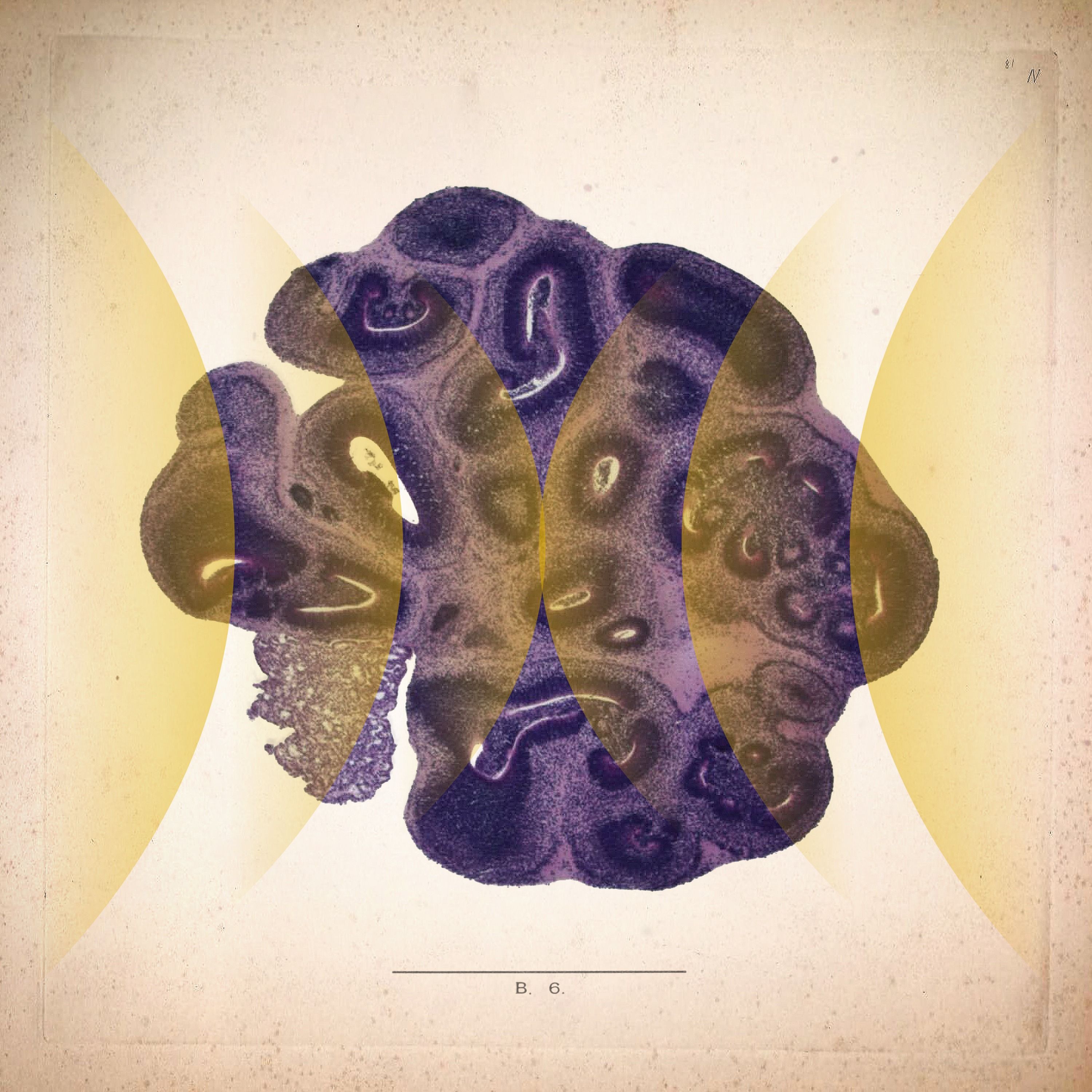
Brain Balls
Jan 900:41:27Summary readyWhen neuroscientist Madeline Lancaster was a brand new postdoc, she accidentally used an expired protein gel in a lab experiment and noticed something weird. The stem cells she was trying to grow in a dish were self-assembling. The result? Madeline was the first person ever to grow what she called a “cerebral organoid,” a tiny, 3D version of a human brain the size of a peppercorn.In about a decade, these mini human brain balls were everywhere. They were revealing bombshell secrets about how our brains develop in the womb, helping treat advanced cancer patients, being implanted into animals, even playing the video game Pong. But what are they? Are these brain balls capable of sensing, feeling, learning, being? Are they tiny, trapped humans? And if they were, how would we know?Special thanks to Lynn Levy, Jason Yamada-Hanff, David Fajgenbaum, Andrew Verstein, Anne Hamilton, Christopher Mason, Madeline Mason-Moriarty, the team at the Boston Museum of Science, and Howard Fine, Stefano Cirigliano, and the team at Weill-Cornell. EPISODE CREDITS: Reported by - Latif Nasserwith help from - Mona MadgavkarProduced by - Annie McEwen, Mona Madgavkar, and Pat Walterswith mixing help from - Jeremy BloomFact-checking by - Natalie Middleton and Rebecca Randand Edited by - Alex Neason and Pat WaltersEPISODE CITATIONS:Videos -“Growing Mini Brains to Discover What Makes Us Human,” Madeline Lancaster’s TEDxCERN Talk, Nov 2015 (https://zpr.io/6WP7xfA27auR)Brain cells playing Pong (https://zpr.io/pqgSqguJeAPK)Reuters report on CL1 computer launch in March 2025 (https://zpr.io/cdMf8Yjvayyd)Articles -Madeline Lancaster: The accidental organoid – mini-brains as models for human brain development (https://zpr.io/nnwFwUwnm2p6), MRC Laboratory of Molecular BiologyWhat We Can Learn From Brain Organoids (https://zpr.io/frUfsg4pxKsb), by Carl Zimmer. NYT, November 6, 2025Ethical Issues Related to Brain Organoid Research (https://zpr.io/qyiATHEhdnSa), by Insoo Hyun et al, Brain Research, 2020Brain organoids get cancer, too, opening a new frontier in personalized medicine (https://zpr.io/nqMCQ) STAT Profile of Howard Fine and his lab’s glioblastoma research at Weill Cornell Medical Center:By re-creating neural pathway in dish, Stanford Medicine research may speed pain treatment (https://zpr.io/UnegZeQZfqn2) Stanford Medicine profile of Sergiu Pasca’s research on pain in organoidsA brief history of organoids (https://zpr.io/waSbUCSrL9va) by Corrò et al, American Journal of Physiology - Cell Physiology,Books - Carl Zimmer Life’s Edge: The Search for What it Means to be Alive (https://carlzimmer.com/books/lifes-edge/)Sign up for our newsletter!! It includes short essays, recommendations, and details about other ways to interact with the show. Signup (https://radiolab.org/newsletter)!Radiolab is supported by listeners like you. Support Radiolab by becoming a member of The Lab (https://members.radiolab.org/) today.Follow our show on Instagram, Twitter and Facebook @radiolab, and share your thoughts with us by emailing radiolab@wnyc.org.Leadership support for Radiolab’s science programming is provided by the Simons Foundation and the John Templeton Foundation. Foundational support for Radiolab was provided by the Alfred P. Sloan Foundation. Hosted by Simplecast, an AdsWizz company. See pcm.adswizz.com for information about our collection and use of personal data for advertising.
Summary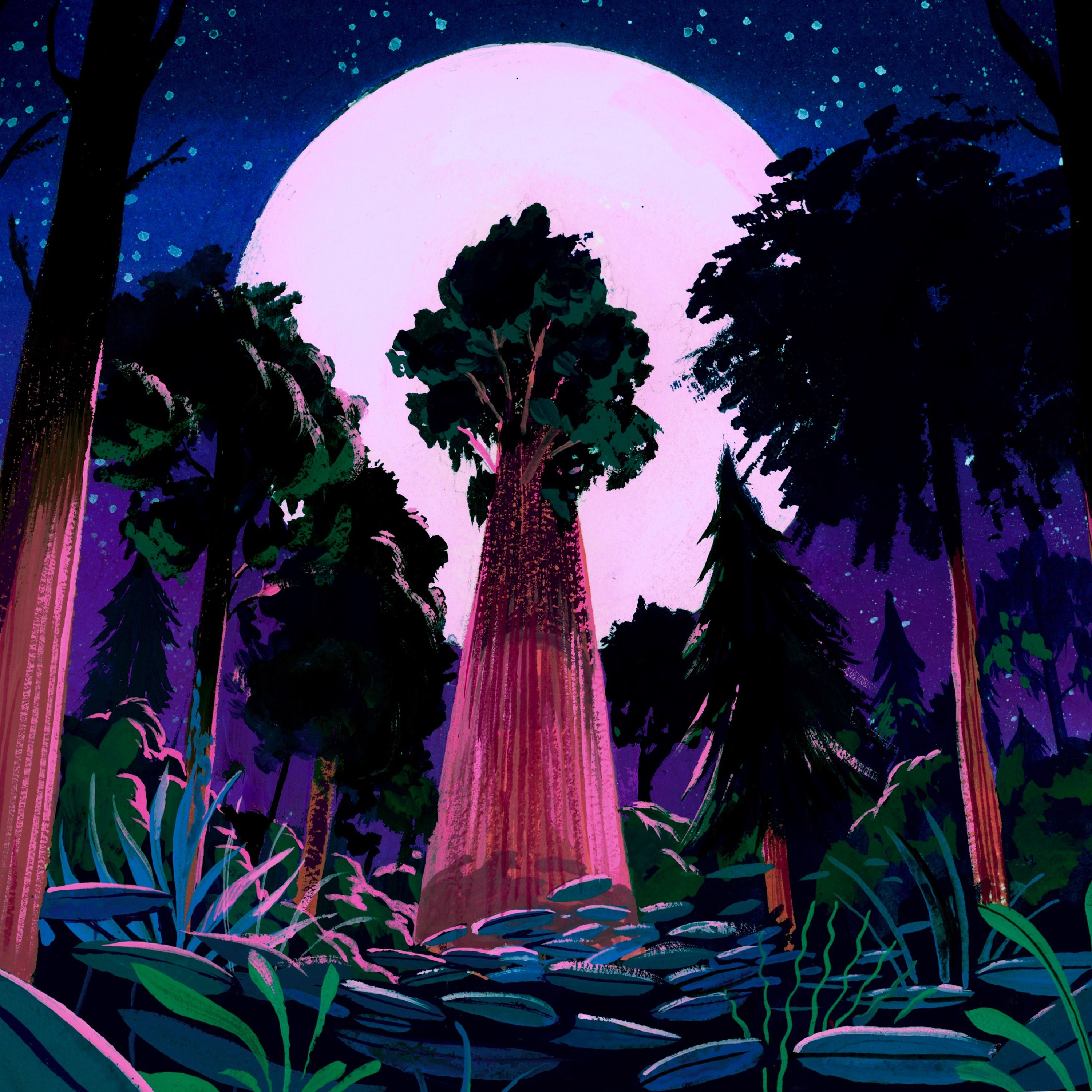
Moon Trees
Jan 200:35:06Summary readyIn 1971, a red-headed, tree-loving astronaut named Stu ‘Smokey’ Roosa was asked to take something to the moon with him. Of all things, he chose to take a canister of 500 tree seeds. After orbiting the moon 34 times, the seeds made it back to Earth. NASA decided to plant the seeds all across the country and then… everyone forgot about them. Until one day, a third grader from Indiana stumbled on a tree with a strange plaque: "Moon Tree." This discovery set off a cascading search for all the trees that visited the moon across the United States. Science writer, and our very own factchecker, Natalie Middleton (https://www.nataliemiddleton.org/) tells us the tale.Read Lulu’s remembrance of Alice Wong for Transom.org: 13 questions I’ll never get to ask Alice Wong (https://transom.org/2026/13-questions-ill-never-get-to-ask-alice-wong/). Check out Natalie’s map to find your nearest moon tree on our show page (https://radiolab.org/podcast/moon-trees)!Help us hunt for more moon trees. If you know of an undocumented moon tree, contact Natalie at nataliemiddleton.org. Check out Natalie’s essay on Moon Trees (https://orionmagazine.org/article/moon-tree/) and Space Zinnias (https://orionmagazine.org/article/astronaut-scott-kelly-flower-experiment-space/) in Orion Magazine (https://orionmagazine.org/).Visit NASA’s official Moon Tree Page (https://science.nasa.gov/resource/apollo-moon-trees/) for a list of all the Apollo 14 Moon Trees in the world. To learn more about Stu Roosa or to learn more about acquiring your own half Moon Tree, check out the Moon Tree Foundation (https://www.moontreefoundation.com/), spearheaded by Stu’s daughter, Rosemary Roosa. A reminder that Terrestrials also makes original music! You can find ‘Tangled in the Roots’ and all other music from the show here (https://www.wnycstudios.org/podcasts/radiolab-kids/just-the-songs).EPISODE CREDITS: Terrestrials was created by Lulu Miller with WNYC Studios. This episode was produced by Tanya Chawla and sound-designed by Joe Plourde. Our Executive Producer is Sarah Sandbach. Our team includes Alan Goffinski, Ana González and Mira Burt-Wintonick. Fact checking was by Diane Kelly. Special thanks to Sumanth Prabhaker from Orion magazine, retired NASA Scientist Dr. Dave Williams, Joan Goble, Tre Corely and NASA scientist Dr. Marie Henderson.Our advisors for this show were Ana Luz Porzecanski, Nicole Depalma, Liza Demby and Carly Ciarrocchi.Support for Terrestrials also comes from the Simons Foundation, the Arthur Vining Davis Foundations, and the John Templeton Foundation.Signup for our newsletter!! It includes short essays, recommendations, and details about other ways to interact with the show. Sign up (https://radiolab.org/newsletter)!Radiolab is supported by listeners like you. Support Radiolab by becoming a member of The Lab (https://members.radiolab.org/) today.Follow our show on Instagram, Twitter and Facebook @radiolab, and share your thoughts with us by emailing radiolab@wnyc.org.Leadership support for Radiolab’s science programming is provided by the Simons Foundation and the John Templeton Foundation. Foundational support for Radiolab was provided by the Alfred P. Sloan Foundation. Hosted by Simplecast, an AdsWizz company. See pcm.adswizz.com for information about our collection and use of personal data for advertising.
Summary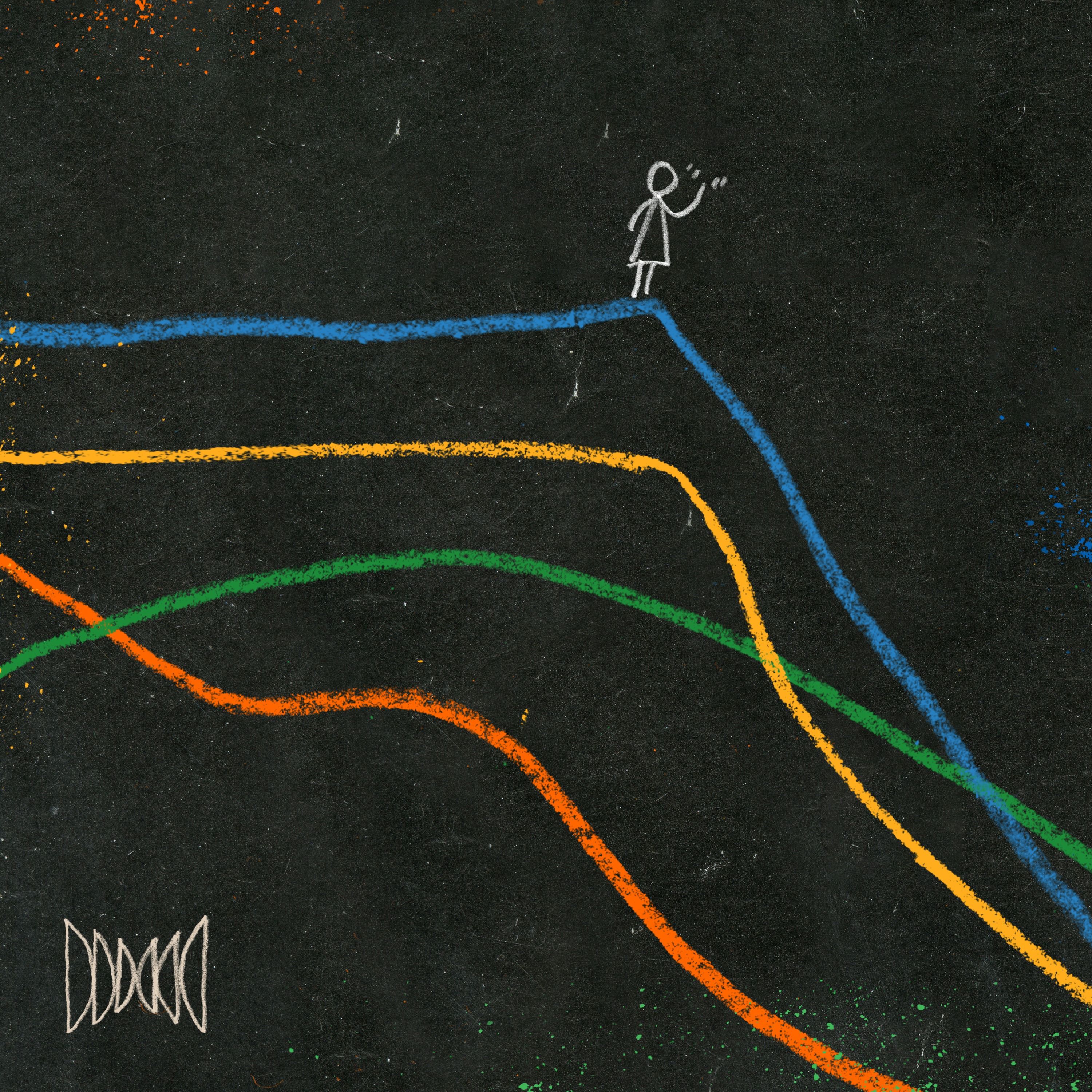
Fertility Cliff
Dec 2600:26:28Summary readyAs she -- and her friends — approached the age of 35, senior correspondent Molly Webster kept hearing a phrase over and over: “fertility cliff.” It was a short-hand term to describe what she was told would happen to her fertility after she turned 35 — that is, it would drop off. Suddenly, sharply, dramatically. And this was well before she was supposed to hit menopause. Intrigued, Molly decided to look into it — what was the truth behind this so-called cliff, and when, if so, would she topple? This story first premiered in “Thirty Something,” a 2018 Radiolab live show that was part of, Gonads, (https://radiolab.org/series/radiolab-presents-gonads)a six-episode audio and live event series all about reproduction and the parts of us that make more of us. The live event was produced by Rachael Cusick and edited by Pat Walters.Special thanks to epidemiologist Lauren Wise, at Boston University. Plus, Emily, Chloe, and Bianca. And of course, Jad Abumrad.If you’re more of a visual person, here are the graphs we explain in the episode, we also include links to the corresponding papers in our Episode Citations Section, below!LINK TO GRAPHS:https://internal.wnyc.org/admin/cms/image/249243/EPISODE CREDITS: Reported by - Molly WebsterProduced by - Arianne WackFact-checking by - Diane A. KellyEPISODE CITATIONS:Audio:Gonads (https://radiolab.org/series/radiolab-presents-gonads/)A six-part audio series on reproduction and the parts of us that make more of usThe Menopause Mystery (https://radiolab.org/podcast/the-menopause-mystery)One of Radiolab’s most listened-to episodes of 2025! Videos:“Radiolab Presents: Thirty Something”https://youtu.be/LOJVAaSwags?si=czCBraHf1JEqmAQiResearch Articles:Graph 1: Can assisted reproduction technology compensate for the natural decline in fertility with age? A model assessment (https://zpr.io/ft6dqdbkJnTd) Graph 2: Ovarian aging: mechanisms and clinical consequences (https://zpr.io/GrPLebynpvxV) , Brookmans, et al.BUT, the graph was borrowed and actually comes from this 1991 paper, Delaying childbearing: effect of age on fecundity and outcome of pregnancy” (https://zpr.io/whWg2UAZsb6h) Graph 3 and 4: Age and fecundability in a North American preconception cohort study, (https://zpr.io/Rmqry4Kd67hY) Wise et al; Dutch fertility researchFurther reading: Predicting Fertility, (https://zpr.io/YEdfiYT29rUh): Magazine article on Lauren Wise’s research, Sign up for our newsletter!! It includes short essays, recommendations, and details about other ways to interact with the show. Signup (https://radiolab.org/newsletter)!Radiolab is supported by listeners like you. Support Radiolab by becoming a member of The Lab (https://members.radiolab.org/) today.Follow our show on Instagram, Twitter and Facebook @radiolab, and share your thoughts with us by emailing radiolab@wnyc.org.Leadership support for Radiolab’s science programming is provided by the Simons Foundation and the John Templeton Foundation. Foundational support for Radiolab was provided by the Alfred P. Sloan Foundation.
Summary
The Alien in the Room
Dec 1201:00:59Summary readyIt’s faster than a speeding bullet. It’s smarter than a polymath genius. It’s everywhere but it’s invisible. It’s artificial intelligence. But what actually is it?Today we ask this simple question and explore why it’s so damn hard to answer.Special thanks to Stephanie Yin and the New York Institute of Go for teaching us the game. Mark, Daria and Levon Hoover Brauner for helping bring NETtalk to life Grant Sanderson for his unending patience explaining the math of neural nets to us.EPISODE CREDITS: Reported by - Simon AdlerProduced by - Simon AdlerOriginal music from - Simon AdlerSound design contributed by - Simon AdlerFact-checking by - Anna Pujol-Mazzini Sign up for our newsletter!! It includes short essays, recommendations, and details about other ways to interact with the show. Signup (https://radiolab.org/newsletter)!Radiolab is supported by listeners like you. Support Radiolab by becoming a member of The Lab (https://members.radiolab.org/) today.Follow our show on Instagram, Twitter and Facebook @radiolab, and share your thoughts with us by emailing radiolab@wnyc.org.Leadership support for Radiolab’s science programming is provided by the Gordon and Betty
Summary
Shell Game: Minimum Viable Company
Dec 500:39:49Summary readyA year ago we brought you a show called Shell Game where a journalist named Evan Ratliff made an AI copy of himself. Now on season 2 of the show, Evan’s using AI to do more than just mimic himself — he’s starting a company staffed entirely by AI agents, and making a podcast about the experience. The show is a smart, funny, and truly bizarre look at what AI can do—and what it can’t. This week we bring you the first episode of Shell Game Season Two, Minimum Viable Company. You can sign up to get the rest of the Shell Game ad-free, and the Shell Game newsletter, at shellgame.co .EPISODE CREDITS: Shell Game Hosted by Evan Ratliff, Produced and edited by Sophie Bridges. Shell Game’s Technical Advisor Matty Bohacek Executive Produced by Samantha Henig, Kate Osborn and Mangesh Hattikudur at Kaleidoscopeand Katrina Norvell at IHeart Podcasts.Radiolab portions Hosted by Simon Adler Produced by Mona Madgavkar.Sign up for our newsletter!! It includes short essays, recommendations, and details about other ways to interact with the show. Signup (https://radiolab.org/newsletter)!Radiolab is supported by listeners like you. Support Radiolab by becoming a member of The Lab (https://members.radiolab.org/) today.Follow our show on Instagram, Twitter and Facebook @radiolab, and share your thoughts with us by emailing radiolab@wnyc.org.Leadership support for Radiolab’s science programming is provided by the Simons Foundation and the John Templeton Foundation. Foundational support for Radiolab was provided by the Alfred P. Sloan Foundation.
Summary
Fela Kuti: Enter the Shrine
Nov 2800:38:12Summary readyOur original host Jad Abumrad returns to share a new podcast series he’s just released. It’s all about Fela Kuti, a Nigerian musician who created a genre, then a movement, then tried to use his hypnotic beats to topple a military dictatorship. Jad tells us about the series and why he made it, and we play the episode that, for us at least, gets to the heart of the matter: How exactly does his music work? What actually happens to the people who hear it and how does it move them to action?You can find Jad’s entire nine-part series, Fela Kuti: Fear No Man, on Apple or Spotify, or wherever you get your podcasts.EPISODE CREDITS: Reported by - Jad AbumradRadiolab portions produced by - Sindhu GnanasambandanSign up for our newsletter!! It includes short essays, recommendations, and details about other ways to interact with the show. Signup (https://radiolab.org/newsletter)!Radiolab is supported by listeners like you. Support Radiolab by becoming a member of The Lab (https://members.radiolab.org/) today.Follow our show on Instagram, Twitter and Facebook @radiolab, and share your thoughts with us by emailing radiolab@wnyc.org.Leadership support for Radiolab’s science programming is provided by the Simons Foundation and the John Templeton Foundation. Foundational support for Radiolab was provided by the Alfred P. Sloan Foundation.
Summary
Our Common Nature: West Virginia Coal
Nov 2100:53:33Summary readyToday on the show, we’re bringing you an episode from Our Common Nature (https://link.podtrac.com/v7mx144d), a new podcast series where cellist Yo-Yo Ma and host Ana González travel around the United States to meet people, make music and better understand how culture binds us to nature. The series features a few familiar voices, including Ana González (host) and Alan Goffinski (producer), from our kids podcast, Terrestrials (https://link.podtrac.com/vysacqn1). About the episode: West Virginia is defined by its beauty and its coal, two things that can work against each other. Yo-Yo Ma felt this as soon as stepped foot in its hills.This episode explores how music and poetry help process the emotions of a community besieged with disaster and held together by pride and duty. We travel down the Coal River with third-generation coal miner Chris Saunders, who tells us how coal has saved and threatened his life. Poet Crystal Good shares her poetry, which channels her rage and love. And musician and granddaughter of West Virginia coal miners, Kathy Mattea, explains the beauty of belting out your home state in a chorus. The end of the episode finds host Ana floating down the New River with help from a group of high schoolers and Yo-Yo Ma. Listen to the full series Our Common Nature (https://link.podtrac.com/v7mx144d). Featuring music by Yo-Yo Ma, Dom Flemons, and Kathy Mattea and poetry by Crystal Good.EPISODE CREDITS: Radiolab Bits Produced - Anisa Vietze (Radiolab bits)Signup for our newsletter!! It includes short essays, recommendations, and details about other ways to interact with the show. Sign up (https://radiolab.org/newsletter)!Radiolab is supported by listeners like you. Support Radiolab by becoming a member of The Lab (https://members.radiolab.org/) today.Follow our show on Instagram, Twitter and Facebook @radiolab, and share your thoughts with us by emailing radiolab@wnyc.org.Leadership support for Radiolab’s science programming is provided by the Simons Foundation and the John Templeton Foundation. Foundational support for Radiolab was provided by the Alfred P. Sloan Foundation.
Summary
Quantum Refuge
Nov 1400:48:17Summary readyQasem Waleed is a 28-year-old physicist who has lived in Gaza his whole life. In 2024, he joined a chorus of Palestinians sharing videos and pictures and writing about the chaos and violence they were living through, as Israel’s military bombardment devastated their lives. But Qasem was trying to describe his reality through the lens of the most notoriously confusing and inscrutable field of science ever, quantum mechanics. We talked to him, from a cafe near the Al-Mawasi section of Gaza, to find out why. And over the course of several conversations, he told us how this reality-breaking corner of science has helped him survive. And how such unspeakable violence actually let him understand, in a visceral way, quantum mechanics’ most counter-intuitive ideas. Special thanks to Katya Rogers, Karim Kattan, Allan Adams, Sarah Qari, Soren Wheeler, and Pat WaltersEPISODE CREDITS: Reported by - Lulu MillerProduced by - Jessica Yungwith mixing help from - Jeremy BloomFact-checking by - Emily Kriegerand Edited by - Alex NeasonEPISODE CITATIONS:Videos - A Brief History of Quantum Mechanics with Sean Carroll, The Royal Institution (https://www.youtube.com/watch?v=5hVmeOCJjOU)Introduction to Superposition, with MIT’s Allan Adams (https://www.youtube.com/watch?v=lZ3bPUKo5zc)The Quantum Wavefunction, Explained (https://www.youtube.com/watch?v=sOI4DlWQ_1w)Articles - Read a selection of Qasem’s published essays about his life in Gaza and the quantum world: I am stuck in a box like Schrodinger’s in Gaza (https://zpr.io/ALDVi9E5bRt8) Israel has turned Gaza’s summer into a weapon (https://zpr.io/YS4WK4hVQC5T)The Physics of Death in Gaza (https://zpr.io/hxsgxicVqPAd) Signup for our newsletter!! It includes short essays, recommendations, and details about other ways to interact with the show. Sign up (https://radiolab.org/newsletter)!Radiolab is supported by listeners like you. Support Radiolab by becoming a member of The Lab (https://members.radiolab.org/) today.Follow our show on Instagram, Twitter and Facebook @radiolab, and share your thoughts with us by emailing radiolab@wnyc.org.Leadership support for Radiolab’s science programming is provided by the Simons Foundation and the John Templeton Foundation. Foundational support for Radiolab was provided by the Alfred P. Sloan Foundation.
Summary
The Wubi Effect
Nov 700:56:51Summary readyWhen we think of China today, we think of a technological superpower. From Huawei and 5G to TikTok and viral social media, China is stride for stride with the United States in the world of computing. However, China’s technological renaissance almost didn’t happen. And for one very basic reason: the Chinese language, with its 70,000 plus characters, couldn’t fit on a keyboard.Today, we tell the story of Professor Wang Yongmin, a hard-headed computer programmer who solved this puzzle and laid the foundation for the China we know today.Special thanks to Martin Howard. You can view his renowned collection of typewriters at: antiquetypewriters.com. EPISODE CREDITS: Reported by - Simon AdlerProduced by - Simon Adler Sign up for our newsletter!! It includes short essays, recommendations, and details about other ways to interact with the show. Signup (https://radiolab.org/newsletter)!Radiolab is supported by listeners like you. Support Radiolab by becoming a member of The Lab (https://members.radiolab.org/) today.Follow our show on Instagram, Twitter and Facebook @radiolab, and share your thoughts with us by emailing radiolab@wnyc.org.Leadership support for Radiolab’s science programming is provided by the Simons Foundation and the John Templeton Foundation. Foundational support for Radiolab was provided by the Alfred P. Sloan Foundation.
Summary