
Podcast
Statecraft
Hosted by Santi Ruiz · EN
51episodes
Episodes
Newest firstAll episodes
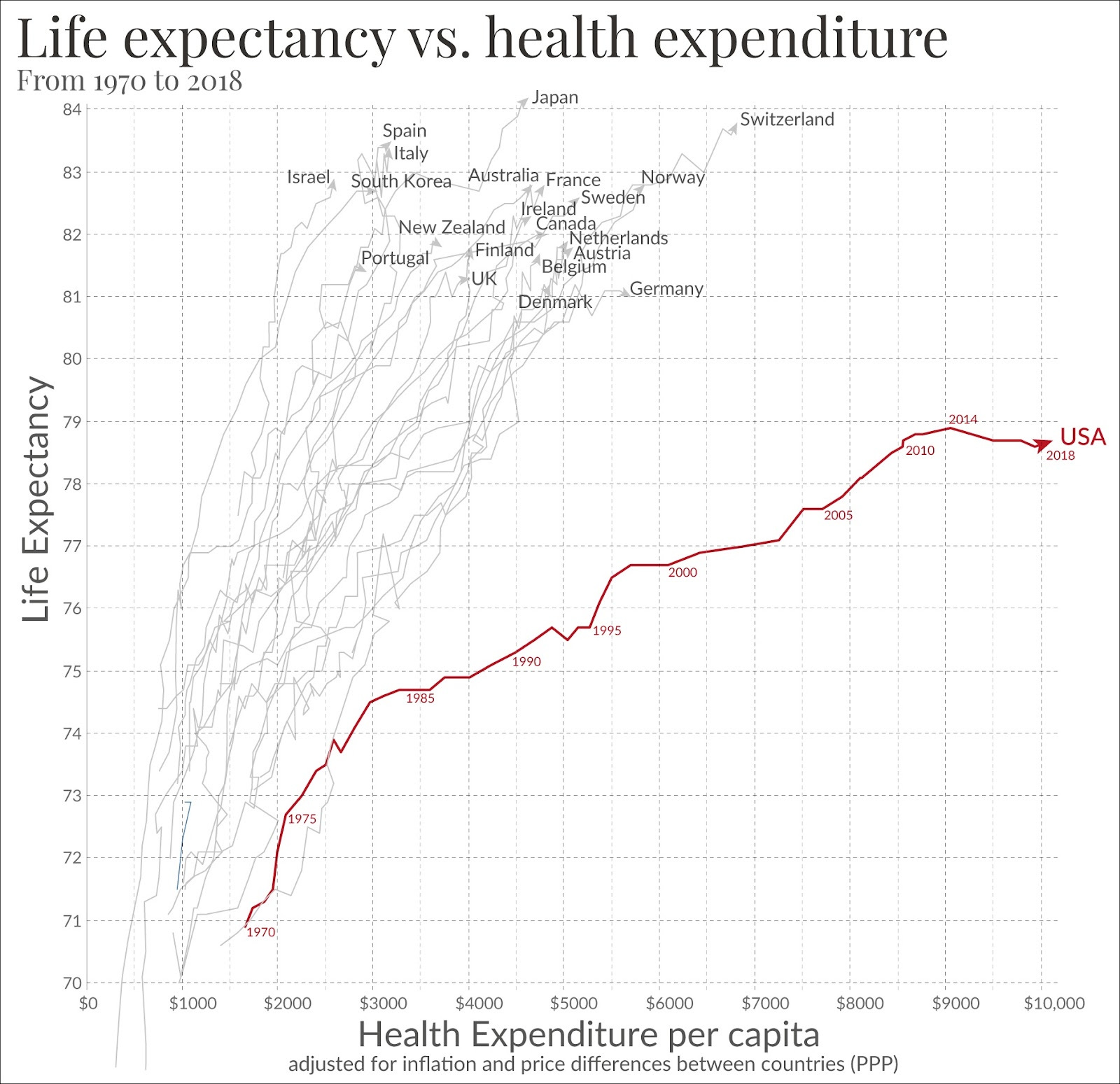
How to Bring Down Healthcare Costs
Oct 201:22:18Summary readyToday, I’m joined by Anup Malani. He’s a professor of law at the University of Chicago, currently on leave, serving as the first Chief Economist at the Centers for Medicare & Medicaid Services. This means he oversees economic analysis for the agency managing $2 trillion in annual healthcare spending — 23% of the entire federal budget. CMS runs Medicare for 70 million elderly Americans, Medicaid for low-income families, and the health insurance exchanges where millions buy coverage.Malani answers a lot of questions I have about American healthcare policy:* The US spends 20% of GDP on healthcare. Why is our life expectancy so bad?* How do you crack down on Medicare fraud without hurting patients who need care?* What incentives do private insurers like UnitedHealth have to make patients look sicker than they are?* What do academic economists get wrong about policy?The full transcript for this conversation is at www.statecraft.pub. This is a public episode. If you would like to discuss this with other subscribers or get access to bonus episodes, visit www.statecraft.pub
Summary
What Is America’s Infrastructure Cost Problem?
Sep 1700:33:35Summary readyThis episode was originally recorded on September 4th at the Abundance Conference in DC."Zach Liscow, my guest today, is a professor of law at Yale Law School. In 2022-2023, he was the Chief Economist at the Office of Management and Budget. He's also now my colleague at IFP, as a non-resident senior fellow.I have a bit of a problem today, which is that while Zach may not be a national household name, he might as well be in this audience. As most of you are aware, Zach has worked on many interesting economic topics, but especially on infrastructure costs: why it costs so much to build in the US, what the inputs are, and cross-cutting comparisons.The challenge for me today as an interviewer is that, in part because of Zach’s work, everyone here now knows that infrastructure in the US costs a huge amount to build. I recently reviewed some submissions for a project on transit at IFP, and every other submission referenced the fact that the cost per mile to build a subway in New York is something like eight times more than the equivalent project in Paris.These stylized facts are now embedded in our discourse. And my problem is that this makes it a little hard to figure out how to have a conversation that isn't just all of us nodding in agreement. I'm going to try to tackle that problem, but I just want to lay my cards on the table. This is my fear, and we’ll try to avoid it."The full transcript for this conversation and many others is at www.statecraft.pub. This is a public episode. If you would like to discuss this with other subscribers or get access to bonus episodes, visit www.statecraft.pub
Summary
How to Write the AI Action Plan
Sep 1001:25:05Summary readyThe full transcript for this conversation is at www.statecraft.pub. When I started this podcast a couple years ago, the idea was more constrained than it is today. We wanted to do exit interviews with civil servants, who were newly free to speak about their experiences and their learnings. The project has expanded: we talk to political scientists, economists, DC wonks, elected officials and people currently in government. But the core value of this project is in that original idea of getting a hold of people as they're leaving the government, pinning them to the wall, and making them reveal their secrets.Today's guest is in that mold. His name is Dean Ball. If you follow AI policy, you already know who he is. Until a couple of weeks ago, Dean was a senior policy advisor for artificial intelligence and emerging technology at the White House Office of Science and Technology Policy (OSTP).Dean and I go back a little while. Most notably, we’ve serve together on one of the most dominant trivia teams DC has seen. But that's not why Dean's important. Dean's had a whirlwind tour over the past few months in the federal government. During that time, he was the organizing author of the Administration's AI Action Plan, a comprehensive roadmap from the White House on federal AI policy.Today, we caught up to talk about that Action Plan, what it takes to write a strategy document for the federal government, and the challenges of implementing that strategy in the face of political, personal, and bureaucratic opposition.I've said in the past that Dean thinks more clearly about the near-term future than most people. I still think that's true, though I don't agree with him on everything here. He's an incredibly sharp thinker and I benefit from talking to him.We discuss:* How to gain influence in the White House* Navigating the interagency process efficiently* Whether the deep state is real* The AI Action Plan* How to implement change across the federal government* The complexities of export controls on AI Chips* Why Dean left the White House after six monthsThanks to Harry Fletcher-Wood for his transcript edits, and to Katerina Barton for her audio edits. This is a public episode. If you would like to discuss this with other subscribers or get access to bonus episodes, visit www.statecraft.pub
Summary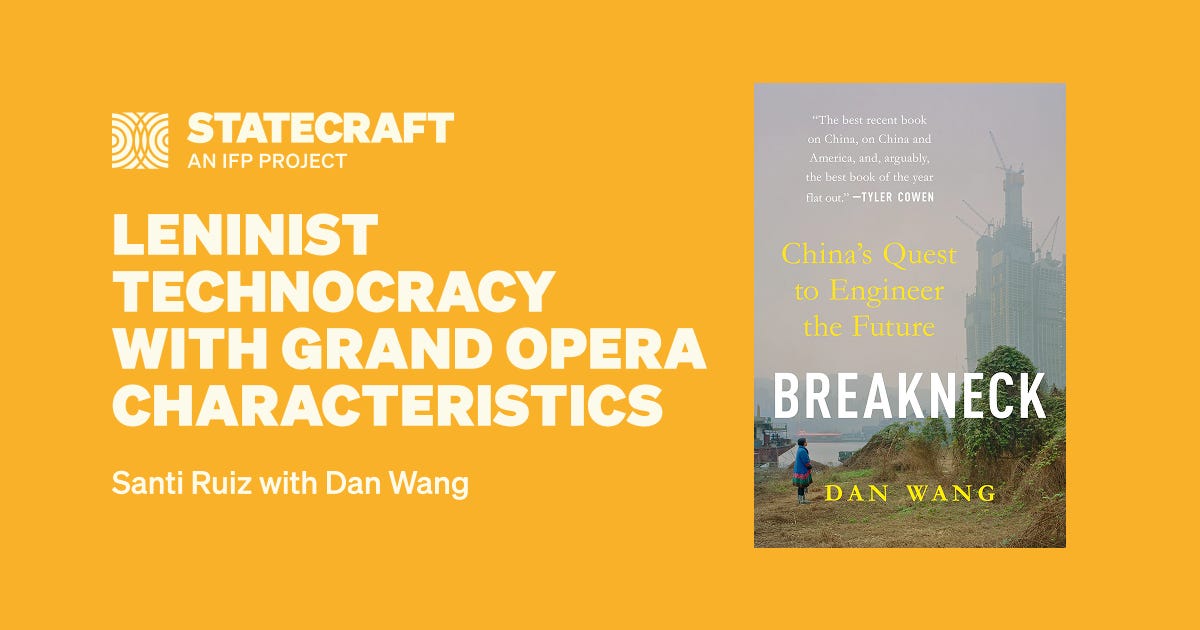
Leninist Technocracy with Grand Opera Characteristics
Aug 2801:20:48Summary readyToday I'm talking to Dan Wang. He has a great new book, Breakneck: China's Quest to Engineer the Future. Dan spent the better part of the last decade in China and published a yearly letter summarizing his thoughts, explorations, and eating.Breakneck is like those letters: it goes all over the place, as does our conversation. Topics include:* America's overabundance of lawyers* Whether our ruling class should be all economists* Stylish propaganda* The book collections of Yale professors* iPhone manufacturing* Forced sterilization* Planting cassavaOne of the things I like most about Dan's work is that he's comfortable looking at China through multiple, very different lenses. Parts of Breakneck explicitly use China as a lens to think about the US and its political culture and institutions. Other parts of the book try very hard to take China on its own terms, without reading our own culture into it. It’s that mix that made the book so enjoyable for me, and I hope you enjoy it too.Thank you to Harry Fletcher-Wood for his judicious transcript edits, and to Katerina Barton for her audio edits. You can find the full, annotated transcript to this conversation at www.statecraft.pub. This is a public episode. If you would like to discuss this with other subscribers or get access to bonus episodes, visit www.statecraft.pub
Summary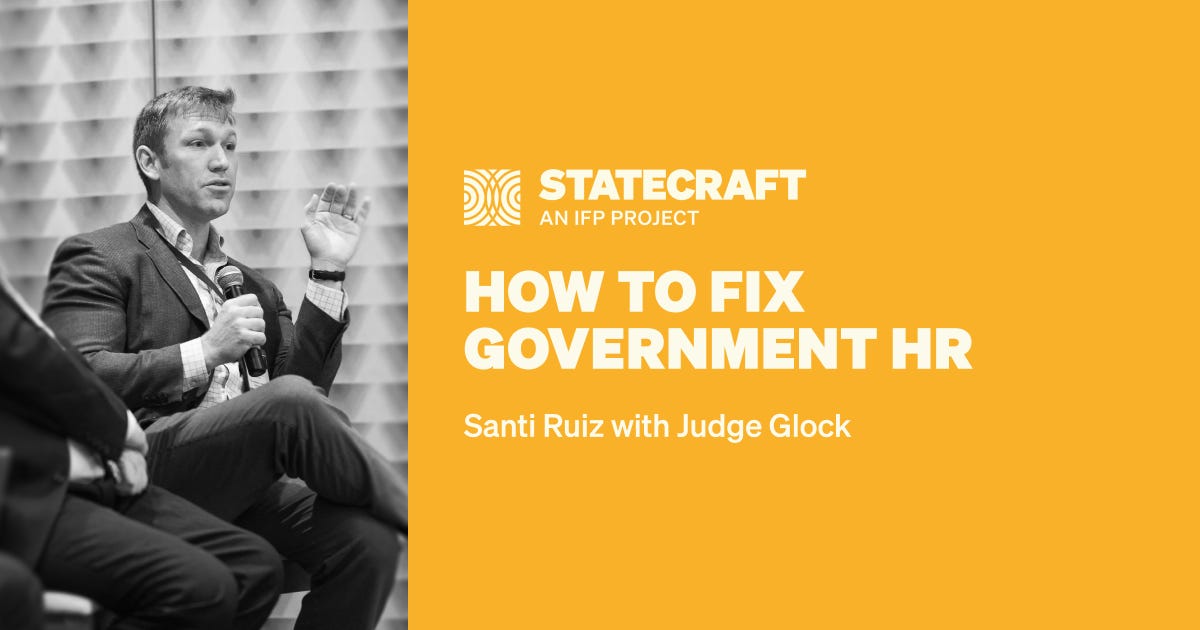
Four Ways to Fix Government HR
Aug 2101:03:02Summary readyToday I'm talking to economic historian Judge Glock, Director of Research at the Manhattan Institute. Judge works on a lot of topics: if you enjoy this episode, I'd encourage you to read some of his work on housing markets and the Environmental Protection Agency. But I cornered him today to talk about civil service reform.Since the 1990s, over 20 red and blue states have made radical changes to how they hire and fire government employees — changes that would be completely outside the Overton window at the federal level. A paper by Judge and Renu Mukherjee lists four reforms made by states like Texas, Florida, and Georgia: * At-will employment for state workers* The elimination of collective bargaining agreements* Giving managers much more discretion to hire* Giving managers much more discretion in how they pay employeesJudge finds decent evidence that the reforms have improved the effectiveness of state governments, and little evidence of the politicization that federal reformers fear. Meanwhile, in Washington, managers can’t see applicants’ resumes, keyword searches determine who gets hired, and firing a bad performer can take years. But almost none of these ideas are on the table in Washington.Thanks to Harry Fletcher-Wood for his judicious transcript edits and fact-checking, and to Katerina Barton for audio edits.Judge, you have a paper out about lessons for civil service reform from the states. Since the ‘90s, red and blue states have made big changes to how they hire and fire people. Walk through those changes for me.I was born and grew up in Washington DC, heard a lot about civil service throughout my childhood, and began to research it as an adult. But I knew almost nothing about the state civil service systems. When I began working in the states — mainly across the Sunbelt, including in Texas, Kansas, Arizona — I was surprised to learn that their civil service systems were reformed to an absolutely radical extent relative to anything proposed at the federal level, let alone implemented.Starting in the 1990s, several states went to complete at-will employment. That means there were no official civil service protections for any state employees. Some managers were authorized to hire people off the street, just like you could in the private sector. A manager meets someone in a coffee shop, they say, "I'm looking for exactly your role. Why don't you come on board?" At the federal level, with its stultified hiring process, it seemed absurd to even suggest something like that.You had states that got rid of any collective bargaining agreements with their public employee unions. You also had states that did a lot more broadbanding [creating wider pay bands] for employee pay: a lot more discretion for managers to reward or penalize their employees depending on their performance.These major reforms in these states were, from the perspective of DC, incredibly radical. Literally nobody at the federal level proposes anything approximating what has been in place for decades in the states. That should be more commonly known, and should infiltrate the debate on civil service reform in DC.Even though the evidence is not absolutely airtight, on the whole these reforms have been positive. A lot of the evidence is surveys asking managers and operators in these states how they think it works. They've generally been positive. We know these states operate pretty well: Places like Texas, Florida, and Arizona rank well on state capacity metrics in terms of cost of government, time for permitting, and other issues.Finally, to me the most surprising thing is the dog that didn't bark. The argument in the federal government against civil service reform is, “If you do this, we will open up the gates of hell and return to the 19th-century patronage system, where spoilsmen come and go depending on elected officials, and the government is overrun with political appointees who don't care about the civil service.” That has simply not happened. We have very few reports of any concrete examples of politicization at the state level. In surveys, state employees and managers can almost never remember any example of political preferences influencing hiring or firing.One of the surveys you cited asked, “Can you think of a time someone said that they thought that the political preferences were a factor in civil service hiring?” and it was something like 5%.It was in that 5-10% range. I don't think you'd find a dissimilar number of people who would say that even in an official civil service system. Politics is not completely excluded even from a formal civil service system.A few weeks ago, you and I talked to our mutual friend, Don Moynihan, who's a scholar of public administration. He's more skeptical about the evidence that civil service reform would be positive at the federal level.One of your points is, “We don't have strong negative evidence from the states. Productivity didn’t crater in states that moved to an at-will employment system.” We do have strong evidence that collective bargaining in the public sector is bad for productivity.What I think you and Don would agree on is that we could use more evidence on the hiring and firing side than the surveys that we have. Is that a fair assessment?Yes, I think that's correct. As you mentioned, the evidence on collective bargaining is pretty close to universal: it raises costs, reduces the efficiency of government, and has few to no positive upsides.On hiring and firing, I mentioned a few studies. There's a 2013 study that looks at HR managers in six states and finds very little evidence of politicization, and managers generally prefer the new system. There was a dissertation that surveyed several employees and managers in civil service reform and non-reform states. Across the board, the at-will employment states said they had better hiring retention, productivity, and so forth. And there's a 2002 study that looked specifically at Texas, Florida, and Georgia after their reforms, and found almost universal approbation inside the civil service itself for these reforms.These are not randomized control trials. But I think that generally positive evidence should point us directionally where we should go on civil service reform. If we loosen restrictions on discipline and firing, decentralize hiring and so forth — we probably get some productivity benefits from it. We can also know, with some amount of confidence, that the sky is not going to fall, which I think is a very important baseline assumption. The civil service system will continue on and probably be fairly close to what it is today, in terms of its political influence, if you have decentralized hiring and at-will employment.As you point out, a lot of these reforms that have happened in 20-odd states since the ‘90s would be totally outside the Overton window at the federal level. Why is it so easy for Georgia to make a bipartisan move in the ‘90s to at-will employment, when you couldn't raise the topic at the federal level?It's a good question. I think in the 1990s, a lot of people thought a combination of the 1978 Civil Service Reform Act — which was the Carter-era act that somewhat attempted to do what these states hoped to do in the 1990s — and the Clinton-era Reinventing Government Initiative, would accomplish the same ends. That didn't happen.That was an era when civil service reform was much more bipartisan. In Georgia, it was a Democratic governor, <a target="_blank" href="https://en.wikipedia...
Summary
How to Be a Good Intelligence Analyst
Aug 7, 202501:01:26Summary readyToday we're joined by Dr. Rob Johnston. He's an anthropologist, an intelligence community veteran, and author of the cult classic Analytic Culture in the US Intelligence Community, a book so influential that it's required reading at DARPA. But first and foremost, Johnston is an ethnographer. His focus in that book is on how analysts actually produce intelligence analysis.Johnston answers a lot of questions I've had for a while about intelligence and spying, such as:* Why do we seem to get big predictions wrong so consistently?* Why can't the CIA find analysts who speak the language of the country they're analyzing?* Why do we prioritize expensive satellites over human intelligence?We also discuss a meta-question I always come back to on Statecraft: is being good at this stuff an art or a science? By “this stuff,” I’m referring to intelligence analysis, but I think that the question generalizes across policymaking. Would more formalizing and systematizing make our spies, diplomats, and EPA bureaucrats better? Or would it lead to more bureaucracy, more paper, and worse outcomes? How do you build processes in the government that actually make you better at your job?You can find the full transcript for this conversation at www.statecraft.pub. This is a public episode. If you would like to discuss this with other subscribers or get access to bonus episodes, visit www.statecraft.pub
Summary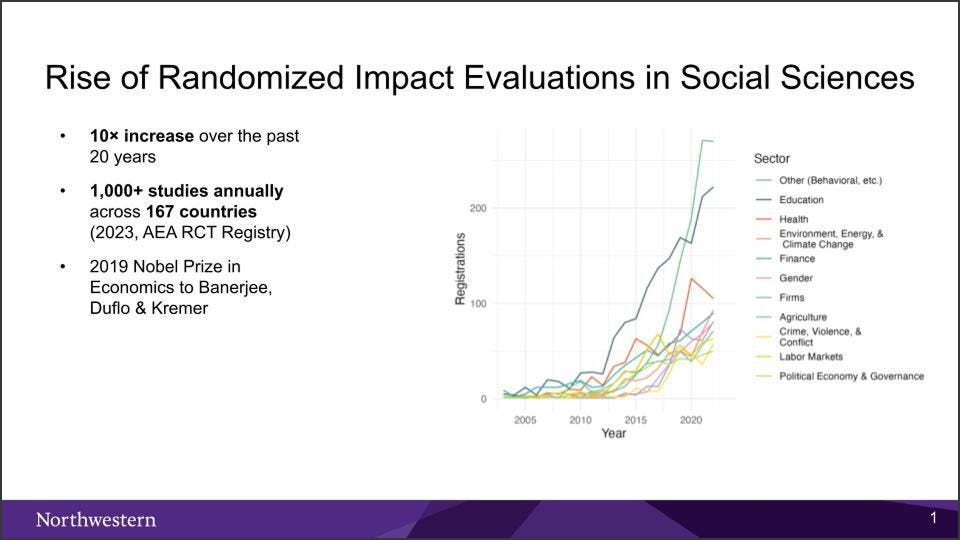
How to Fix Foreign Aid
Jul 31, 202501:14:01Summary readyWe’ve covered the US Agency for International Development, or USAID, pretty consistently on Statecraft, since our first interview on PEPFAR, the flagship anti-AIDS program, in 2023. When DOGE came to USAID, I was extremely critical of the cuts to lifesaving aid, and the abrupt, pointlessly harmful ways in which they were enacted. In March, I wrote, “The DOGE team has axed the most effective and efficient programs at USAID, and forced out the chief economist, who was brought in to oversee a more aggressive push toward efficiency.”Today, we’re talking to that forced-out chief economist, Dean Karlan. Dean spent two and a half years at the helm of the first-ever Office of the Chief Economist at USAID. In that role, he tried to help USAID get better value from its foreign aid spending. His office shifted $1.7 billion of spending towards programs with stronger evidence of effectiveness. He explains how he achieved this, building a start-up within a massive bureaucracy. I should note that Dean is one of the titans of development economics, leading some of the most important initiatives in the field (I won’t list them, but see here for details), and I think there’s a plausible case he deserves a Nobel.Throughout this conversation, Dean makes a point much better than I could: the status quo at USAID needed a lot of improvement. The same political mechanisms that get foreign aid funded by Congress also created major vulnerabilities for foreign aid, vulnerabilities that DOGE seized on. Dean believes foreign aid is hugely valuable, a good thing for us to spend our time, money, and resources on. But there's a lot USAID could do differently to make its marginal dollar spent more efficient.DOGE could have made USAID much more accountable and efficient by listening to people like Dean, and reformers of foreign aid should think carefully about Dean’s criticisms of USAID, and his points for how to make foreign aid not just resilient but politically popular in the long term.We discuss* What does the Chief Economist do?* Why does 170% percent of USAID funds come already earmarked by Congress?* Why is evaluating program effectiveness institutionally difficult?* Why don’t we just do cash transfers for everything?* Why institutions like USAID have trouble prioritizing* Should USAID get rid of gender/environment/fairness in procurement rules?* Did it rely too much on a small group of contractors?* What’s changed in development economics over the last 20 years?* Should USAID spend more on governance and less on other forms of aid? * How DOGE killed USAID — and how to bring it back better* Is depoliticizing foreign aid even possible?* Did USAID build “soft power” for the United States?This is a long conversation: you can jump to a specific section with the index above. If you just want to hear about Dean’s experience with DOGE, you can click here or go to the 45-minute mark in the audio. And if you want my abbreviated summary of the conversation, see these two Twitter threads. But I think the full conversation is enlightening, especially if you want to understand the American foreign aid system. Thanks to Harry Fletcher-Wood for his judicious edits.Our past coverage of USAIDDean, I'm curious about the limits of your authority. What can the Chief Economist of USAID do? What can they make people do?There had never been an Office of the Chief Economist before. In a sense, I was running a startup, within a 13,000-employee agency that had fairly baked-in, decentralized processes for doing things.Congress would say, "This is how much to spend on this sector and these countries." What you actually fund was decided by missions in the individual countries. It was exciting to have that purview across the world and across many areas, not just economic development, but also education, social protection, agriculture. But the reality is, we were running a consulting unit within USAID, trying to advise others on how to use evidence more effectively in order to maximize impact for every dollar spent.We were able to make some institutional changes, focused on basically a two-pronged strategy. One, what are the institutional enablers — the rules and the processes for how ...
Summary
How Cheaply Could We Build High-Speed Rail?
Jul 23, 202500:56:32Summary readyAt the end of April, the Transit Costs Project released a report: it’s called How to Build High-Speed Rail on the Northeast Corridor. As the name suggests, the authors of the report had a simple goal: the stretch of the US from DC and Baltimore through Philadelphia to New York and up to Boston, the densest stretch of the country. It’s an ideal location for high-speed rail. How could you actually build it — trains that get you from DC to NYC in two hours, or NYC to Boston in two hours — without breaking the bank?That last part is pretty important. The authors think you could do it for under $20 billion dollars. That’s a lot of money, but it’s about five times less than the budget Amtrak says it would require. What’s the difference? How is it that when Amtrak gets asked to price out high-speed rail, it gives a quote that much higher?We brought in Alon Levy, transit guru and the lead author of the report, to answer the question, and to explain a bunch of transit facts to a layman like me. Is this project actually technically feasible? And, if it is, could it actually work politically?* How to cut time off the Northeast Corridor* Operations coordination as a time-saver* The move away from the Mad Men commuter* Was our episode on the Green Line extension wrong?The full transcript for this conversation is at www.statecraft.pub. This is a public episode. If you would like to discuss this with other subscribers or get access to bonus episodes, visit www.statecraft.pub
Summary
Governance Lessons From the Constitutional Convention
Jul 4, 202500:13:42Summary readyHappy Fourth of July! I’m attending a wedding today, so this episode is from the vault, in a way, although it’s its first time on Statecraft. I originally published this essay in January of 2022 on Mirror, shortly after my wife had joined the core team of a DAO that was attempting to acquire a first-edition copy of the US Constitution. I had been reading a history of the constitutional convention, and it seemed fitting to write about it on a thematic site. Yes, July 4th is about the Declaration of Independence, not the Constitution. Cut me some slack, please!You can find the transcript for this episode and many others at www.statecraft.pub. This is a public episode. If you would like to discuss this with other subscribers or get access to bonus episodes, visit www.statecraft.pub
Summary
How to Predict the Future
Jun 25, 202501:24:18Summary readyThe decisions that humans make can be extraordinarily costly. The wars in Iraq and Afghanistan were multi-trillion-dollar decisions. If you can improve the accuracy of forecasting individual strategies by just a percentage point, that would be worth tens of billions of dollars. Yet society does not invest tens of billions of dollars in figuring out how to improve the accuracy of human judgment. That seems really odd.That’s a quote from today’s interviewee, who has made his career helping the intelligence community predict the future better. In this interview, we discuss:* Which prediction methods perform the best?* How does IARPA create tech for American spies?* What technologies give democracies an advantage over autocracies?* Could the Internet have been designed better?Our interviewee, Jason Matheny, championed research into human judgment and forecasting at the R&D lab for the intelligence community: the Intelligence Advanced Research Projects Activity, or IARPA, which he directed from 2015-2018.[This interview was originally published in 2023, at this link, without the audio: Statecraft was still transcript-only then.]You can find the transcript for this conversation at www.statecraft.pub. This is a public episode. If you would like to discuss this with other subscribers or get access to bonus episodes, visit www.statecraft.pub
Summary