
Podcast
Uncensored CMO
Hosted by Jon Evans · EN
The Uncensored CMO was created to explore the good, the bad and quite frankly downright ugly truth about marketing theory & practice.
137episodes
Episodes
Newest firstAll episodes
Nir Eyal on how belief can transform your life & your brand
Apr 2200:54:42Summary readyNir Eyal returns to the podcast to discuss his latest book, Beyond Belief, and the powerful role belief plays in shaping our behaviour, relationships, and decisions.From the difference between fact, faith, and belief to the surprising ways our perceptions influence what we see, Nir explains how beliefs can be consciously changed and why doing so can transform everything from personal performance to company culture.We also explore the role of belief in branding, including how companies like Liquid Death use anticipation to disrupt entire categories, and why the most successful brands don’t just sell products they shape what people believe.Thank you to System1 for sponsoring Uncensored CMO.https://system1group.com/Timestamps00:00 - Start01:44 - Why Nir wrote a book about belief?05:57 - How powerful can belief be?10:15 - Believing is seeing12:44 - The three powers of belief14:42 - The difference between fact, faith and belief16:05 - How belief can affect relationships17:10 - How to change your beliefs25:52 - How powerful can beliefs be?28:37 - The cautious power of placebo32:59 - Why Liquid Death used the power of anticipation to disrupt water35:59 - Why brand is so powerful37:40 - How our beliefs literally shape what we see39:42 - Why smart people are more unsuccessful41:59 - How beliefs can improve company culture42:57 - When should you quit?47:08 - Why labelling yourself can be self-limiting50:52 - How to build good beliefs
Summary
How to get the best performance out of your agency with Kory Marchisotto
Apr 2000:22:16Summary readyToday, Jon and Kory break down one of the most misunderstood relationships in marketing: working with agencies.From treating agencies as a true force multiplier to fixing broken relationships, they share practical advice on how to get the best out of your partners, and what to do when things inevitably go wrong. This is a candid look at trust, expectations, and why the best results come when agencies feel like part of your team, not just a supplier.Whether you’re managing an agency or working inside one, this episode will change how you think about the relationship.Get Uncensored Renegades every week:Apple Podcasts: https://podcasts.apple.com/gb/podcast/uncensored-renegades/id1868870960Spotify: https://open.spotify.com/show/7qnkqq0XSpgif9A5ZNgSpX?si=f181c3a0e9af480cTimestamps00:00 - Start01:20 - Why agencies can be a force multiplier02:11 - How to fix a broken agency relationship04:12 - How to set your agency up for success08:36 - Bringing your agency into your company13:42 - What to do when things go wrong with your agency18:30 - Be tough in victory and gentle in defeat20:17 - What is the cost of changing your agency?
SummaryWho Gives A Crap Founder on Challenger Lessons - Danny Alexander
Apr 1500:43:41Summary readyDanny Alexander, co-founder of Who Gives A Crap, joins us to share how a toilet paper brand became a global challenger business while giving away 50% of its profits to charity.From launching with a viral crowdfunding campaign to capitalising on the global toilet paper shortage, Danny breaks down how the brand combined purpose, creativity, and strong fundamentals to stand out in a commoditised category.We also discuss the realities of scaling a mission-led business, the differences between DTC and retail marketing, lessons from failed launches, and how to build a team and culture that lasts. A brilliant look at what it really takes to build a brand people care about.Timestamps00:00 – Start00:29 – The founding story of Who Gives A Crap02:55 – The benefits of having three co-founders05:00 – Naming the company07:07 – Innovating in packaging design10:08 – The story behind the emergency roll10:58 – Why they give away 50% of profits12:53 – Convincing investors to support the mission14:38 – The viral crowdfunding campaign17:33 – Capitalising on the toilet paper shortage22:45 – DTC vs retail marketing24:36 – Most effective marketing campaigns27:46 – Biggest challenges and failures30:53 – A failed brand launch37:08 – Hiring great talent38:32 – The five values of Who Gives A Crap41:14 – Advice for aspiring founders
Summary
How to find inspiration with Kory Marchisotto
Apr 1300:21:33Summary readyToday, Jon and Kory explore a simple but often overlooked skill: how to actually find inspiration.From brands like Tony’s Chocolonely to supermarkets, subways, and even nature, they break down why the best ideas rarely come from inside your own company. Instead, inspiration comes from changing your environment, staying curious, and being open to unexpected moments.If you’re feeling stuck, this episode is a reminder that great ideas are everywhere, if you’re willing to look for them.Get Uncensored Renegades every week:Apple Podcasts: https://podcasts.apple.com/gb/podcast/uncensored-renegades/id1868870960Spotify: https://open.spotify.com/show/7qnkqq0XSpgif9A5ZNgSpX?si=f181c3a0e9af480cTimestamps00:00 - Start00:32 - Why Jon is inspired by Tony’s Chocolonely06:45 - Why you need to look outside your company for inspiration08:35 - Finding inspiration in nature10:54 - The importance of changing your context12:56 - Getting inspiration in a supermarket14:33 - Getting inspiration on the metro16:57 - Why you need to be open to be inspired
SummaryCoke CMO’s lessons on advertising, innovation and surviving corporate politics - Walter Susini
Apr 801:00:53Summary readyWalter Susini, former CMO of Coca-Cola Europe, joins us to share what it really takes to succeed inside one of the world’s most iconic brands. From the enduring power of “Holidays Are Coming” to the role of jingles and distinctive assets.We also dive into innovation at Coca-Cola, including the lessons from Coke Zero and the failed launch of Coke Energy, and where brands often get innovation wrong.But beyond marketing, Walter offers a candid look at the political reality of being a CMO, a theme he explores in his book Bullsh*t Inc., an unfiltered guide to how companies really operate behind the scenes. Drawing on decades of experience, he shares why performance alone isn’t enough, how decisions actually get made, and what it takes to survive and succeed inside large organisations. Get Walter's book here:https://www.amazon.co.uk/BULLSH-INC-Unfiltered-Survival-Corporate/dp/B0G6PVDM11Sign up to our live event, The Calling, on April 21st here:https://event.uncensoredcmo.com/events/uncensoredcmo/2044861Subscribe to our newsletter, The One Thing:https://newsletter.uncensoredcmo.com/Listen to our new podcast, Uncensored Renegades:Apple Podcasts: https://podcasts.apple.com/gb/podcast/uncensored-renegades/id1868870960Spotify: https://open.spotify.com/show/7qnkqq0XSpgif9A5ZNgSpX?si=f181c3a0e9af480cTimestamps00:00 - Start00:58 - Walter Susini’s career journey02:38 - Why Coke ran the holidays are coming ads for so long?05:51 - The power of distinctive assets for Coca Cola - especially jingles08:34 - Why Pepsi used Coke’s polar bear11:50 - What the data says about the Pepsi polar bear ad15:41 - Why Walter is a “Professor of Practice”18:10 - The failed launch of Coke Energy21:29 - Innovation in the drinks industry: launching Coke Zero23:32 - The sweet spot for innovation25:53 - The political reality of being a CMO34:00 - Why Walter’s book cover is yellow37:11 - Why Walter wrote a book on corporate politics40:29 - How to navigate the politics in a business42:27 - Why you can still be fired if your performance is great44:54 - Performance theatre beats actual theatre47:15 - Why decisions don’t get made in meetings47:57 - Why vulnerability and psychological safety are non-existent in business49:33 - Dealing with buzzword hyperfocus53:39 - How to survive the corporate jungle
Summary
The price of leadership: the sacrifices every CMO has to make
Apr 600:19:17Summary readyLeadership at the top level doesn't come free it costs time, energy, and often the comfort of a predictable life. In this episode, Kory and Jon get honest about what it really takes to lead as a CMO: the personal sacrifices, the travel, the pressure, and the constant balancing act between work and home. From managing time zones on the road to the surprisingly powerful concept of strategic laziness, this is a candid look at what high-performance leadership actually demands, and how to make it sustainable.Get Uncensored Renegades every week:Apple Podcasts: https://podcasts.apple.com/gb/podcast/uncensored-renegades/id1868870960Spotify: https://open.spotify.com/show/7qnkqq0XSpgif9A5ZNgSpX?si=f181c3a0e9af480cTimestamps00:00 - Start00:39 - What sacrifices do CMOs need to make04:37 - How to balance work with home life06:36 - Managing time zone differences when you travel10:41 - How to apply strategic laziness14:15 - How to lead effectively under pressure from travelling
SummaryRory Sutherland & Rawdon Glover - How Jaguar pulled off a design & engineering miracle
Apr 100:56:13Summary readyLast year, I sat down with Jaguar MD Rawdon Glover to unpack one of the most controversial rebrands in automotive history. Now, the car is real and I got a chance to ride around the test track in it.Joined by Rory Sutherland, we travelled to Jaguar’s HQ to experience the new car in prototype form. What followed was a conversation on whether this radical reinvention is genius or madness.We dive into the thinking behind the design, the disappearing trade-offs between performance and comfort, and why Jaguar is deliberately challenging convention. Rory brings his trademark perspective on behaviour and perception, including how to rethink “range anxiety” and what makes a product feel truly desirable.This is a rare look inside a brand attempting one of the boldest transformations in modern automotive history.Timestamps00:00 - Start01:10 - What has gone into creating the new Jaguar?04:00 - Balancing performance and comfort05:43 - The power of choosing conflicting goals07:51 - Why the new Jaguar is being tested on ice?10:32 - How close is the concept car to the production car?12:54 - Who is the target audience for the new Jaguar?14:30 - The design process of the new Jaguar18:41 - The Spirit of Jaguar Campaign20:46 - Why the metrics for electric cars need to change22:13 - Why the new Jaguar is a bargain at £130,00025:34 - Will petrolheads like this car?26:37 - Why electrification changes the paradigm of what’s possible30:47 - Rory’s pitch for removing battery anxiety33:08 - Why Ferrari and Lamborghini took different approaches to EVs35:21 - Will the new Jaguar be a Waymo?36:27 - How are Jaguar predicting demand for this car?36:41 - How will Jaguar predict demand for the car?37:57 - The marketing plan for the new Jaguar40:57 - Is the residual value of electric cars a worry?42:12 - Customisation options for the new Jaguar46:03 - What would Rory do if he was in charge of Jaguar49:26 - The decision behind the bold car colours
Summary
How not to get fired (from the world’s leading expert)
Mar 3000:21:03Summary readyGetting fired is one of the most humbling experiences in business, and one of the most instructive. In this episode, Kory and Jon get candid about the times they've been let go, what went wrong, and the hard-won lessons that followed. Jon in particular has a story or two to share (including getting fired twice in 18 months), and between them they unpack what it really takes to survive and thrive in high-stakes leadership roles.Get Uncensored Renegades every week:Apple Podcasts: https://podcasts.apple.com/gb/podcast/uncensored-renegades/id1868870960Spotify: https://open.spotify.com/show/7qnkqq0XSpgif9A5ZNgSpX?si=f181c3a0e9af480cTimestamps00:00 - Start01:22 - What Jon learned from being fired twice03:35 - How not to get fired08:20 - How to understand your boss (so you don’t get fired)10:50 - Align yourself with the company, not just personal goals13:11 - How Jon got fired for the second time in 18 months16:12 - Are you the right person to work for a high growth company?17:50 - Be careful where you get hired
SummaryHow Zwift created a global fitness unicorn - Steve Beckett
Mar 2500:48:00Summary readyIt’s not often you meet a CMO who helped build a unicorn from the ground up while creating an entirely new category. Steve Beckett, CMO of Zwift, joined as employee number five and played a key role in turning Zwift into the global sporting powerhouse it now is.In this episode, Steve shares how Zwift balanced performance marketing with brand building, deeply understanding the acquisition metrics while making bold brand bets, including becoming the founding sponsor of the Tour de France Femmes avec Zwift. We also explore how the business scaled through COVID, the bold move to launch their own hardware, and the role brand played in raising capital.This is a conversation about what it really takes to build a category-defining company and why the best CMOs understand both the metrics and the magic.Sign up to our live event, The Calling, on April 21st here:https://event.uncensoredcmo.com/events/uncensoredcmo/2044861Subscribe to our newsletter, The One Thing:https://newsletter.uncensoredcmo.com/Listen to our new podcast, Uncensored Renegades:Apple Podcasts: https://podcasts.apple.com/gb/podcast/uncensored-renegades/id1868870960Spotify: https://open.spotify.com/show/7qnkqq0XSpgif9A5ZNgSpX?si=f181c3a0e9af480cTimestamps00:00 - Start02:51 - Steve’s work with team Sky05:05 - Learning about success inside Team Sky07:09 - From Sky to employee number 5 at Zwift08:36 - How Zwift invented the indoor training category13:37 - The behavioural science behind Zwift14:51 - Has anyone turned pro from riding on Zwift?17:18 - How Covid impacted Zwift23:11 - Growing at all costs vs profitability27:28 - Whats it like working for a founder led startup29:50 - How brand helped Zwift raise money32:06 - From selling software to selling hardware34:14 - Why Zwift sponsor the women’s Tour De France38:09 - Advice on how to create a unicorn business
Summary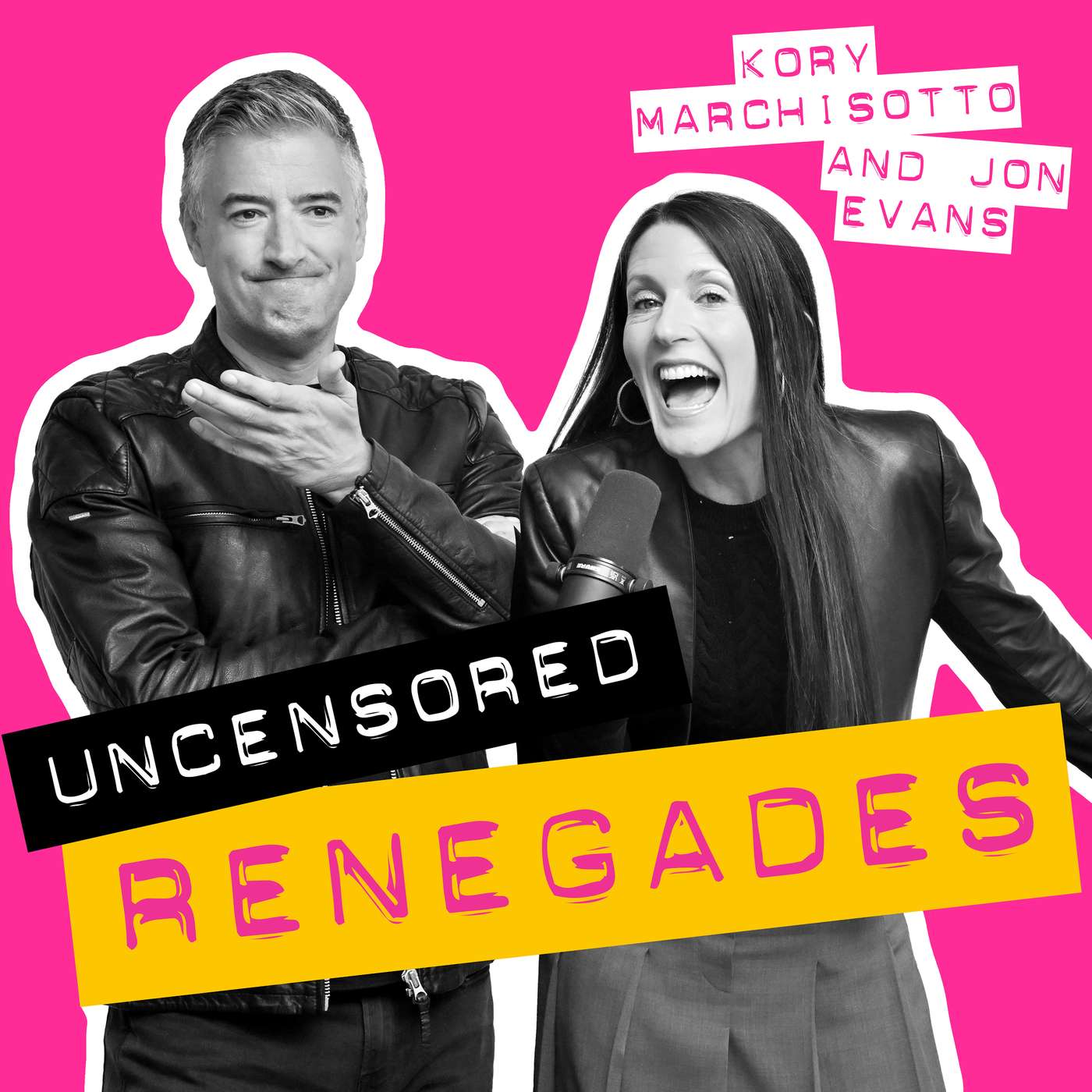
Why you need a personal board of directors [Uncensored Renegades]
Mar 2300:21:41Summary readyCompanies have boards of directors to make big decisions, so why don't individuals? Kory does exactly this in her life, so she breaks down why she does it, how she chose the people to be a part of her board, and the kind of decisions they helps her make.Get Uncensored Renegades every week:Apple Podcasts: https://podcasts.apple.com/gb/podcast/uncensored-renegades/id1868870960Spotify: https://open.spotify.com/show/7qnkqq0XSpgif9A5ZNgSpX?si=f181c3a0e9af480cTimestamps00:00 - Start01:17 - What is a personal board of directors?04:07 - When to use your board of directors04:51 - What makes a good personal board of directors?06:21 - How to choose your board08:58 - The power of networking11:41 - What not to do with your personal board of directors12:37 - Finding people outside your industry19:09 - Why you learn more deeper into your career
Summary