
Podcast
Gilbert House Fellowship
Hosted by Gilbert House Ministries · EN
Since March 2005, Derek and Sharon Gilbert have shared their take on cryptopolitics and things that go bump in the night. Those first podcasts, back when podcasting was a brand new idea, were rough–recorded through a jury-rigged setup of string, wire, duct tape, and a durable little Mac laptop.
Always ready to share a laugh and an opinion, the Gilberts emphasize the joy of living for Christ in the midst of doom and gloom news.
Their first podcast, PID (Peering Into Darkness) Radio connected Derek and Sharon to Tom Horn, L. A. Marzulli, Gary Stearman and Bob Ulrich (Prophecy Watchers), Steve Quayle, Dr. Michael Heiser, and too many others to mention.
Those relationships developed into research, writing, and broadcasting for SkyWatchTV, which spawned the programs SciFriday, Unraveling Revelation, and The Bible’s Greatest Mysteries, as well as cutting-edge books on theology and end-times prophecy like The Great Inception, Last Clash of the Titans, Bad Moon Rising, The Day the Earth Stands Still, Veneration, Giants Gods & Dragons, and The Second Coming of Saturn, as well as Sharon’s critically-acclaimed series of supernatural thrillers, The Redwing Saga.
Since 2014, the Gilberts have produced the weekly Gilbert House Fellowship, a verse-by-verse study of the Bible in chronological order.
29episodes
Episodes
Newest firstAll episodes

Behold, the Virgin Shall Conceive
Feb 101:29:31Summary readyTHE PROPHET ISAIAH lived through turbulent times, with kings of Judah who ranged from the good (Hezekiah, Jotham. Uzziah) to the evil (Ahaz, Manasseh, Amon).In Isaiah 7, the prophet is sent to Ahaz by God with a word about the invasion of his land by the combined forces of Syria and the northern kingdom of Israel. This was despite the fact that Ahaz “made offerings in the Valley of the Son of Hinnom and burned his sons as an offering” (2 Chr. 28:3, ESV), a reference to the sacrifice of children to Molech.God gave Ahaz a sign, an already-but-not-yet prophecy: Behold, the virgin shall conceive and bear a son, and shall call his name Immanuel. He shall eat curds and honey when he knows how to refuse the evil and choose the good. For before the boy knows how to refuse the evil and choose the good, the land whose two kings you dread will be deserted. (Isa. 7:14–16, ESV)This was a promise that Judah would not be conquered by his northern neighbors, but it was also a promise that a virgin in the future (Mary) would give birth to “God with us”—the meaning of the name Immanuel.
Summary
The Son of Man
Jan 2501:35:46Summary readyTHE ESSENES who wrote the second section of the Book of 1 Enoch, chapters 37–71 (called The Book of Parables), foresaw a coming Savior called the Son of Man. This was a new doctrine for Jews in the 1st century AD. The Zadokite priesthood in Jerusalem believed that faithful adherence to the Law would redeem the world. The Essenes of the Upper Galilee taught that the world had been so corrupted by the rebellious Watchers that only God’s direct intervention could make things right. 1 Enoch is the first Jewish writing to put forward this doctrine, and the first to called the agent of God’s divine judgment the Anointed One, the Chosen One, and The Son of Man. And it’s clear in the text that the Son of Man is God Himself: For this purpose he became the Chosen One; he was concealed in the presence of (the Lord of the Spirits) prior to the creation of the world, and for eternity. (1 Enoch 48:6, Charlesworth translation Here are the Bible verses about angels Derek referred to: “See that you do not despise one of these little ones. For I tell you that in heaven their angels always see the face of my Father who is in heaven…” (Matt. 18:10, ESV) Do not neglect to show hospitality to strangers, for thereby some have entertained angels unawares. (Heb. 13:2, ESV)
Summary
Here I Am! Send Me
Jan 1801:19:58Summary readyISAIAH WAS commissioned as a prophet in the year King Uzziah of Judah died—and it was a mindbending sight. One of the seraphim descended from the altar with a burning coal in a pair of tongs and touched Isaiah’s lips to absolve him of sin so that he could remain in the presence of God. We discuss the seraphim, who were probably winged, radiant beings of serpentine appearance. The word “seraphim” literally means “burning ones,” in the sense that they destroyed enemies by incinerating them, suggesting that the seraphim may have been what we’d call dragons. Then, after hearing the Lord ask, “Who will go for us?” Isaiah responded, “Here I am! Send me”—something all of us who follow Jesus Christ do to one degree or another when we accept him as Lord.
Summary
The Branch of the LORD
Jan 1101:31:11Summary readyPROPHECIES OF the coming Messiah are woven throughout the Book of Isaiah. The one we encounter in this week’s study, chapter 4 of Isaiah, is not as well known as the prophecy of Isaiah 11:1 (“There shall come forth a shoot from the stump of Jesse, and a branch from his roots shall bear fruit”), but the reference to “the Branch” (Hebrew tsemach) is also found in Jeremiah 23:5 and 33:15, and Zechariah 3:8 and 6:12. The rest of this week’s study is a sharp contrast to the prophecy of a savior who will restore “the survivors of Israel.” Isaiah 3:1–4:1 and 5:1–30 is a prophecy of God’s judgment the people of Judah for their failure to meet His standards. This week’s questions: How do we defend a futurist view of prophecy? Did Satan persuade the fallen Watchers (the sons of God from Genesis 6:1–4) to rebel? And what Bible commentary do we recommend?
Summary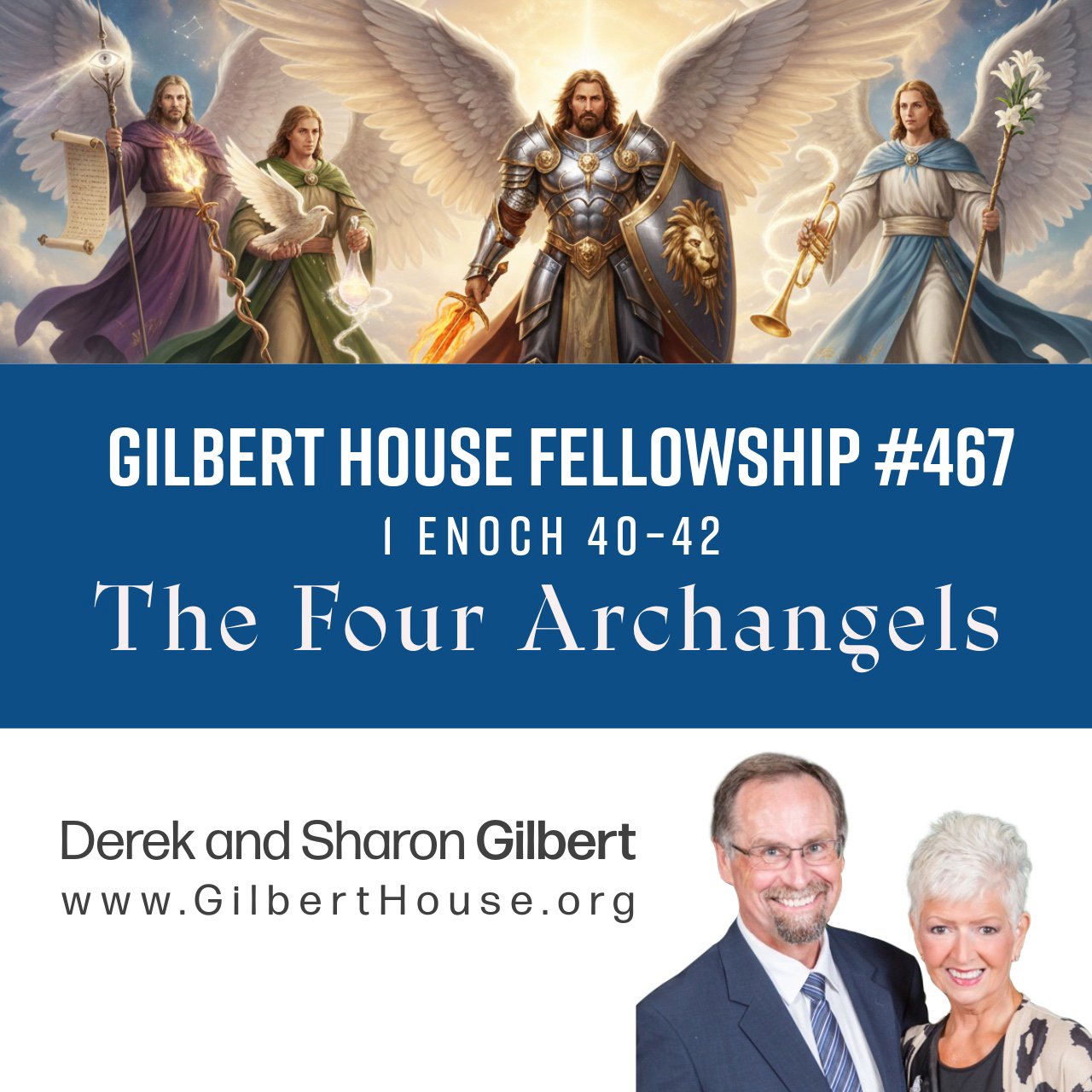
The Four Archangels
Dec 2101:27:31Summary readyENOCH’S TOUR of the spirit realm continues with a view of the throne room of God.He describes the four archangels—Michael, Gabriel, Raphael, and Phanuel—and their responsibilities. Interestingly, Phanuel is the archangel believed to fend off “the satans” to keep them from approaching God to “accuse them who dwell on the earth.” Apparently, there were Jews during the Second Temple period who believed that there were multiple satans (“accusers” or “adversaries”), a concept most Christians today find odd to say the least. Our purpose in going through the Book of 1 Enoch is to better understand the theological background of the New Testament. Although there are good reasons 1 Enoch is not in the Bible, there are clear links between 1 Enoch and New Testament theology.
Summary
Their Land is Filled With Idols
Dec 1401:44:14Summary readyISAIAH WAS a wordsmith. And the word he used translated “idols,” ʾĕlîlim, identifies the spiritual nature and origin of the idols he condemned. Dr. Christopher B. Hays, citing the work of A. T. Clay published in 1907, identified the origin of ʾĕlîlim as the name of the Mesopotamian deity Ellil, which was the Akkadian form of the Babylonian/Sumerian god Enlil. As Derek documented in The Second Coming of Saturn, Ellil/Enlil was the equivalent of the Canaanite father-god El, and thus “the abomination of the Ammonites,” Milcom (i.e., Molech). He was also known as Assur, chief god of the Assyrians, Dagon of the Philistines, Kronos of the Greeks, Saturn of the Romans, and probably Osiris of the Egyptians, among others. We believe this entity is also Shemihazah, leader of the sons of God in Genesis 6, whose rebellion created the monstrous Nephilim, the spirits of which became demons upon their deaths in the Flood of Noah. Isaiah, then, was condemning not carved blocks of wood or stone, but the demonic spirits they represented—the “gods” of the pagans whom the kingdoms of Israel and Judah continued to worship. We’ll see as we get deeper into the Book of Isaiah that the prophet understood the nature of the entities the Israelites were interacting with. The cult of the dead was alive and well in the time of Isaiah.
Summary
Pride and Leprosy
Dec 701:44:49Tap to summarizeTHE PRIDE of a king who elevated himself above what God ordained left King Uzziah with a debilitating disease. Uzziah, also called Azariah, ruled the kingdom of Judah 792–742 BC. He was a good king for most of his reign until pride got the better of him. He dared to offer incense in the Temple, a function reserved for the priests. As a result, he was afflicted with leprosy the rest of his life. This week’s question: What’s the context of Joel 2:25: I will restore to you the years that the swarming locust has eaten, the hopper, the destroyer, and the cutter, my great army, which I sent among you.
Transcribe →
Enoch's Book of Parables
Nov 2301:25:52Tap to summarizeTHE SECOND SECTION of the Book of 1 Enoch isn’t as well known as the part that deals with the fallen Watchers, but it’s at least as important from a theological perspective. The Book of Parables, chapters 37–71 of 1 Enoch, deals specifically with how the world will be purified from the sin introduced by the rebellious Watchers. To the author(s) of this section of 1 Enoch, which was probably written by Essenes in the Galilee between 25 BC and the end of the first century BC (in other words, just before the birth of Jesus), the world had been so corrupted by the fallen angels that only God’s direct intervention could put things right. This week, we share the historic backdrop of the Book of Parables: The return of Jews from Babylon who found a priesthood in Jerusalem that believed the age of prophecy was over, repeated invasions by Greeks, Armenians (yes, really), Parthians, and Romans, and civil war, which only intensified a belief among the group that came to be known as Essenes that the arrival of a Savior was imminent. When he didn’t come on schedule (sometime between 90 and 80 BC), the Essenes revised their timeline. After a period of civil war, followed by a Parthian invasion around 40 BC, Herod the Great, governor of Galilee, returned from Rome with the backing of the army of Mark Antony (yes, that one). When Herod drove the Parthians from Judea in 37 BC after a three-year war, many Essenes apparently thought Herod was the Anointed One—the Messiah! It didn’t take long for Herod to disabuse everyone of that notion.That’s the back story of the Book of Parables. It was written at a time when many Jews believed Messiah’s arrival was imminent. The Book of Parables was a reminder that God’s promises would be fulfilled, and the agent of God’s imminent judgment was a figure called the Anointed One, the Chosen One, and, most frequently, the Son of Man. This would all be nothing more than historical interest except for an important fact: Jesus applied the title “the Son of Man” to himself 78 times in the New Testament, and that title doesn’t appear in any Jewish writing prior to the Book of Parables. This week’s question: Are there ranks of demons, some of which are more difficult than others to exorcise? We referenced the work of Restoration in Christ Ministries (rcm-usa.org). The study notes Derek mentioned by the founder of RCM, Dr. Tom Hawkins, are no longer available to download, but a study on the cosmic hierarchy is available here: https://rcm-usa.org/product/the-cosmic-hierarchy/
Transcribe →
In the Belly of the Fish
Nov 1601:17:25Tap to summarizeJONAH WAS a vindictive man who cared more about a plant than he did for the 120,000 people of Nineveh. Reading the short Book of Jonah aloud makes it clear that the story is as much about Jonah’s desire for the destruction of Nineveh as it is about God’s mercy and desire that all people would repent and return to Him. Not only did Jonah try to run away from God, but when he finally did proclaim God’s imminent judgment on the great city (reluctantly), he was so upset that God spared the city that Jonah asked God to kill him! This is one of those sections of the Bible that would surely have been rewritten to show Jonah in a better light if the text had been changed over the years—although we note that the time given the Ninevites to repent was changed from three days to forty between the time of the Septuagint translation (around 200 BC) and the Masoretic text on which our English Old Testament is based (about 900 AD). This week’s question: What do we make of Jeremiah 30:6 and the description of men of Israel in such distress they’re like women in childbirth?
Transcribe →