Podcast
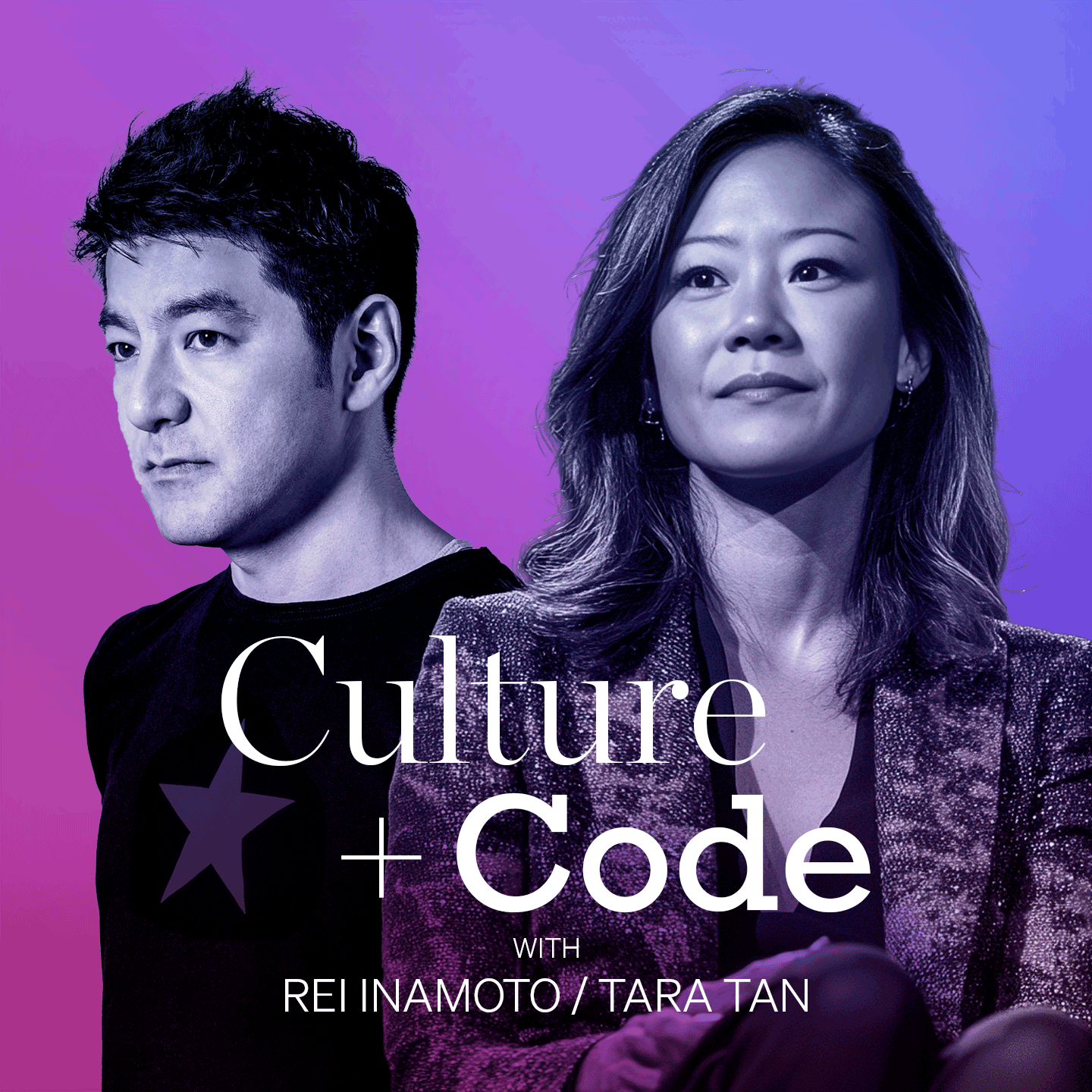
Culture & Code
Hosted by Rei Inamoto/Tara Tan · EN
Culture & Code is an exploration of where technology meets culture, and how they shape our future.
Every week, Tara Tan, general partner of Strange Ventures, and Rei Inamoto, a creative entrepreneur and founding partner of I&CO, decode the patterns in tech, business, and culture—before they go mainstream.
25episodes
Episodes
Newest firstAll episodes
What We Can Learn about Relatability from Kpop Demon Hunters and Labubu
Sep 200:25:34Summary readyIn this episode of Culture and Code, Rei and Tara discuss the recent popularity of fictional characters like K-Pop Demon Hunters and Labubu and what we can learn about relatability and escapism.They explore the concept of escapism and its appeal through multidimensionality and contradiction, making these characters relatable. The conversation delves into the unexpected success of K-Pop Demon Hunters on Netflix, the strategic missteps by Sony, and how modern brands could leverage multidimensionality in their narratives. Key TakeawaysSony’s misstep and Netflix’s luckSony’s $100M misstep and Netflix’s $20M investmentKpop Demon Hunters to become the No.1 hit of all time for NetflixNetflix wins with experimentation, not betsMultidimensionality of CharactersContradictions make characters relatableEmotional depth appeals across agesEscapism vs. RelatabilityFantasy works best when grounded in truthAudiences crave layered, imperfect personasTension drives authenticity and interestAI will reshape how stories are tested and scaledResources MentionedKpop Demon Hunters (Netflix)Labubu (Pop Mart)Why escapism is the new marketing currency (Vogue Business)About the HostsRei Inamoto Creative entrepreneur and founding partner of I&CO, a global innovation firm with offices in New York, Tokyo, and Singapore. Tara Tan Managing partner of Strange Ventures, an early-stage firm investing in the future of computing. Connect & SubscribeCulture and Code is a podcast about the biggest shifts in tech, business, and culture—before they go mainstream. New episodes on every Tuesday.
Summary
Culture and Code: Why Quality Might Win Over Hype in Tech
Aug 2600:29:58Summary readyIn the inaugural episode of Culture and Code, hosts Rei Inamoto and Tara Tan dive deep into a fascinating contrast in the tech world: the billion-dollar data labeling company you've never heard of versus the AI giants dominating headlines. Through the lens of Surge AI's remarkable bootstrap success story, they explore whether obsessive craftsmanship can triumph over venture-backed hype machines in Silicon Valley and beyond.Key TakeawaysThe Billion-Dollar Bootstrap Nobody KnowsSurge AI: $1B+ annual revenue, zero venture funding, completely bootstrappedOutperforming Scale AI despite Scale's massive funding roundsSecret sauce: treating data labeling as craft, not commodityQuality vs. Hype in the AI RaceOpenAI's GPT-5 launch: productization over breakthroughThe power of narrative in tech (why your dad knows ChatGPT but not Claude)"Hype as infrastructure" - why some companies need buzz to compete with infinite capitalCraftsmanship in CodeProgramming as poetry, not just problem-solvingThe Japanese coffee shop principle: first principles thinking in everythingWhy a clean kitchen makes better sushi (and better software)Resources MentionedThe Information (tech publication that broke the Surge AI story)Surge AIJiro Dreams of Sushi (Netflix documentary)Jacques Marie Mage (luxury sunglass brand exemplifying quality over hype)About the HostsRei Inamoto Creative entrepreneur and founding partner of I&CO, a global innovation firm with offices in New York, Tokyo, and Singapore. Tara Tan Managing partner of Strange Ventures, an early-stage firm investing in the future of computing. Connect & SubscribeThis is the official first episode of Culture and Code, a podcast about patterns in tech, business, and culture. New episodes weekly.
SummaryIt's a wrap!
Apr 3, 202500:37:46Summary readyIn the final episode of Season 1 of Hitmakers, Rei and Ana look back at the core themes that their discussions revolved around: how great products build great brands, why creativity is a mindset not an output, and why the most important thing of all is to care about the work that you are doing.IKEA April FoolsNike Trolls New Balance and Cooper Flagg with 4 WordsMayoHaters by NotCoWatch us on YouTubeFollow Ana here:Newsletter "The Sociology of Business"New book "Hitmakers: How Brands Influence Culture"Follow Rei here:Rei's LinkedInNewsletter "The Intersection"Rei's global innovation firm I&CO
SummaryThe State Of Play
Mar 20, 202500:45:05Summary readyDemi Moore has a house for her doll collection. David Beckham relaxes by assembling Lego kits. Board games are the preferred Saturday night pastime. Selling toys to adults is a big business, and in this episode, Rei and Ana unpack the reasons behind bag charms, AFOLs (Adult Fans of Lego) and popularity of brand mascots. Rather than seeing these trends as mere nostalgia, we suggest that consumers are increasingly comfortable with the blurred lines between reality and imagination, spurred by AI.Watch us on YouTubeFollow Ana here:Newsletter "The Sociology of Business"New book "Hitmakers: How Brands Influence Culture"Follow Rei here:Rei's LinkedInNewsletter "The Intersection"Rei's global innovation firm I&CO
SummaryHow to Brand Technology
Mar 6, 202500:42:42Summary readySome of the biggest global brands are tech companies (Apple, Google, Samsung, Nvidia), and in this episode, Rei and Ana explore the branding strategy behind technology. From myth-making to a seamless omnichannel experience to translating narratives into user interface, we are looking at how branding of tech is different.Watch us on YouTubeFollow Ana here:Newsletter "The Sociology of Business"New book "Hitmakers: How Brands Influence Culture"Follow Rei here:Rei's LinkedInNewsletter "The Intersection"Rei's global innovation firm I&CO
SummaryThe Society of Spectacle
Feb 20, 202500:33:10Summary readyThe culture of hype (streetwear, cronuts, Gone Girl, Hamilton...) got replaced by the society of spectacle (fashion shows, Olympics, SuperBowl, Barbieheimer). Everything is a spectacle if you lead with celebrities, promote it wildly, and spend enough money on it. Spectacles grab our attention and fizzle in one summer or shorter. In this episode, Rei and Ana talk about SuperBowl's half show, why sports is the only thing that unifies us these days, and whether can hype make a comeback.Watch us on YouTubeFollow Ana here:Newsletter "The Sociology of Business"New book "Hitmakers: How Brands Influence Culture"Follow Rei here:Rei's LinkedInNewsletter "The Intersection"Rei's global innovation firm I&CO
SummaryPost Meh-ification
Feb 6, 202500:46:16Summary readyWhen algorithm flattens cultural markets, how to create against this backdrop? When everything is “meh,” winners are the surprising, the unexpected, and the different. The problem is, these things succeed in niches - offline communities, small groups, and subcultures. They are created in niches, and usually stay there. In the winners-take-all markets, scaling requires algorithms. Can brands bridge this dichotomy? What are the success stories of innovation in the meh world? Is it even financially possible for a brand to disrupt itself before someone else does? In this episode, Rei and I use once-innovative brands as examples of what happens when disruption goes analog.Watch us on YouTubeFollow Ana here:Newsletter "The Sociology of Business"New book "Hitmakers: How Brands Influence Culture"Follow Rei here:Rei's LinkedInNewsletter "The Intersection"Rei's global innovation firm I&CO
SummaryWhy Brands Need Creative Strategy
Jan 23, 202500:40:16Summary readyCreativity is not just an ideas game. More than anything, it’s a matter of process, organization, and the problem-solving abilities of the “backend” office. McKinsey study found that companies that prioritize creativity have 67 percent higher organic revenue growth than those who do not. Yet, creativity, despite its superior business value, is often siloed in “creative” departments like marketing, design or creative. Creativity is a company-wide mandate, and in this episode, Rei and I talk about how that looks like, which brands successfully implement it, and how to organize for creativity.The Changing Role of Design By Rei Inamoto@toraya.wagashiWatch us on YouTubeFollow Ana here:Newsletter "The Sociology of Business"New book "Hitmakers: How Brands Influence Culture"Follow Rei here:Rei's LinkedInNewsletter "The Intersection"Rei's global innovation firm I&CO
SummaryWho and What Influences Culture?
Jan 9, 202500:44:14Summary readyWhat is culture? Culture can mean a lot of different things, and in this episode we zero in on our working definitions, along with the brands, consumer behaviors, and trends that we can expect to see more of in 2025Show notes:How to build brand energy by Grace GordonMarcijuš AI StudioDeluxe: How Luxury Lost Its Luster by Dana ThomasWatch us on YouTubeFollow Ana here:Newsletter "The Sociology of Business"New book "Hitmakers: How Brands Influence Culture"Follow Rei here:Rei's LinkedInNewsletter "The Intersection"Rei's global innovation firm I&CO
SummaryHappy New Year
Dec 26, 202400:48:31Summary readyIn their last episode of 2024, Ana and Rei talk about predictions. Rather than predicting the future, companies should set themselves out for the future's inherent unpredictability. In this context, we unpack why "boring" brands are set to succeed, why smart glasses are going to be big, and why the retail middle may be coming back, thanks to Substack and AI. We wish everyone a happy new year!Watch us on YouTubeFollow Ana here:Newsletter "The Sociology of Business"New book "Hitmakers: How Brands Influence Culture"Follow Rei here:Rei's LinkedInNewsletter "The Intersection"Rei's global innovation firm I&CO
Summary