Podcast
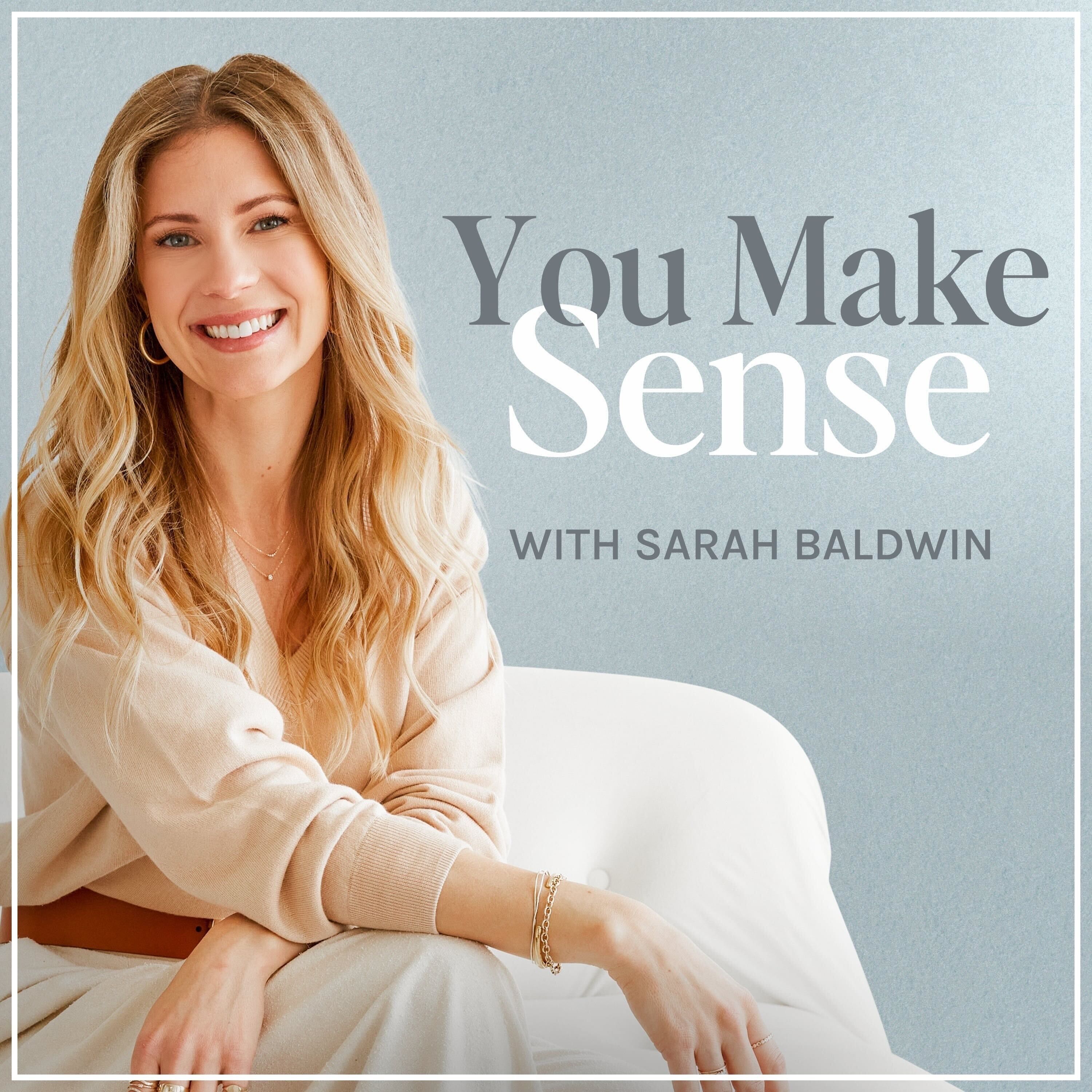
You Make Sense
Hosted by Sarah Baldwin · EN
You Make Sense is a manual to understanding your human experience, so that you can navigate the world with freedom, ease, and empowerment. Using the latest neuroscience and trauma research, this podcast will equip you with powerful somatic tools to help you get unstuck and create the life you desire. Sarah Baldwin, SEP, is an expert in trauma resolution, attachment, parts work, and nervous system regulation. But before she was a Somatic Experiencing Practitioner and trained in Polyvagal interventions, she first came to this work as someone struggling to find relief. It was through her own healing that led her to become a trained professional, now helping thousands of people across her programs, courses, and classes to do the same.
66episodes
Episodes
Newest firstAll episodes
Leading in Business and in Life
Jan 7, 202500:45:26Tap to summarizeThis episode unpacks the vital connection between our nervous system and how we lead—in business, at home, and in life. Sarah dives into the science of regulation, exploring how dysregulated states like fight/flight, freeze, or shut down often drive our decisions, keeping us stuck in survival mode. These patterns, rooted in past experiences of stress or trauma, influence how we show up as leaders, parents, and creators.With clear explanations and actionable tools, Sarah offers a roadmap for recognizing when we’re leading from dysregulation. She shares how to cultivate a regulated nervous system, unlocking creativity, connection, and clarity. Whether you're looking to grow a business, nurture your family, or simply lead yourself with more purpose, this episode offers the practical steps to create the life—and leadership—you desire.Episode Highlights00:00 Intro00:26 Leading from a State of Regulation01:20 Entrepreneurs Have Higher Stress Levels04:28 The Most Important Thing Parents Should Focus on06:43 Your Nervous System Affects Everyone Else08:23 Leading from Sympathetic (fight/flight)11:05 Leading from Regulation (safety)13:36 Leading from Dorsal (shut down)15:27 Leading from Freeze (tonic immobility)17:42 Consistent Neural Exercises20:41 How to Reshape Your Nervous System23:02 The Key to Somatic Manifestation26:57 Anchoring in Your Adult Self32:30 Trust Your Own Pacing38:19 Embodying Your Purpose Take Sarah’s FREE Quiz:Ready to learn more about your nervous system specific to you? Take Sarah’s free quiz, “What’s Keeping You Stuck?” for a personalized guide and powerful somatic tools to help you gain control over your experience.https://bit.ly/yms-sp-quizConnect with Sarah on:Email Community - https://bit.ly/yms-sp-newsletterInstagram - https://www.instagram.com/sarahbcoaching/Website - https://www.sarahbaldwincoaching.com/Submit a Question: https://sarahbaldwin1.typeform.com/podcastImportant Keywords:Nervous System Regulation - The practice of bringing your system into safety in presence, which supports effective leadership, whether in business, parenting, or personal growth. Being in regulation allows for more creativity, clarity, and connection while reducing the reactive tendencies of stress and overwhelm.Ventral Vagal Complex - Your state of presence, safety, and connection where creativity, connection, and problem-solving thrive. It’s the optimal state for leadership and decision-making, allowing leaders to see possibilities and act with confidence.Co-Regulation - The process of connecting with another person in safety where each person's nervous system positively influences the others’. In leadership and parenting, co-regulation can set the tone for calm and productivity, creating a ripple effect in teams or families.Dysregulation - When your nervous system senses a threat (whether real or perceived), it sends you into dysregulation or active self-protection. Leading from this place can often result in stress, burnout, or stagnation.Capacity Building - Capacity building involves gradually increasing our ability to handle new or challenging situations. It’s about expanding the nervous system's tolerance and adaptability through small, intentional experiences of growth.
Transcribe →4 Reasons Why New Year Resolutions Don’t Work
Dec 31, 202401:10:25Tap to summarizeIn this special New Year’s episode, Sarah invites listeners to reimagine the way they approach goals and resolutions. Kicking off the five-part Somatic Starter Kit series, Sarah dives into four reasons why traditional New Year’s resolutions often fail and offers transformative science-backed tools to use instead. You’ll learn how unresolved past experiences and traumas can keep you stuck in cycles of unmet goals.Listeners will learn the importance of taking tolerable steps, building nervous system regulation, and fostering safe connection to support personal growth. Sarah also shares actionable insights on cultivating self-compassion, replacing coping strategies with healthier habits, and understanding the deeper desires that drive us. The episode is both a manual for self-discovery and a compassionate reminder that you make sense, just as you are.Episode Highlights00:00 Intro02:26 Reason 1: We Aren’t Addressing Our Nervous System05:05 Do You Feel Like You’re Behind in Life?07:03 Connecting to What You Truly Desire09:41 Reason 2: Our Desires Often Have Flavorings of Past Danger14:03 Reason 3: We Aren’t Addressing Our Parts19:07 Reason 4: Lack of Support and Connection24:19 Safe Support and Connection is Crucial25:21 Take Tolerable Steps Towards Your Desires30:17 Consistent Regulation of Your Nervous System 31:37 Work at the Rate of Your Most Apprehensive Part37:39 Relation Between Money and the Nervous System46:00 What is a Coping Strategy?53:54 How Do You Know Your Life’s Purpose?01:01:36 Trying Something New Can Feel OverwhelmingJoin the Navigating Your Nervous System Waitlist:Want access to limited-time pricing for Sarah’s upcoming 6-week course? Make sure to get on the waitlist for Navigating Your Nervous System by January 5th to take advantage of the 24-hour only $100 off bonus.https://bit.ly/sp-nyns-waitlistConnect with Sarah on:Email Community - https://bit.ly/yms-sp-newsletterInstagram - https://www.instagram.com/sarahbcoaching/Website - https://www.sarahbaldwincoaching.com/Submit a Question: https://sarahbaldwin1.typeform.com/podcastImportant Keywords:Nervous System Regulation - This refers to practices that help balance the body's stress response, promoting a state of calm and safety. By regulating the nervous system, we can better handle challenges, make intentional choices, and build resilience in the face of discomfort or fear.Coping Strategies - These are habits or behaviors developed to manage discomfort or stress, often unconsciously. While they can serve as short-term relief, understanding and replacing maladaptive strategies with healthier alternatives promotes long-term well-being.Somatic Healing - Somatic healing focuses on reconnecting with the body to release tension and process trauma. This approach integrates physical sensations, emotions, and thoughts to foster self-awareness and recovery.Parts Work - This therapeutic concept involves recognizing and addressing different "parts" or aspects of ourselves, often tied to past experiences or emotional wounds. By understanding and integrating these parts, we can move toward greater wholeness and self-compassion.Safe Connection - Safe connection refers to relationships where we feel seen, valued, and accepted without judgment. These connections are essential for emotional and nervous system regulation, providing a foundation for personal growth.Capacity Building - Capacity building involves gradually increasing our ability to handle new or challenging situations. It’s about expanding the nervous system's tolerance and adaptability through small, intentional experiences of growth.Dysregulation - Dysregulation occurs when the nervous system is stuck in states of fight, flight, freeze, or shutdown. It manifests as heightened anxiety, emotional overwhelm, or disconnection and requires mindful practices to return to a balanced state.
Transcribe →When We Feel Like We're Going Backward in Our Healing
Dec 24, 202400:51:55Summary readyThis episode dives into the ups and downs of healing and why it can sometimes feel like you’re moving backward instead of forward. Sarah breaks down how coming back into our bodies is a marker of progress — but that it can also feel overwhelming at first. Experiencing grief, anger, or other deep emotions can all be signs of the work you’ve done.With real-life examples and simple, science-backed advice, Sarah shares how to move beyond just “knowing” about your patterns and into healing in a way that actually creates change. You’ll learn how to regulate your nervous system, work with your younger parts, and create space for more connection and joy.Episode Highlights00:00 Intro00:40 Why Healing Can Feel Like You’re Going Backward05:34 Information Gathering is Not Enough07:29 Why We Become Disembodied11:03 Healing is the Hero’s Journey15:31 Trauma & Energy Wells21:33 What To Look For in a Therapist or Practitioner31:20 Receiving & Working With Young Parts38:00 Why Do We Experience Chronic Dysregulation?42:56 Sarah’s Journey Join Sarah’s Email Community:Looking for more FREE resources? Click below to join Sarah’s email community for additional teachings and somatic tools to support you on your healing journey.https://bit.ly/yms-sp-newsletterConnect with Sarah on:Email Community - https://bit.ly/yms-sp-newsletterInstagram - https://www.instagram.com/sarahbcoaching/Website - https://www.sarahbaldwincoaching.com/Submit a Question: https://sarahbaldwin1.typeform.com/podcastImportant Keywords:Nervous system - The nervous system is a self-protective system that determines your emotions, behaviors, and overall experience. It responds to safety, real threats, and perceived threats, influencing how you react and regulate in different situations.Regulation - We can only experience regulation when our nervous system believes we are safe. Our primary state of regulation is our Ventral Vagal Complex, where we experience things like joy, connection, presence, groundedness, and feeling “here.”Trauma - Trauma refers to overwhelming experiences that the body and mind were unable to process fully at the time they occurred. These unresolved energies get stuck and stored in the body, impacting mental and physical well-being until they are resolved.Healing - Healing is the journey of addressing past wounds—both physical and emotional—to achieve greater freedom and alignment in life. It involves learning to regulate the nervous system, release stored trauma, and tending to younger parts of ourselves.Dysregulation - Dysregulation occurs when the nervous system believes we are in danger, whether it is a real or perceived threat. Chronic dysregulation is often a result of unresolved trauma and can significantly impact daily functioning.Internal Safety - Creating safety within our bodies and nervous system is the foundation of healing. This is what we are working toward when we take steps to regulate our nervous system.
SummaryNavigating Loneliness and Grief During the Holidays
Dec 17, 202400:57:39Tap to summarizeIn this heartfelt episode of You Make Sense, Sarah explores the often-overlooked emotional complexities of the holiday season. While the holidays are often painted as a time of joy and togetherness, Sarah acknowledges the undercurrent of loneliness, grief, and stress that many experience. She unpacks how societal expectations and past experiences can amplify these emotions, offering relatable insights and actionable tools to help listeners navigate this season with more ease.Sarah delves into the somatic roots of grief and loneliness, using Parts Work to differentiate between our adult self and younger parts. From tending to these younger parts to finding solace in music, nature, and intentional connection, this episode offers a blueprint for transforming holiday challenges into opportunities for healing and self-discovery.Episode Highlights00:00 Intro02:09 Reasons the Holidays Can Be Challenging06:58 Connecting to the Unmet Need09:05 Why We Struggle to Process Grief13:34 Step 1: Grief is Best Processed Through Connection15:06 Step 2: What Parts of You Are Struggling?15:45 Step 3: Focus on Nourishing Yourself17:03 Step 4: Connection19:42 Identify Which Part of You is Feeling Sad30:46 How to Process Death and Loss39:50 Coupling Dynamics & the Holidays49:42 “Why Do I Drink More Around My Family?” Join the Navigating Your Nervous System Waitlist:Want access to limited-time pricing for Sarah’s upcoming 6-week course? Make sure to get on the waitlist for Navigating Your Nervous System by January 5th to take advantage of the 24-hour only $100 off bonus.https://bit.ly/sp-nyns-waitlistConnect with Sarah on:Email Community - https://bit.ly/yms-sp-newsletterInstagram - https://www.instagram.com/sarahbcoaching/Website - https://www.sarahbaldwincoaching.com/Submit a Question: https://sarahbaldwin1.typeform.com/podcastImportant Keywords:Loneliness - Loneliness is the feeling of being disconnected or isolated from others, often heightened during the holidays when societal messages emphasize togetherness. Sarah highlights how loneliness can stem from unmet needs, relational trauma, or past experiences and encourages using somatic tools and Parts Work to address it.Grief - Grief is the emotional response to loss, encompassing not only what happened but also what never was. Sarah explains how grief surfaces when we feel safe enough to process it and encourages gentle, titrated processing of these emotions to create space for healing and growth.Connection - Connection is a fundamental human need that fosters a sense of belonging and emotional safety. Sarah emphasizes the importance of cultivating meaningful connections with others, nature, and ourselves, as these relationships are key to navigating emotional challenges.Parts work - Parts work is a therapeutic approach that acknowledges and tends to different aspects of the self, particularly younger parts carrying past wounds. Sarah discusses how identifying and comforting these parts can bring clarity and healing during emotionally challenging times.Regulation - Regulation is the process of bringing the nervous system into safety and balance, allowing us to respond to situations from a calm, grounded place. Sarah suggests somatic practices such as mindfulness, movement, and connection to achieve regulation and build emotional resilience.Healing - Healing is the process of addressing past traumas, unmet needs, and emotional pain to create space for growth and well-being. Sarah frames healing as an ongoing journey of self-compassion, connection, and transformation, particularly relevant during challenging emotional periods.
Transcribe →Experiencing Healthy Love for the First Time
Dec 10, 202401:11:54Tap to summarizeDo you find romantic partnerships challenging, confusing, or overwhelming? Sarah is going to walk you through what is necessary to heal your attachment wounds and come toward more secure, healthy relationships. Although it might seem counterintuitive, the kind of connection we’re desiring often doesn’t “feel good” at first. In fact, our first experience of a secure attachment can range from being boring — to completely terrifying.The good news is that this doesn’t necessarily mean the relationship is wrong for you! In this episode, you’ll learn the neuroscience behind why healthy love can initially feel overwhelming or unexciting. But the more that we step toward safe connection, the deeper and more intimate our relationships become, giving us a container where we can truly be seen, known, and chosen.Episode Highlights00:00 Intro01:01 Earned Secure Attachment06:12 The Good Doesn’t Feel Good at First08:45 Why A Secure Attachment Can Feel Boring10:08 Love from Choice vs Love from Survival16:33 Why A Secure Attachment Can Feel Terrifying24:00 Leaning into a Secure Attachment29:40 “Why Do I Feel Like I’m Going Backwards?”30:52 Building Capacity for Vulnerability and Exposure35:06 The Beautiful Orphaned Parts of Us39:43 How to Know if the Lack of Attraction is Normal46:37 Regret Is an Opportunity for Self-Compassion & Learning52:01 Perceived Threats in Relationships01:06:01 Even with Loving Parents, Relationships Can Be Hard Grab Sarah’s FREE Workbook:Ready to gain control over your life? Click below to download Sarah’s free trauma-informed workbook. This in-depth guide will help you to harness the power of your nervous system and unlock your desires.https://bit.ly/yms-sp-workbookConnect with Sarah on:Email Community - https://bit.ly/yms-sp-newsletterInstagram - https://www.instagram.com/sarahbcoaching/Website - https://www.sarahbaldwincoaching.com/Submit a Question: https://sarahbaldwin1.typeform.com/podcastImportant Keywords:Secure Attachment - A safe, stable way of attaching and relating to others in our relationships that forms in our early childhood from having caregivers who could consistently meet our needs for love, safety, attunement, and connection.Earned Secure Attachment - A secure attachment that develops through intentional self-work and healing from past patterns. It reflects personal growth and the ability to attract healthier relationships by creating internal safety for yourself and your younger parts.Neuroception - Your body's internal threat detector that is constantly assessing whether you’re in safety, danger, or life-threatening danger. It decides this by looking to a database of past information that holds all your lived experiences.Parts Work - A therapeutic process that involves connecting with and healing younger parts of yourself that hold onto past wounds. It’s a core tool for building internal safety and reshaping how you show up in relationships.Trauma Bond - A strong emotional connection formed through cycles of highs and lows in an unstable relationship. Often mistaken for love, trauma bonds are rooted in survival instincts and unresolved past pain.Protective Parts - Younger parts that learned to keep you from past emotional harm by creating walls, avoidance, control, or sabotage. Even if the past is over, these well-intentioned parts can keep you from fully engaging in healthy relationships.Capacity Building - The process of gradually expanding your emotional tolerance for safety, love, and connection. It involves learning to sit with discomfort as you adjust to the steady, healthy love you’ve always wanted.
Transcribe →Getting to Know Your Protector Parts: Perfectionist, Procrastinator & More
Dec 3, 202400:56:05Summary readyThis episode pulls back the curtain on how our “younger selves” often influence the way we show up in our adult lives. From the perfectionist to the procrastinator, these protective parts develop in response to early or past experiences of feeling unsafe or overwhelmed. If we have yet to come to the aid of these parts, they will continue to show up in an effort to keep our vulnerable parts safe, often keeping us stuck in cycles that no longer serve us.Using science-backed concepts and practical tools, Sarah guides listeners on how to recognize and calm these parts so that our adult selves can take charge. By differentiating ourselves from these parts, unburdening these protectors, and coming to the aid of the vulnerable part they are protecting, it’s possible to start living in alignment with our highest self—and navigate the world with more freedom.Episode Highlights00:00 Intro00:16 Are Your Young Parts Running the Show?01:10 Understanding Somatic Parts Work06:10 The Power of Internal Coregulation07:43 What is a Protector Part?09:08 The Doer Part15:23 The Perfectionist Part21:21 The Procastinator Part28:18 Adult Life Can Be Overwhelming30:18 Building Capacity to Be in Your Adult Self32:24 Unburdening the Protector Parts35:07 Supporting the Most Vulnerable Part37:52 “How Do We Know How Many Parts There Are?”44:36 Learning to Differentiate From Your Parts51:29 Why Do We Experience Roadblocks?Take Sarah’s FREE Quiz:Ready to learn more about your nervous system specific to you? Take Sarah’s free quiz, “What’s Keeping You Stuck?” for a personalized guide and powerful somatic tools to help you gain control over your experience.https://bit.ly/yms-sp-quizConnect with Sarah on:Email Community - https://bit.ly/yms-sp-newsletterInstagram - https://www.instagram.com/sarahbcoaching/Website - https://www.sarahbaldwincoaching.com/Submit a Question: https://sarahbaldwin1.typeform.com/podcastImportant Keywords:Parts Work - A therapeutic approach that involves understanding and working with different “parts” of oneself, especially those that have been influenced by past experiences or trauma.Most Vulnerable Parts - Younger versions of ourselves that fragment off when we experience trauma, harm, or overwhelm and essentially get “stuck” in that painful experience until we can come to their aid as our adult self.Protector Parts - These are also younger versions of ourselves that develop as a way to keep the most vulnerable part safe, often through controlling behaviors, avoiding risks, or overachieving to make sure the vulnerable part never has to feel that pain again.Internal Co-Regulation - A process of self-soothing, where the adult self learns to comfort and integrate these young parts, providing them with the care and safety they lacked in the past.Neuroception - The brain’s subconscious detection of safety or threat, which shapes how we react to situations based on internal “safety” signals and past memories.Internal Family Systems (IFS) - A therapeutic model often referenced in Parts Work, which sees the self as made up of multiple parts, each with its own role, memory, and emotional state.
SummaryFamily Systems and the Roles We Play
Nov 26, 202401:00:03Summary readyThis episode uncovers the hidden roles we carry in relationships—roles that often date back to our earliest experiences and shape how we connect with others. From being the “caretaker” to the “perfectionist,” these familiar patterns tend to influence our choices and interactions long after childhood, even if that role no longer serves us.With tools grounded in neuroscience and practical guidance, this conversation dives into what it takes to rewrite those outdated scripts. Listeners will learn simple steps to heal the past, break free from conditioned reactions, and start building relationships that align with who they truly are. It’s absolutely possible to embody a new role and make room for the connections that genuinely feel right.Episode Highlights00:00 Intro00:33 Why Do We Play the Roles We Play?02:19 Family Systems & the Origin of Our Roles07:13 Secure Attachment & Healthy Family Plays10:19 Many of Us Did Not Have a Healthy Family System13:57 Choosing Partners & “Compatability” 17:21 Healing Allows us to Write a New Role21:45 The Bumpy Road of Healing27:59 “How Can You Get Comfortable in Receiving When You’re a Giver?”39:06 Being of Service vs. Being of Sacrifice46:44 Why We Disconnect from Our Emotions54:16 “How Do You Forgive?”Waitlist Bonus Coming in 2025:Ready to start feeling better in the New Year? Navigating Your Nervous System is a 6-week, live course focused on the most important foundation of healing: nervous system regulation. Join the NYNS waitlist by January 5th for limited-time reduced pricing! https://bit.ly/sp-nyns-waitlistConnect with Sarah on:Email Community - https://bit.ly/yms-sp-newsletterInstagram - https://www.instagram.com/sarahbcoaching/Website - https://www.sarahbaldwincoaching.com/Submit a Question: https://sarahbaldwin1.typeform.com/podcastImportant Keywords:Nervous System - The nervous system is central to understanding our emotional and relational patterns. It holds the embodied experience of past memories and influences how we respond to others, shaping the roles we play in our lives.Roles - The patterns we adopt in relationships, often influenced by early family dynamics. Common roles include caretaker, perfectionist, scapegoat, and the helpless one, which define how we interact with others. Changing these roles allows us to step out of limiting patterns and embrace more fulfilling connections.Family System - The family system is the foundation of our relational blueprint. It establishes our initial roles and influences how we navigate social dynamics, often carrying over into adult relationships.Attachment - Attachment refers to the emotional bonds formed with primary caregivers, impacting how we relate to others. Secure attachment fosters healthier relationships, while insecure attachment can lead to self-protective behaviors and dynamics. Healing attachment wounds enables us to build stable, supportive connections.Healing - Healing is the process of releasing old roles and expanding the nervous system’s capacity for change. It involves recognizing and shedding survival patterns and replacing them with practices that honor our true selves. Healing is an empowering journey toward self-discovery and authentic relationships.Patterns - Patterns are recurring behaviors that shape how we interact with others. These automatic responses often stem from unresolved past experiences and can hold us back. Using a somatic approach to transform these patterns is key to stepping into new roles and fostering growth.
SummaryHow to Tangibly Step Toward Your Purpose
Nov 19, 202400:49:14Tap to summarizeEver feel like stepping into a bigger life is tougher than it should be? In this episode, Sarah breaks down why we get stuck in old patterns and how our nervous system shapes the life we’re currently living. You’ll learn why even good changes—like deeper relationships or exciting career moves—can feel overwhelming or lead to self-sabotage. Using science-backed concepts and tools, Sarah will teach you how to practically build your nervous system’s capacity to hold the life you’re really wanting. By taking small, tolerable steps and working at the rate of your most apprehensive part, it’s possible to work with your nervous system to move toward a life full of connection and joy.Episode Highlights00:00 Intro00:32 Living the Bigger Life06:19 The Process of Building Our Capacity13:42 Our Purpose Often Leads to Our Healing17:39 What Lights You Up?19:36 How to Begin Working with Your Nervous System23:38 We Must Embody Where We Are Going28:05 One Tolerable Step at a Time30:49 There’s Always Room to Expand and Grow36:45 What to do When Good Opportunities Overwhelm Us41:29 Tangible Steps Toward Being SeenGrab Sarah’s FREE Workbook:Ready to gain control over your life? Click below to download Sarah’s free trauma-informed workbook. This in-depth guide will help you to harness the power of your nervous system and unlock your desires.https://bit.ly/yms-sp-workbookConnect with Sarah on:Email Community - https://bit.ly/yms-sp-newsletterInstagram - https://www.instagram.com/sarahbcoaching/Website - https://www.sarahbaldwincoaching.com/Submit a Question: https://sarahbaldwin1.typeform.com/podcastImportant Keywords:“Self-Sabotage” - This term can often feel shaming, but it is simply the nervous system’s way of protecting us from what it doesn’t yet know is safe by pushing away or leaving things we might actually deeply desire.Building Capacity - The gradual process of training the nervous system to hold more of the “good” in life and tolerate changes or stressors without triggering overwhelm. This is done by gently stepping toward new, safe experiences of what was once dangerous or inhibited in the past (like: being seen, taking up space, making mistakes, etc.).Nervous System Regulation - Techniques and strategies used to calm and stabilize the nervous system. Regulation helps move the body out of a fight/flight, freeze, or shut down responses and into a balanced state of presence and connection.“The Invisible Wall” - A term coined by Sarah used to describe what it feels like when we try to step toward what we’re wanting but are met with resistance and dysregulation within our nervous system.Parts Work - This approach seeks to integrate the fragmented younger parts of ourselves by coming to their aid and giving them love, safety, attunement, and connection. Under the umbrella of Parts Work, Internal Family Systems is the most well-known modality.Tolerable Steps - Small, bite-sized actions taken to gradually introduce new experiences and reduce the nervous system's stress response. These steps are essential for building internal safety and making sustainable progress toward larger goals.
Transcribe →Parts Work: How Different Parts of Us Show Up in Our Lives
Nov 12, 202401:11:27Summary readyAlthough we may look our numeric age on the outside, we actually have many different parts or versions of ourselves within us. Using somatic Parts Work, also known as IFS or inner child healing, Sarah is going to show you how these different parts can inhabit our experience to influence the way we show up in our daily lives.When we come to the aid of these younger parts and give them the love, safety, attunement, and protection they didn’t receive in the past, it creates what Sarah calls internal co-regulation, so that we can begin spending more time moving through the world as our confident, capable adult self.Episode Highlights00:00 Intro00:23 What is Parts Work?04:37 Holistic Healing is Like a Web09:35 Each Part Has a Different Autonomic Tone16:17 Vulnerable Parts and Protective Parts22:44 Real Life Examples of Parts Show Up in Our Lives28:21 The Difference Between Young Parts and Adult Self33:34 How Do We Bring Together Fragmented Parts?37:20 All Parts of You Make Sense39:49 Focus on the Loudest Part First43:11 How to Deal with Multiple Parts Without Feeling Overwhelmed49:41 Two Ways to Create Internal Safety01:00:12 A Common Misconception About Real LoveConnect with Sarah on:Email Community - https://bit.ly/yms-sp-newsletterInstagram - https://www.instagram.com/sarahbcoaching/Website - https://www.sarahbaldwincoaching.com/Submit a Question: https://sarahbaldwin1.typeform.com/podcastImportant Keywords:Parts Work - The therapeutic practice of differentiating from and coming to the aid of the younger parts of ourselves that fragment off of us and develop when we’ve experienced a trauma or overwhelm in the past. Under the umbrella of Parts Work, Internal Family Systems is the most well-known modality.Younger Part - This is any part that is younger than what our current numeric age is now. It can be a vulnerable part or a protective part.Most Vulnerable Part - This is a younger part that experienced a trauma or overwhelming event(s) where they were left helpless, unsupported and unsafe and remain stuck in the perpetual pain of that experience.Protective Part - This is often a younger part of us that developed in order to protect the most vulnerable parts from that pain, and might look like being “the do-er,” perfectionism, procrastination, etc.Nervous System Regulation - The process of managing the body's stress response and guiding your self-protective system to internal safety, which helps to resolve trauma, promote balance and wellbeing, and navigate life’s challenges with greater ease.Regulating Resource: Tools or activities that discharge or get rid of activation in the body, helping to bring our system back into safety, rest, and regulation.Trauma Resolution: The process of healing from past trauma by addressing and releasing trapped energy and incomplete physical responses from the body.Embodiment: The practice of being fully present in and connected to your body and the sensations and feelings present within it, which is crucial for nervous system regulation and emotional healing.
SummaryWhy We Choose the Partners We Choose
Nov 5, 202400:41:44Summary readyEver wonder why you keep choosing the same kind of partners? Sarah breaks it all down in this episode. She’s going to teach you how your nervous system is the one doing the matchmaking, drawing on your early childhood experiences to inform the way you show up in your adult relationships. Whether it’s romantic partnerships, friendships, or work dynamics, you’ll learn how to begin changing old patterns that no longer serve you.Many of us choose our partners out of a need for survival rather than from a place of choice. Sarah will give you powerful somatic tools to begin creating a new internal baseline for what love is, so that you can transform your relationships and step toward the secure attachments you’re desiring.Episode Highlights00:00 Intro00:17 Why We Choose the Partners that We Choose03:30 Your Early Childhood Experiences Lay the Blueprint07:30 The Threat Detector Picks Up On Subtle Cues10:16 Love From Choice or Love From Survival?14:39 Healthy Love Isn’t Infatuation19:21 Creating an Internal Secure Attachment21:25 Our Reactions Always Match Some Circumstance27:29 Developing the Ability for Self-Regulation31:43 We Can be a Combination of Different Attachment Styles37:00 Building Connection When Feeling IsolatedTake Sarah’s FREE Quiz:Ready to learn more about your nervous system specific to you? Take Sarah’s free quiz, “What’s Keeping You Stuck?”, for personalized tools to regulate your nervous system and step toward the life you’re desiring. Get started below.https://bit.ly/yms-sp-quizConnect with Sarah on:Email Community - https://bit.ly/yms-sp-newsletterInstagram - https://www.instagram.com/sarahbcoaching/Website - https://www.sarahbaldwincoaching.com/Important Keywords:Autonomic Nervous System - The body’s internal network that controls responses to stimuli and regulates our experiences of safety, fear, and connection. In the context of relationships, it drives automatic reactions based on past experiences stored in our internal "database."Neuroception - A subconscious process through which the nervous system detects safety or threats in our environment. It plays a key role in determining who we are drawn to in relationships, often based on past relational patterns.Attachment - Refers to the emotional bond we form with others, shaped by early relationships, particularly with caregivers. Our attachment style influences how we relate to others.Parts Work - A therapeutic process focused on identifying and healing the different "parts" of ourselves that were wounded in the past. It helps us reparent those parts and create internal safety, allowing us to make healthier relationship choices.Internal Safety - The feeling of security and stability that comes from within, rather than from external validation or relationships. Cultivating internal safety helps reduce anxiety and allows for more balanced, healthy relationships.Healing Work - The ongoing process of addressing past traumas and emotional wounds to create lasting change in our relational patterns and lives.Relationship Patterns - Recurring behaviors and dynamics that emerge in our relationships, often based on unresolved past experiences. Recognizing and changing these patterns is key to fostering healthier connections.
Summary