
Podcast
ADHD reWired
Hosted by Eric Tivers, LCSW, ADHD-CCSP · EN
The podcast for adults with ADHD. Hear stories, learn strategies, and get great productivity tips as we talk about the real-life struggles and what it takes to achieve success. Host, Eric Tivers, LCSW, is a psychotherapist, coach and entrepreneur (with ADHD) in private practice. Eric interviews a variety of guests. Many are people just like yourself, as well professionals, entrepreneurs, and ADHD experts.
29episodes
Episodes
Newest firstAll episodes

542 Tunnel of Focus: Monotropism, Trauma, and Thriving with ADHD and Autism with Mattia Mauree
Aug 23, 202400:53:21Summary readyIn this episode of ADHD reWired, Eric Tivers is joined by Mattia Mauree, an award-winning composer, poet, and host of the AUDHD Flourishing Podcast. Mattia shares their insights into the unique challenges faced by neurodivergent individuals, particularly those with ADHD and autism, as they navigate trauma, self-expression, and what they describe as "attention tunnels." Mattia opens up about their personal journey, discussing the impact of complex PTSD, disordered eating, and their late diagnoses of ADHD and autism. They explain how monotropism—having a narrower field of focus—shapes their experience as a neurodivergent person. Through the lens of monotropism, Mattia explores how being stuck in an attention tunnel can make transitioning to different tasks or social situations feel overwhelming and distressing. Eric and Mattia dive deep into the intersections of trauma and neurodivergence, examining how neurodivergent brains may be more easily traumatized, especially in environments that fail to meet their unique needs. They discuss the profound impact of neurodivergent parents raising neurodivergent children and the challenges of navigating systems that don’t support their differences. This conversation also highlights the importance of self-expression in healing and flourishing. Mattia explains how self-expression, rather than achievement, has become central to their definition of success, emphasizing the importance of creating work that resonates emotionally, even if it doesn't fit the traditional metrics of success. Other topics discussed include: The connection between hyperfocus and monotropism in ADHD and autism How Mattia balances creativity, self-care, and flourishing as a neurodivergent individual The complexity of navigating trauma in neurodivergent families The importance of community and support systems for neurodivergent creatives and entrepreneurs This episode is a must-listen for anyone interested in understanding the complex interplay of trauma, neurodivergence, and flourishing. Whether you identify as neurodivergent or are simply curious about these experiences, this conversation offers valuable insights into the importance of creating space for self-expression, healing, and growth. Connect with Mattia Mauree: Website: Podcast: Support ADHD reWired on Patreon: If you’ve enjoyed this episode and want to support the podcast, consider becoming a patron at . Your support helps keep the podcast going and brings more episodes to listeners like you! Join ADHD reWired Coaching and Accountability Groups: Our coaching groups return this fall! Learn how to manage your ADHD more effectively in a supportive, community-based program. Visit to get all the details.
Summary
541 | Are you addicted to your screen? with Alex Basche LMFT
Jul 25, 202400:51:13Summary readyIn episode 541 host Eric Tivers speaks with licensed marriage and family therapist Alex Bache about digital addiction and its impact on ADHD, anxiety disorders, and OCD, particularly in adolescents and young adults. The discussion covers identifying behavioral addictions, the role of dopamine in addiction, and interventions like motivational interviewing and harm reduction. They also explore the balance between gaming for social connection and potential addiction, offering strategies for parents and individuals. Additionally, Eric updates listeners on his coaching groups and upcoming plans for the podcast. Topics Include: Addressing Digital Addiction Meet Alex Bache: Expert on Digital Behavioral Addictions Understanding Behavioral Addiction Game Transfer Phenomena Explained Interventions for Digital Addiction The Role of Harm Reduction Digital Hygiene Practices The Power of Accountability and Connection ADHD reWired Coaching and Accountability Groups Reflecting on Changes in ADHD Coaching Listener Survey Gaming and Social Connection Managing Screen Time Collaboratively Balancing Screen Time and Family Activities Recognizing Digital Addiction Conclusion and Contact Information Connect with Alex at www.resetfromtech.com
Summary
540 | Hormones, Migraines, Social Skills with Gilly Kahn Ph.D
Jun 29, 202400:51:43Summary readyWelcome back to another episode of ADHD reWired. Our guest today is Dr. Gilly Khan, Ph.D., a licensed psychologist who specializes in working with children, teens, and young adults dealing with anxiety, depression, and ADHD. In this episode, Dr. Khan shares her personal journey with ADHD, discusses the impact of hormonal fluctuations on ADHD symptoms, and offers practical advice on improving emotional regulation and social skills. Dr. Gilly Khan's Journey with ADHD Dr. Gilly Khan was diagnosed with ADHD at the age of 33, a revelation that came as no surprise to her. Like many women, she had suspected for years that she might have ADHD. Her journey towards diagnosis began when she noticed ADHD symptoms in her young daughter, leading her to seek a diagnosis for herself. Encouraged by a colleague who was open about her ADHD diagnosis, Dr. Khan decided to embrace her neurodiversity and advocate for herself and her clients. The Impact of Hormonal Fluctuations on ADHD One of the most significant insights Dr. Khan offers is the connection between hormones, particularly estrogen, and ADHD symptoms. She explains that hormonal fluctuations can significantly impact mood, memory, and overall ADHD symptoms. This is crucial for women, especially during periods of hormonal change such as menstruation, pregnancy, and menopause. Dr. Khan shares her personal experience with migraines, which she began having in college, and later discovered were linked to estrogen levels. Her experience highlights the importance of considering hormonal influences when diagnosing and treating ADHD in women. Practical Advice for Emotional Regulation Dr. Khan emphasizes that medication can significantly help reduce ADHD symptoms, including emotional dysregulation. However, she also discusses the importance of practical strategies to manage emotions. One key approach is to take a time-out when feeling overwhelmed and practice coping skills like deep breathing in a calm environment before re-engaging with the situation. Dr. Khan's recommendation to include parents in the process is particularly insightful. Coaching parents to help their children recognize emotional dysregulation and use coping strategies can make a significant difference. Social Skills in ADHD Addressing social skills, Dr. Khan discusses the effectiveness of social skills groups, especially when tailored to the needs of neurodivergent individuals. She notes the importance of applied practice and the role of parents in coaching their children outside of therapy sessions. For adults with ADHD, Dr. Khan suggests finding activities and clubs that align with their interests to facilitate meeting like-minded individuals. She also highlights the importance of planning social interactions, just like planning professional activities, to maintain relationships. Overcoming Social Challenges Both Eric and Dr. Khan share personal anecdotes about the challenges of remembering names and maintaining social connections. Practical tips such as using a planner to schedule social activities and taking photos to remember names illustrate how even small strategies can make a big difference. Advocacy and Self-Education Dr. Khan stresses the importance of self-advocacy and educating oneself about ADHD. She advises seeking out credible resources and being prepared to discuss specific symptoms and experiences with healthcare providers. Her message is clear: understanding and advocating for one’s own neurodiversity is crucial for effective treatment and self-acceptance. Conclusion Dr. Gilly Khan’s insights provide a deeper understanding of the complexities of ADHD, particularly in women. From the impact of hormonal fluctuations to practical strategies for emotional regulation and social skills, her expertise offers valuable guidance for both individuals with ADHD and those supporting them. To learn more about Dr. Gilly Khan, her work, and her upcoming book on emotional dysregulation, visit her website at drgillykhan.com and follow her on Instagram at @drgillykhan. Thank you for tuning into ADHD reWired. If you found this episode helpful, consider supporting the podcast on Patreon, and don't forget to subscribe so you never miss an episode. Together, we can continue to learn, grow, and support one another in our ADHD journeys. *Shownotes generated by Ai
Summary
539 | Sex, kink, and communication with Vida Carey
Jun 25, 202400:58:02Summary readyIn episode 539 of ADHD reWired, host Eric Tivers welcomes neurodivergent coach Vida Carey, who specializes in sex and relationships. Together, they dive into conversations about sexuality, intimacy, and the unique challenges faced by neurodivergent individuals in these areas. Vida shares her experiences and provides insights on discussing sex openly, defining kink, exploring different relationship structures, and addressing sexual desires in a shameless and authentic manner. The episode emphasizes the importance of communication, understanding personal needs, and fostering intimacy while managing ADHD. Additionally, the podcast highlights resources and support available through ADHD reWired’s coaching programs and virtual community. Navigating ADHD and Intimacy: Conversations with Neurodivergent Coach Vida Carey In episode 539 of ADHD reWired, host Eric Tivers welcomes Vida Carey, a neurodivergent coach specializing in sex and relationships, who emphasizes comfort through humor and candid vulnerability. The discussion delves into the unique challenges of navigating sexual intimacy for those with ADHD, including overcoming societal norms, advocating for oneself, and understanding hyper- and hyposexuality. Vida shares her insights on redefining sex, utilizing intimacy menus, and having open conversations about one's desires. Additionally, the episode addresses the importance of developing healthy communication practices in relationships and offers a humorous yet candid look into making sex a more comfortable topic for neurodivergent individuals. The episode closes with reflections on how neurodivergent couples can better understand and support each other's needs. 00:00 Introduction to ADHD reWired 01:08 Meet Coach Vida Carey 02:36 Navigating Sex and Relationships 05:13 Understanding Kink and Communication 07:31 Advocating for Yourself in the Bedroom 10:16 Exploring Sexual Desires and Intimacy 18:33 Sex Rewards and Intimacy Menus 22:33 ADHD reWired Coaching Groups 28:38 Hyper and Hyposexuality in Neurodivergent Brains 30:44 The Reality of Life and Sex 31:48 Hypersexuality vs. Sexual Addiction 32:49 Exploring Relationship Structures 36:32 Navigating Intimacy and Communication 38:27 The Journey to Intimacy Coaching 41:41 Common Questions About Sex 47:51 The Importance of Communication in Sex 56:01 Final Thoughts and Resources
Summary
538 | Queer and Neurodivergent: A Panel Discussion
Jun 17, 202401:15:26Summary readyEpisode 538 of the ADHD reWired podcast, hosted by Eric Tivers, addresses the complexities and intersections of neurodivergence (ADHD and autism) and LGBTQ identities. The episode features a panel discussion from a NeuroDivergent Pride event, co-hosted by Chris Wang from Shimmer. The panel includes Eric, Nate, and Vida, who share their personal journeys of coming out as queer and neurodivergent. They discuss the challenges of navigating societal expectations, masking, and the importance of supportive communities. The episode also emphasizes the impact of visibility and advocacy in both the ADHD and LGBTQ communities, encouraging listeners to join supportive spaces and take steps to be proud of their identities. 03:24 NeuroDivergent Pride Panel Introduction 09:14 Panelists Share Their Stories 22:34 Exploring Neurodivergent and Queer Identities 31:55 Impact of Heteronormative and Neurotypical Expectations 38:04 High-Level Masking and Personal Experiences 38:50 Coming Out and Family Reactions 40:40 Navigating Identity and Cultural Expectations 43:37 Unmasking and Embracing Neurodivergence 46:06 Challenges of Masking and Survival Strategies 53:30 The Continuous Process of Coming Out 01:04:12 Getting Involved in Neurodivergent and LGBTQ Communities 01:13:29 Conclusion and Final Thoughts
Summary
537 | Coaches Roundtable - Legacy and Bucket List Planning S36w7
Jun 10, 202400:25:21Summary ready📣Registration is OPEN for our Summer Coaching and Accountability Groups - Learn more at 🏳️🌈Free Neurodivergent Pride Month Panel is this Thursday at 1:30 PM PT / 4:30 PM ET - Register at This week we focused on the importance of planning for the future and prioritizing meaningful activities, with what Eric likes to think of as "Big Heart Week." The coaches emphasized the need to direct energy towards activities that provide a sense of purpose and emotional fulfillment and shared their personal experiences with setting and achieving goals. The discussion also revolved around creating and reviewing bucket lists as a way to connect with one's inner desires and plan for meaningful experiences. Prioritizing Meaningful ActivitiesIn the latest episode of the Adhd Rewired podcast, Eric, Coach Kristen, and Coach Brian discussed the importance of planning for the future and prioritizing meaningful activities. The theme of the week was "Big Heart Week," focusing on issues that might be difficult to confront. Brian emphasized the significance of directing energy towards activities that provide a sense of purpose and emotional fulfillment rather than just productivity. Eric concurred, stressing the need to recognize the unpredictability of life and carve out time for activities that matter. The coaches shared their experiences of helping clients approach these topics and encouraged listeners to reflect on their own priorities. Discussing Personal Bucket Lists and Goals Eric encouraged members to plan for their long-term goals and dreams, and initiated a discussion about personal bucket lists. Coach shared that she has noticed a pattern among members where practical considerations, such as creating a will or planning for children, often come up when making bucket lists. This realization has led to more intentional goal-setting and planning. The group also recognized the value of sharing and knowing each other's dreams and aspirations. Shared Projects, Accomplishments, and Motivation An anecdote was shared about a person's enthusiasm and eagerness to move forward with a shared project. Eric then discussed the joy he found in seeing group members sharing their accomplished bucket list items, finding it both entertaining and inspiring. Brian, who participated in an annual bikeathon fundraiser for the Aids Life Cycle, shared his personal experience of setting a goal to participate in the event, initially hesitant due to self-doubt, but eventually realizing his capability to achieve it. His accomplishment provided him a sense of enrichment and motivation in all areas of his life. Creating and Celebrating Bucket-List Experiences Eric emphasized the importance of creating and reviewing a bucket list as a way to connect with one's inner desires and plan for meaningful experiences. He suggested that people should be intentional about their bucket lists, allowing themselves to enjoy the anticipation of upcoming experiences and celebrating achievements along the way. Coach Kristin added that unexpected experiences also qualify as bucket-list items and should be recognized and celebrated. The team also shared personal bucket-list items, including Eric's story of a delightful experience at a clothing-optional campsite.
Summary
529 | Music to my Ears with Steven Sharp Nelson from the Piano Guys
Apr 2, 2024Tap to summarizeMix together cello, ADHD, and an insatiable need for sushi, and you get Steven Sharp Nelson–one of the most watched musicians in the world! A self-titled "dorky dad", Steven attributes his hard-earned "unlikely" success story to his unending love for helping people feel the worth of their own soul through music. Name a concert venue–he's sold it out! Name an iconic place in the world–he's filmed a music video there with The Piano Guys! His content is watched and streamed over 3 million times every day! He's performed and spoken to two million people around the world; as much as he loves all of this, his favorite thing in the world is one-on-one time with his wife and each of his four children who "tolerate" and sometimes even love his quirky creative persona! He is passionate about music education and its critical role in our culture. Learn More about Steven Sharp Nelson: Find him on ThePianoGuys.com (The Piano Guys) (Steven Sharp Nelson) Find Steven Sharp Nelson on Instagram @stevensharpnelson (click here) Find The Piano Guys on Instagram @thepianoguys (click here) In this episode, you'll hear tips, stories, and discussions about: Steven's fascination with music's power and effect on the brain "Perpetual burnout can often be a result of unhealthy hyperfocus and overdriving your overdrive." - Steven Sharp Nelson Burnout as an indicator of your strengths rather than your weaknesses Practicing the art of self-awareness and healthy hyperfocus vs. unhealthy hyperfocus "A perfect balance does not exist!" Self-suggestibility and attention abundance "Not being present is the easiest way to be depressed." / "Face down, chin up!" The parable of the spinning (too many) plates and chronic burnout The space between the notes / The meaning of life is in between our expectations; the space between our expectations is where we find meaning Music, mutualism, edification, and the role of intention Toxic positivity vs. a genuine desire to appreciate and be grateful "You are like a cello" and navigating our unique gifts, variables, and expressions of ADHD When too many options become too much Cataloging what you're working on and what you're not working on The wax and wane of motivation / The muscles of discipline and consistency Book :: Atomic Habits by James Clear (link here) Removing obstacles between us and the things we're working towards Hyperfocus, pros and cons, expecting internal pushback, and creating a virtual cliffhanger for yourself How do you interact with your hyperfocus? Website :: Arthur Brooks https://arthurbrooks.com (click here!) The toxic belief that everything in our lives should "always be on an incline" Arc jumping and how to go from mid-life crisis to mid-life crescendo Are you bored or are you unfulfilled? A practice of fulfillment scores and finding out where your next sense of fulfillment will be YouTube Video :: Me and My Cello - Happy Together (Turtles) Cello Cover - The Piano Guys (click here!) The importance of becoming friends with your instrument A message to you, our wonderful listeners, from Steven 🌟 Interested in group coaching and want to take your ADHD management to the next level? Go to coachingrewired.com to get all the up-to-date information on how to join our award-winning online coaching and accountability groups! 🌟 Interested in 1-on-1 coaching? Learn more and get in touch with Dana Crews at www.adhdrewired.com/coach-dana-crews 🌟 Check out the newest podcast on the ADHD reWired Podcast Network :: The ADHD Creatives Podcast with Kristin Marts, LCSW @ TheADHDCreativesPodcast.com 🎙️ 🎧 🌟 Find out what we're talking about in our coaching groups by checking out our YouTube channel! Just search for "ADHD reWired" when you go to YouTube!
Transcribe →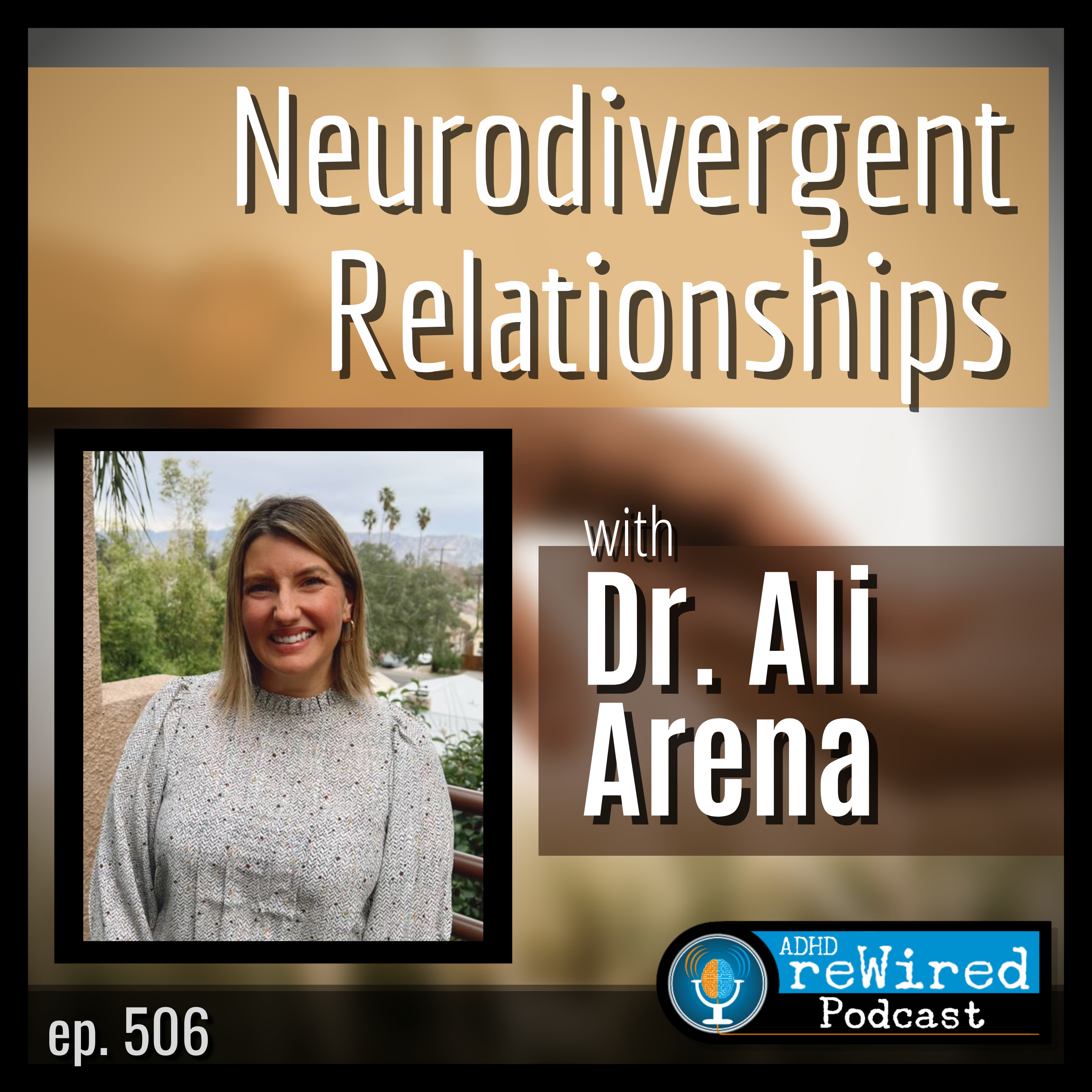
506 | Neurodivergent Relationships with Dr. Ali Arena
Oct 24, 2023Tap to summarizeIn today’s episode, Eric is joined by Dr. Ali Arena! Dr. Ali is passionate about social cognition, language processing, executive functioning, and creating meaningful friendships and relationships. She is both a speech and language pathologist and a board-certified behavior analyst, has a doctorate degree in educational leadership, is becoming a licensed educational psychologist, and uses a neurodiversity- and trauma-informed lens when working with all clients. Dr. Ali’s doctorate focus was unique, to say the least, as it addresses the dating intricacies of autistics, which led her to develop her private practice for anyone who wants help socially navigating in their workplace or relationships. Lastly, Dr. Ali feels social support is a biological necessity and wants to help all neurodivergent individuals to reach wholistic communication. Find out more and get connected with Dr. Ali at Connection-Squared.com Questions/Topics: [00:01:36] Introducing Dr. Ali [00:03:26] Eric asks Dr. Ali how she got into focusing on relationships and the dating intricacies of neurodivergent people [00:05:04] Emptying the dishwasher and other themes in neurodivergent relationships [00:06:40] A discussion on parentification [00:07:53] Ways to bring up difficult conversations with a partner [00:11:31] Cleaning up 99 percent, not assuming negative meanings, and shame responses [00:18:27] Listening, eye-contact, and different ways of processing while listening [00:22:35] “How do you cope with going out to eat in a noisy restaurant?” and other sensory challenges when communicating [00:24:41] Setting yourself up for talking with your partner [00:26:02] Communicating via text [00:32:47] A discussion on neurodivergent relationships and sex [00:36:57] Neurodiversity and the LGBTQ+ community [00:39:00] Explaining neurodiversity as part of one’s identity in a relationship [00:42:54] The impact of being in a relationship with someone who understands your neurodiversity [00:45:31] Finding support for neurodivergent relationships and how to get in touch with Dr. Ali [00:46:20] One more question for Dr. Ali & closing thoughts 🌟 Want to hear the bonus questions and answer at the end of this episode? Go to adhdrewired.com/Patreon where you can get an uninterrupted listening experience of this show and bonus content when you become a Patron at $5 a month or more! You can even join Eric every 4th Tuesday of the month for a Patron-only monthly coaching call at $25 a month! 🌟 Have you heard about our Adult Study Hall Community? Go to adultstudyhall.com to join our ADHD-friendly body-doubling community! 🌟 Interested in group coaching and want to take your ADHD management to the next level? Go to coachingrewired.com to get all the up-to-date information on the upcoming season of ADHD reWired's award-winning Coaching & Accountability groups!
Transcribe →35 | ADHD 101: What is ADHD?
Oct 30, 2014Tap to summarizeWhat is ADHD, really? In a bonus episode, host Eric Tivers discusses, via analogies and examples, the reality of ADHD. Breaking it down into its separate categories, Eric explains the different standardized presentations of ADHD along with their identifying symptoms. If you or others you know are looking for an introduction to ADHD as a technical topic, this is an ideal place to start. Go to www.erictivers.com/35 for the full show notes and links mentioned in this episode. Visit chadd.org for information on improving the lives of people affected by ADHD.
Transcribe →