
Podcast
ADHD reWired
Hosted by Eric Tivers, LCSW, ADHD-CCSP · EN
The podcast for adults with ADHD. Hear stories, learn strategies, and get great productivity tips as we talk about the real-life struggles and what it takes to achieve success. Host, Eric Tivers, LCSW, is a psychotherapist, coach and entrepreneur (with ADHD) in private practice. Eric interviews a variety of guests. Many are people just like yourself, as well professionals, entrepreneurs, and ADHD experts.
29episodes
Episodes
Newest firstAll episodes
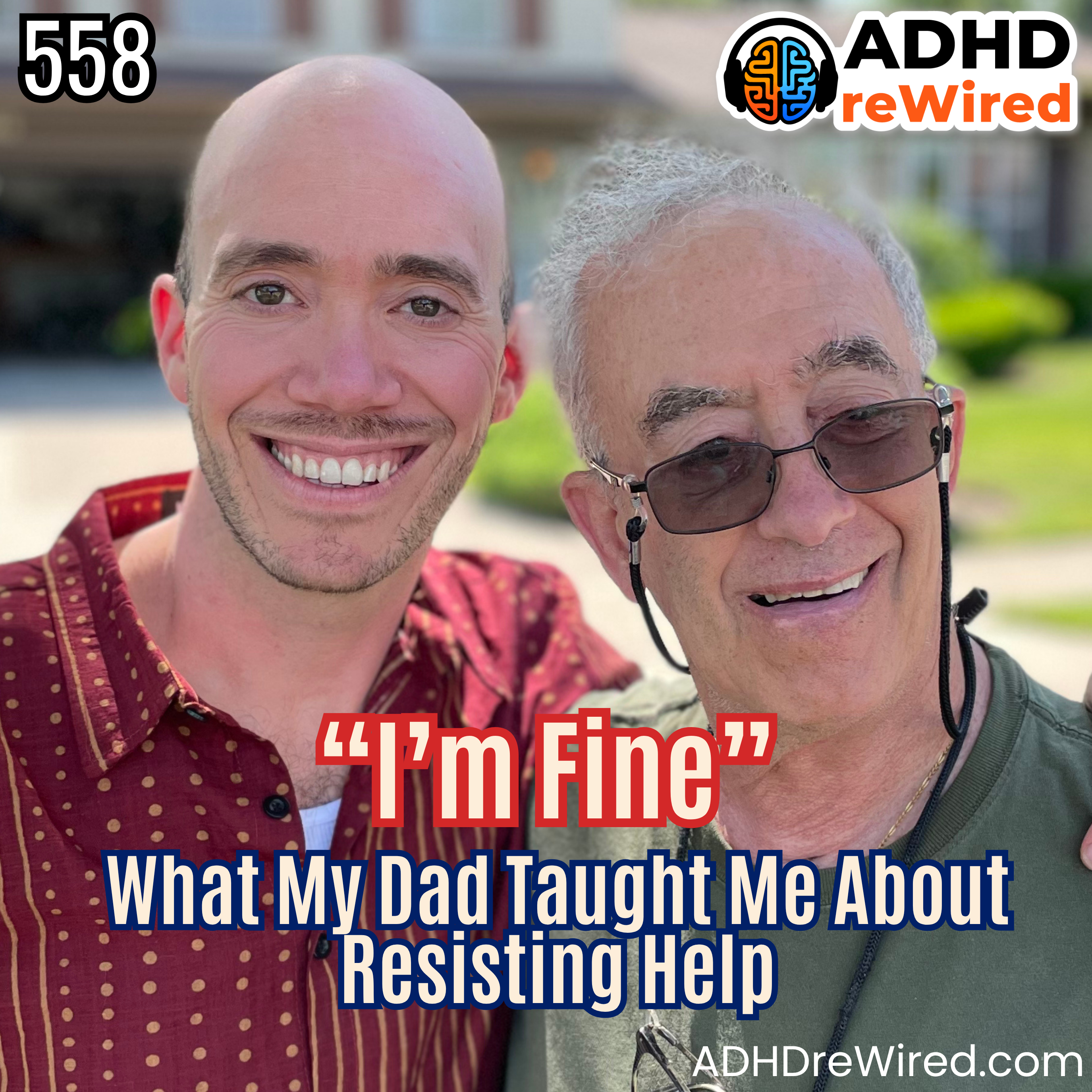
When "Fine" Keeps Us Stuck: A Reflection on My Dad, Masking, and Adapting ep 558
Oct 600:14:36Summary ready"I'm Fine": What My Dad Taught Me About Resisting Help On August 14th, my dad passed away. In the weeks since, I've been reflecting on his life, his humor, his resilience — and his signature phrase: "I'm fine." He said it when he was hooked up to machines in the hospital. He said it when he was on the roof cleaning gutters, even though his balance was shot. And most of the time, he wasn't fine at all. In this episode, I share some of the lessons I learned from my dad about adapting — and about the cost of resisting it. From the adult trike he never would have bought for himself, to the senior living community he resisted but came to love, my dad's story is a mirror for the ways we all struggle with change, masking, and accepting support. I also talk about my own journey: being diagnosed with ADHD at 19, and more recently, with autism — a diagnosis that really came into focus during a season of burnout. Like my dad, I've had to learn that determination isn't enough. Saying "I'm fine" isn't enough. What matters is adapting — and allowing ourselves to receive help when we need it. If you've ever caught yourself saying "I'm fine" when you're not, this one's for you. In This Episode The phrase my dad used that wasn't always true — "I'm fine." How his resistance to adapting shaped my understanding of masking. The trike that gave him joy he wouldn't have chosen for himself. Why moving into a senior living community became one of the best decisions he never wanted to make. What his struggles taught me about ADHD, autism, burnout, and learning to adapt. Resources & Links Learn more about ADHD reWired Coaching & Accountability Groups: coachingrewired.com Join our virtual co-working community: adultstudyhall.com Support the podcast on Patreon: patreon.com/adhdrewired
Summary
Building Systems that work for you (and not the other way around) with Stephanie Blake - Ep 557
Sep 3000:41:44Summary ready🧠 Episode Summary: Are you building a business (or a life) that supports your life—or one that runs you into the ground? In this episode of ADHD reWired, Eric Tivers is joined by business systems coach and automation strategist Stephanie Blake. Diagnosed with ADHD later in life, Stephanie shares how simplifying her business, embracing structure, and getting honest about burnout helped her reclaim her energy and build a business that works for her, not the other way around. They talk about the unique ways ADHD brains thrive with streamlined systems, why too many tools can be a trap, and how authenticity and self-awareness fuel sustainable success. If you've ever felt overwhelmed trying to do all the things, this episode is your permission slip to do less—better. You'll also hear tips for where to start with automation, how to avoid shiny object syndrome, and why consistency matters more than complexity. ⏱️ Timestamps & Topics: 00:00 – Intro 02:02 – Stephanie's story: diagnosis, business, and burnout 06:11 – "Simplify to scale": the ADHD-friendly approach to business 11:58 – Tools and systems that actually help (and what to ditch) 18:05 – Where to start with automation (without breaking your brain) 21:42 – The myth of doing it all—and why solo doesn't mean alone 26:39 – What's behind our addiction to new tools 30:14 – The power of community and authenticity in building your brand 35:20 – Why revisiting your systems is a must, not a maybe 38:17 – Final thoughts: automate the right things, at the right time 40:36 – Learn more from Stephanie + Fall Coaching Groups are open! 👤 Guest Bio: Stephanie Blake is the founder of the Simple Business School and Simple Business Suites. She helps entrepreneurs scale to six figures and beyond by simplifying their business systems, automating strategically, and building offers that align with their values. As a mom, a CEO, and an ADHDer, Stephanie believes in doing business your way—and building something that lasts. 🌐 Learn more at: theblakecollective.com 📱 Instagram: @theblakecollective 🔧 Tools & Resources Mentioned: ClickUp – Project Management Airtable – Databases / Organizing Everything Zapier – Automation StreamYard – Live Streaming Platform 🚀 Learn More & Take Action 🧭 Fall 2025 Coaching Groups are open for registration! If you're ready to finally get support, structure, and accountability that works for your ADHD brain, then come join us. Join our next Registration Event: 📅 Friday, October 3rd at 12pm Central OR 📅 Thursday, October 9th at 10am Central October 3rd: $1699 October 9th (Late Reg): $1899 📆 3- and 6-month payment plans available! 🔗 Start your pre-registration now at www.coachingrewired.com 🌐 Learn more about: Adult Study Hall (Virtual co-working): www.adultstudyhall.com Support us on Patreon: patreon.com/adhdrewired 🎧 Listen & Share If this episode helped you feel less alone or gave you a new perspective on how to run your business or your life with ADHD, share it with a friend—or on social! Use #ADHDreWired to join the conversation.
Summary
Hustle, Flow or Let it Go? Lessons from Burnout and Grief - with Dr. Portia Preston - Ep 556
Sep 1500:51:35Summary readyWhat does it really mean to know when to push, when to pause, and when to let go? In this heartfelt conversation, Dr. Portia Preston returns to ADHD reWired to share insights from her book Hustle, Flow, or Let It Go? We talk about burnout, shame-free wellness, and the small practices that can help us create a more sustainable rhythm in life. This episode weaves together stories of resilience and grief, the reality of living with ADHD and autism, and Portia's SANE model (Slow down, Acknowledge, Navigate, Evaluate)—a simple framework to help you reset when overwhelm takes over. We also talk about support squads, the hidden cost of hustle culture, and what it means to choose rest without shame. If you've been running on empty, carrying grief, or just wondering if there's another way forward, this conversation is for you. 00:00 – Introduction: Shame Free Wellness and unlearning harmful beliefs 01:07 – Welcome to ADHD Rewired, host Eric Tivers introduces the show 01:31 – Eric shares personal news: loss of his father and recent illness 03:06 – Portia Preston joins: author, speaker, and executive coach 05:36 – Portia discusses the motivation behind her book and the concept of sustainable rhythm 07:54 – The SANE Cycle: a four-step process for self-reflection and growth 08:49 – Book launch experiences, balancing promotion, and authenticity 10:57 – Defining "hustle" and "flow" in the context of wellness 13:00 – Letting go: the challenge and importance of releasing what doesn't serve you 15:21 – The SANE model explained: Slow down, Acknowledge, Navigate, Evaluate 17:06 – Portia's favorite part of the book and audience reactions 17:52 – Break: Coaching and accountability group info - ADHD Rewired Coaching & Accountability Groups - ADHD Rewired Virtual Coworking Community 18:48 – Grief, burnout, and the importance of sitting with discomfort 22:00 – Building a support squad and the difference between solitude and isolation 25:00 – Neurodivergence, intersectionality, and Portia's experience as a Black woman with ADHD and autism 29:00 – Audience feedback on the book and the importance of vulnerability 33:00 – Shame Free Wellness Manifesto (read aloud) 35:44 – The importance of rest, authenticity, and self-acceptance 39:00 – Context shifting, capacity vs. discipline, and self-compassion - Dr. Raquel Martin on Instagram: @drraquelmartin 43:00 – Teaching students about shame-free wellness and legacy 46:00 – Grief, community, and turning pain into purpose 49:00 – The value of showing up authentically and embracing imperfection 52:00 – Where to find Portia's book and connect online - Book: "Hustle, Flow, or Let It Go: A Guide to Shame-Free Wellness" • PortiaPreston.com • Amazon Book Link - Instagram: @drportiapreston 54:00 – Closing thoughts: SANE model reminder and encouragement 56:00 – Outro: gratitude and next steps
Summary
People Pleasing & ADHD: When "Yes" is a Nervous-System Response and How to Stop with Anita Sandoval, LPC - EP 555
Aug 11, 202500:45:01Summary readyPeople-pleasing isn't a personality flaw—often it's a nervous-system strategy. Licensed Professional Counselor and ADHD-CCSP Anita Sandoval joins Eric to unpack how the fawn response shows up with ADHD, trauma, and RSD; how it differs from masking and conflict avoidance; and what real change looks like. We cover Anita's "Empower → Resilient → Authentic" model, ADHD-friendly EMDR adaptations, and the messy-but-worth-it work of boundaries (including with narcissistic family dynamics). Resources, Anita's links, and a quick survey about a potential evening coaching group are in the full notes at ADHDreWired.com. Guest: Anita Sandoval, LPC-S, EMDR-Certified, ADHD-CCSP — therapist, supervisor, and author of Broken Chains (English & Spanish). Host of Empowering Women in Conversations and creator of Empower Her Pathways. We cover: People-pleasing as a neuro-adaptive response (fight/flight/freeze/fawn) People-pleasing vs. conflict avoidance vs. masking ADHD & RSD: why "neutral" feedback stings and how regulation shifts it Differentiating from personality disorders (dependent/BPD) Hypervigilance, ACEs, and emotional regulation circuits Boundaries with narcissistic dynamics (including the "victim narcissist" pattern) Anita's staged model (Stages of Change × grief work): Unaware → Aware → Ready → Action → Maintenance → Integration (Empowered → Resilient → Authentic) Therapies that help ADHD brains: EMDR with resourcing, IFS/parts work, polyvagal-informed regulation Eric's EMDR story: from trigger spirals to co-regulation Try this: Notice your next automatic "yes." Ask: Is this aligned with my values, or is my nervous system chasing safety? Then practice one tiny boundary this week and track before/during/after. Resources mentioned: Anita Sandoval — anitasandoval.com (course: Empower Her Pathways) Broken Chains (English/Spanish) Dr. Ramani's work on narcissism (Should I Stay or Should I Go?) Modalities: EMDR, IFS/Parts, Polyvagal-informed approaches Coaching & community: Evening Coaching Group — interest survey We're exploring a fall evening section (proposed Wed, Sept 18 • 5pm PT / 8pm ET) led by ADHD reWired Coach & LCSW Kristin Marts, at a budget-friendly rate (starting at $999) if we move forward. Deadline to weigh in: Aug 15. Take the short survey at www.coachingrewired.com. Complete the survey to enter to win 6 months free in our Alumni community ($240 value) or 1 year free of Adult Study Hall ($240 value). Adult Study Hall (ASH) — virtual co-working & body doubling. Free 1-week trial, then $19.99/mo or $150/yr at www.adultstudyhall.com. Connect with Anita: www.anitasandoval.com | Podcast: Empowering Women in Conversations
Summary
554 | OCD with ADHD: Could your anxiety be OCD? with Natalia Aíza
Jul 7, 202500:47:57Tap to summarizeWhat is OCD, really? It's far more than the stereotypes of handwashing, tapping, or lining up your pens just right. On today's episode, Eric is joined by Natalia Aíza — a therapist, parent, writer, and co-founder of Kairos Wellness Collective — who specializes in supporting individuals and families navigating OCD and anxiety. Together, they explore how OCD can show up in less obvious ways, especially for those with ADHD. You'll hear: ✅ Why OCD is often missed or misdiagnosed in ADHD brains ✅ How intense nostalgia, perfectionism, and social media checking can all be forms of OCD ✅ The difference between typical anxiety and OCD ✅ Why intrusive thoughts don't define you ✅ How exposure response prevention (ERP) and medication can help ✅ Eric's own reflections on healing unexpected layers through EMDR and discovering his autism If you've ever felt stuck in mental loops, struggled with perfectionism, or wondered whether your patterns might be more than "just" ADHD, this episode is for you. Learn more about Natalia Aiza and Kairos Wellness Collective: 👉 Instagram: @letstalk.ocd 👉 Kairos Wellness Collective: kairoswellnesscollective.com 👉 Email: natalia@kairoswellnesscollective.com Ready to take the next step with your ADHD? Don't miss our second 2nd chance Registration Event for the summer ADHD reWired Coaching & Accountability Groups on Thrusday, July 10. Visit coachingrewired.com to learn more and secure your spot.
Transcribe →
The ADHD Productivity Manual with Ari Tuckman, PSY.D, MBA
Jun 30, 202500:57:03Tap to summarizeSupport Comes from ADHD reWIred's Coaching and Accountability Groups. Summer Sessions are July 24 - Sept 18. Join us at our next registration event on July 10th. Learn more by going to www.coachingrewired.com Episode Overview: In this episode, Eric is joined by Ari Tuckman, PSY.D, MBA, psychologist, international presenter, and author of the new "ADHD Productivity Manual." Together, they dive deep into the realities of productivity for people with ADHD, exploring motivation, activation, self-compassion, and practical strategies for getting things done. Key Topics Discussed: The difference between motivation and activation, and why both matter for ADHD brains How perfectionism and unrealistic expectations can sabotage progress The importance of understanding your "why" for each task, not just the "what" Social aspects of productivity: people-pleasing, setting boundaries, and communicating when you can't meet a deadline Real-world strategies and creative hacks from Ari, Eric, and their clients (including timers, accountability, and engineering urgency) The value of celebrating small wins and tracking progress over time Self-compassion and letting go of impossible standards How to build systems that work for your unique brain, not just follow generic advice Guest Bio: Dr. Ari Tuckman is a leading ADHD expert, psychologist, and author of five books, including the "ADHD Productivity Manual." He brings decades of clinical experience and a practical, compassionate approach to helping people thrive with ADHD. Resources & Links: Learn more about Ari and his books: adultadhdbook.com Join ADHD reWired Coaching & Accountability Groups: coachingrewired.com Check out Adult Study Hall for virtual coworking: adultstudyhall.com Support the Show: Become a patron for bonus content and monthly coaching calls: adhdrewired.com/patreon Sign up for the newsletter and get episode resources: adhdrewired.com Takeaway: You're not broken, and you don't have to do hard things the hardest way or alone. Progress is possible—one step, one system, and one act of self-compassion at a time. Thanks for listening!
Transcribe →
546 Reducing Miscommunication among neurodiverse teams with Chris Hooten
Feb 28, 202500:54:15Summary readyIn this episode of ADHD reWired, Eric Tivers welcomes Chris Hooten, a LinkedIn Top Facilitation Voice and certified neuro-mindfulness coach. With over 15 years of experience, Chris specializes in helping neurodiverse organizations foster inclusive communication, leadership, and workplace strategies. Eric begins the episode with a personal update, sharing his ongoing journey of overcoming burnout and a recent formal autism evaluation. He also highlights his interviews on Chasing Life with Dr. Sanjay Gupta and Entrepreneur on Fire, as well as the pressing need for advocacy in the face of recent policy changes that threaten diversity, equity, and inclusion (DEI) initiatives. The core discussion revolves around communication challenges in neurodivergent teams and how traditional workplace structures often fail to accommodate neurodiverse employees. Chris introduces the 4D Model of Neuroinclusive Communication—a framework designed to improve communication by making it more descriptive, deliberate, direct, and diverse. They discuss common workplace miscommunication issues, the pitfalls of platforms like Slack for neurodivergent individuals, and how managers can foster psychological safety. Chris also explores the systemic barriers that impact neurodivergent and marginalized individuals in professional spaces. They emphasize shifting away from medicalized, deficit-based narratives about neurodiversity and adopting an intersectional, affirming approach that values lived experiences. Eric and Chris conclude by reflecting on the evolving nature of work, the need for workplace wellness, and how neurodivergent individuals are often the first to recognize unsustainable work environments. Chris shares insights on fostering genuine inclusion rather than performative DEI efforts and provides strategies for improving workplace culture. 🔗 Find Chris Hooten: | LinkedIn | Instagram 💡 Resources & Announcements: Pre-registration is now open for the ADHD reWired Coaching & Accountability Groups. Secure your spot at . Spring Sessions April 24 - June 19th. Join Adult Study Hall for virtual co-working and upcoming Zentangle workshops at . Support the show on Patreon at . 🎧 Listen Now! Don’t forget to subscribe and leave a review on your favorite podcast app! Contact Chris at ADHD reWired's Coaching and Accountability Groups: Adult Study Hall: Eric on the Chasing Life Podcast - Eric on Entrepuner on Fire 5 Calls
Summary
545 ADHD Growth Journeys An Alumna Coaching Experience and My Path towards Sustainable energy management - Group Registration Ends this Week
Jan 6, 202500:20:15Summary readyIn this episode of ADHD reWired, I’m pulling back the curtain on two intertwined journeys: my own path toward sustainability and the incredible growth story of Jessica, an alumna of our ADHD Coaching and Accountability Groups. As I’ve navigated my own challenges with burnout and the pressures of juggling too much, I’ve made a commitment this year to focus on what matters most. My word for the year—sustainability—has reshaped how I approach my work, my energy, and even this podcast. Jessica’s story adds another layer of depth to this episode. After feeling stuck, overwhelmed, and disconnected while pursuing her PhD, Jessica joined our fall coaching group. Through her deeply personal and reflective audio journal, she shares how the program helped her build sustainable systems, reconnect with her goals, and find the motivation to tackle her work and her life with renewed energy. From discovering the power of accountability teams to replacing old habits with more supportive ones, Jessica’s transformation offers hope and inspiration for anyone seeking to live more intentionally with ADHD. This season, we’ve made changes to our coaching program to better support ADHDers like you. Now 8 weeks instead of 10, the program is more focused and accessible. We’ve also introduced on-demand access to our yearly planning sessions, allowing you to go at your own pace. These adjustments reflect the principle that less is truly more when it comes to creating meaningful and lasting growth. The final registration events for our Winter Coaching and Accountability Groups are Wednesday and Thursday of this week, so now is the time to take the next step. If you’re ready to stop juggling fireballs and start building a more sustainable, ADHD-friendly life, visit to pre-register today. Tune in to hear Jessica’s story, learn more about what makes our coaching groups so transformative, and find inspiration to start your own growth journey. Together, let’s challenge internalized ableism and reimagine what it means to thrive with ADHD.
Summary
544 ADHD at 80 Miles an Hour
Dec 20, 202400:25:43Summary readyEric Tivers continues to reflect on his journey of overcoming burnout and seeking solutions for long-term sustainable energy management. ADHD at 80 MPH is a nod to the last episode recorded in the car about 9 years ago. Episode 47 called . Recording from his car during a road trip, Eric shares his experiences of taking a solo retreat to recharge and refocus and to think about yearly planning. He discusses his efforts to rebalance his work and personal needs, and some insights he's recently gained. The episode also touches on his continued discovery of being autistic alongside having ADHD and how it's shaping his approach to life and business. Eric also announces the opening of registration for winter coaching and accountability groups, reflecting on the value of community and structured support for ADHD individuals. The episode concludes with hearing from some recent coaching group alumi and with logistical details about upcoming coaching sessions and community events. 1:07 Winter Coaching and Accountability Groups 01:30 Road Trip Reflections 03:47 Burnout and Sustainability 15:45 Coaching Group Success Stories 22:02 Upcoming Events and Announcements 25:36 Conclusion and Farewell Registration for our winter groups starts Jan. 3, 2025. Winter sessions are January 30 - March 27. Add your name to our interest list at It's not to late to do your yearly planning with ADHD reWired in . Our 5-part yearly planning series is available on demand for Adult Study Hall Members. Join today. It's only $19.99 a month, or save with an annual membership for only $150 for the year. You can also support this work on *Note - There will be no Monthly Patreon Coaching Call, or Pomodoro Dance Party for Adult Study Hall Members in December. But we'll be back in January.
Summary
543 Overcoming Burnout - Personal Reflections
Nov 9, 202400:24:49Summary readyAnd We're Back!!! In episode 543 of ADHD reWired, host Eric Tivers returns to mark a new beginning for the podcast. Eric focuses this episode on recognizing and overcoming burnout. After 10 years of weekly episodes, plus other stressors in business and life, the pace became unsustainable, leading him to experience significant burnout. Eric elaborates on these elements of burnout, describing emotional exhaustion as a deep-seated fatigue that impacts life engagement, depersonalization as growing detachment and cynicism towards work, and diminished personal achievement as a sense of ineffectiveness despite efforts. He recounts personal struggles, including a divorce and other stressors that exacerbated his burnout. Eric discusses the importance of meaningful alone time to recharge, using his motorcycle trips as an example of finding mental clarity and rebalancing life. He also outlines changes in his coaching seasons to ensure sustainability. Additionally, Eric introduces a new offering for Adult Study Hall where he will be leading members through a 5-week guided workshop for planning your year beginning November 20th, 2024. Learn more at - Plus sign up with our new annual plan and get 37% off your membership. Join us for our Live Monthly Q &A every 2nd Tuesday of the Month at 10:30 AM PT / 1:30 PM PT. RSVP at Support ADHD reWired by becoming a Patron at 00:00 Welcome to ADHD reWired 01:19 Introduction to Season Two 02:40 Understanding Burnout 03:19 Emotional Exhaustion 04:48 Depersonalization and Cynicism 06:02 Reduced Personal Accomplishment 07:57 Diagnosing Burnout 09:47 Personal Journey and Realizations 13:03 Rebalancing Life and Work 14:25 Upcoming Coaching Groups and Community Events 18:50 Yearly Planning Sessions 21:27 Conclusion and Future Plans
Summary