
Podcast
Gilbert House Fellowship
Hosted by Gilbert House Ministries · EN
Since March 2005, Derek and Sharon Gilbert have shared their take on cryptopolitics and things that go bump in the night. Those first podcasts, back when podcasting was a brand new idea, were rough–recorded through a jury-rigged setup of string, wire, duct tape, and a durable little Mac laptop.
Always ready to share a laugh and an opinion, the Gilberts emphasize the joy of living for Christ in the midst of doom and gloom news.
Their first podcast, PID (Peering Into Darkness) Radio connected Derek and Sharon to Tom Horn, L. A. Marzulli, Gary Stearman and Bob Ulrich (Prophecy Watchers), Steve Quayle, Dr. Michael Heiser, and too many others to mention.
Those relationships developed into research, writing, and broadcasting for SkyWatchTV, which spawned the programs SciFriday, Unraveling Revelation, and The Bible’s Greatest Mysteries, as well as cutting-edge books on theology and end-times prophecy like The Great Inception, Last Clash of the Titans, Bad Moon Rising, The Day the Earth Stands Still, Veneration, Giants Gods & Dragons, and The Second Coming of Saturn, as well as Sharon’s critically-acclaimed series of supernatural thrillers, The Redwing Saga.
Since 2014, the Gilberts have produced the weekly Gilbert House Fellowship, a verse-by-verse study of the Bible in chronological order.
29episodes
Episodes
Newest firstAll episodes
The Fall of Israel
1w ago01:41:32Summary readyAfter 200 years of idolatry, God finally allowed the northern kingdom of Israel to be destroyed and the people carried off by Assyria. Meanwhile, the southern kingdom of Judah was being ruled the young, foolish, idolatrous King Ahaz. After being defeated in battle by the Aramean Kingdom of Damascus, Ahaz decided to worship the gods of Syria rather than turning to God for help. He also sacrificed his son to Molech in the Valley of Hinnom southwest of Jerusalem. Then he turned to the Assyrians for help against Israel, Syria, and Edom, cutting up fixtures in the Temple to send to Assyria as tribute. Needless to say, God was not pleased. Apparently, neither were the people of Judah. Ahaz was buried in the City of David rather than in the tombs of the kings of his forefathers. Sharon’s niece, Sarah Sachleben, has been battling stage 4 bowel cancer and the medical bills are piling up. If you are led to help, please go to GilbertHouse.org/hopeforsarah. Derek’s new book War of the Watchers Book One: From Baal to Balfour is now available at Amazonin paperback and as a Kindle e-book!
Summary
He Does Not Retain His Anger Forever
3w ago01:23:57Summary readyAfter several chapters of prophecies of destruction at the hands of the Assyrians, Micah concludes his book with a promise of restoration for the people of Israel. Although there are some differences between the Masoretic text on which the old Testament of our English Bibles is based and the Septuagint, which was translated from Hebrew into Greek by about 200 BC, the overall message is the same: God will chastise His people for their behavior, but He will bless the remnant who repent and return to Him.
Summary
Who is the Assyrian?
4w ago01:30:00Summary readyWho is the Assyrian?The Bible foretells a mysterious character called “the Assyrian” who seems to have a role in the end times war against Israel. Who is he? What’s odd is the Hebrew text of Micah 5:5–6 (and Isaiah 14:25, 31:8, and 52:4) lacks the definite article “the.” In other words, there is no "the Assyrian" in the Old Testament. The Hebrew word Assur can referred to Assyria, its capital city, or its chief deity, who was the equivalent of the Sumerian/Babylonian god Enlil (called Ellil in Akkad), El of Canaan, Dagon of the Philistines, and Milcom of Ammon—and thus Molech, the netherworld god who demanded the sacrifice of children from his followers. We believe the passages in Micah are an “already but not yet” prophecy, referring to the imminent conquest of the northern kingdom of Israel by Assyria, which occurred during Micah’s lifetime in 722 BC, and a future return of Assur in the end times as the Destroyer, Abaddon/Apollyon, who is released from the abyss for five months to torment those without the seal of God on their foreheads.
Summary
Judgment of the Kings and the Mighty
Jun 2801:34:47Summary readyThe Book of 1 Enoch prophesies a day when evil kings and rulers would be judged by a messianic figure called the Elect One—the Son of Man. As we’ve mentioned previously, this section of 1 Enoch is the first Jewish text in which “the Son of Man” is used as a title—a title Jesus applied to himself 78 times. We also discuss the differences between “angels” and cherubim, seraphim, and ophanim (Ezekiel’s wheels): and the identity of the Son of Man as one with the Lord of Spirits, God the Father—Yahweh.
Summary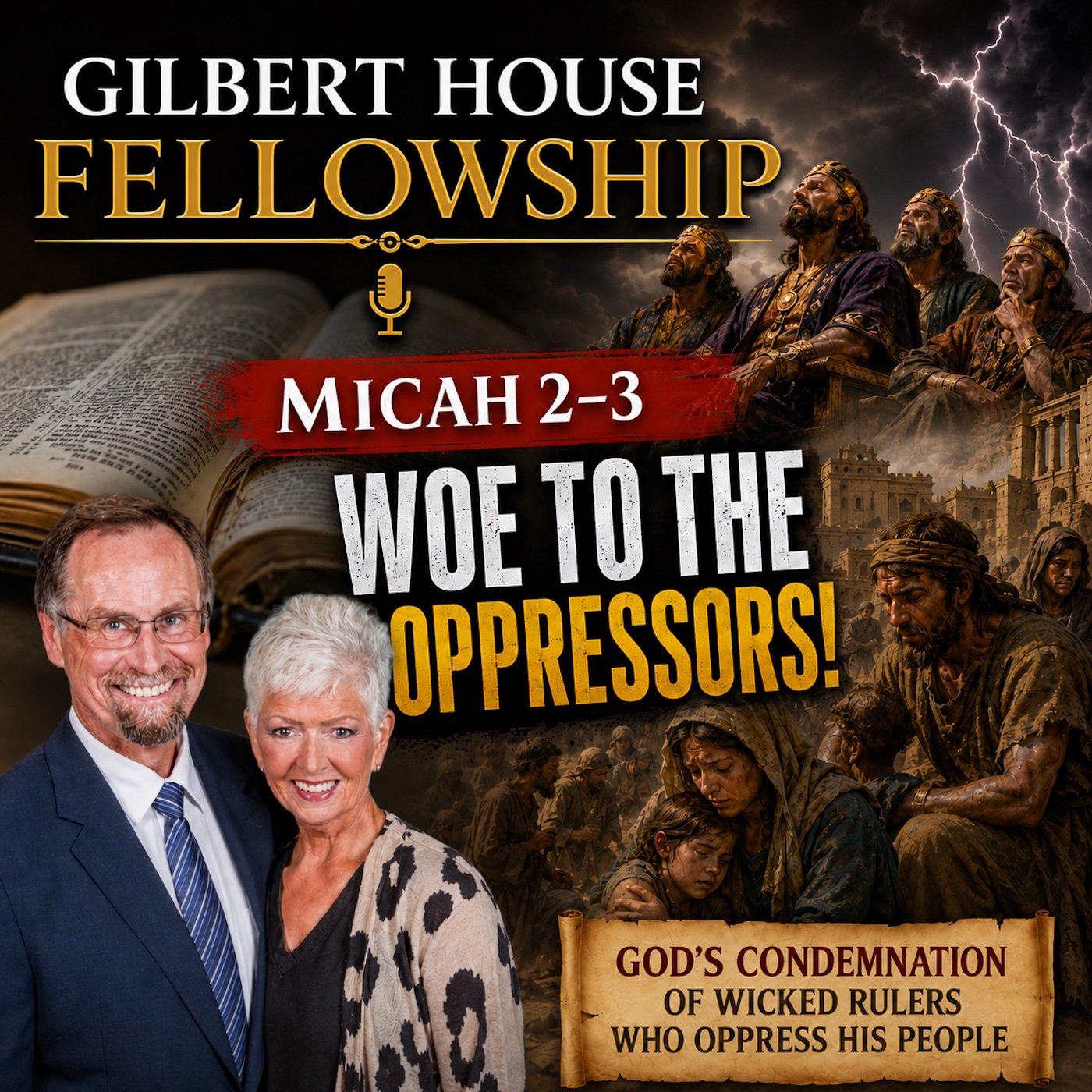
Woe to the Oppressors!
Jun 2101:25:17Summary readyThe ruling elites of ancient Israel were compared to cannibals eating the flesh of those they were supposed to protect.We continue with the prophet Micah's polemic against ancient Israel's ruling class, who apparently took advantage of the poor and downtrodden. For that reason, God told Micah to prophesy a day of judgment that would bring destruction on the rich and powerful.Because Micah used the phrase, "in that day," we view this as an "already but not yet" prophecy—one that was fulfilled when Assyria conquered the northern Kingdom in 722 BC, and will be fulfilled again in the last days.
SummaryWoe to the Oppressors!
Jun 2101:25:17Summary readyThe ruling elites of ancient Israel were compared to cannibals eating the flesh of those they were supposed to protect.We continue with the prophet Micah's polemic against ancient Israel's ruling class, who apparently took advantage of the poor and downtrodden. For that reason, God told Micah to prophesy a day of judgment that would bring destruction on the rich and powerful.Because Micah used the phrase, "in that day," we view this as an "already but not yet" prophecy—one that was fulfilled when Assyria conquered the northern Kingdom in 722 BC, and will be fulfilled again in the last days.
Summary
The Coming Destruction
Jun 1401:40:28Summary readyThe prophet Micah, a contemporary of Isaiah, prophesied the coming judgment of God on the kingdoms of Israel and Judah at the hand of the Assyrians.Our chronological reading order brings the book of Micah into the middle of our study of Isaiah. While Isaiah prophesied a day when the kingdom of Judah would declare, "God is my salvation," Micah's prophecy is a warning of God's imminent judgment for the sins of Judah and Samaria.We see both prophecies as being of the "already but not yet" type, fulfilled in the eighth century BC, but with a future fulfillment still to come. Bear in mind when reading Isaiah 12 that the the Hebrew word translated "salvation" is Yeshua—Jesus.
Summary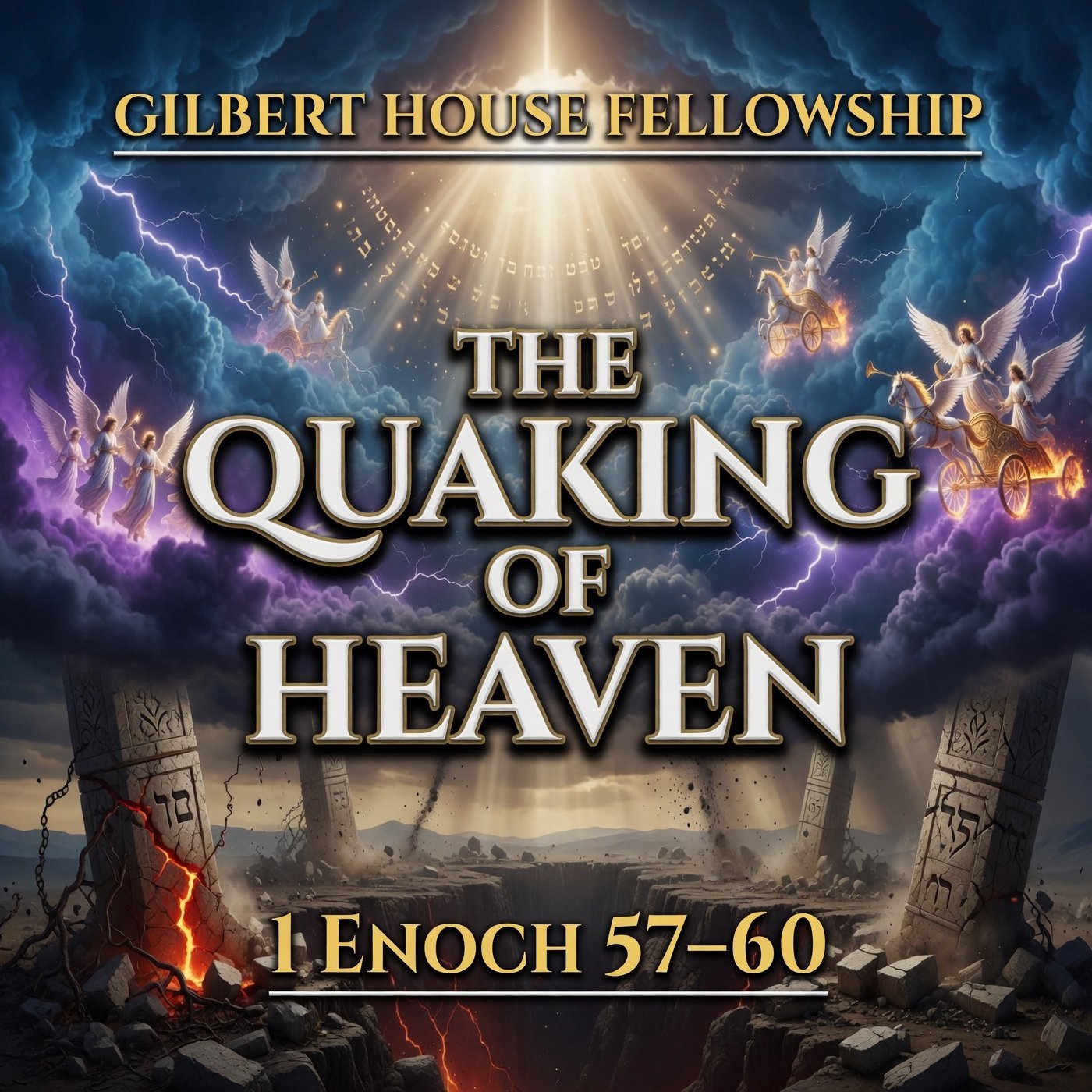
The Quaking of Heaven
May 3101:48:30Summary readyA VISION of Noah's was inserted into the Book of 1 Enoch, with interesting references to Leviathan and Behemoth.These are chaos monsters. Leviathan, described as female and from the sea, and Behemoth, male and occupying the wilderness—possibly the same one into which the Watcher Azazel was thrown as punishment for his role in corrupting humanity.We discussed the "already but not yet" prophecies of 1 Enoch 57–59 and the end times fulfillment of the vision ascribed to Noah in chapter 60.As a reminder, this month's study comes from the Book of Parables, the prophetic section of 1 Enoch written just before the birth of Jesus. The importance of this section of the book is in its prophecies of a coming messianic figure called the Chosen One, the Anointed One, and, most frequently, the Son of Man, a title not found in any prior Jewish writing. Jesus referred to himself as the Son of Man 78 times in the New Testament.The high regard for 1 Enoch held by Jesus, the apostles, and the early church suggests that it's worth our while to study this book for ourselves. It's not in the Bible, nor should it be, but there are teachings in the New Testament that come straight from the book of 1 Enoch.
Summary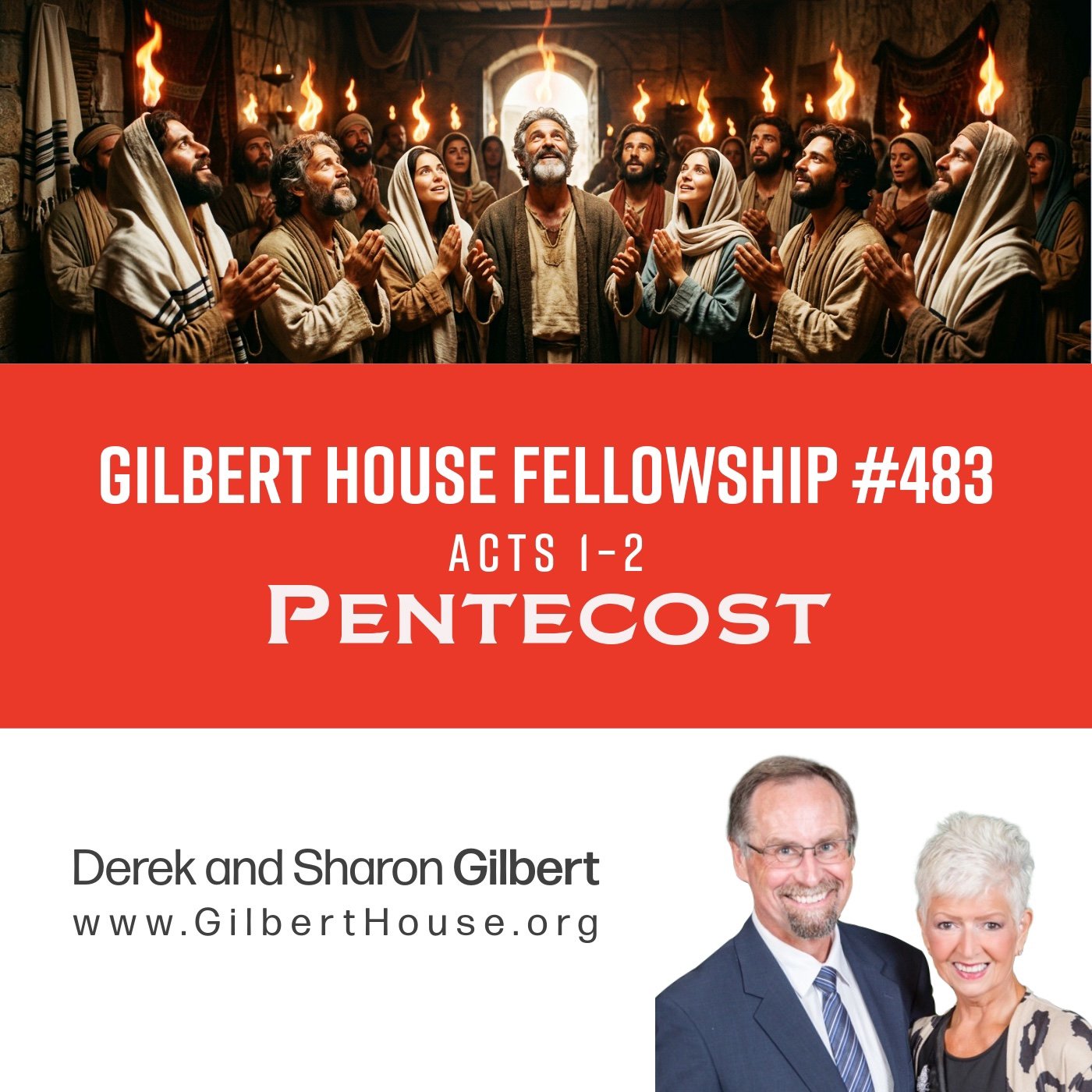
Pentecost
May 2401:42:14Summary readyToday Is Pentecost, fifty days after Passover. It’s the day the Holy Spirit descended on the followers of Jesus and the day Moses descended Mount Sinai with the Law. We discussed the similarities and differences between those two events. For example, the fire on Mount Sinai and the tongues of fire over the heads of the followers of Jesus; and the 3,000 saved on Pentecost in Acts chapter 2 contrasted with the 3000 who were put to death when Moses returned from Sinai to find the Israelites engaged in debauchery around the golden calf. We also discuss the change between the law on tablets of stone and the law written on our hearts. We bring in passages from Ezekiel 36 in which God promised to restore Israel to the land—not because the Israelites earned it, but for the sake of His Holy Name so that the world would know He is Yahweh. This was fulfilled in 1948. Here’s the link to “The Comforter Has Come,” featuring Sharon with Sandi Patty, Steve Green, and Warren Hoffman: https://www.youtube.com/watch?v=BgOrW8DAFJ0And here’s the video “Mount Hermon’s Upsettingly Dark Occult Connections”: https://www.youtube.com/watch?v=rQvfrTtE9XM
Summary
The LORD Has Chosen Zion
May 1701:45:12Summary readyThe arrival of the Ark of the Covenant in Jerusalem in the time of David is a foreshadowing of the prophesied return of our King to his earthly throne. This week, we flash back about 250 years to study four psalms we overlooked during the life of David. These Psalms of praise would have been written just after the arrival of the Ark of the Covenant in Jerusalem, as described in 1 Chronicles 13–16. We also discuss the covenants between God and Abraham, Moses, and David, and the difference between the unconditional covenants made with Abraham and David and the Sinaitic covenant with Moses. Though the Israelites, and later Jews, broke faith with God, there are promises. He made that were not dependent on the faithfulness of the people of Israel. Zechariah 12 and 14 tells us of a day when Messiah arrives in Jerusalem at the hour of Israel's greatest need. He will establish His eternal throne there: For the LORD has chosen Zion; he has desired it for his dwelling place: “This is my resting place forever; here I will dwell, for I have desired it. (Psalm 132:13–14, ESV) Here are links to the books we mentioned during the study:• Rebooting the Bible Part One by Doug Woodward• Rebooting the Bible Part Two by Doug Woodward• The Battle for the Bible’s Truth by Doug Van Dorn
Summary